Glossary · Essay
Box Entries: The Stat That Ignores Everything Until the Ball Reaches the Box
Chances don't come from nowhere. Box entries count how often a team actually gets the ball into the penalty area, by pass or by carry.

By 01 Owen
· Updated 6 Oct 2026 · 5 min read

A lot of buildup play in football never gets anywhere near a shot, which is fine and normal, but it makes evaluating attacking quality from shot counts alone a little like judging a road trip only by how many times the car actually arrived somewhere. Box entries back up one step from the shot itself and count something more basic: how often a team actually gets the ball into the penalty area at all, by pass or by carry, regardless of what happens once it's there.
The count is intentionally simple. Every time the ball crosses into the penalty area under a team's control, whether via a driven pass, a through ball, or a player dribbling it in themselves, that's one box entry, tallied without any judgment about the quality of what followed. A team can rack up box entries by working the ball into the area repeatedly even if the final touch is consistently wasted, and a team can post a low box-entries count while still being efficient in front of goal if the few times it does get in there, it makes them count; the stat says nothing about conversion, only about frequency of access.
Reading box entries alongside xG
This makes box entries a useful check on a team or player's underlying attacking process, somewhat independent of finishing variance. A team generating a healthy number of box entries but a low xG total is probably getting into the area in low-value ways, wide crosses under pressure rather than central cutbacks, say, which points to a specific, fixable problem in how the team is using its access to the box rather than a general lack of attacking threat. A team with both low box entries and low xG has a more fundamental problem: it simply isn't getting into dangerous territory often enough for a finishing or service adjustment to matter much on its own.
Entries by pass and by carry
The distinction between entries by pass and entries by carry is worth paying attention to separately, since they tend to describe different kinds of attacking teams. A side that gets into the box mostly through passing combinations is usually working the ball through a settled defense with patient interplay, while a side that gets into the box mostly through dribbles and carries is more often exploiting broken-down defensive shape, in transition or against a defense that's already been dragged out of position, since carrying the ball into a well-organized box is a much harder, more individually demanding way to arrive there than combining your way in against a shape that's already compromised.
Where the count falls short
The stat's obvious limitation is the same one that runs through most simple counting metrics in this glossary: it treats every entry identically regardless of where in the box it happens or how much pressure the receiving player is under once they arrive. A ball worked into a central, unmarked position six yards from goal counts the same as a hurried touch that barely crosses the byline under a covering defender's challenge, even though the two situations bear almost no resemblance to each other in terms of actual danger created. This is exactly the gap that shot-creating actions and xG pick up on the other side of the same sequence, by weighing what actually happens with the ball once it's in the area rather than just whether it got there, which is why box entries tends to work best as a volume check paired with those value-based numbers rather than as a standalone measure of attacking quality.
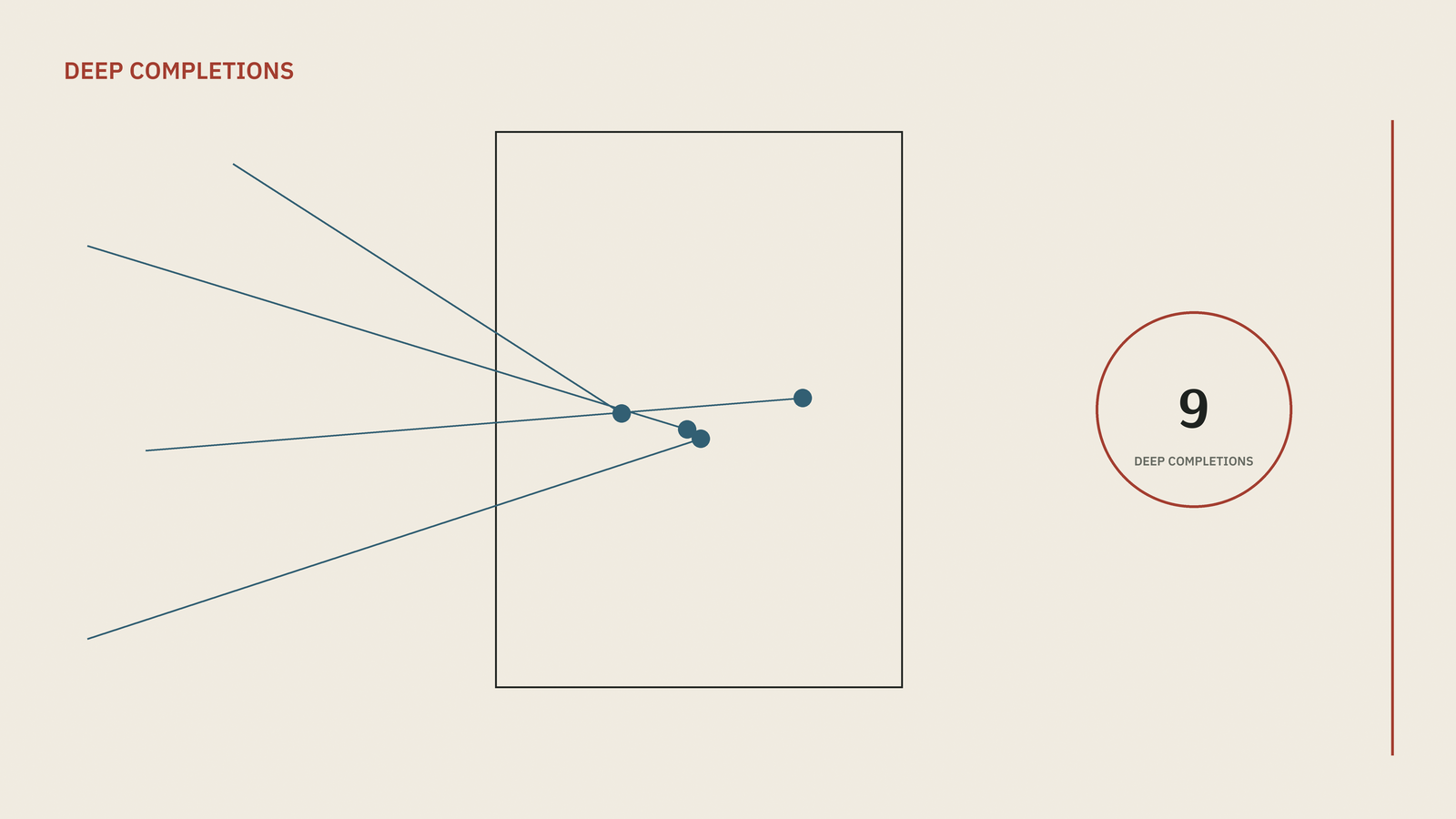
It's a natural companion to field tilt, which measures time spent in the final third rather than actual entries into the box, and to deep completions, the passing stat most likely to precede one.
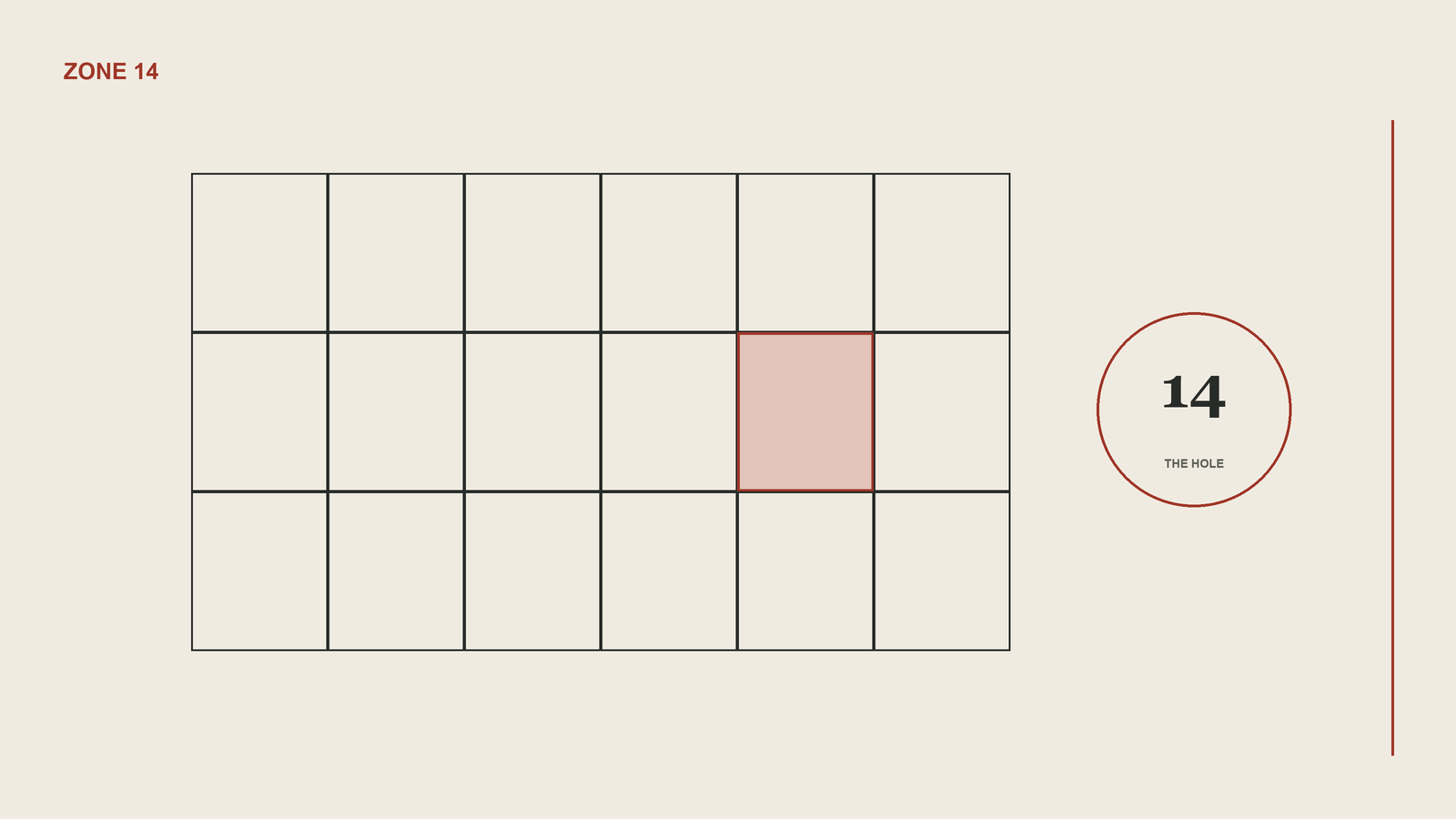
Where an entry comes from matters as much as how many there are. One played from Zone 14, the central pocket just outside the box, usually finds a better shooting position than a cross from the touchline.
Box entries vs. touches in the box: what's the difference?
Box entries count the action that gets the ball into the penalty area, a specific pass or carry crossing that line, while touches in the box count every subsequent contact a team has with the ball once it's already inside, including passes and shots taken after the initial entry. A single box entry can generate several touches in the box if a team strings passes together inside the area, so the two numbers measure different things: box entries is about access, touches in the box is closer to a measure of sustained presence once access has been won.
How are box entries counted?
A box entry is counted every time the ball crosses into the penalty area under a team's control, whether by a driven pass, a through ball or a player dribbling it in. Each one is tallied without any judgment about what followed. The stat says nothing about conversion, only about how often a team or player gets access to the box.
What does it mean if a team has many box entries but low xG?
A team with plenty of box entries but a low xG total is probably getting into the area in low-value ways, such as wide crosses under pressure rather than central cutbacks. That points to a specific, fixable problem in how it uses its access. A team low on both box entries and xG has a more fundamental problem: it is not reaching dangerous territory often enough.
What is the difference between box entries by pass and by carry?
Box entries by pass and by carry tend to describe different teams. A side that gets into the box mostly through passing combinations is usually working the ball through a settled defence. A side that arrives mostly by dribbles and carries is more often exploiting broken defensive shape, in transition or against a defence already dragged out of position.
Sources and further reading
- Touch in box — Wyscout Data Glossary (accessed 18 Sep 2026)
- Opta Football Stats Definitions — Opta Analyst (accessed 18 Sep 2026)