Glossary · Essay
Shot-Creating Actions: Before the Assist, There's Another Pass Nobody Notices
Assists only credit the final pass before a goal. Shot-creating actions count the two plays before every shot, crediting the buildup that assist totals miss entirely.
By 01 Owen
· Updated 6 Oct 2026 · 5 min read
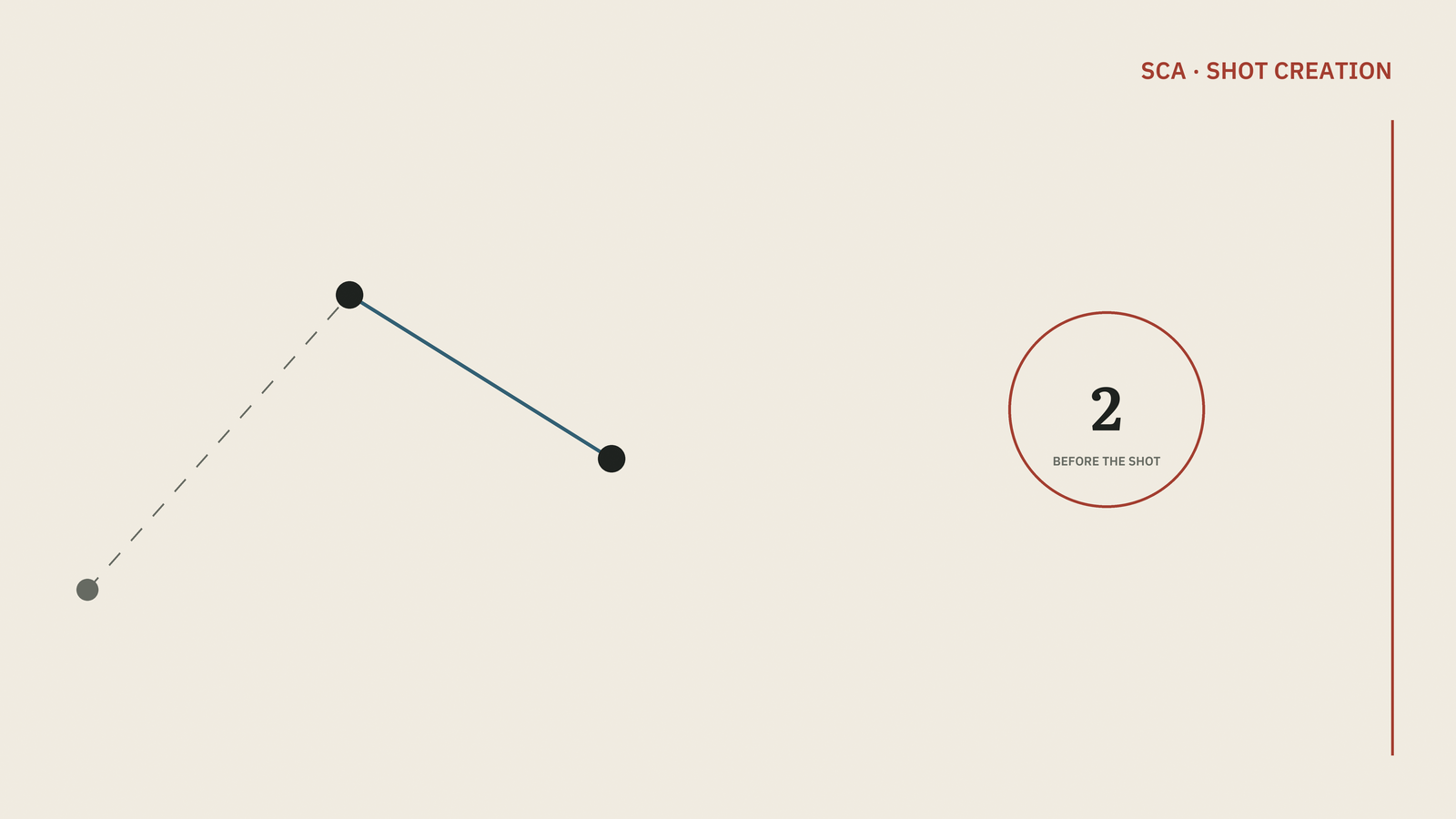
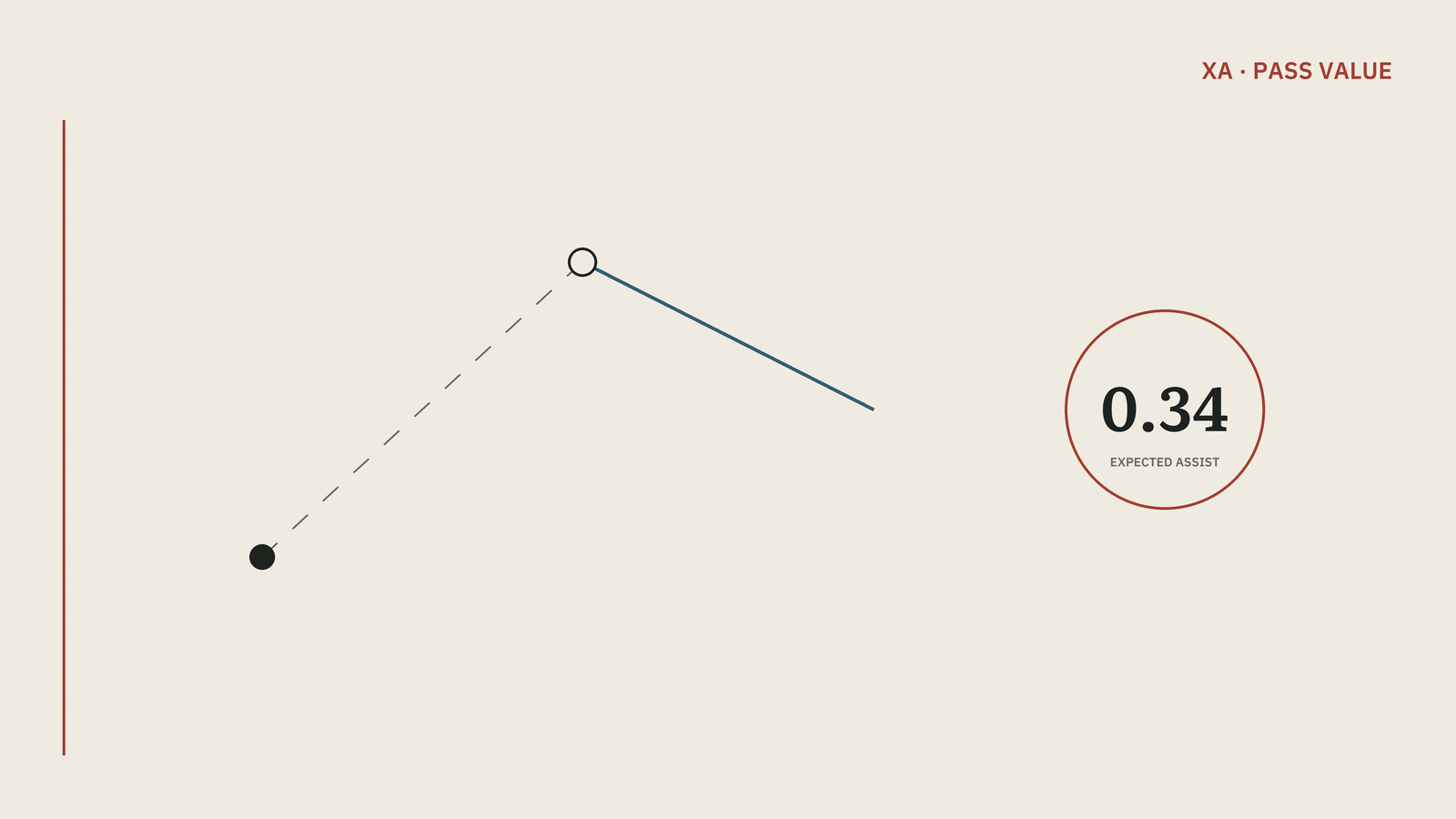
Assist totals only credit the very last pass before a goal, and xA only credits the very last pass before any shot. Both stop one step too early for a lot of buildup play, because a lot of the work that creates a chance happens two passes before the shot, not one. A midfielder who plays the ball out wide to a winger, who then cuts inside and shoots, gets nothing from an assist count and nothing from xA either, even though his pass is what started the entire move.
Shot-creating actions, usually shortened to SCA, fix that by counting the two offensive actions, passes, dribbles, or drawn fouls, that immediately precede a shot, not just the final one. If a center back plays a long ball to a winger, who beats his man with a dribble, who then squares it for a striker to shoot, the dribble and the square ball are the two shot-creating actions, credited to the players who made them; the long pass that started the move falls just outside the two-action window. It widens the lens from who set up the shot to who helped build the sequence that produced it.
Goal-creating actions, the narrower version
The related stat, goal-creating actions or GCA, applies the exact same two-action window but only counts sequences that end in an actual goal rather than any shot. The relationship between the two mirrors the relationship between xA and actual assists: SCA is the broader, more stable measure of a player's involvement in creating danger, while GCA depends on finishing at the end of the chain and swings around much more from game to game and season to season.
Players SCA brings to light
Where this stat earns its keep is identifying players whose contribution gets buried by counting stats that only look at the final pass. A deep progressive passer who regularly starts moves two passes before a shot, without ever being the one who delivers the final ball, will show up clearly in SCA numbers while looking unremarkable in a standard assist column. It's a similar problem to the one xT and progressive passing were built to solve, extended specifically to the buildup that leads directly to shots rather than general ball progression.
Credit for drawn fouls
It also captures something those metrics miss: drawn fouls. A foul won in a dangerous area that leads directly to a shot, from a free kick taken quickly or worked short, counts as a shot-creating action for the player who won it, which none of the passing-based metrics account for at all. A forward who consistently draws fouls in the final third by inviting pressure and getting fouled is contributing to shot creation in a way that goes completely unmeasured by xA or progressive passes, and SCA is one of the only widely available public stats that gives him any credit for it.
Where the two-action window falls short
The limitation is the same one that runs through most of these counting stats: SCA treats every action in the sequence equally regardless of difficulty or risk, and a two-action window is still an arbitrary cutoff. A brilliant pass three actions before a shot, the one that actually broke the defensive line, gets no credit at all if two more touches happened before the shot went in, even though it might have mattered more than either action inside the counted window. Used as one input among several rather than a final word on creativity, it fills in a real gap that assist counts and even xA leave open.
It extends the same idea behind expected assists one step further back in the buildup, and for a more structural view of what a pass actually breaks open, see packing.
SCA stops two actions before the shot. Possession value models go further back, crediting every pass and carry with the change in scoring chance it produced.
SCA vs. GCA: which one actually predicts future output?
SCA is the more stable, more predictive number over a season, precisely because it's a larger sample: it counts every sequence that leads to a shot rather than only the sequences that happen to end in a goal. GCA depends on finishing at the very end of the chain, the same variance problem that makes raw goals and assists unreliable over short stretches, so a player's GCA total can swing heavily from a few lucky or unlucky finishes even when their actual chance-creation process, reflected in SCA, stayed consistent.
How are shot-creating actions counted?
Shot-creating actions, or SCA, count the two offensive actions that immediately precede a shot: passes, dribbles or drawn fouls. If a centre-back plays a long ball to a winger, who beats his man with a dribble and squares it for a striker to shoot, the dribble and the square ball are the two shot-creating actions. The long ball that started the move falls outside the two-action window.
What are goal-creating actions?
Goal-creating actions, or GCA, use the same two-action window as shot-creating actions but only count sequences that end in a goal rather than any shot. The relationship mirrors xA and actual assists. SCA is the broader, more stable measure of involvement in creating danger, while GCA depends on the finishing at the end of the chain and swings much more.
Do drawn fouls count as shot-creating actions?
Yes. A foul won in a dangerous area that leads directly to a shot, from a quick or short free kick, counts as a shot-creating action for the player who won it. None of the passing-based metrics account for this, so a forward who keeps drawing fouls in the final third gets credit from SCA that xA and progressive passes never give him.
Sources and further reading
- Shot assist — Wyscout Data Glossary (accessed 18 Sep 2026)
- Opta Football Stats Definitions — Opta Analyst (accessed 18 Sep 2026)