Glossary · Essay
Deep Completions: The Pass Completion Stat That Only Counts Near the Goal
Not every completed pass matters equally. Deep completions only count the ones that land close enough to goal to actually threaten it.

By 01 Owen
· Updated 6 Oct 2026 · 5 min read
An assist only credits the pass that directly precedes a goal, and even expected assists only credits the pass that directly precedes a shot. Both stats miss a huge amount of genuinely valuable passing that happens close to goal but doesn't happen to be the very last touch before an attempt. Deep completions exist to give that work some credit.
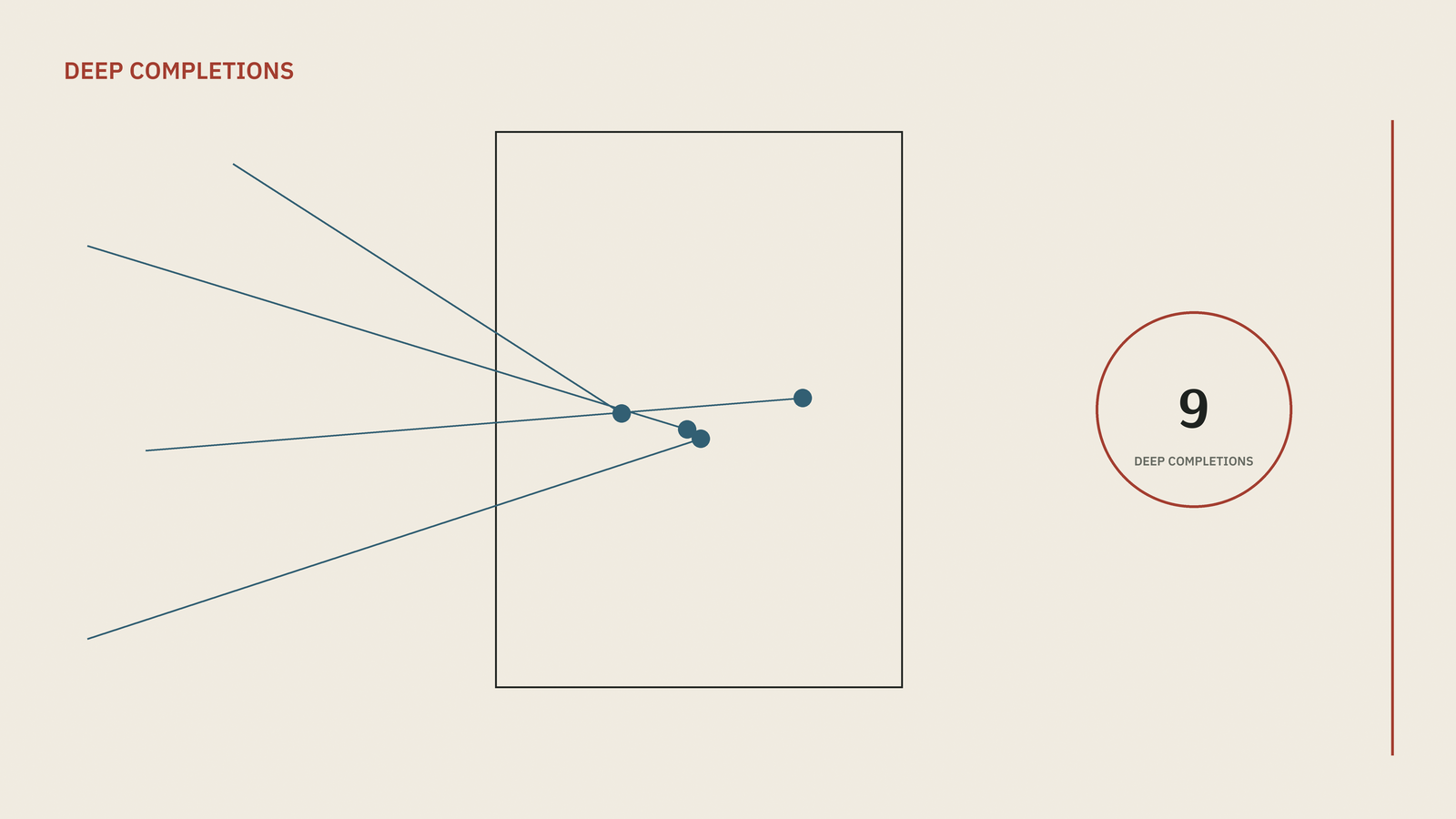
The definition is geographic rather than tied to what happens immediately afterward: a deep completion is any completed pass that lands within roughly the last twenty percent of the pitch in front of goal, sometimes narrowed further to a defined arc around the penalty area rather than the full width of the pitch at that depth, excluding crosses, which are usually counted separately since they behave differently and come from a different starting position than passes into feet or space centrally. The exact zone definition varies a little by data provider, but the underlying idea is consistent: count passes that reach dangerous territory, regardless of whether a shot, a goal, or nothing at all happens next.
A volume stat, not a value stat
This makes deep completions a volume stat rather than a value stat, closer in spirit to a raw counting number like shots than to a probability-weighted one like xG or xA. A player can rack up a high deep-completions total by consistently finding teammates in good areas even if the finishing on the other end is poor that season, which is exactly the situation xA was built to describe from the passer's side but which deep completions describes with a simpler, cruder count: not how good the resulting chance was, just whether the pass reached dangerous territory at all.
The players deep completions reward
The stat tends to reward a specific kind of player: creative midfielders and wide attackers who repeatedly find pockets of space near the box for teammates, as opposed to players whose creative contribution is more about the buildup several passes earlier. It's a reasonable proxy for a certain kind of final-third craft, especially useful for spotting players whose end product doesn't show up in assist totals because the players around them are missing chances, the same underlying problem that motivated xA, approached here through raw location rather than shot probability.
Where the count falls short
Its main limitation is exactly what you'd expect from a count that ignores everything except location: a deep completion into a crowded, well-defended pocket where the receiving player has no realistic options counts identically to a pass that splits the defense and creates a clear sight of goal. The stat has no sense of pressure, defensive setup, or what the receiving player was actually able to do with the ball once it arrived, which is why it's rarely used as a headline number on its own and works better as a supporting stat alongside something that does account for shot quality, like xA or shot-creating actions.
It's also worth noting deep completions measure the passer's contribution, not the receiver's, which sounds obvious but matters for how the stat gets used in scouting and analysis. A forward who makes brilliant runs into the box to receive these passes contributes just as much to the sequence as the passer credited with the completion, but that contribution shows up elsewhere, in touches in the box or shot totals, rather than in the deep-completions number itself, which is purely about who played the ball forward into the zone, not who made the run to be there for it.
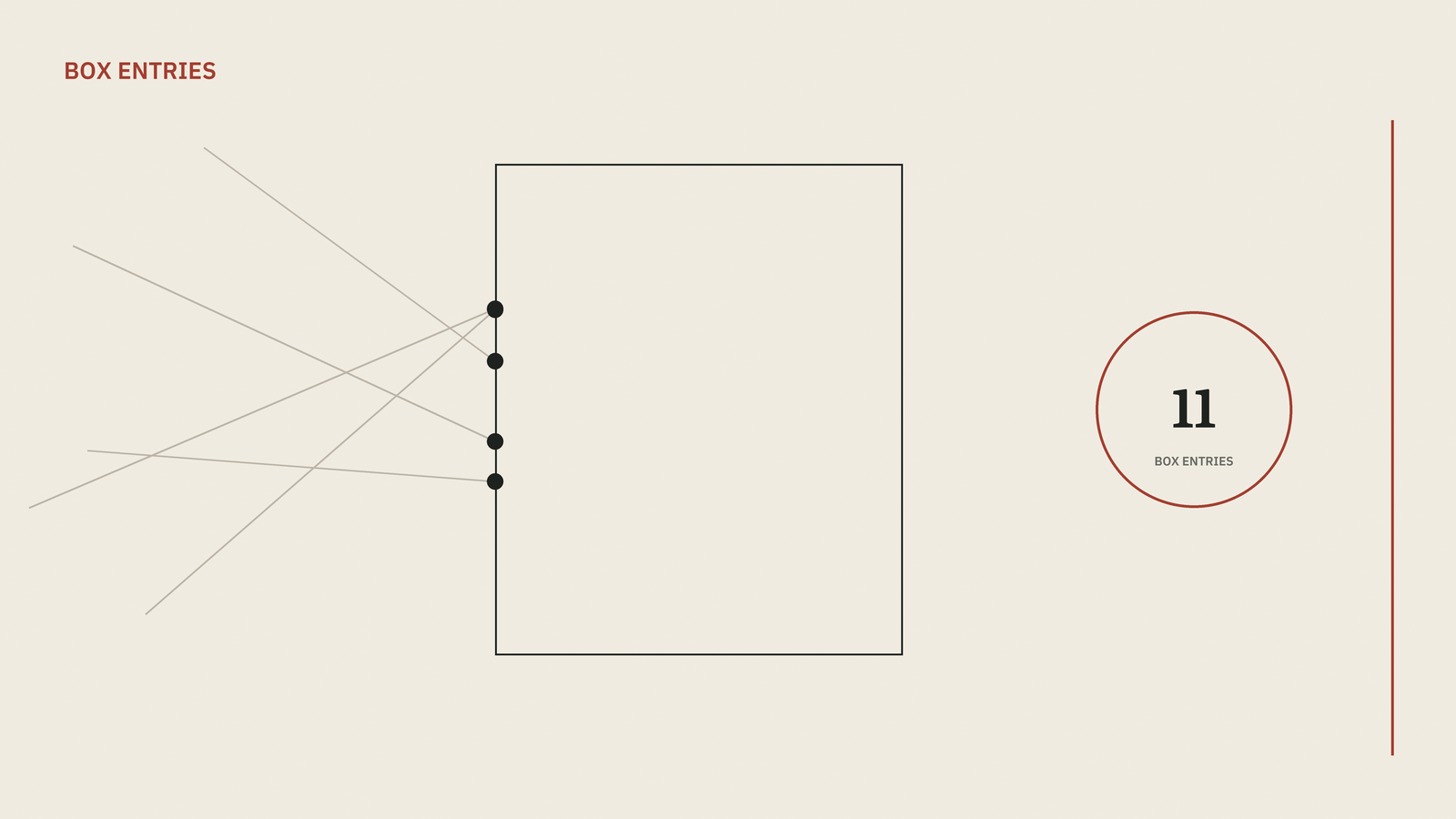
It sits next to progressive passes and carries as another way of crediting buildup play, and the natural next step in the sequence is a box entry, whether or not this particular pass is the one that gets there.
Do deep completions include crosses?
Usually not. Most public implementations exclude crosses and count them separately, since crosses behave differently and typically originate from a different starting position, out near the touchline, than passes played into feet or space centrally. This keeps deep completions focused specifically on ground and lofted passes into the danger zone from central or half-space positions, rather than mixing in the very different skill and risk profile of a crossed ball.
What counts as a deep completion?
A deep completion is any completed pass that lands within roughly the last twenty percent of the pitch in front of goal, sometimes narrowed to an arc around the penalty area. Crosses are usually excluded and counted separately. The exact zone varies by data provider, but the idea is the same: count passes that reach dangerous territory, whatever happens next.
How are deep completions different from xA?
Deep completions are a volume stat, while xA is a probability-weighted value stat. xA credits the pass before a shot according to how good the chance was. Deep completions simply count whether a pass reached dangerous territory, regardless of whether a shot followed. Both help spot creators whose end product does not show up in assists, approached from different directions.
Do deep completions credit the player who receives the pass?
No. Deep completions measure only the passer's contribution. A forward who makes clever runs into the box to receive these passes adds just as much to the move, but his work shows up elsewhere, in touches in the box or shot totals. The deep-completions number is purely about who played the ball forward into the zone.
Sources and further reading
- Understat: xG stats for teams and players — Understat (accessed 18 Sep 2026)