Glossary · Essay
Half-Space: The Zone Between the Winger and the Striker That Decides Games
Football commentary talks about wings and the center. The half-space is the corridor in between, and it's where a huge share of modern attacking play actually happens.

By 01 Owen
· Updated 6 Oct 2026 · 5 min read
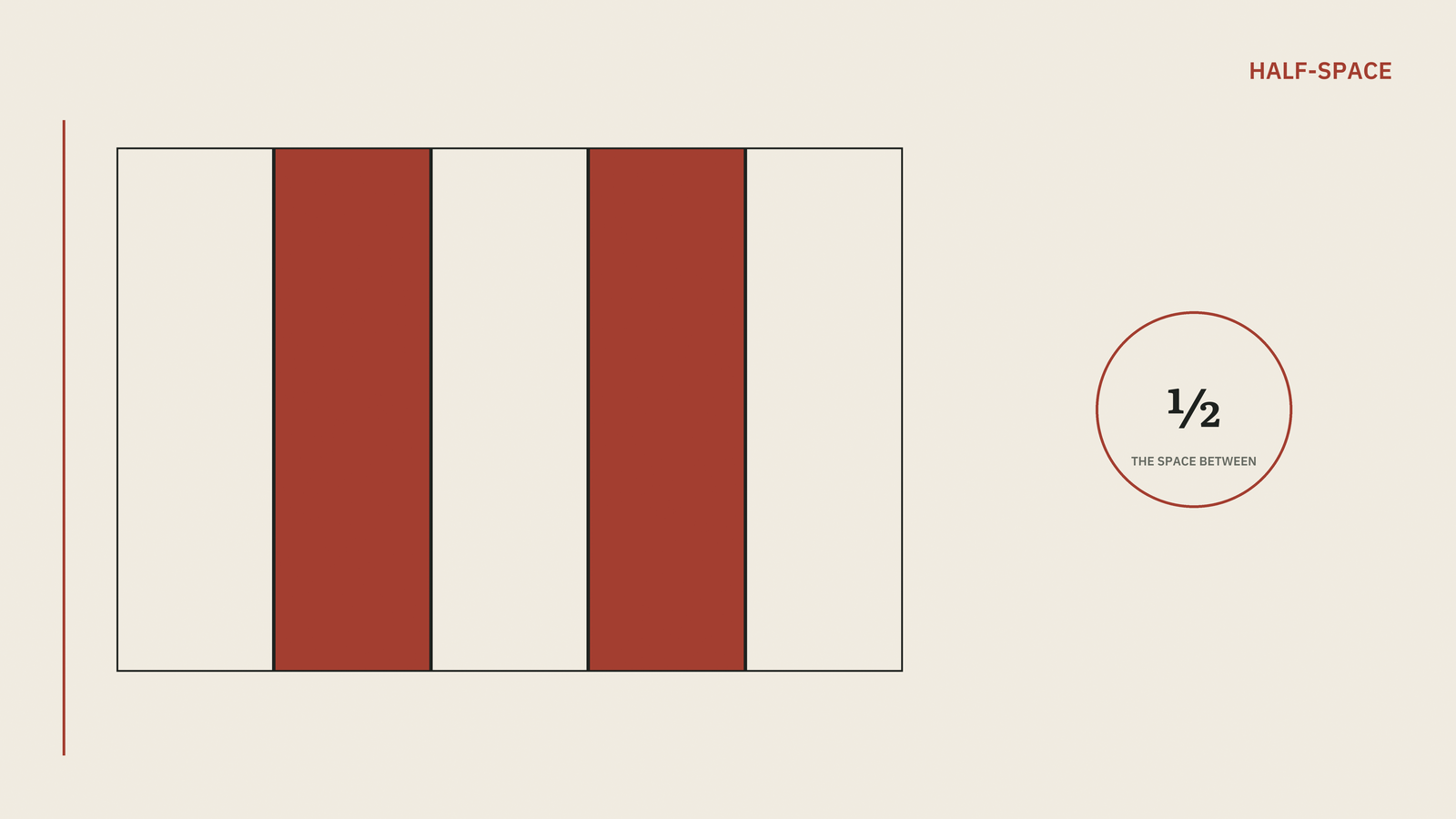
Football commentary has a vocabulary problem. There's the wing, out by the touchline, and there's the center, down the middle, and for a long time that was more or less the working map of a pitch's width. The half-space is the name for the strip in between, roughly from the edge of the center circle out to just inside the touchline, that doesn't fit neatly into either category and that a large share of modern attacking play is now deliberately built around.
The German term is Halbraum, and it comes out of the same tactical culture that produced gegenpressing and packing, though unlike packing it never really crossed over as an English loanword; English-language coverage almost always translates it as "half-space" outright. The appeal of the zone is structural rather than mystical. A player standing in the center of the pitch is usually facing the most crowded, most heavily defended part of the field, with center backs and a defensive midfielder all within a few yards. A player out on the touchline has space but a limited field of view, since half the pitch is behind them and a good chunk of their passing options are cut off by the sideline itself.
Why the zone is hard to defend
The half-space sits between those two problems. A player receiving the ball there can see most of the pitch in front of them the way a winger can, but they're central enough to have a genuine passing lane into the box, a cutback option, or a shot on a half-decent angle, none of which a winger pinned to the touchline reliably has. It's also usually defended by the seam between a fullback and a center back, or a fullback and a defensive midfielder, rather than by a single defender with a clear job description, which makes it a structurally awkward zone to cover cleanly no matter how a back four is set up.
Half-spaces in positional play
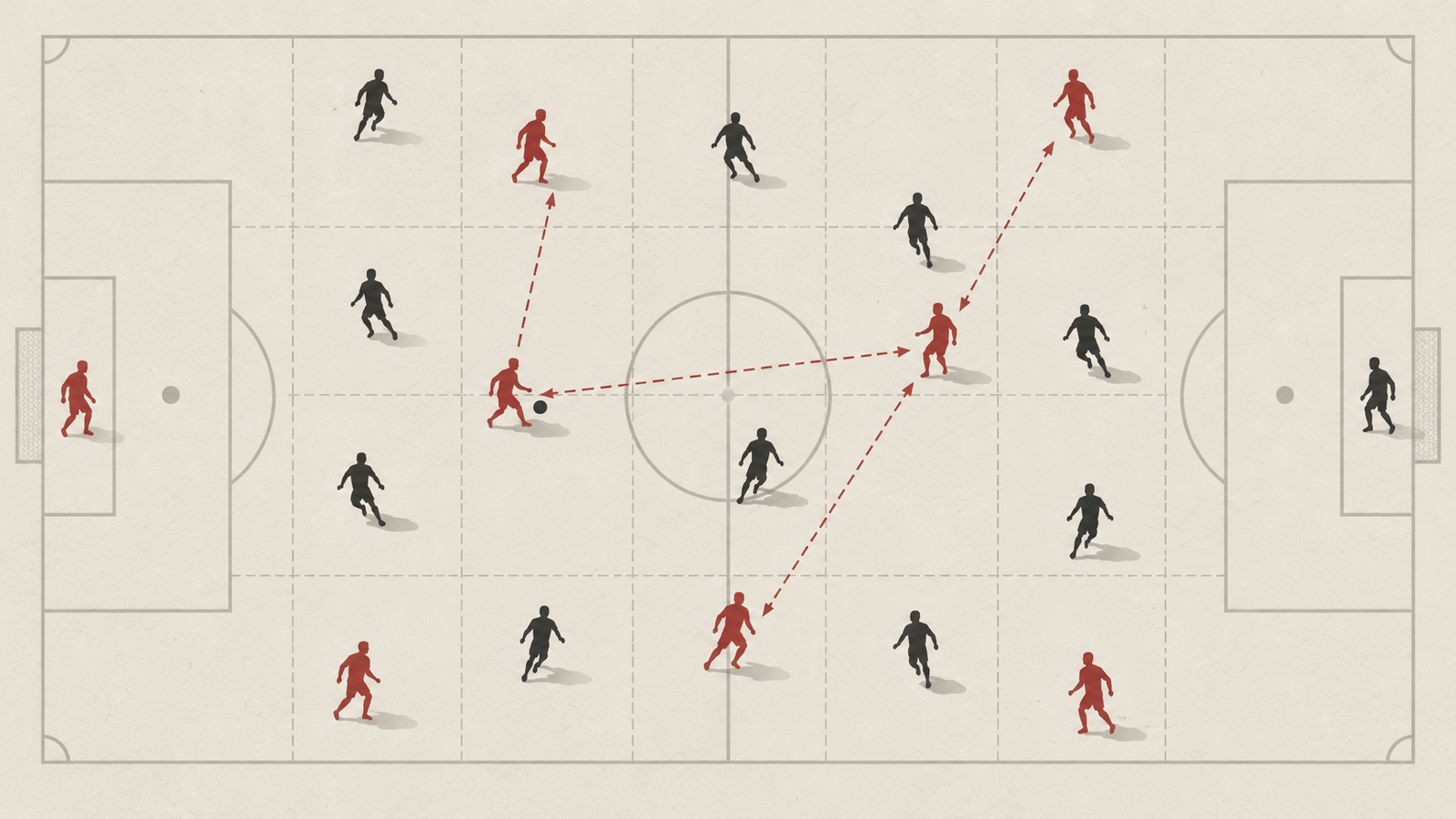
Modern positional-play systems, most visibly the ones associated with Pep Guardiola's coaching lineage, treat occupying the half-spaces as close to a first principle rather than an occasional tactic. A common instruction is to avoid having two teammates standing in the same vertical channel at the same time, since it wastes width and makes a single defender's job easier; a fullback who tucks infield into the half-space while a winger stays wide, or an eight who drifts there while a striker holds the center, creates exactly the kind of staggered, hard-to-mark shape that pulls a defense out of its comfortable banks.
A location, not a tactic
It's worth being honest that "the half-space" describes a location, not a single skill or a single type of player. A number ten drifting into the right half-space to combine before a cutback is doing something different from a fullback overlapping into the left half-space to cross early, even though both are occupying the same named zone. The term is most useful as a way of talking about where good things tend to happen on a football pitch, not as a tactic you can simply instruct a team to "do."
Measuring the half-space
There's no clean public stat that measures half-space occupation the way PPDA measures pressing or xT measures possession value, mostly because it requires tracking data, precise player coordinates rather than just event locations, that isn't widely public. Advanced club analytics departments build their own zone-occupancy models for exactly this purpose, but for a fan watching on television, the half-space is still mostly something you learn to see rather than something you look up in a table, which if anything is part of why the term gets used so loosely in commentary once people know it exists.
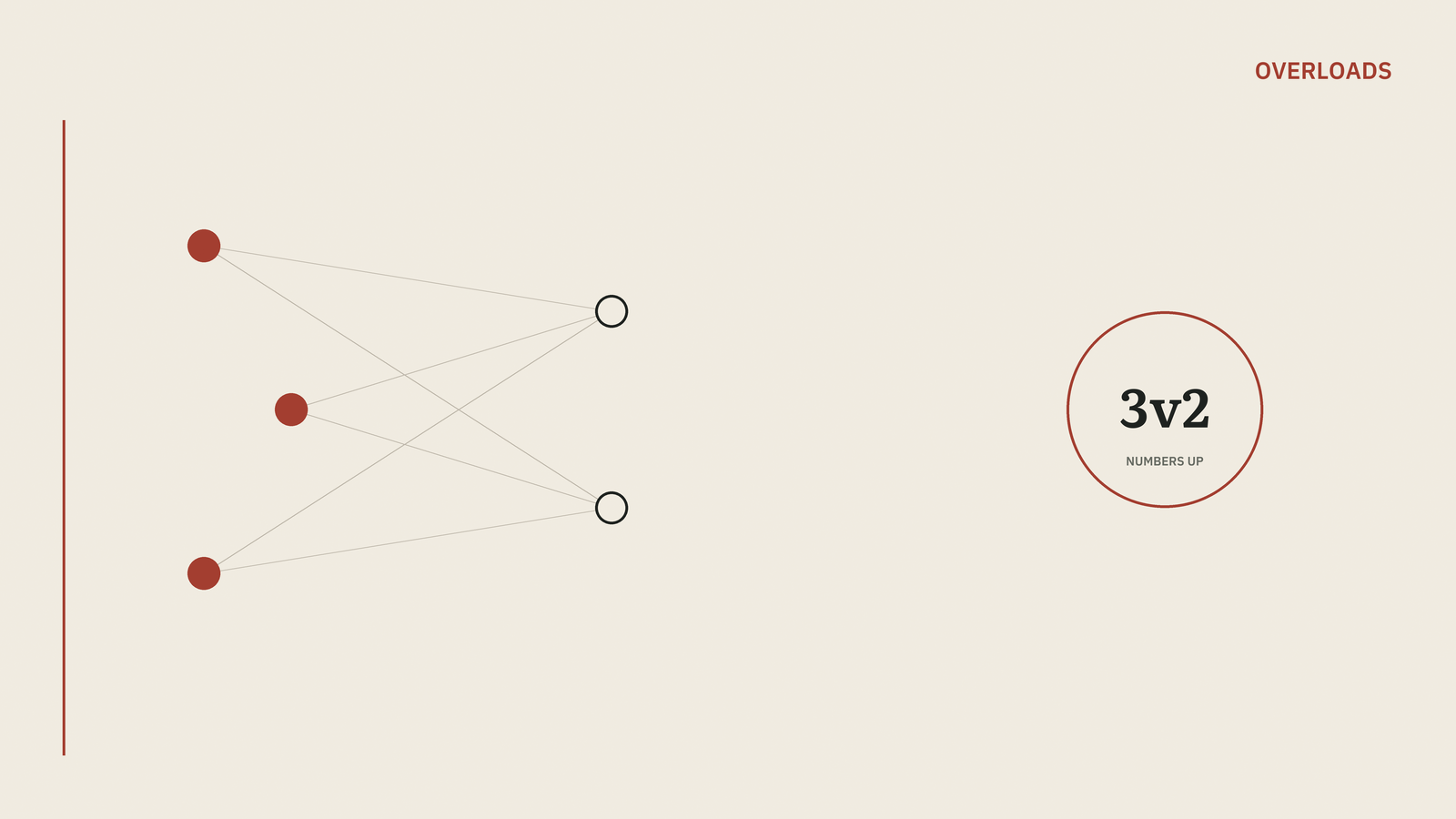
It's one of the most common places teams engineer an overload on purpose, and it's exactly the kind of zone expected threat tends to value most.
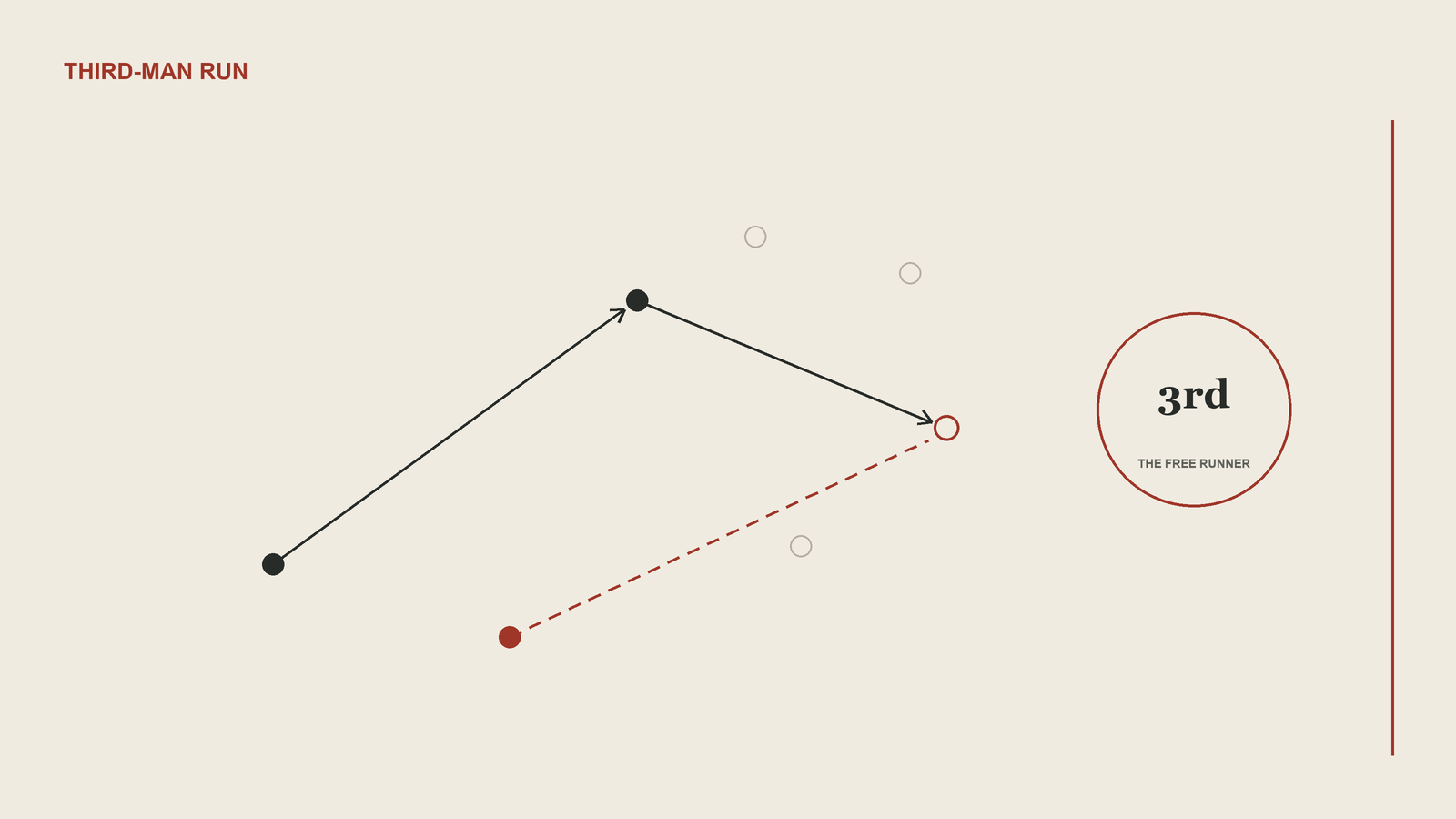
The half-space has a central neighbour, Zone 14, the pocket in front of the box that the same players drift into. And the usual way to find a free man in either area is a third-man run, because the player who receives there is rarely the one the first pass was aimed at.
In a midfield three, a mezzala can attack this lane while an inverted full-back provides support behind or inside it. The benefit depends on complementary movement, not simply putting more players in the same space.
Inverted wingers are among the most frequent visitors to the half-space: they start wide on the side of their weaker foot and cut inside into this channel to shoot or pass with the stronger one.
In positional play the half-spaces are one of the five vertical lanes coaches divide the pitch into, and the inner channels are where a team most wants a free player to receive.
How many half-spaces are there on a pitch?
Four, in the standard framing: one on each flank of each attacking half of the pitch, sitting between the wide touchline channel and the central channel. Some coaches and analysts collapse this to talking about 'the half-spaces' as a pair per attacking third rather than counting all four across the full pitch, but the underlying geometry is the same: each flank has one half-space corridor running the length of the pitch, split conceptually into attacking and defensive halves depending on which third of the pitch is being discussed.
What does Halbraum mean?
Halbraum is the German term for the half-space, and it comes from the same tactical culture that produced gegenpressing and packing. Unlike packing, it never crossed over as an English loanword, so English coverage almost always translates it as half-space. It names the strip between the wing and the centre of the pitch.
Why is the half-space so dangerous?
A player receiving in the half-space can see most of the pitch in front of him like a winger, but he is central enough for a passing lane into the box, a cutback or a shot on a decent angle. The zone is also usually defended by the seam between two defenders rather than one player with a clear job, which makes it awkward to cover.
Is there a statistic for half-space occupation?
There is no clean public stat for the half-space, because measuring occupation needs tracking data with precise player coordinates, which is not widely public. Advanced club analytics departments build their own zone-occupancy models for it. For a fan watching on television, the half-space is still mostly something you learn to see rather than look up in a table.
Sources and further reading
- The Half-Spaces — René Marić, Spielverlagerung (accessed 18 Sep 2026)
- Half-Space — Spielverlagerung glossary (accessed 18 Sep 2026)