Glossary · Essay
Field Tilt: Territory Isn't Possession. Here's the Difference
Possession counts every touch the same, in your own box or the opponent's. Field tilt measures territory directly, by tracking where the passing actually happens.

By 01 Owen
· Updated 6 Oct 2026 · 5 min read
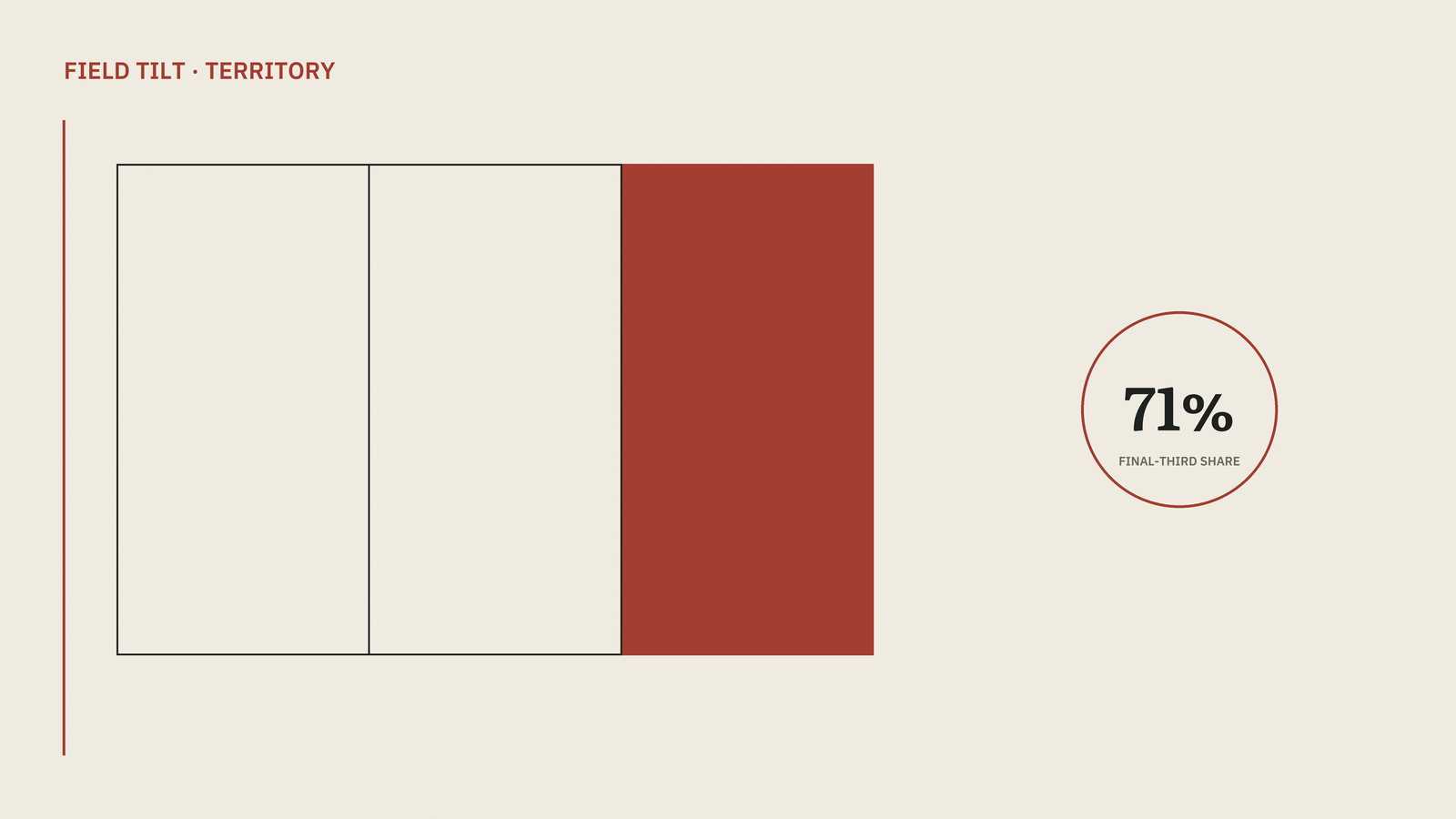
Possession percentage counts every touch equally, whether it happens in a team's own penalty box or the opponent's. That's a problem, because a team can accumulate a big possession share largely by passing the ball around at the back without threatening anything, while their opponent spends less total time on the ball but nearly all of it in dangerous territory. Field tilt was built to capture that difference by looking only at where the passing happens, not how much of it there is overall.
The calculation is straightforward: take each team's passes completed in the attacking third, and express one team's share as a percentage of the combined total from both sides. A team completing 120 attacking-third passes to their opponent's 40 has a field tilt of 75 percent, regardless of what the overall possession count says for the full pitch. It's territory, measured directly, rather than possession used as a rough proxy for territory.
Field tilt versus raw possession
This tends to separate teams more usefully than raw possession does, especially for sides that build patiently through midfield or defense before committing numbers forward. A possession-heavy team that circulates the ball across its back line for long stretches can post 60 percent possession while sitting at a much more modest field tilt, because a large share of that possession never reaches the final third at all. A more direct team can concede overall possession while still posting a strong field tilt, if most of what little of the ball they do have is spent pinning the opponent back rather than building slowly from deep.
The link with shots and xG
Coaches and analysts tend to trust field tilt as a better proxy for territorial dominance over the course of a match, and it correlates reasonably well with shot volume and expected goals across a season, better than raw possession does on its own. A team that consistently tilts the field in their favor is usually generating more shots, even if any individual match doesn't follow the pattern exactly, because a bad finishing day or a resolute defensive performance can still produce a low shot count from a heavily tilted match.
The weakness it shares with possession
It shares the same core weakness as possession, just moved to a smaller section of the pitch: it counts passing volume in the attacking third without judging quality. A team can rack up attacking-third passes by circulating the ball along the edge of the box without ever threatening to break through, the same way a possession-heavy team can circulate at the back without threatening anything either. High field tilt with a low shot count usually means a team that's dominating territory without doing much with it, which is its own diagnosable problem, one field tilt flags without explaining on its own.
Reading field tilt alongside xG
It's most useful read alongside shot and xG numbers rather than instead of them. A team with high field tilt and high xG is dominating both territory and chance quality. A team with high field tilt and modest xG is probably struggling to break down a low block despite spending most of the match in the right area of the pitch, a pattern that shows up constantly against well-organized, deep-defending opponents and is exactly the kind of context raw possession numbers tend to obscure rather than reveal.
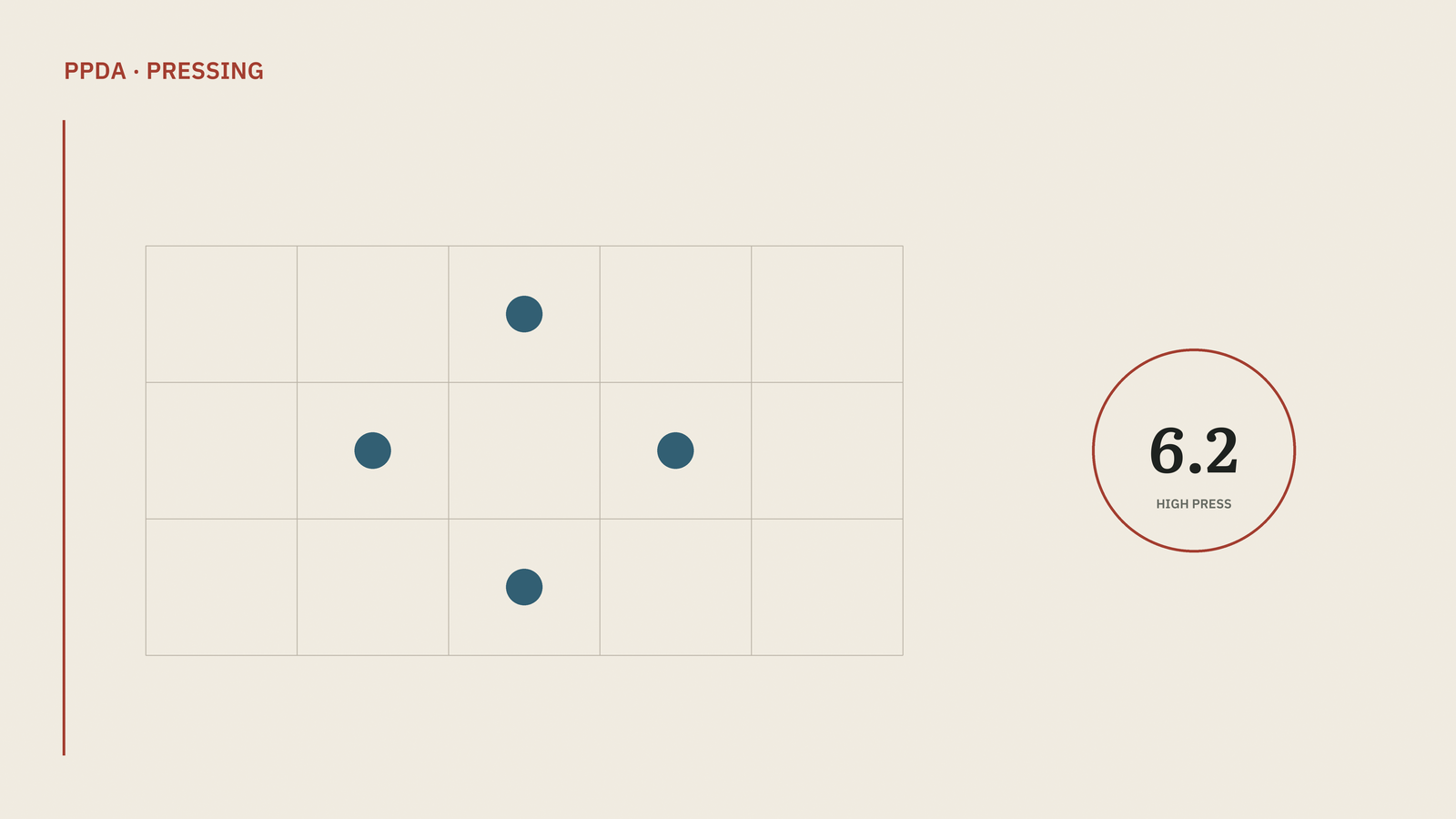
It's a natural companion to PPDA, which measures the same territorial battle from the defending team's side of the ball, and to a simple count of progressive actions, which tracks forward movement rather than time spent in the final third.
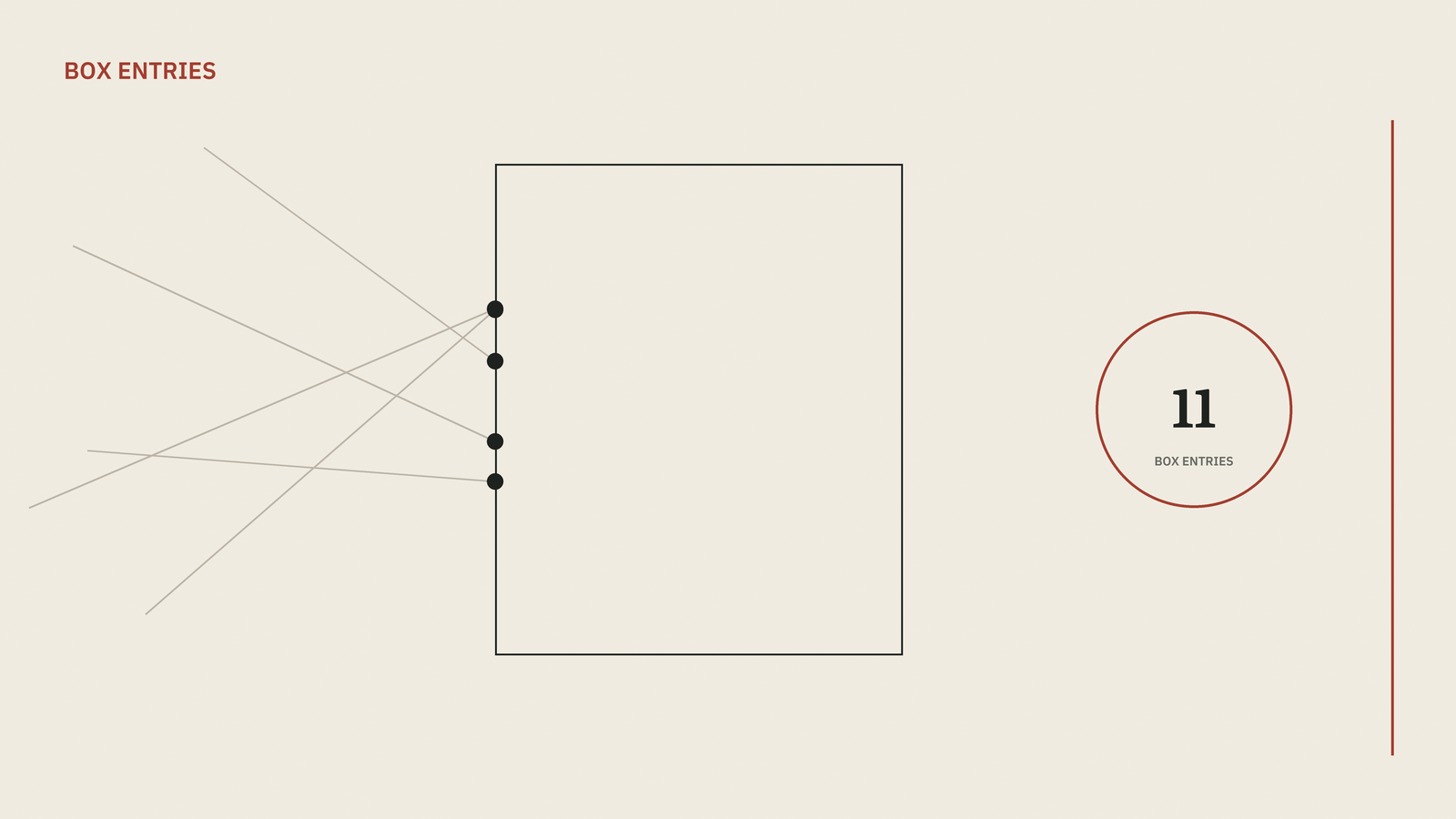
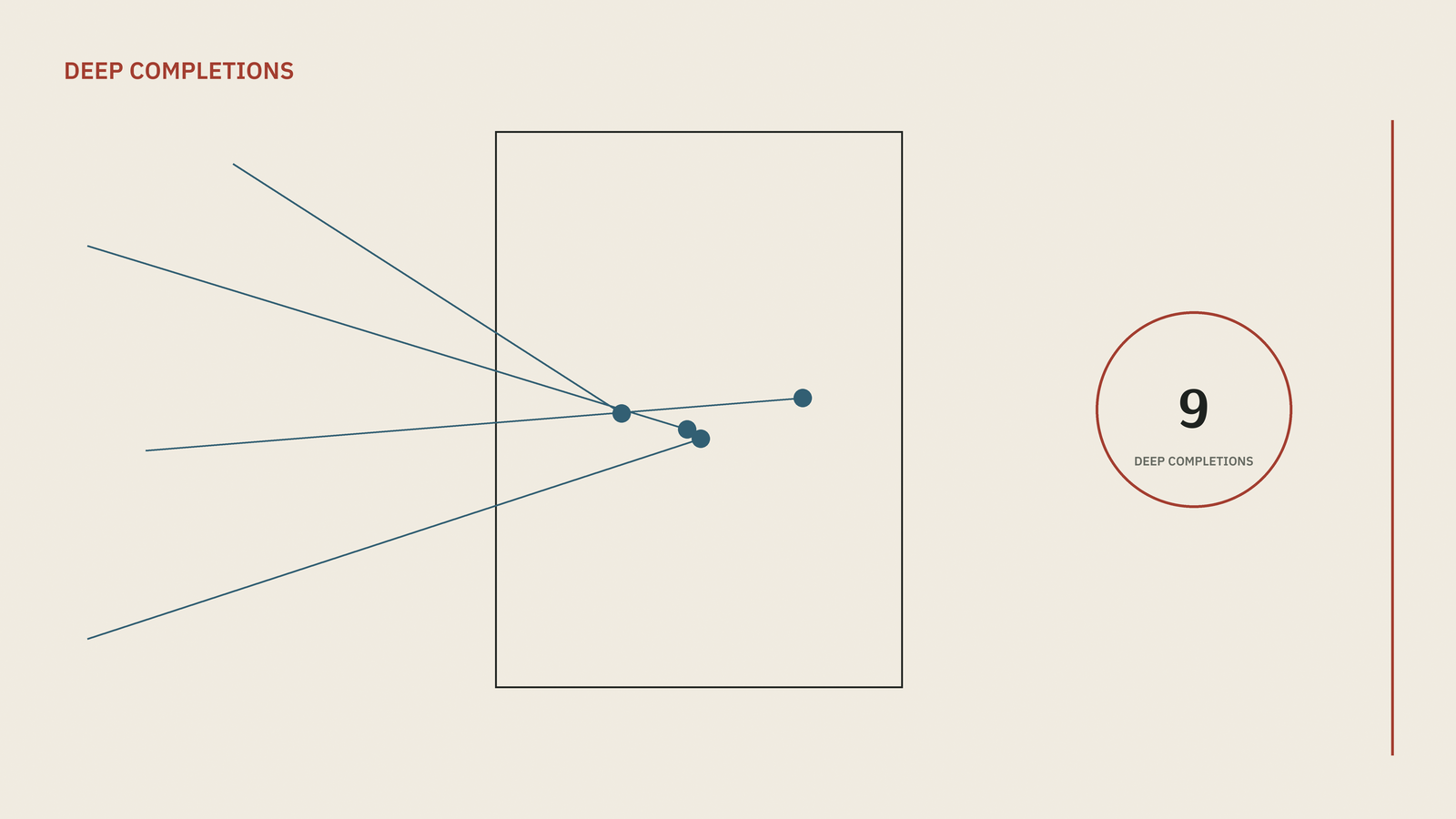
Territory is only useful if it turns into something. The next two steps down the pitch are counted by box entries and deep completions, which show whether all that final-third passing actually reached the dangerous areas.
What counts as a good field tilt percentage?
Above roughly 60% generally signals clear territorial dominance in the attacking third, and the strongest possession-based sides in Europe's top leagues regularly post numbers in the 65-75% range across a season. Anything close to 50% suggests a genuinely even territorial battle regardless of what raw possession says, and a team sitting persistently below 40% is spending most of its attacking-third passing time defending rather than attacking, which is worth reading alongside the scoreline and game state rather than as a standalone verdict on quality.
How is field tilt calculated?
Field tilt takes each team's completed passes in the attacking third and expresses one team's share as a percentage of the combined total. A team completing 120 attacking-third passes to its opponent's 40 has a field tilt of 75 percent, whatever the overall possession figure says. It measures territory directly instead of using possession as a rough proxy.
Is field tilt better than possession?
For measuring territorial dominance, analysts tend to trust field tilt more. A team that circulates the ball across its back line can post 60 percent possession with a modest field tilt, because much of that possession never reaches the final third. Field tilt also correlates better with shot volume and expected goals across a season than raw possession does.
What does high field tilt with low xG mean?
High field tilt with modest xG usually means a team is dominating territory without doing much with it. It is often struggling to break down a low block despite spending most of the match in the right area. Field tilt flags this problem without explaining it, which is why it is best read alongside shot and xG numbers.
Sources and further reading
- Analyze Field Tilt — Hudl Support (accessed 18 Sep 2026)
- Opta Football Stats Definitions — Opta Analyst (accessed 18 Sep 2026)