Glossary · Essay
PSxG: Grading Goalkeepers by the Shots They Should Have Let In
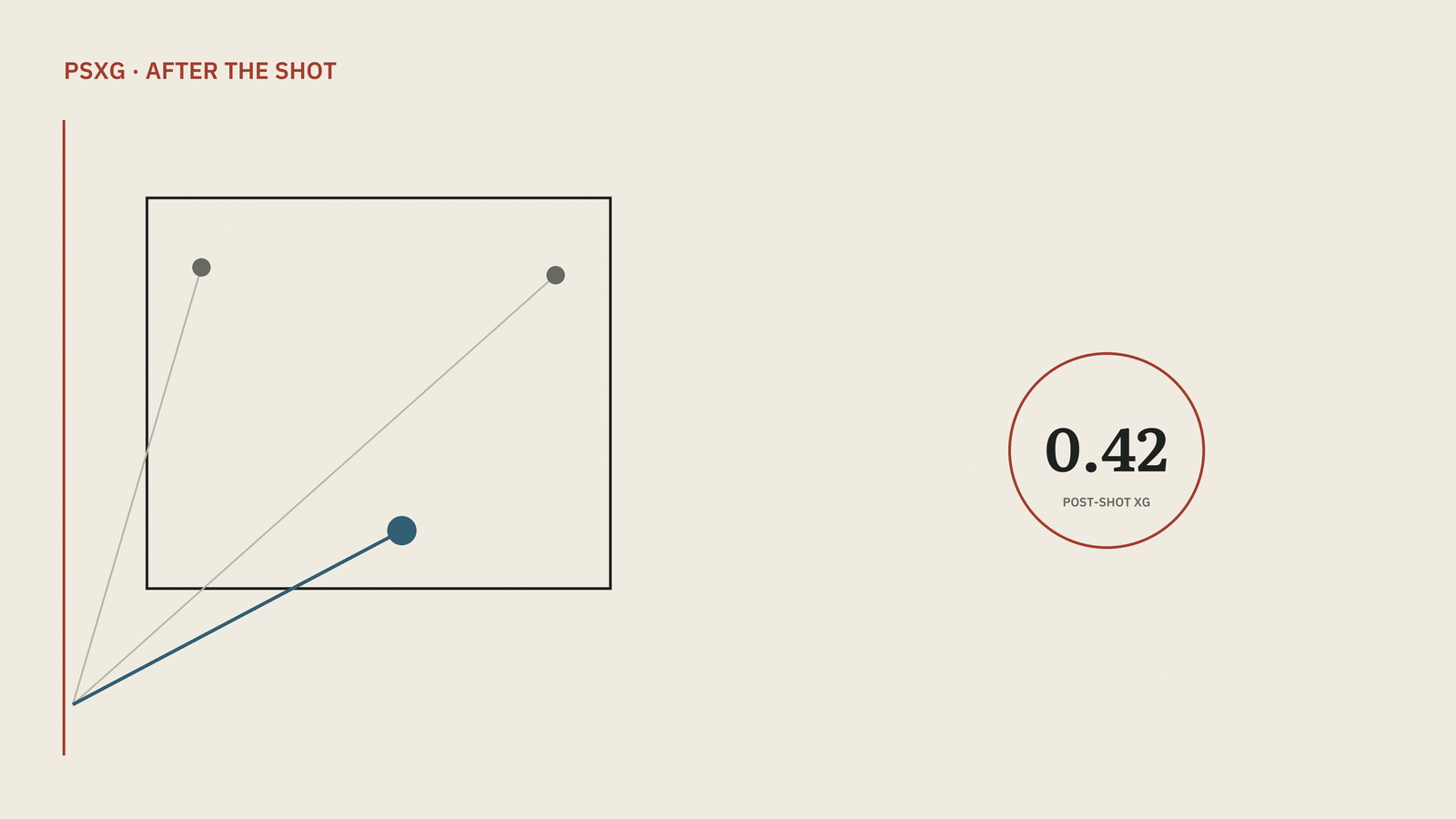
Pre-shot xG can't see where the ball actually went. Post-shot xG grades a shot after it's struck, making it the clearest public way to rate a goalkeeper's shot-stopping.
Tagged
Glossary · Essay
Pre-shot xG can't see where the ball actually went. Post-shot xG grades a shot after it's struck, making it the clearest public way to rate a goalkeeper's shot-stopping.
Glossary · Essay
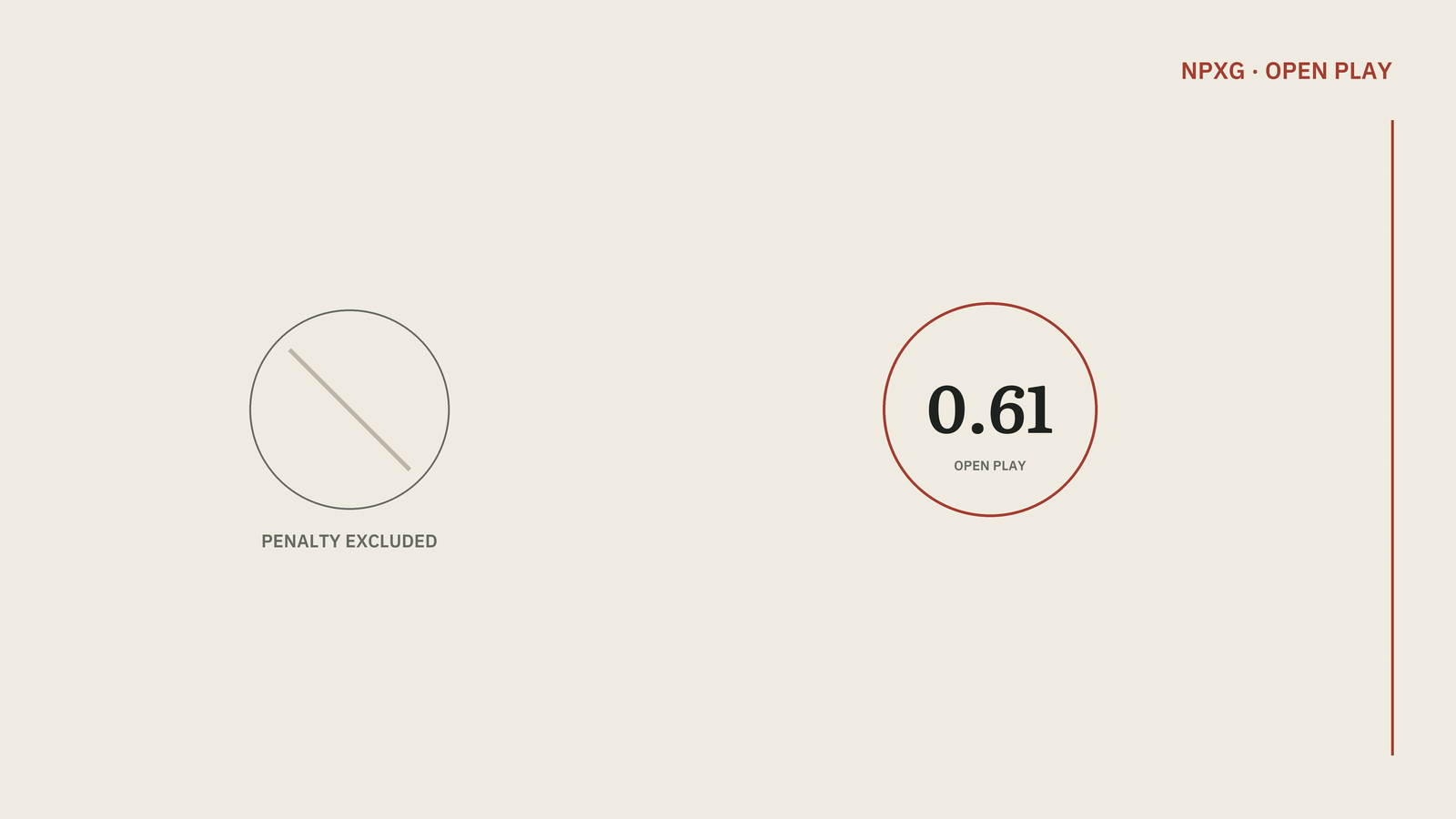
Penalties inflate a striker's expected goals in a way that has nothing to do with open play. Non-penalty xG strips them out for a cleaner read on real chance creation.
Glossary · Essay
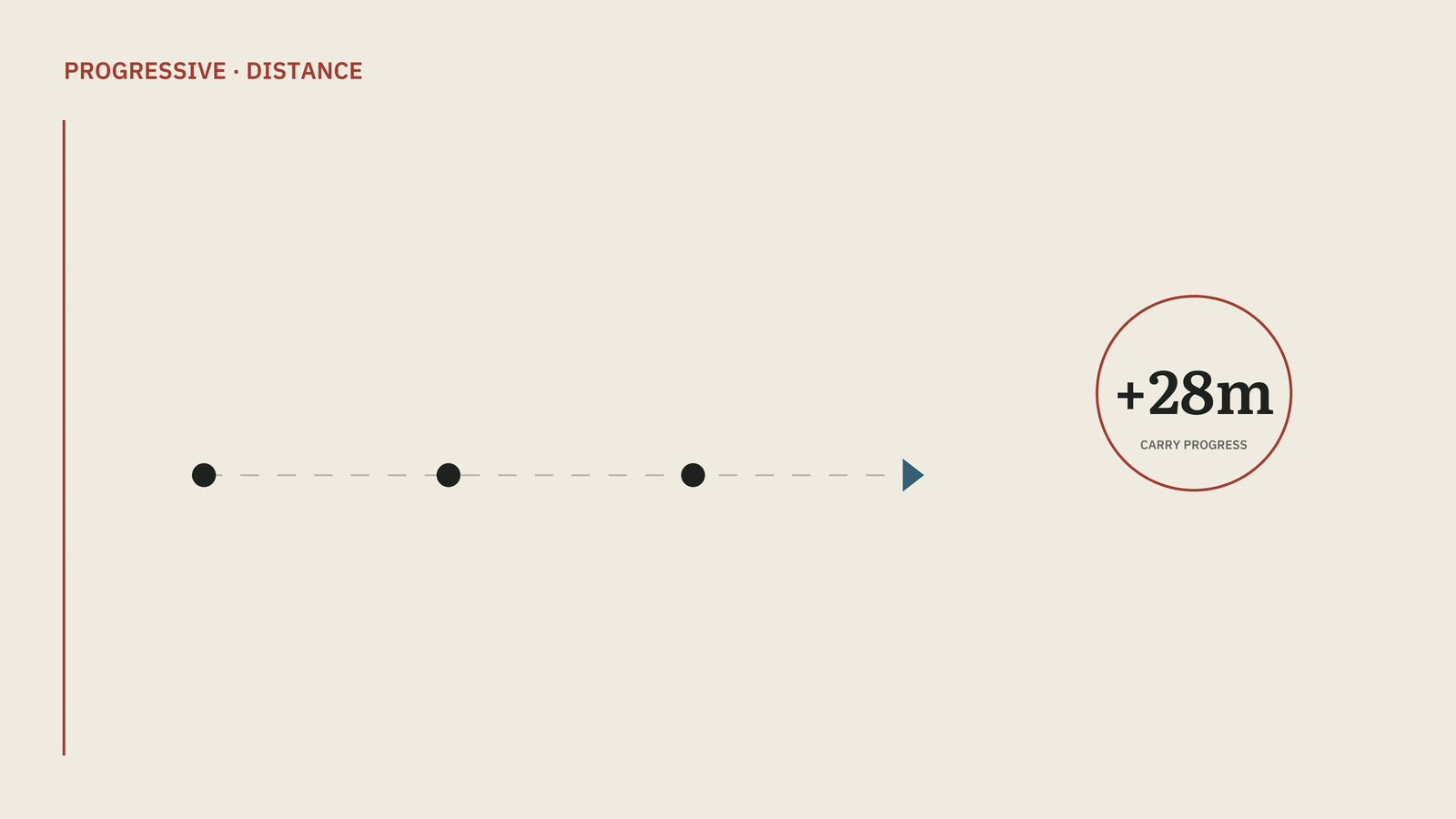
Possession share says who has the ball more, not what they do with it. Progressive passes and carries count how often the ball actually moves toward goal.
Glossary · Essay
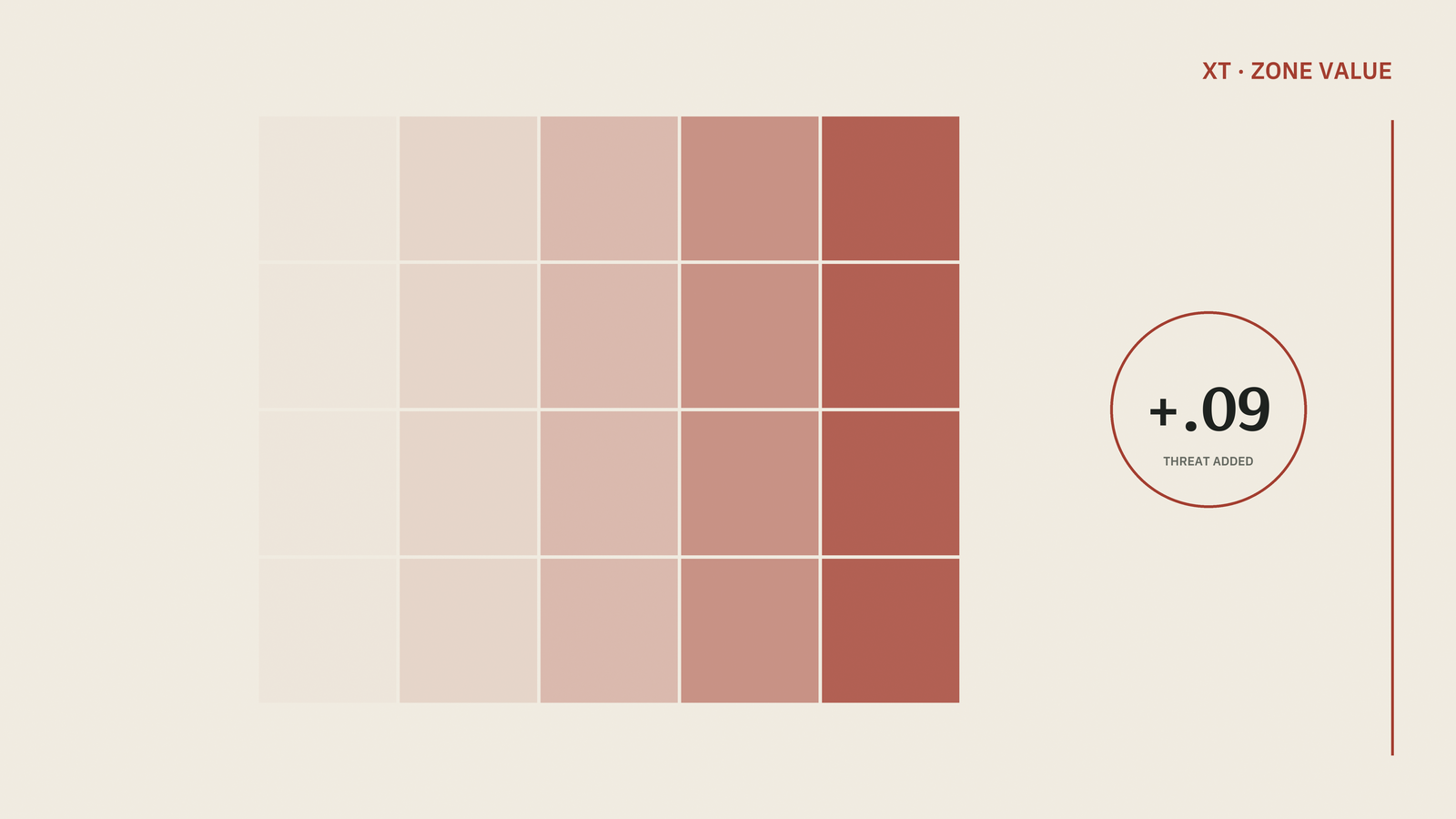
Distance up the pitch isn't the same as danger created. Expected threat values every pass and carry by how much it actually raises the chance of a goal.
Glossary · Essay
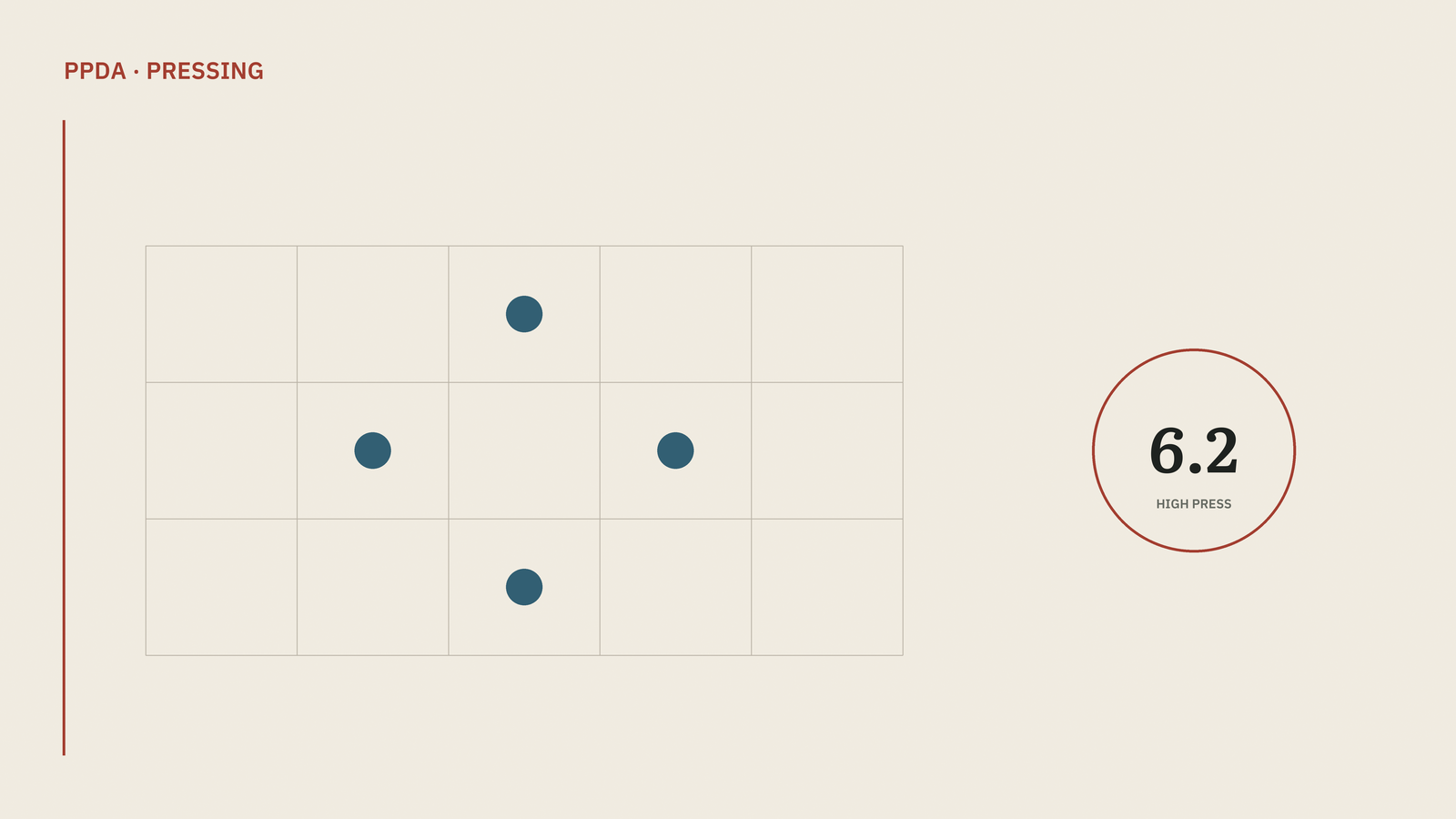
Pressing intensity is hard to judge by eye alone. PPDA counts how many passes a team allows before winning the ball back, turning a vague impression into a comparable number.
Glossary · Essay
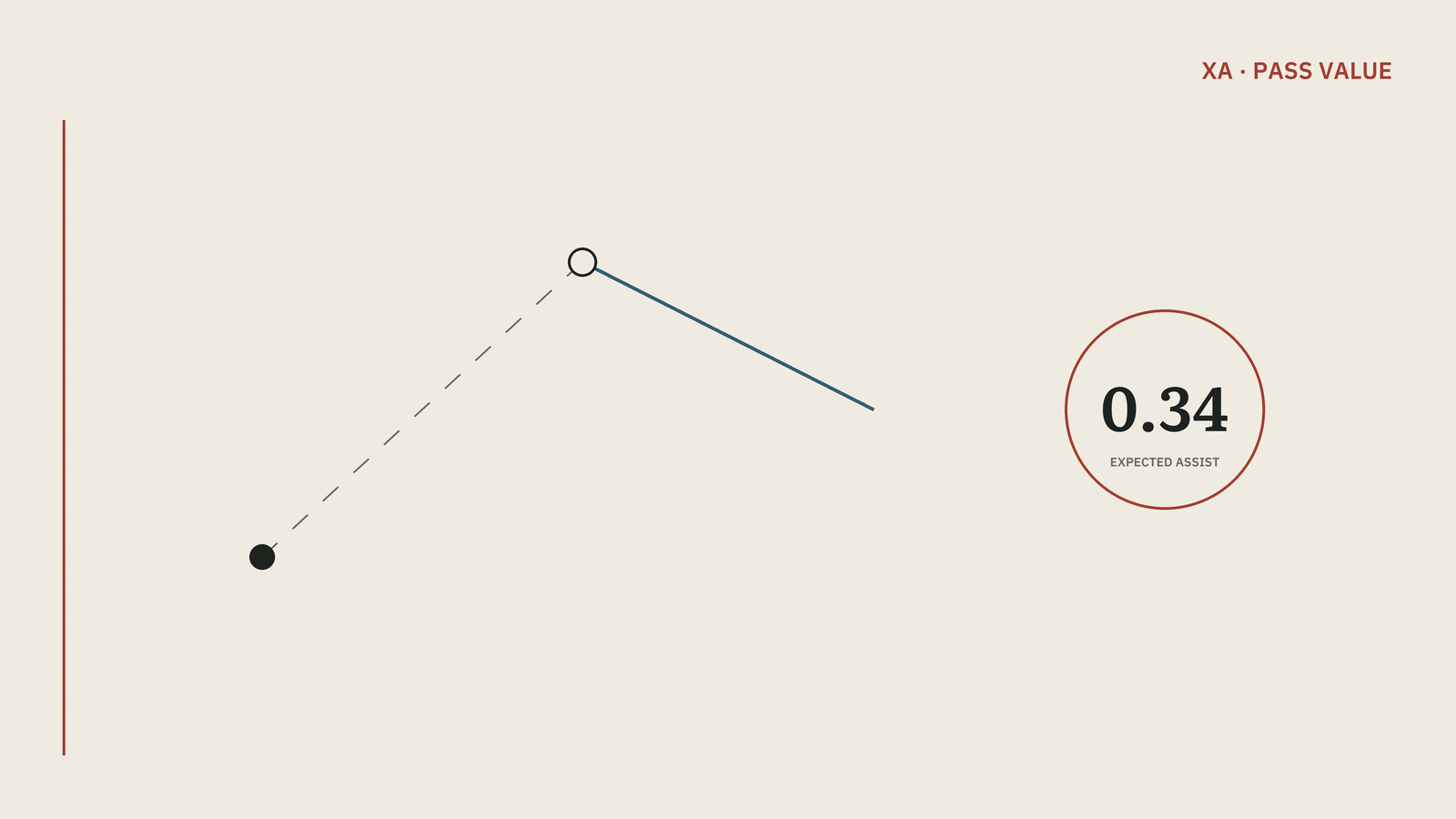
An assist depends on someone else finishing the chance. Expected assists scores the pass itself, showing who is creating danger even when the strikers around them are missing it.
Glossary · Essay
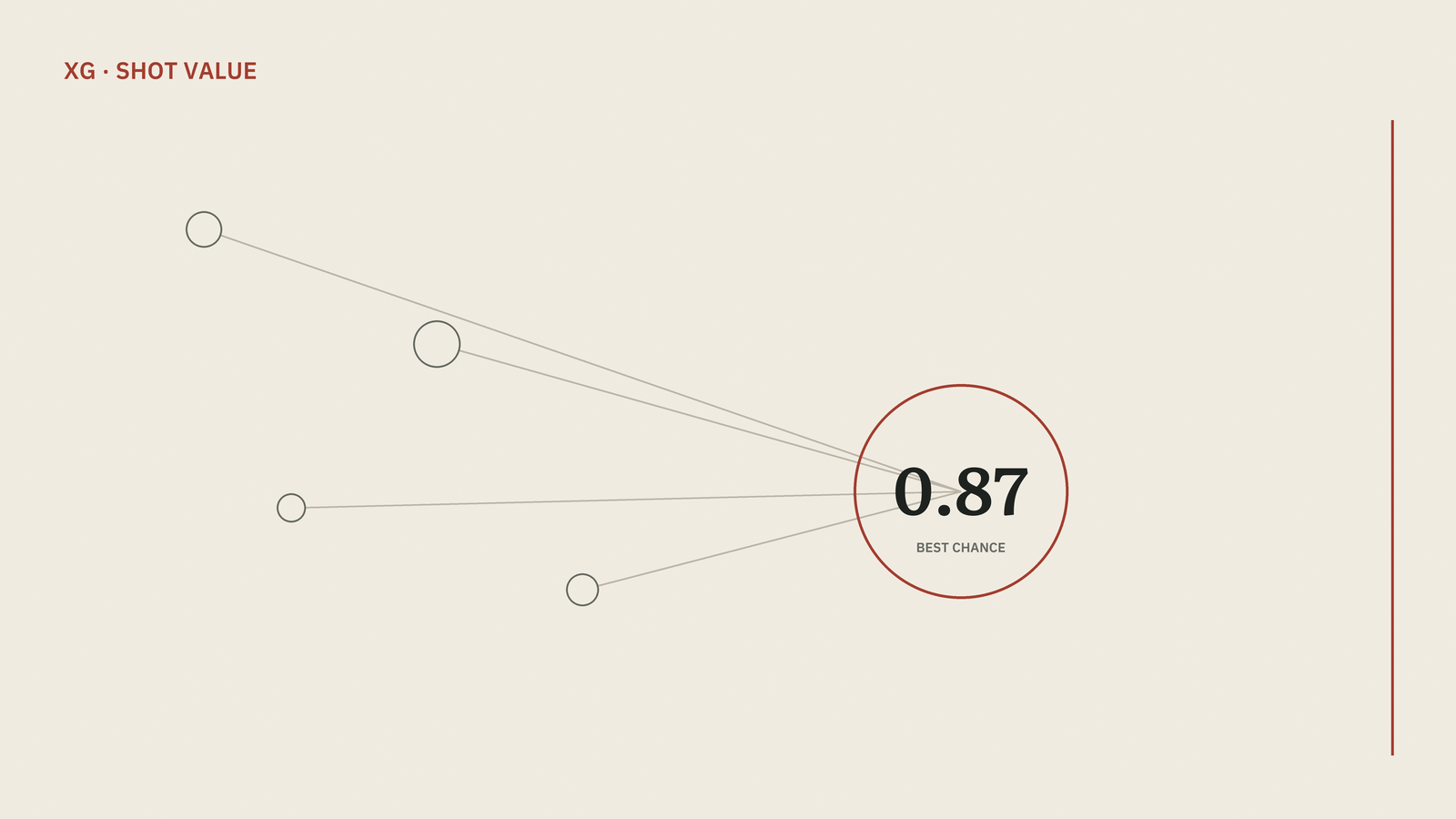
Every shot carries a probability of becoming a goal. Expected goals puts a number on that probability, and gets misread more often than almost any other stat in the modern game.