Glossary · Essay
Progressive Passes and Carries: Forget Possession Share. Track Whether the Ball Is Actually Moving Forward
Possession share says who has the ball more, not what they do with it. Progressive passes and carries count how often the ball actually moves toward goal.

By 01 Owen
· Updated 6 Oct 2026 · 5 min read
Possession percentage tells you who has the ball more. It says almost nothing about what they're doing with it. A team can hold 65 percent of possession by circulating it across the back four and the two center midfielders for long stretches without ever threatening to break a defensive line, and a team can hold 40 percent while using nearly every touch to attack. Progressive passes and progressive carries exist to measure the second thing, which is closer to what actually wins matches.
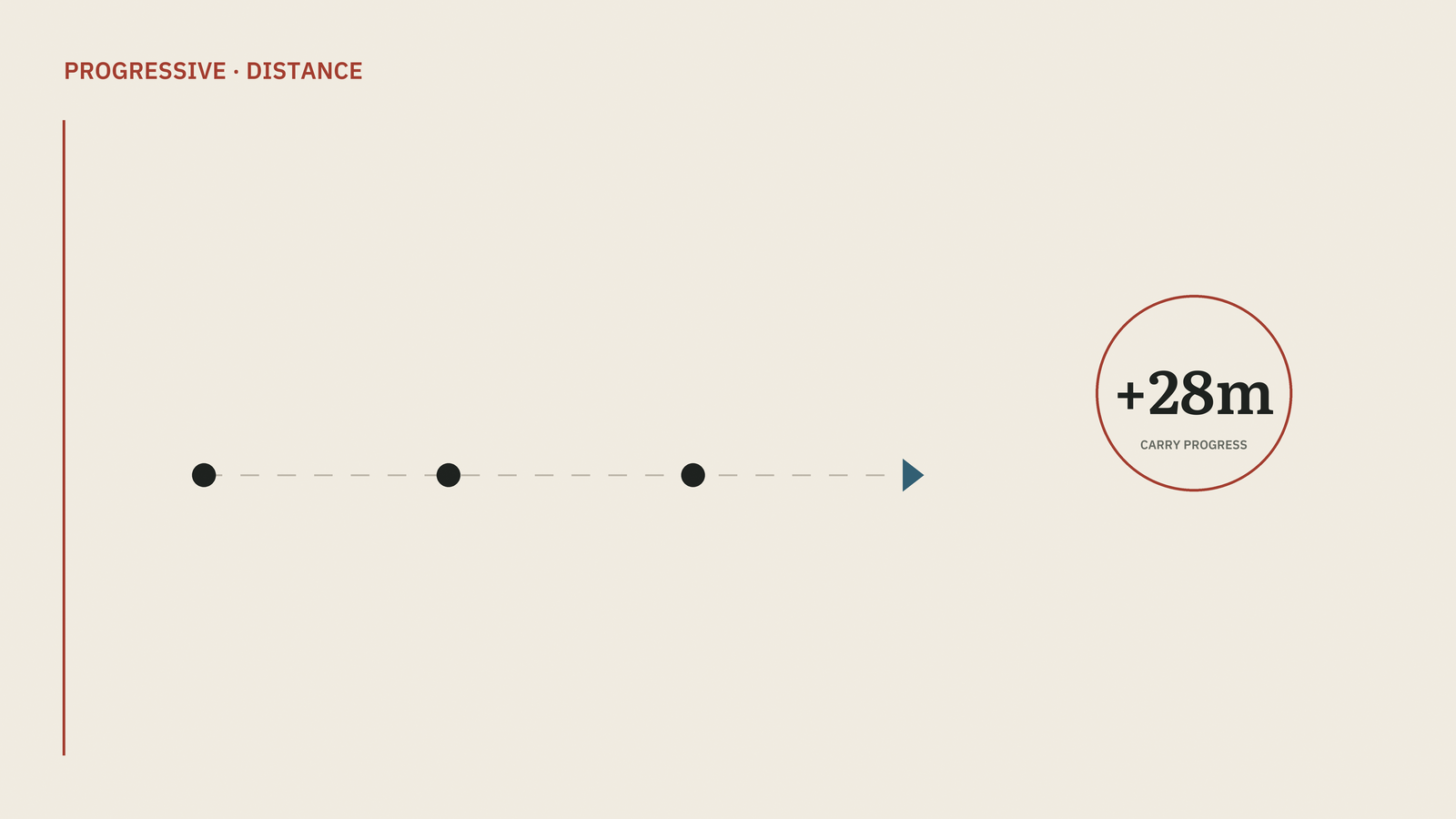
The standard definition, the one most public data providers use, counts a pass as progressive if it moves the ball at least 25 percent closer to the opponent's goal, measured in a straight line, with higher distance thresholds required in a team's own half and lower thresholds required the closer the ball gets to goal, since a ten-yard pass near the byline matters more than a ten-yard pass in your own box. A progressive carry follows the same logic for a player running with the ball rather than passing it. Passes and carries that go backward or sideways without meaningfully closing that distance don't count, no matter how many of them a team strings together.
Control versus progress
What the count is good for is spotting the difference between control and progress. A deep-lying playmaker who racks up ninety completed passes a game but rarely sends the ball forward will show a modest progressive passing number even with a near-perfect completion rate, because most of those ninety passes are lateral or backward. A different midfielder with sixty total passes but twenty of them progressive is doing more to move the team up the pitch, even though the raw pass count looks worse on a stat sheet. Coaches have always known the difference between a passer who circulates the ball and one who breaks lines with it. Progressive numbers just put it in front of anyone looking at a spreadsheet.
What it reveals about full-backs
It also reframes what a fullback's job looks like statistically. Modern fullbacks who overlap or invert into midfield often rack up huge progressive-carry totals simply because their role involves running the ball forward into space that opens up on the flank, space a winger further infield doesn't have access to in the same way. A fullback with a high progressive-carries number isn't necessarily more skillful on the ball than a center back with a low one; he's more often in position to use the skill he has in a way that counts.
The blind spot on risk
The stat has the same blind spot most of these counting metrics share: it doesn't know about risk or difficulty. A progressive pass threaded between two defenders under pressure counts the same as one played into acres of space against a team that's already lost the ball twice that half. It also can't tell you whether the progression led anywhere useful. A team can rack up progressive passes moving the ball from their own box to the center circle over and over without ever entering the final third with any purpose, which is why the number works best alongside something like xT that weighs where the ball ended up, not just how far it moved.
Reading progressive actions with other numbers
Used on its own, progressive actions are a rough but honest correction to possession share. Used alongside expected threat and shot-creating numbers, they start to describe something closer to how a team actually builds toward danger, rather than how long they're willing to hold onto the ball without doing much with it.
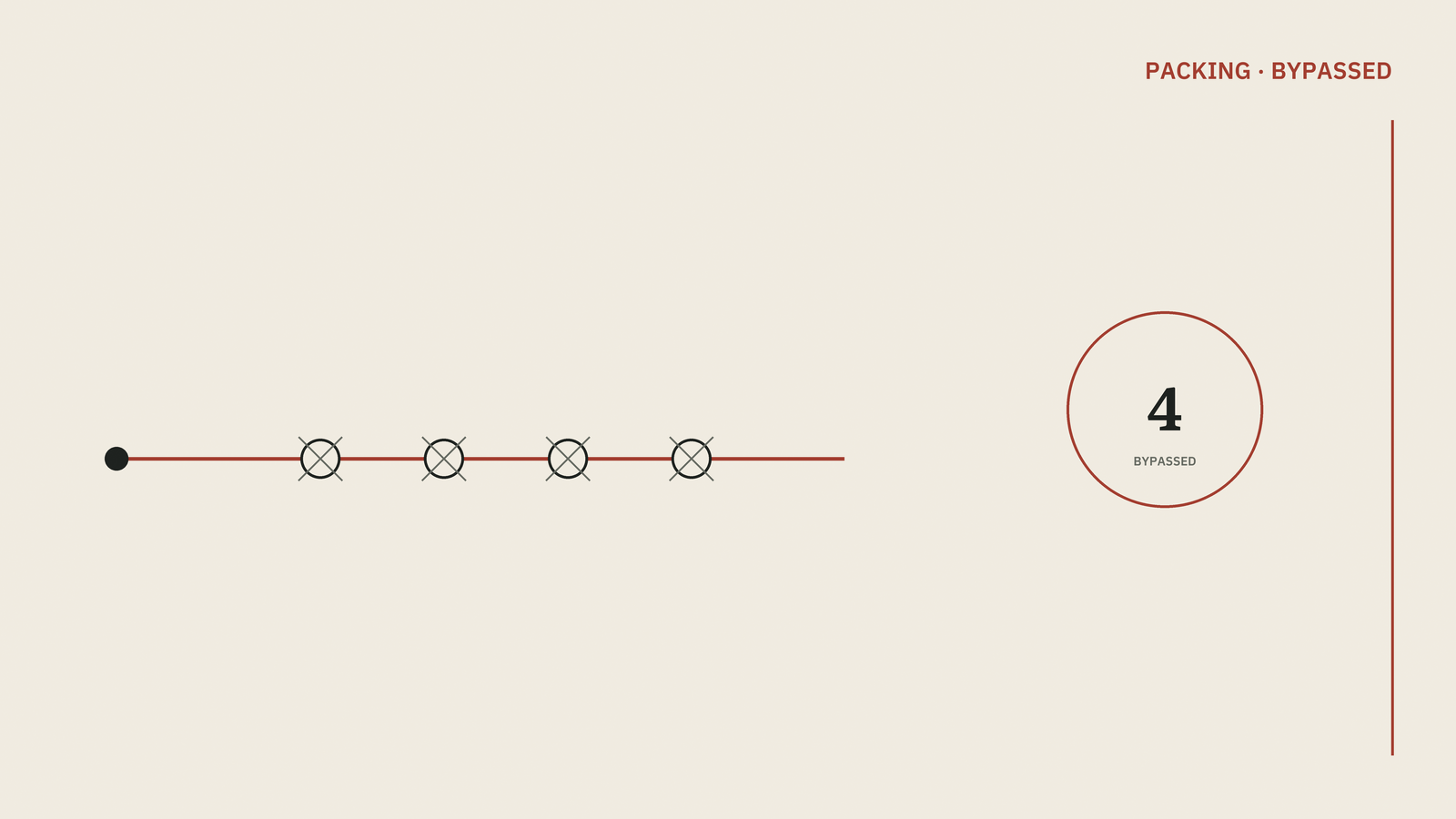
Pair it with expected threat to see whether that forward movement actually increased danger, with packing to see how much defensive structure it actually broke down, or with verticality to see how directly that ball movement travels toward goal.
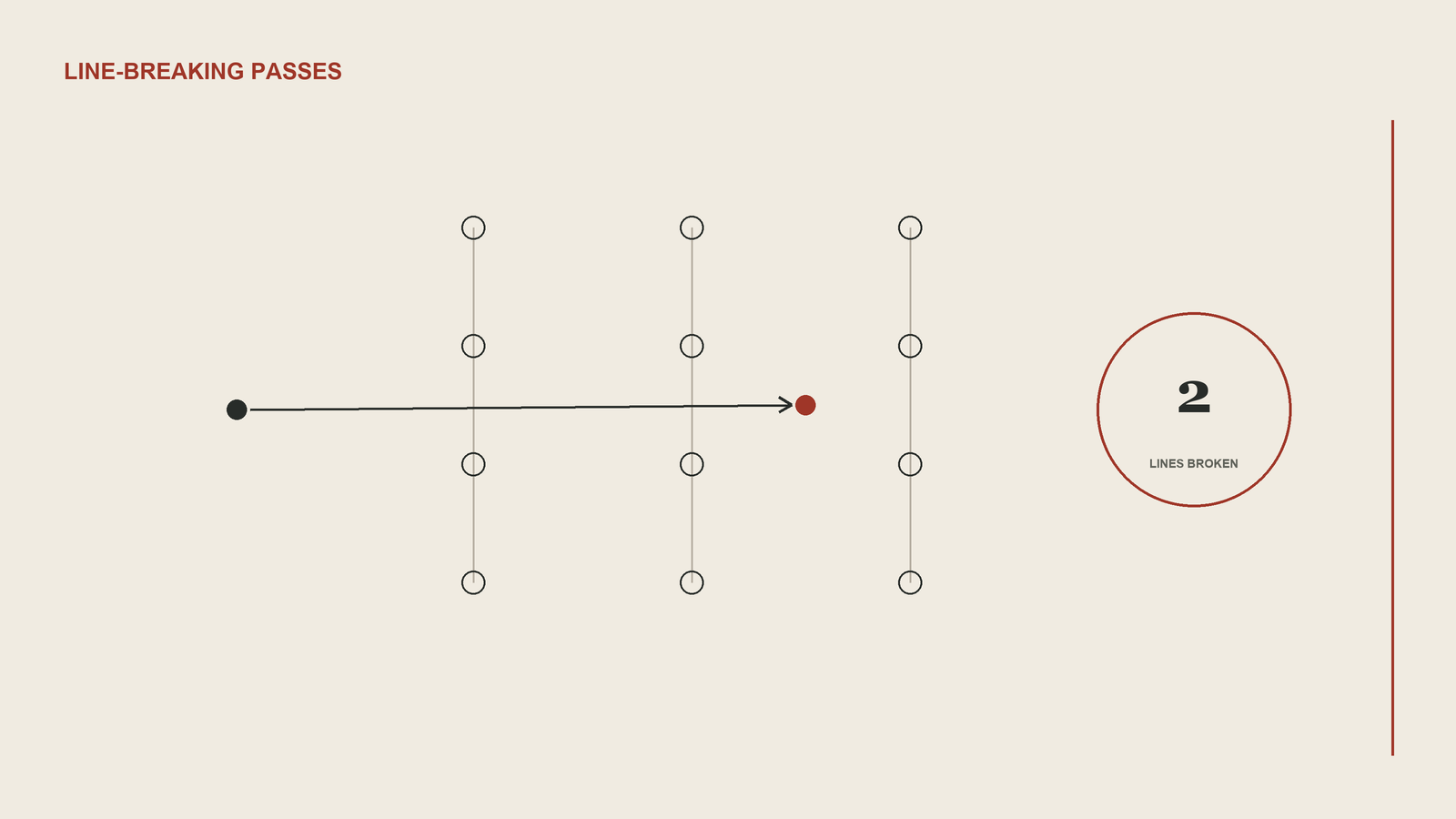
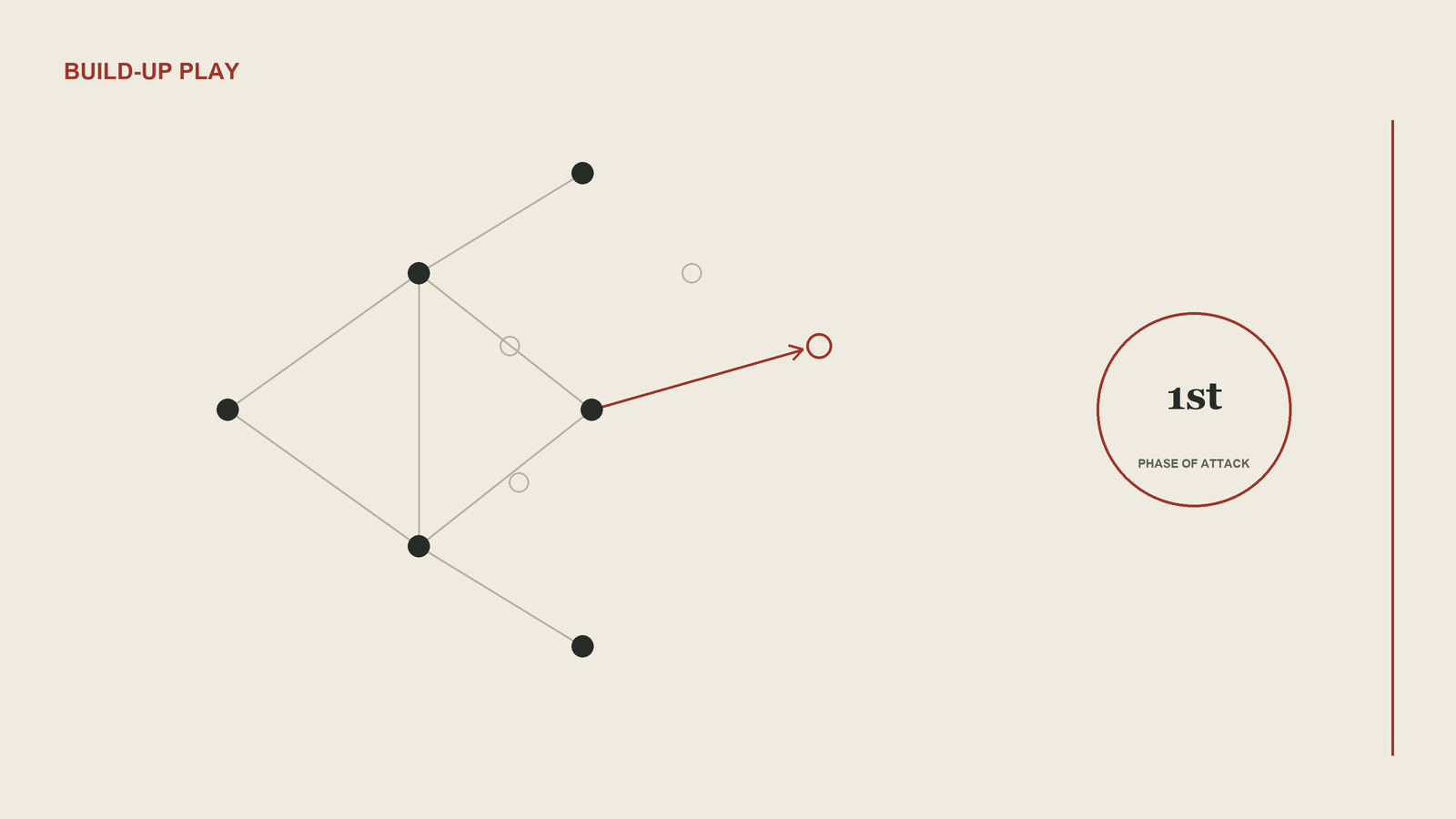
Three neighbouring measures sharpen the picture. Line-breaking passes ask whether the ball went through the opponent's shape rather than just forward, possession value models put a number on how much each progression was worth, and a pass network shows which players the progression depends on.
What's a good number of progressive passes per 90?
For central midfielders specifically, since they touch the ball most often in buildup, sustaining somewhere above 8-9 progressive passes per 90 across a season marks genuine ball-progression quality in most of Europe's top leagues; the best deep-lying playmakers can push well into double figures. Progressive carries follow a different distribution entirely, since they reward dribbling wingers and inverted fullbacks far more than passers, so the two numbers need separate benchmarks rather than being added together and judged against one combined threshold.
What counts as a progressive pass?
Under the standard definition most public data providers use, a pass is progressive if it moves the ball at least 25 percent closer to the opponent's goal in a straight line. Thresholds are higher in a team's own half and lower near goal. A progressive carry follows the same logic for a player running with the ball, and backward or sideways moves never count.
Why do full-backs have so many progressive carries?
Modern full-backs who overlap or invert into midfield often rack up big progressive carry totals because their role involves running the ball forward into space that opens on the flank. A full-back with a high number is not necessarily more skilful than a centre-back with a low one. He is simply more often in a position where his skill counts.
What are the limitations of progressive passes?
Progressive passes and carries do not know about risk or difficulty: a pass threaded between two defenders under pressure counts the same as one played into open space. The count also cannot tell whether the progression led anywhere useful, which is why it works best alongside expected threat, which weighs where the ball ended up.
Sources and further reading
- Progressive pass — Wyscout Data Glossary (accessed 18 Sep 2026)
- Opta Football Stats Definitions — Opta Analyst (accessed 18 Sep 2026)