Glossary · Essay
xA: The Assist Stat That Rewards the Pass, Not the Finish
An assist depends on someone else finishing the chance. Expected assists scores the pass itself, showing who is creating danger even when the strikers around them are missing it.

By 01 Owen
· Updated 6 Oct 2026 · 5 min read
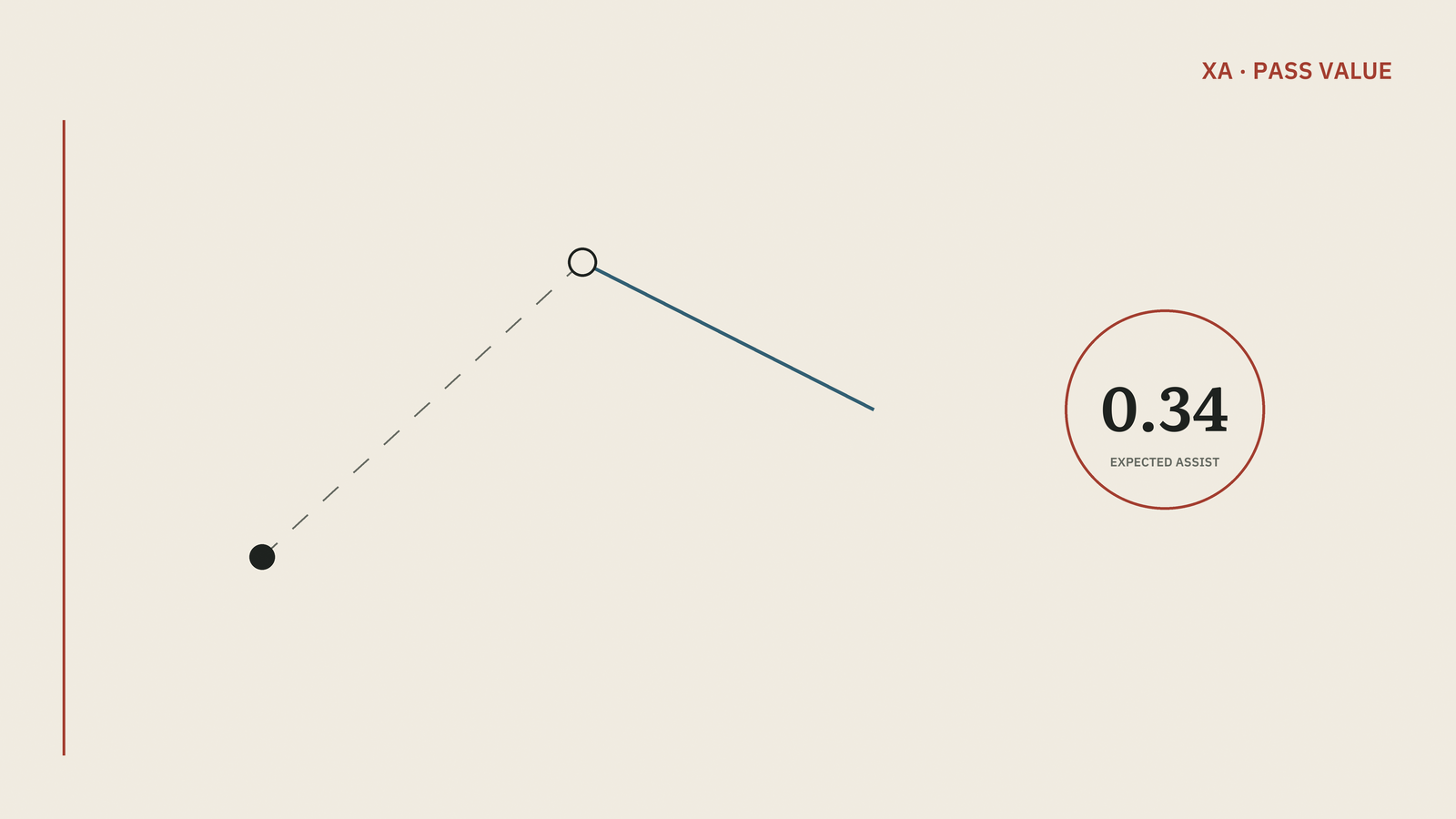
An assist is a strange stat to build an evaluation around, because half of it depends on someone else. A midfielder can play the perfect ball into a striker's path, low and hard across the six-yard box, and get nothing for it if the striker scuffs the finish. Play the same pass to a striker having a good week and it counts. The pass didn't change. The outcome did, because finishing is unpredictable in exactly the way that makes raw assist totals misleading over anything shorter than a full season.
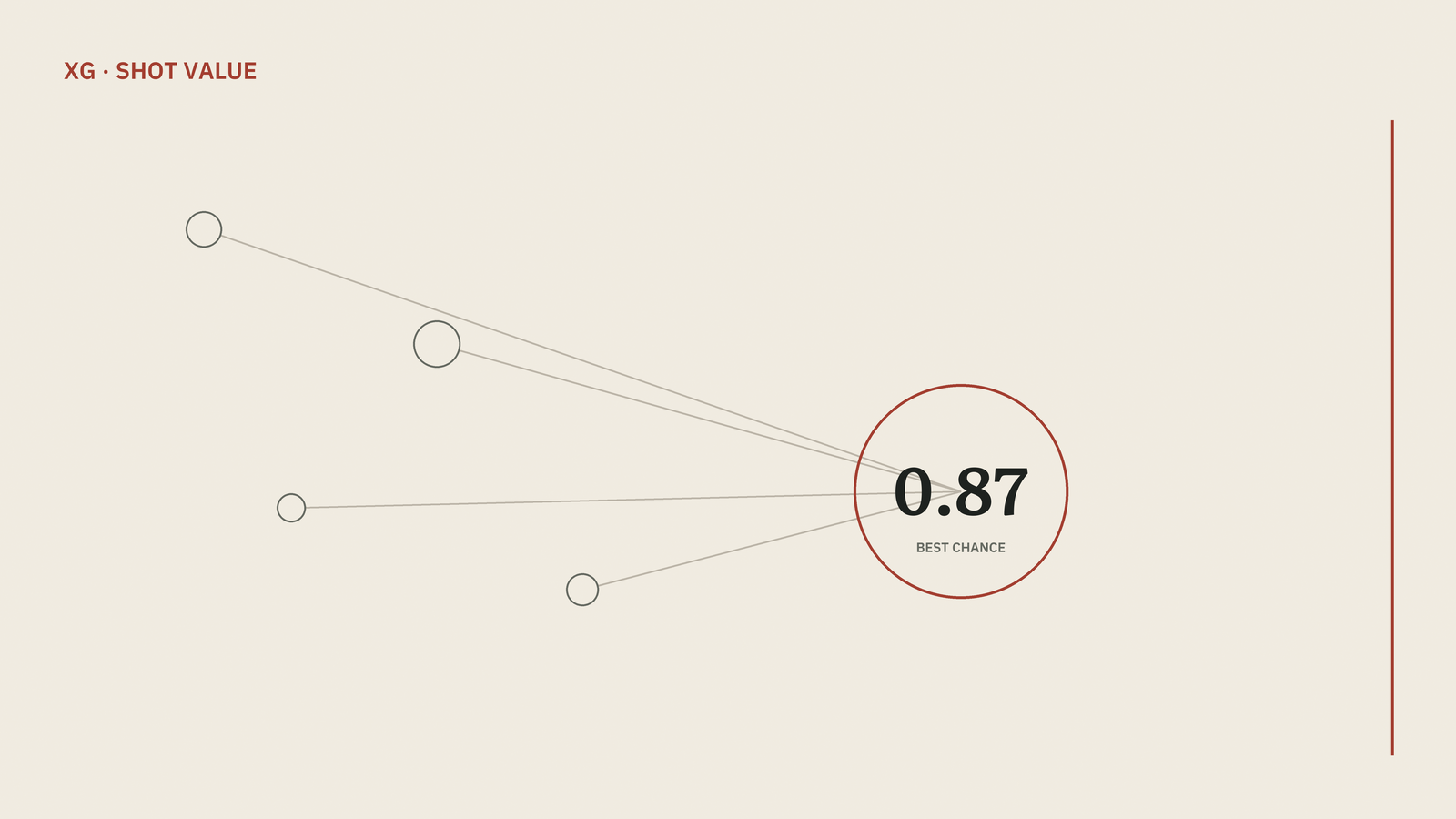
Expected assists tries to fix that by scoring the pass itself rather than what happened after it. Every time a player creates a chance, that shot gets an xG value based on its location, angle, and type, the same way it would for any other shot. The passer is then credited with that xG value as their xA, whether or not the shot goes in. Set up a one-on-one with the keeper and the striker blazes it over the bar, the passer still gets full credit for creating a high-quality chance. That's the whole idea: separate the value of the creation from the luck of the conversion.
When assists and xA diverge
This matters most for players who keep setting up good chances for strikers who are missing them. A winger can lead a league in chances created and finish mid-table in assists, and xA is the number that explains the gap. It's also the number that flags a false alarm the other way: a player who racks up assists from low-quality service, a deflected cross that falls kindly, a cutback that a striker somehow buries from an impossible angle, will have an assist total that looks better than their actual chance creation.
Why De Bruyne is the reference point
Kevin De Bruyne is the standard reference point here because he has spent years living near the top of both charts at once, which is rarer than it sounds. Most players who create a lot of chances create some good ones and a lot of hopeful ones. Sustaining a high xA per ninety over a full season means doing it from your first touch to your ninetieth, week after week, not just producing one or two moments of magic that highlight reels remember.
What xA cannot see
xA has the same blind spot as xG, which is that it reads geometry and assist type but not the run itself. A pass that a striker had to reach with a perfectly timed sprint is scored the same as a pass hit to a striker standing still, provided the eventual shot comes from the same spot. Some more advanced models try to account for defensive pressure at the moment of the pass, but the public versions most fans see usually don't go that deep. It's a description of the chance created, not a full account of the buildup that made the chance possible.
How xA and assists converge
The other thing worth knowing is that xA and assists converge over a large enough sample. A single season can have wide gaps between the two because finishing varies so much game to game. Look at a player's numbers over three or four seasons and the gap usually narrows, because luck stops being able to hide. If a player's actual assists sit well below their xA for one bad month, that's probably the strikers around him missing chances. If it's been three years, it might be worth asking whether his chances are as good as the underlying numbers claim.
It sits alongside expected goals as the other half of the same idea, and it's only part of the picture: for the buildup two passes before the shot rather than just the final one, see shot-creating actions.
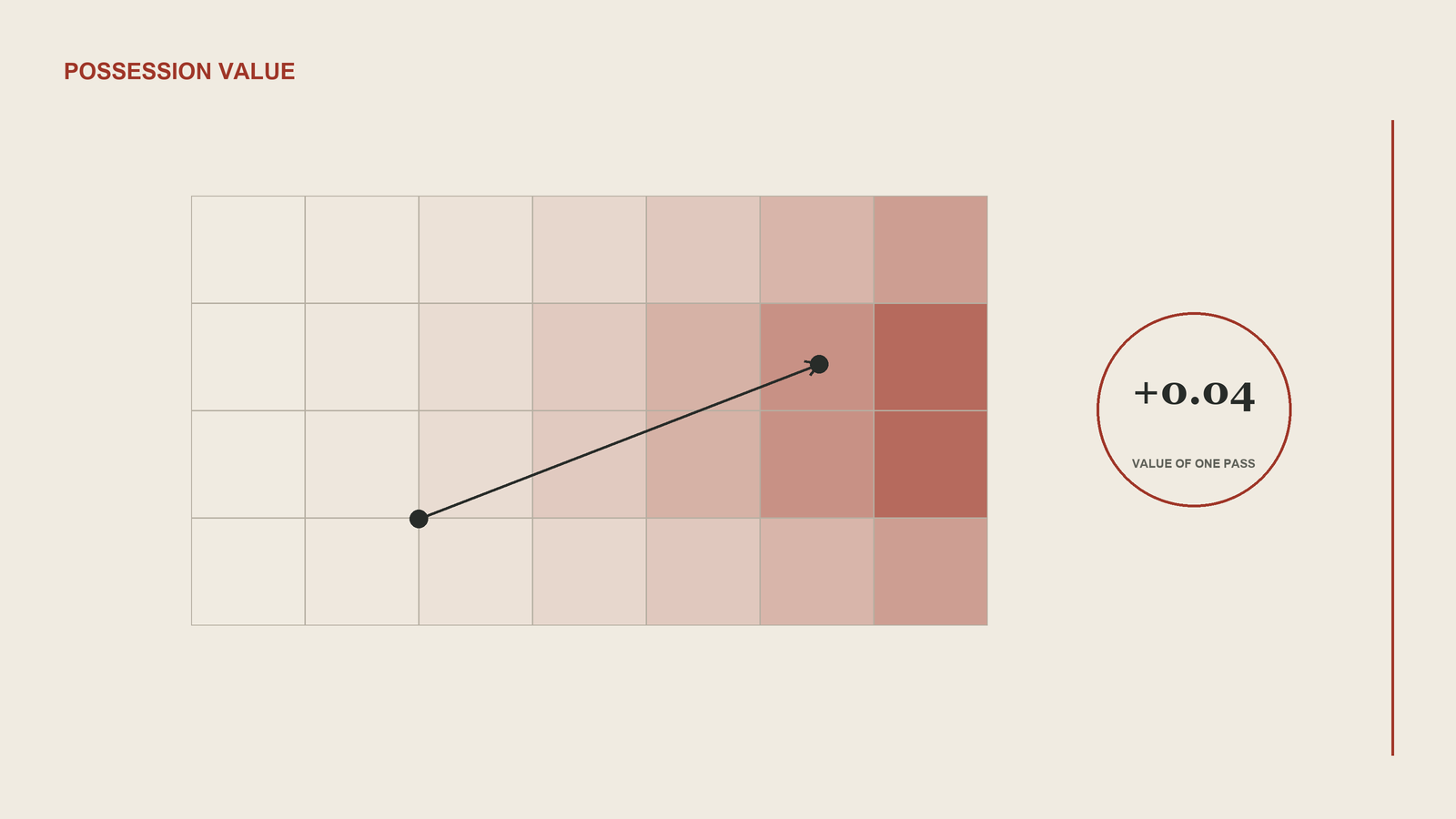
Two related ideas explain where high xA comes from. Passes played from Zone 14 tend to carry a lot of it because they arrive centrally and close to goal, and the number itself is really a statement about the shot quality a passer creates for someone else.
What counts as a good xA per 90 minutes?
There's no fixed threshold, since it depends heavily on role and league, but as a rough public-data benchmark, an attacking midfielder or winger sustaining above roughly 0.30 xA per 90 across a full season is doing real creative work; the very best chance-creators in Europe's top leagues tend to sit somewhere between 0.35 and 0.50. Central defenders and defensive midfielders will normally sit close to zero regardless of quality, which is the reminder that xA per 90 only means something once you compare like-for-like positions, not across the whole pitch.
How is xA calculated?
Expected assists, or xA, scores the pass rather than the finish. Each chance a player creates leads to a shot with an xG value based on its location, angle and type. The passer is credited with that xG value as xA, whether or not the shot goes in, so setting up a one-on-one that the striker blazes over still earns full credit.
Why can a player have high xA but few assists?
A player can have high xA but few assists when the strikers around him keep missing good chances. A winger can lead a league in chances created and finish mid-table in assists, and xA explains the gap. It also works the other way, flagging a player whose assists come from low-quality service that happened to be finished well.
Do xA and assists even out over time?
Usually, yes. A single season can show wide gaps between xA and assists because finishing varies so much. Over three or four seasons the gap tends to narrow as luck stops hiding. If assists sit below xA for one bad month, the strikers are probably missing chances. If it lasts three years, the chances may not be as good as the numbers claim.
Sources and further reading
- What Are Expected Assists (xA)? — Opta Analyst (accessed 18 Sep 2026)
- xA — Wyscout Data Glossary (accessed 18 Sep 2026)