Glossary · Essay
PPDA: How to Measure a Press Without Watching Every Minute of It
Pressing intensity is hard to judge by eye alone. PPDA counts how many passes a team allows before winning the ball back, turning a vague impression into a comparable number.

By 01 Owen
· Updated 7 Oct 2026 · 5 min read
Watching a match, you can usually tell within ten minutes whether a team is pressing hard. Bodies close down the ball quickly, passing lanes get cut, the opposition looks rushed even in their own half. Turning that impression into a number that lets you compare two teams, or the same team across two seasons, is harder, and PPDA is the simplest widely available attempt at doing it.
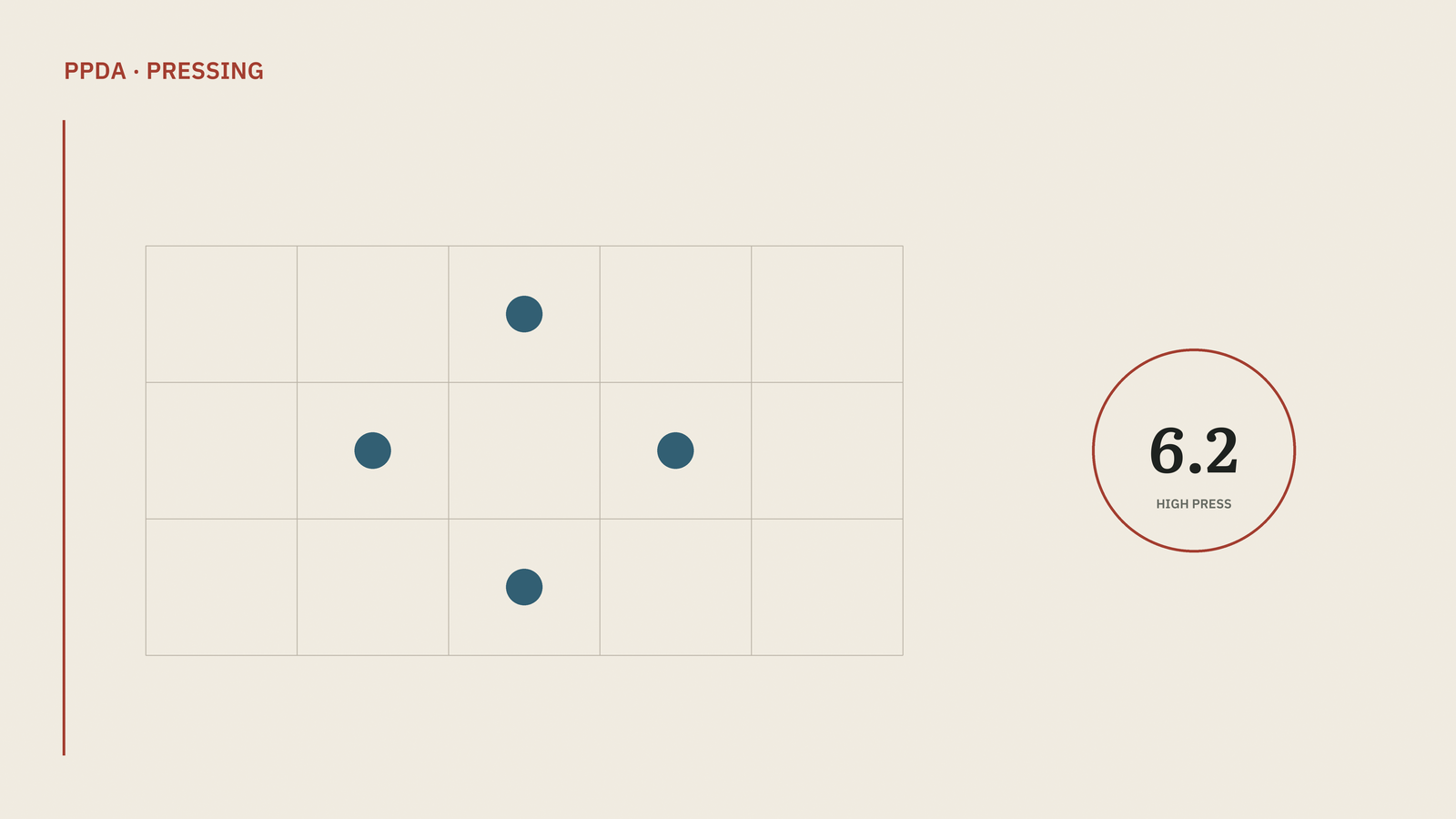
PPDA stands for passes allowed per defensive action. The calculation only looks at the opposition's own half plus a bit past the halfway line, usually the middle 60 percent of the pitch by width, since a team's press is judged by how it behaves in the attacking two-thirds rather than sitting deep in its own box. Within that zone, you count how many passes the opponent completes before the pressing team makes a defensive action: a tackle, an interception, a foul, or a challenge. Divide total opposition passes in that area by the pressing team's defensive actions in it, and you get PPDA.
What a low or high PPDA means
A low number means an aggressive press. If a team is averaging 6 PPDA, the opposition is only stringing together six passes in the middle and attacking thirds before someone wins the ball back. A high number, say 15 or more, usually belongs to a team that's happy to sit off and let the opposition build, saving its energy for deeper zones. Jürgen Klopp's Liverpool teams and Marcelo Bielsa's sides have historically sat at the aggressive end of that scale; a team parking a low block will sit at the other end almost by definition, since letting the opposition pass freely in midfield is the whole point of the shape.
What PPDA cannot see
The stat is popular mostly because it's cheap to calculate from basic event data, which is also its weakness. PPDA counts actions, not effort. A team can press hard for eighty-five minutes and PPDA won't distinguish that from a team that presses hard for the first fifteen and then drops off, as long as the total count of passes and actions comes out similar over the full match. It also doesn't know why a defensive action happened. A tackle that ends a mistimed pass isn't the same as a tackle that's the product of a coordinated trap, but PPDA counts them identically.
There's a context problem too. A team can post a low PPDA simply because their opponent is bad at building play and keeps giving the ball away under minimal pressure, not because the pressing team is doing anything special. And a team chasing a game from behind will naturally press higher and generate a lower PPDA than the same team protecting a lead, which means single-match PPDA numbers need to be read alongside the scoreline, not instead of it.
Where the number still earns its place
None of that makes it useless. Across a full season, PPDA does a reasonable job of separating teams that structurally commit to winning the ball high from teams that don't, and it tracks changes in identity well. When a club changes manager and PPDA drops from 14 to 8 over a summer, that's a real signal about a real tactical shift, even if the number on any single matchday should be taken with some caution. It's a blunt tool. Used to spot trends rather than settle single-game arguments, it's a genuinely useful one.
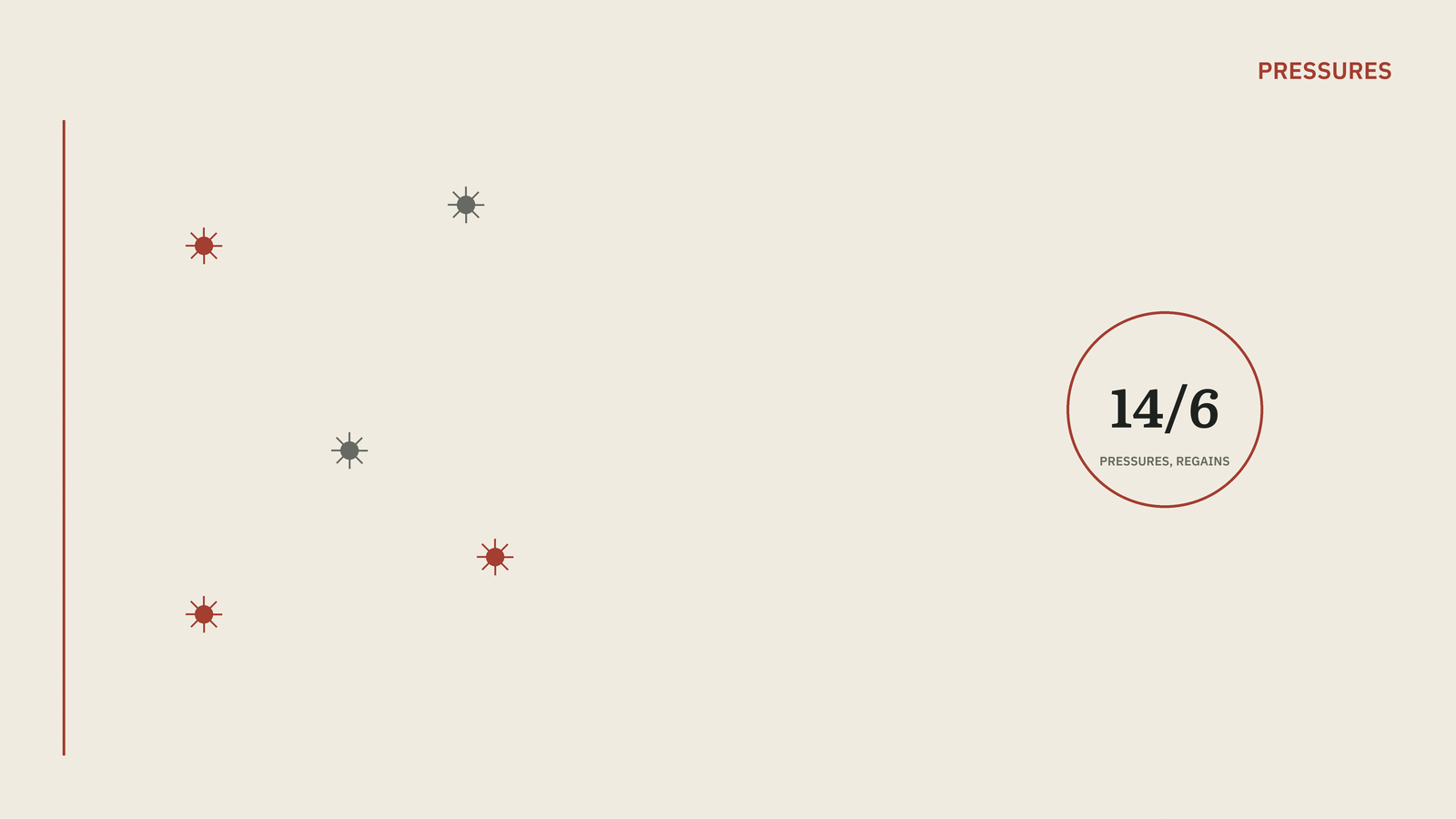
It's worth reading next to field tilt, which measures where a team spends its time on the ball rather than how aggressively it tries to win the ball back, or next to pressures and regains, which counts that same pressing effort action by action instead of collapsing it into one ratio.
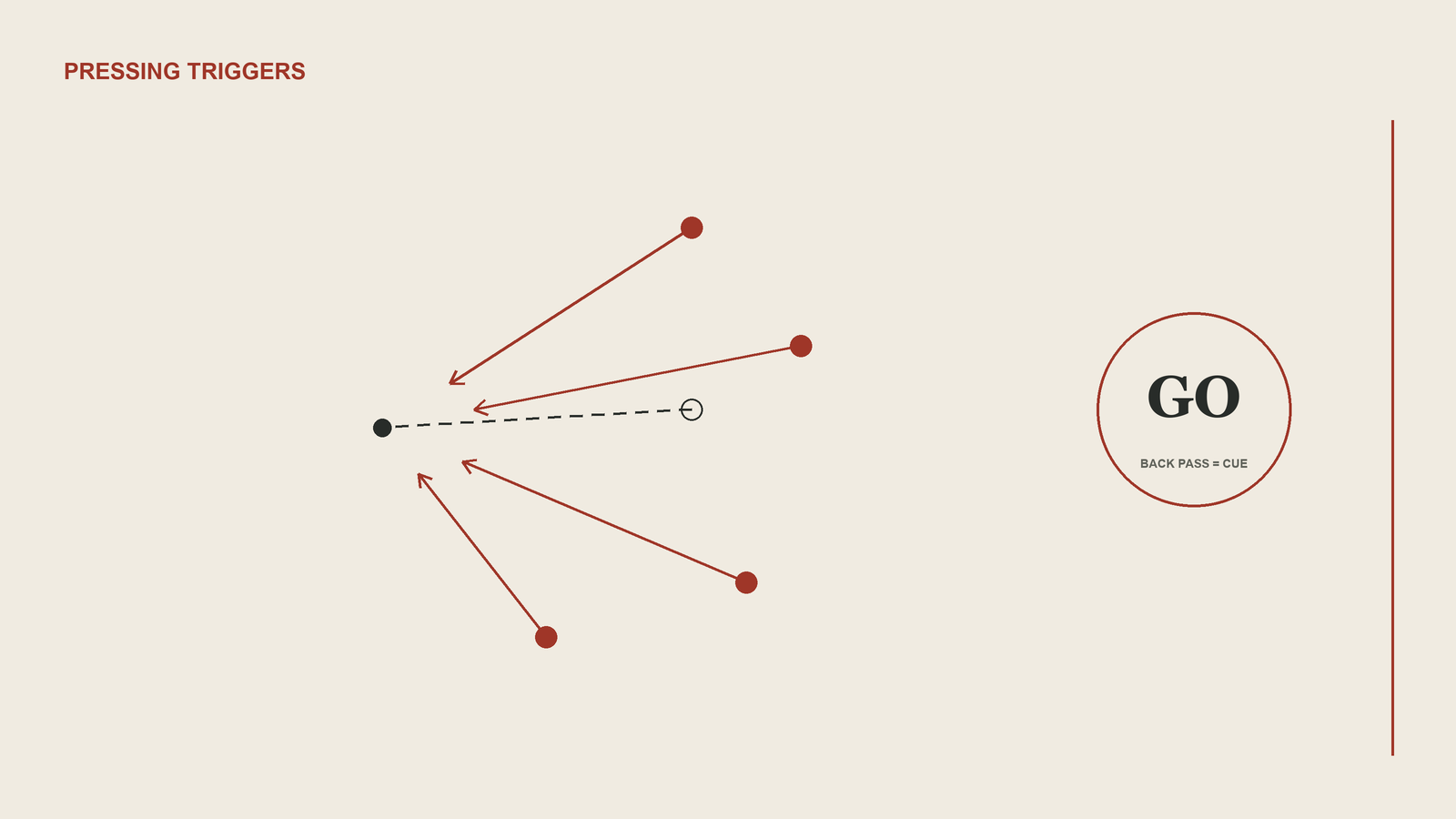
PPDA tells you how much a team presses, not how it decides to. The when is set by its pressing triggers, and the thing being disrupted is the opponent's build-up play, which is why the same PPDA can mean different things against different opponents.
What counts as a good PPDA?
Context matters more than the raw number, but as a rough guide from public match data, anything under about 8 usually signals a genuinely aggressive press, while numbers above 12-13 typically belong to teams that are content to sit off and defend deeper. The more useful comparison is a team against its own history: a club's PPDA dropping from the mid-teens to single digits after a managerial change is a much stronger signal of a real tactical shift than comparing two different teams' PPDA in isolation, since squad quality and league context shift what counts as 'aggressive' from competition to competition.
How is PPDA calculated?
PPDA, passes allowed per defensive action, looks at the opposition's own half plus a bit past halfway, usually the middle 60 percent of the pitch by width. Within that zone you divide the passes the opponent completes by the pressing team's defensive actions there: tackles, interceptions, fouls and challenges. A lower figure means the team wins the ball back after fewer passes.
Which teams have a low PPDA?
Teams that press aggressively post a low PPDA. Jürgen Klopp's Liverpool and Marcelo Bielsa's sides have historically sat at that end of the scale, where a figure around 6 means the opponent strings only a few passes together before losing the ball. A team parking a low block sits at the other end, often 15 or more, almost by definition.
Why can PPDA be misleading?
PPDA counts actions, not effort or intent. It cannot separate a team that presses for the whole match from one that presses early then drops off, or a coordinated trap from a lucky tackle. A low PPDA can also come from a weak opponent giving the ball away, and teams chasing a game naturally press higher, so single matches need the scoreline as context.
Sources and further reading
- Defensive Metrics: Measuring the Intensity of a High Press — Colin Trainor, StatsBomb (accessed 18 Sep 2026)
- PPDA — Wyscout Data Glossary (accessed 18 Sep 2026)