Glossary · Essay
Pressures and Pressure Regains: Counting Every Time a Defender Actually Closes Someone Down
Closing down an opponent doesn't always win the ball back. Pressures count every attempt; regains count only the ones that actually worked.

By 01 Owen
· Updated 6 Oct 2026 · 5 min read
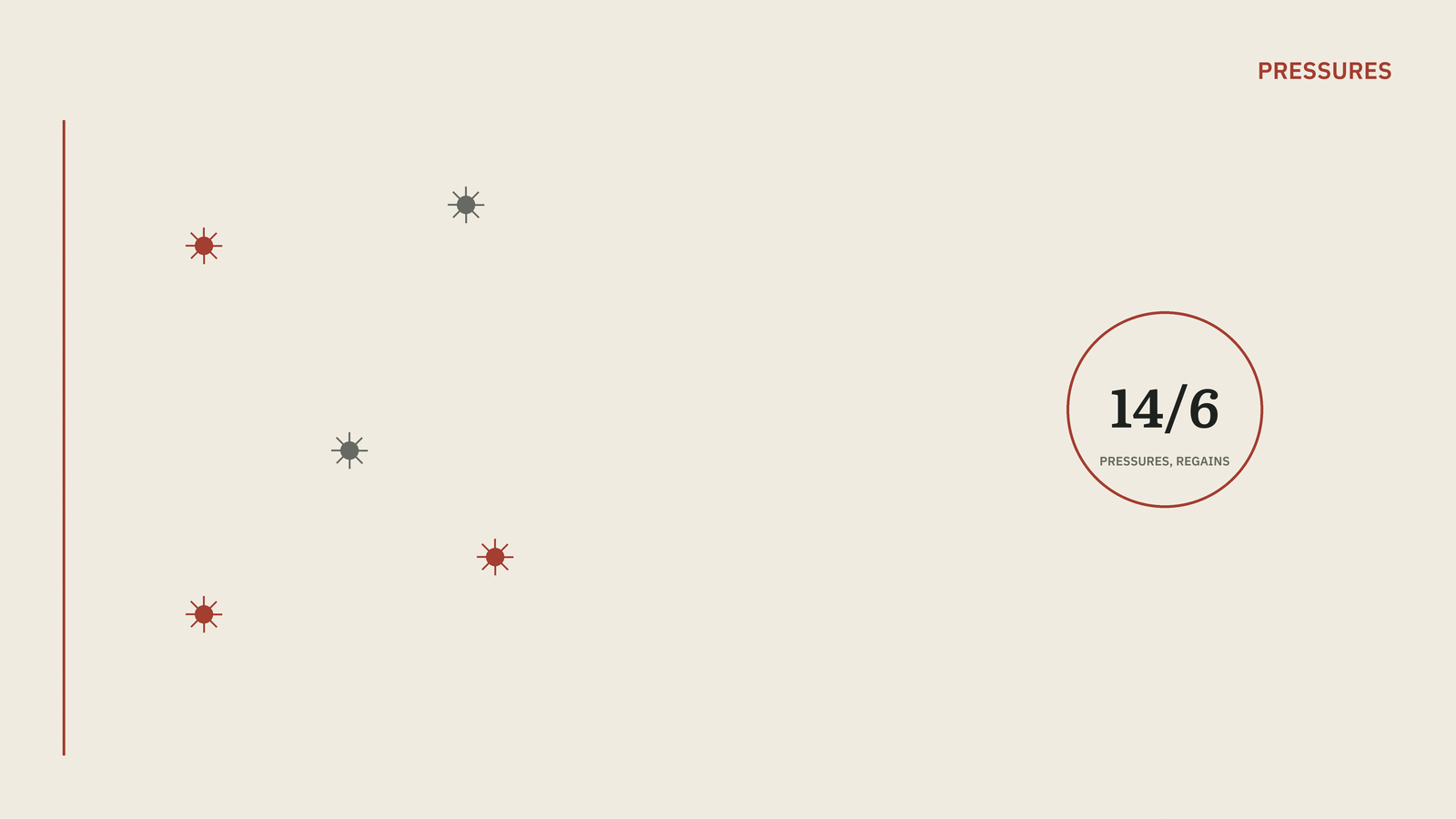
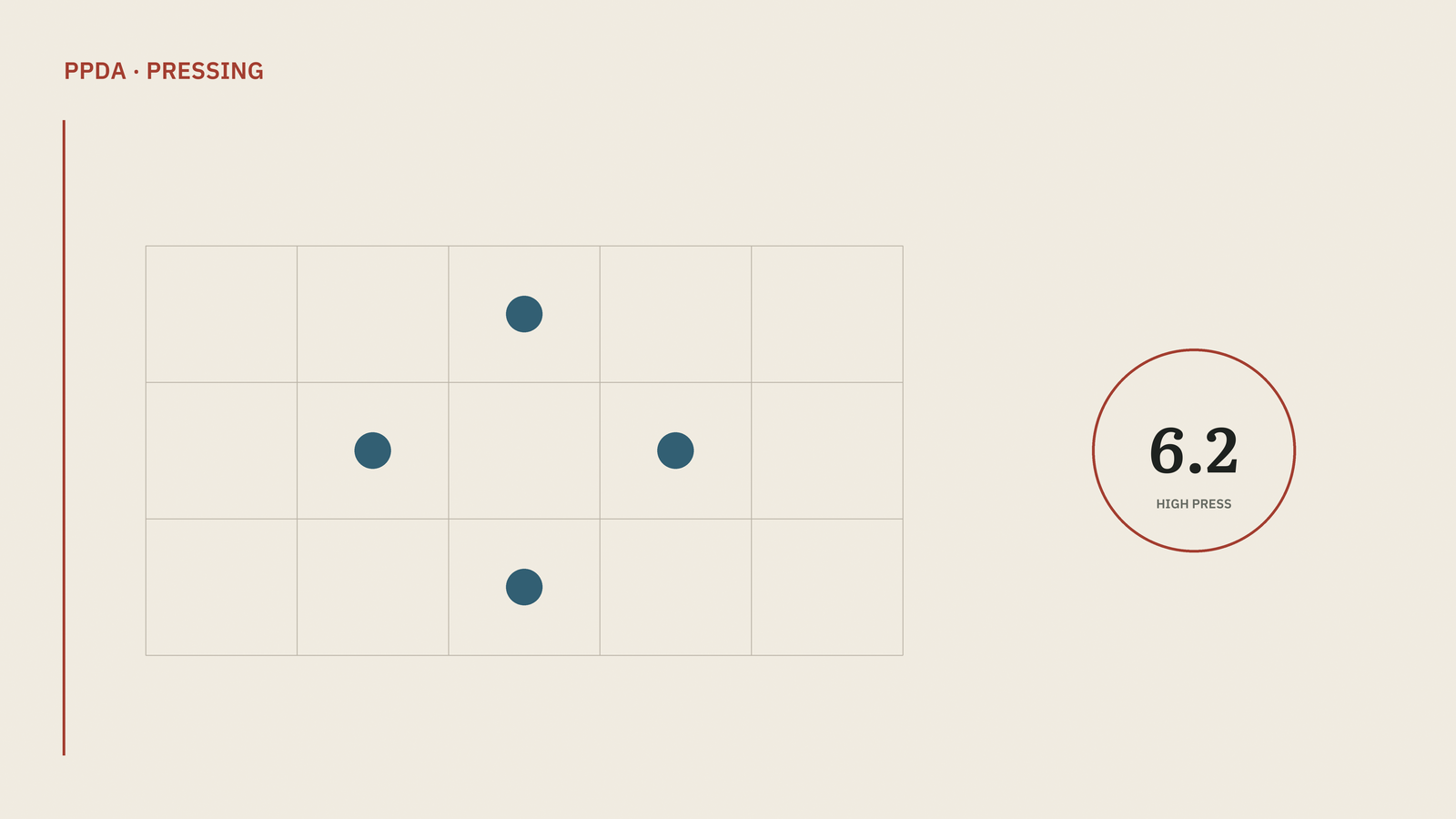
Pressing is one of those things everyone can see happening in a match but that resists being counted cleanly. PPDA gets at pressing intensity indirectly, by looking at how many passes an opponent completes before losing the ball, but it says nothing about individual defensive effort. Pressures and pressure regains, a pairing of stats popularized by StatsBomb's event data, try to count the pressing itself, action by action, rather than inferring it from a team-level ratio.
A pressure is logged whenever a player closes down an opponent who has the ball, or is about to receive it, within a defined distance and time window, regardless of whether that pressure actually wins the ball back. The count is deliberately generous: a player who sprints to close down a pass recipient and forces a rushed, misplaced touch registers a pressure, and so does a player who closes down aggressively but the opponent simply plays around them. The stat is measuring effort and defensive activity, not success, which is exactly the gap it's built to fill next to metrics that only count outcomes.
Pressure regains, the pressures that worked
Pressure regains narrow the focus to the subset of pressures that actually worked, specifically pressures that result in the pressing team winning possession within a short window afterward, usually a handful of seconds. This is the number that separates a player who presses constantly but rarely dispossesses anyone from a player whose pressure count is lower but whose closing-down consistently forces the exact turnover it's aimed at. A high pressure count with a low regain rate usually describes a player working hard in a system that isn't coordinated enough to actually win the ball from that effort, since a lone presser without support behind him just forces the opponent to play around him rather than into a trap; a strong regain rate alongside a high pressure count usually describes both individual effort and a well-organized pressing structure around that player.
Why the two numbers belong together
The pairing is useful precisely because either number alone can mislead. Raw pressure counts reward busy, high-effort players regardless of whether the team's shape supports what they're trying to do, which can flatter a player playing in a chaotic system that generates a lot of individual chasing without much collective result. Regain totals alone reward players who happen to be positioned to intercept the ball after a teammate's pressure forced the mistake, which can undercount the player who did the actual work of forcing the error in the first place. Read together, they start to separate genuine defensive influence from busy-looking activity that doesn't convert into anything.
Pressures, regains and PPDA
Team-level totals for both numbers tend to track PPDA reasonably closely, since both are measuring versions of the same underlying pressing behavior, but they offer a finer grain than PPDA's single ratio. A team can have an aggressive PPDA driven almost entirely by two or three specific players pressing hard while the rest of the team holds a more passive shape around them, and pressures-and-regains data, broken down per player rather than collapsed into one team number, is what actually reveals that kind of uneven distribution, which matters for understanding whether a pressing identity is a genuine team structure or the product of a couple of individually relentless players carrying the system.
At team level these numbers track PPDA fairly closely, and the whole idea is close kin to gegenpressing, just measured action by action instead of as a single team-wide ratio.
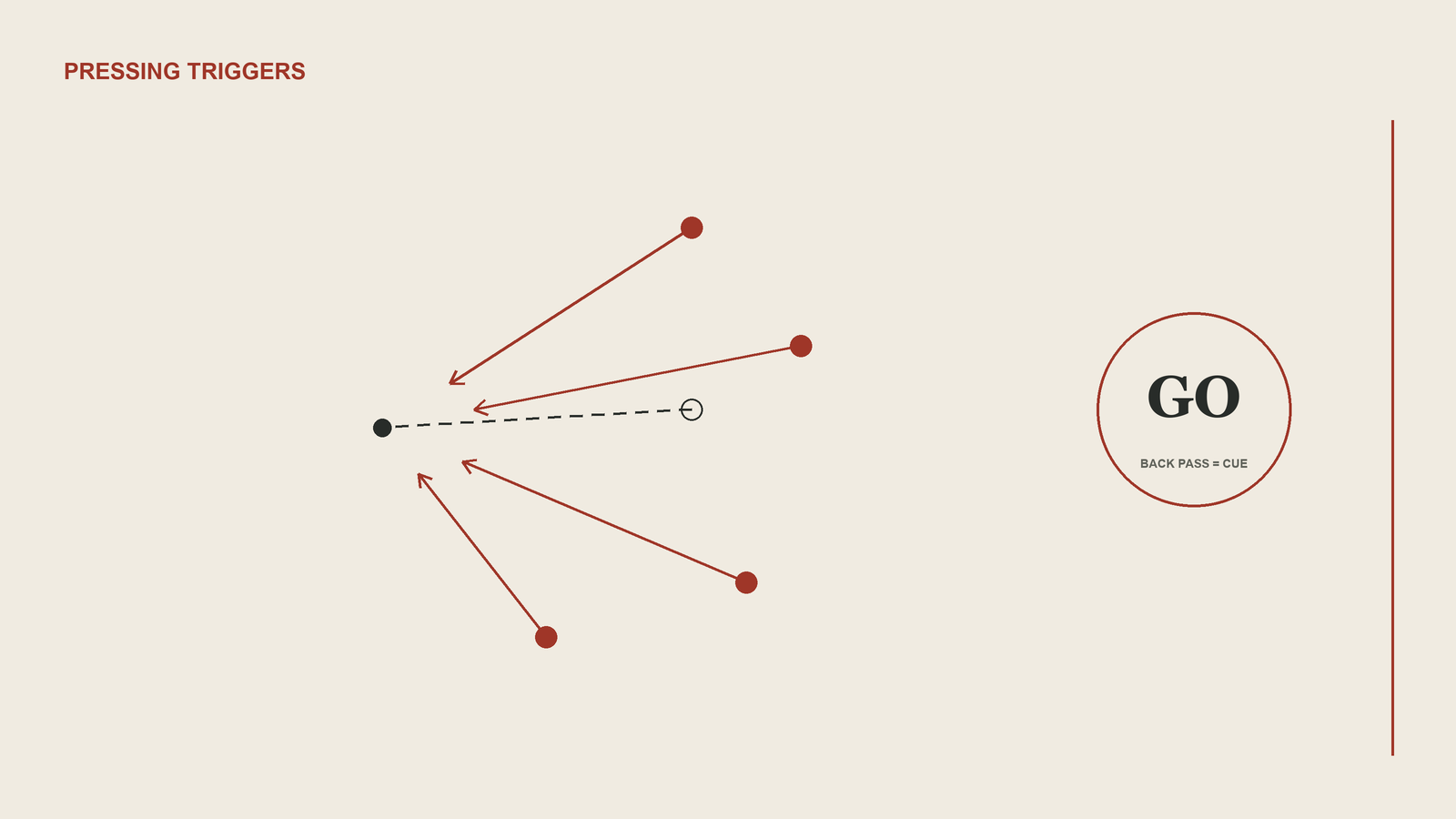
A pressure count also says nothing about timing. A press launched on one of the team's agreed pressing triggers is more likely to end in a regain than one launched at random, which is why two teams with the same number of pressures can have very different regain rates.
What counts as a good pressure regain rate?
Rates vary a lot by team system and are usually reported per-player rather than as a single public benchmark, but broadly, a regain rate somewhere above 25-30% of a player's total pressures is considered a strong, coordinated pressing outcome in the data StatsBomb and similar providers publish; a lot of high-effort pressers still sit well below that if the pressing structure around them isn't winning the ball cleanly. The rate matters more in context of the pressure count itself: a low regain rate on a huge number of pressures usually points to a system problem rather than an individual one.
What counts as a pressure in football data?
A pressure is logged whenever a player closes down an opponent who has the ball or is about to receive it, within a defined distance and time window. It counts whether or not the ball is won back. The stat is deliberately generous because it measures effort and defensive activity, not success, filling a gap next to metrics that only count outcomes.
What does a high pressure count with a low regain rate mean?
A high pressure count with a low regain rate usually describes a player working hard in a system that is not coordinated enough to win the ball from that effort. A lone presser without support just forces the opponent to play around him. A strong regain rate alongside many pressures suggests both individual effort and a well-organised pressing structure.
How are pressures and regains different from PPDA?
PPDA measures pressing indirectly, as a single team-level ratio of passes allowed per defensive action. Pressures and pressure regains count the pressing itself, action by action, and can be broken down per player. That reveals whether an aggressive PPDA comes from a genuine team structure or from two or three relentless players carrying the system.
Sources and further reading
- How we measure pressure — Stats Perform (accessed 18 Sep 2026)
- Defensive Metrics: Measuring the Intensity of a High Press — Colin Trainor, StatsBomb (accessed 18 Sep 2026)