Glossary · Essay
Gegenpressing: The Six-Second Rule That Changed How Teams Defend
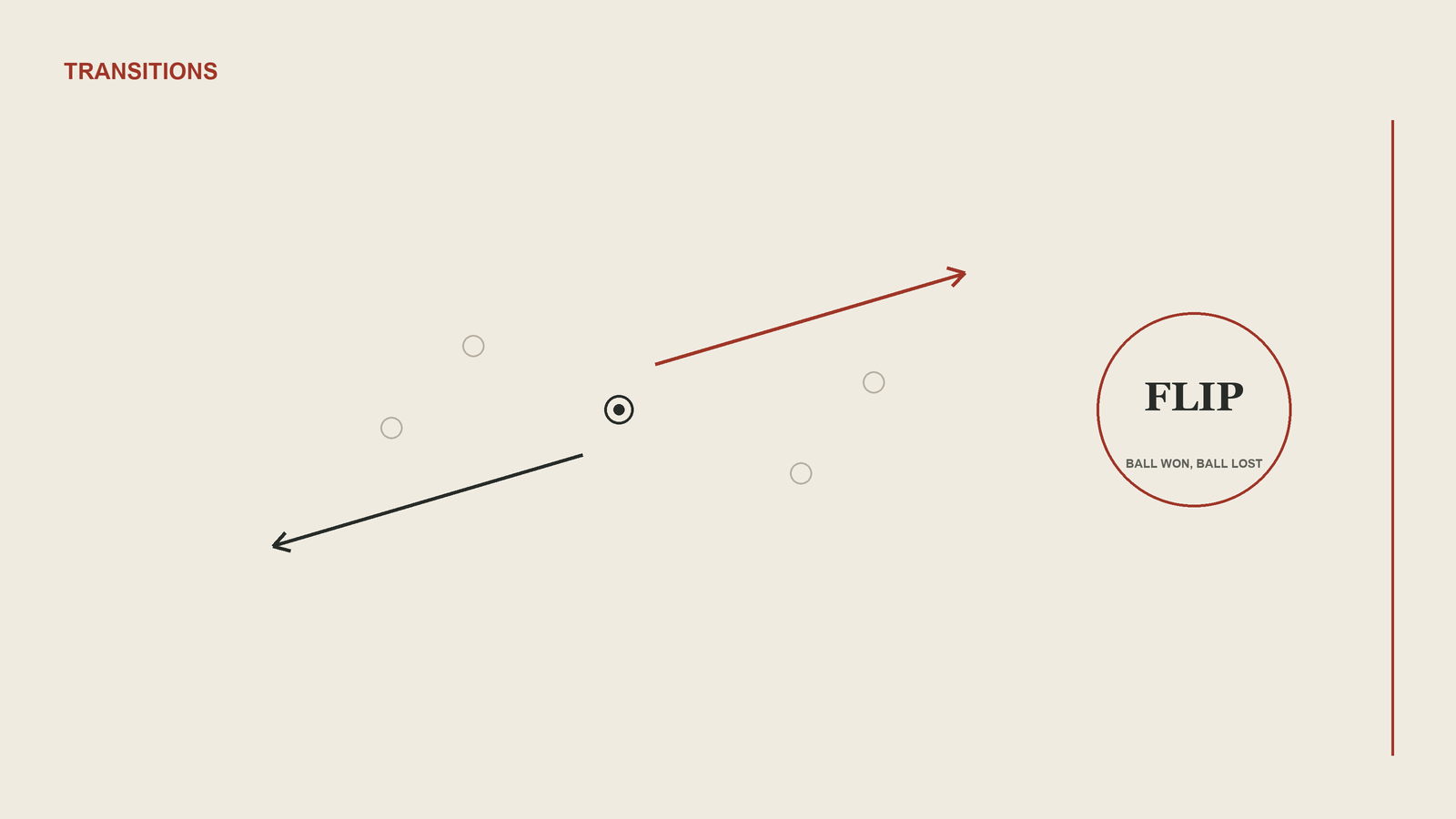
Losing the ball used to mean stopping to reorganize. Gegenpressing treats the moment of loss as the best chance to win it straight back, before the opponent can even think.
By 01 Owen
· Updated 6 Oct 2026 · 6 min read
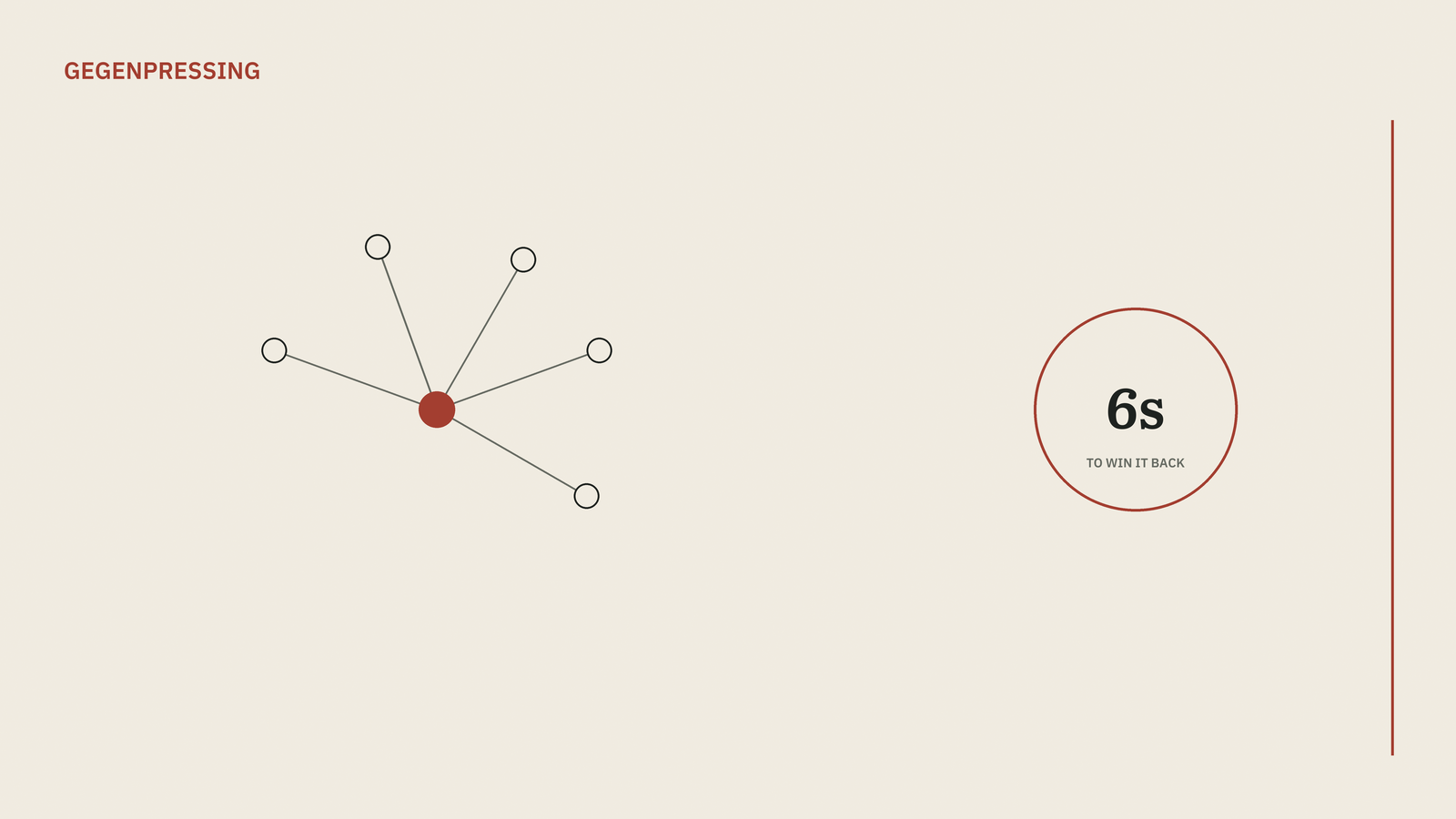
Losing the ball in your own defensive third and losing it just outside the opponent's penalty area used to be treated as roughly the same event: a turnover, a moment to fall back and reorganize. Gegenpressing treats them as completely different problems, because a ball lost high up the pitch is a ball lost near your opponent's most valuable space, and for a few seconds after it happens, the team that just lost it is often better positioned to win it back than the team that just gained it.
The idea, most associated with Jürgen Klopp's Borussia Dortmund and Liverpool sides, is straightforward: instead of retreating into a defensive shape the instant possession changes, players closest to the ball immediately swarm the new holder. The logic is about the opponent's disorientation as much as your own position. A player who has just won the ball is usually still oriented toward winning it, not toward what comes next; their head is down, their support players haven't moved into passing lanes yet, and the team that just lost the ball already knows exactly where everyone is, because a second ago it was their own attack.
Where the six-second rule comes from
Klopp himself has described the appeal in blunt terms: a well-timed counter-press is a better playmaker than any pass, because it wins the ball back close to a disorganized defense, in the exact area where a chance is most likely to follow. The "six-second" framing that gets attached to this idea comes from the observation that the value of pressing collapses fast. Win the ball back within about six seconds of losing it and the opponent is still scrambling. Wait fifteen and they've reorganized, and now you're pressing a settled defense instead of catching one mid-transition, which is a much harder and less rewarding job.
How it differs from other pressing
This is also why gegenpressing looks so different from a low block or a patient mid-block press. It isn't really about pressing for its own sake, and it isn't sustained for the full ninety minutes at the same intensity. It's triggered specifically by the moment of losing possession, concentrated in the seconds right after, and it tends to be abandoned quickly if the initial wave doesn't win the ball back, since chasing a settled opponent at the same intensity for the rest of the passage of play is exhausting and rarely productive.
The physical and tactical cost
The physical cost is the honest trade-off. A team playing this way is asking its forwards and midfielders to sprint immediately after already having sprinted to create the attack that just broke down, over and over, for the length of a match. Squads built around it tend to rotate heavily and rely on fitness work that looks more like interval training than traditional endurance running, and teams without the squad depth or conditioning to sustain it tend to fade badly in the last twenty minutes if they try to copy the approach wholesale.
It also isn't free of risk in a more immediate sense. Committing five or six players to win the ball back high up the pitch means committing five or six players away from their defensive shape. If the counter-press fails, the opponent can find exactly the kind of space in behind that a settled defense would never concede, which is why teams that gegenpress hardest are often also the teams most vulnerable to a single clean line-breaking pass through the middle of a half-collapsed midfield.
Why PPDA misses gegenpressing
PPDA is the closest thing to a public number for how aggressively a team presses in general, but it doesn't isolate this specific moment, the immediate reaction to losing the ball, from a team's pressing posture over the whole ninety minutes. A team can gegenpress hard in short bursts right after turnovers while sitting off for long stretches otherwise, and PPDA calculated over the full match wouldn't necessarily show it as an especially aggressive presser overall. The tactic is best understood by watching the five seconds after a turnover specifically, not by reading a single match-long number.
It's the opposite instinct to a low block, and its intensity is what PPDA tries, imperfectly, to put a number on, or what pressures and regains tries to count action by action instead.
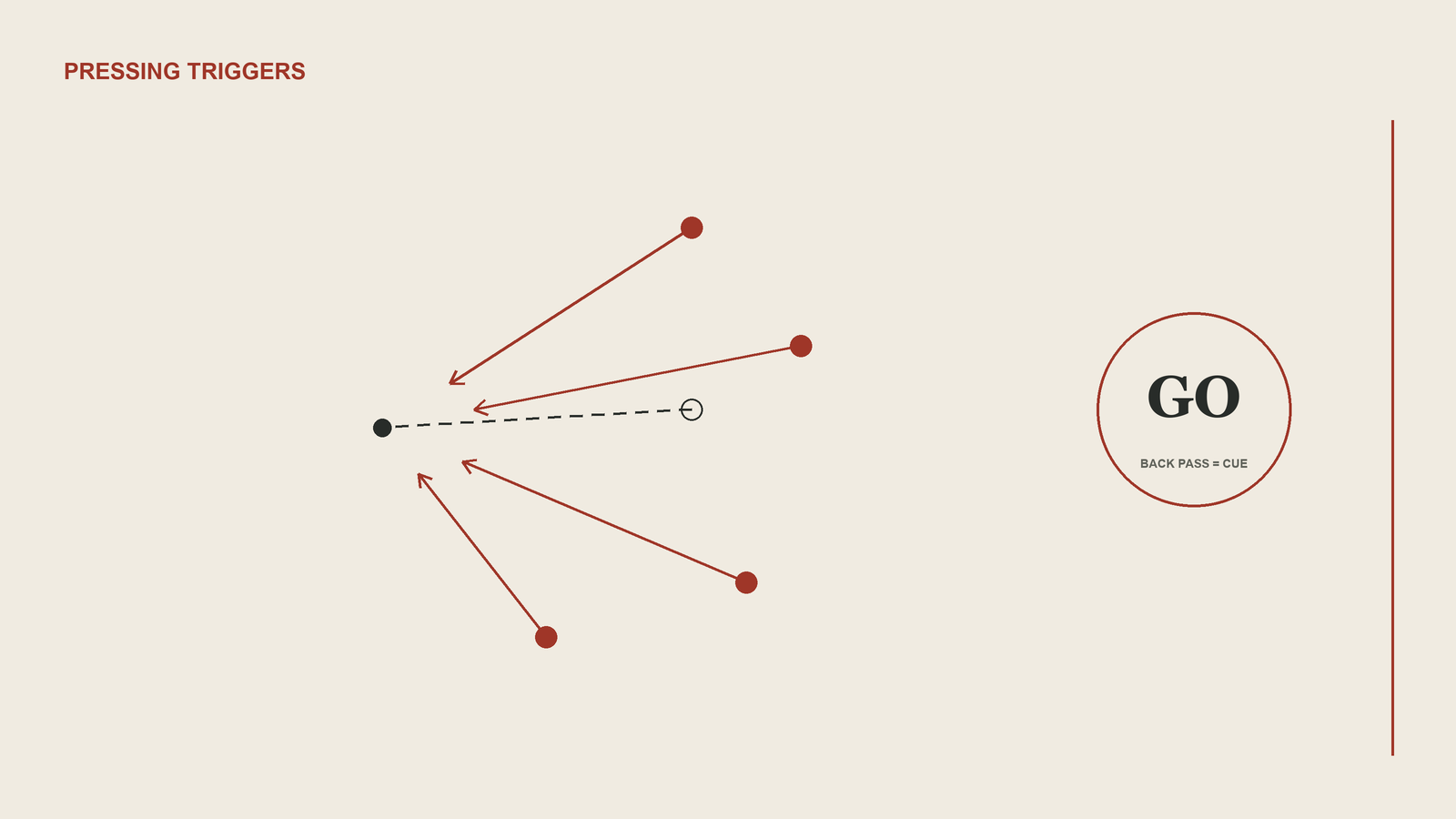
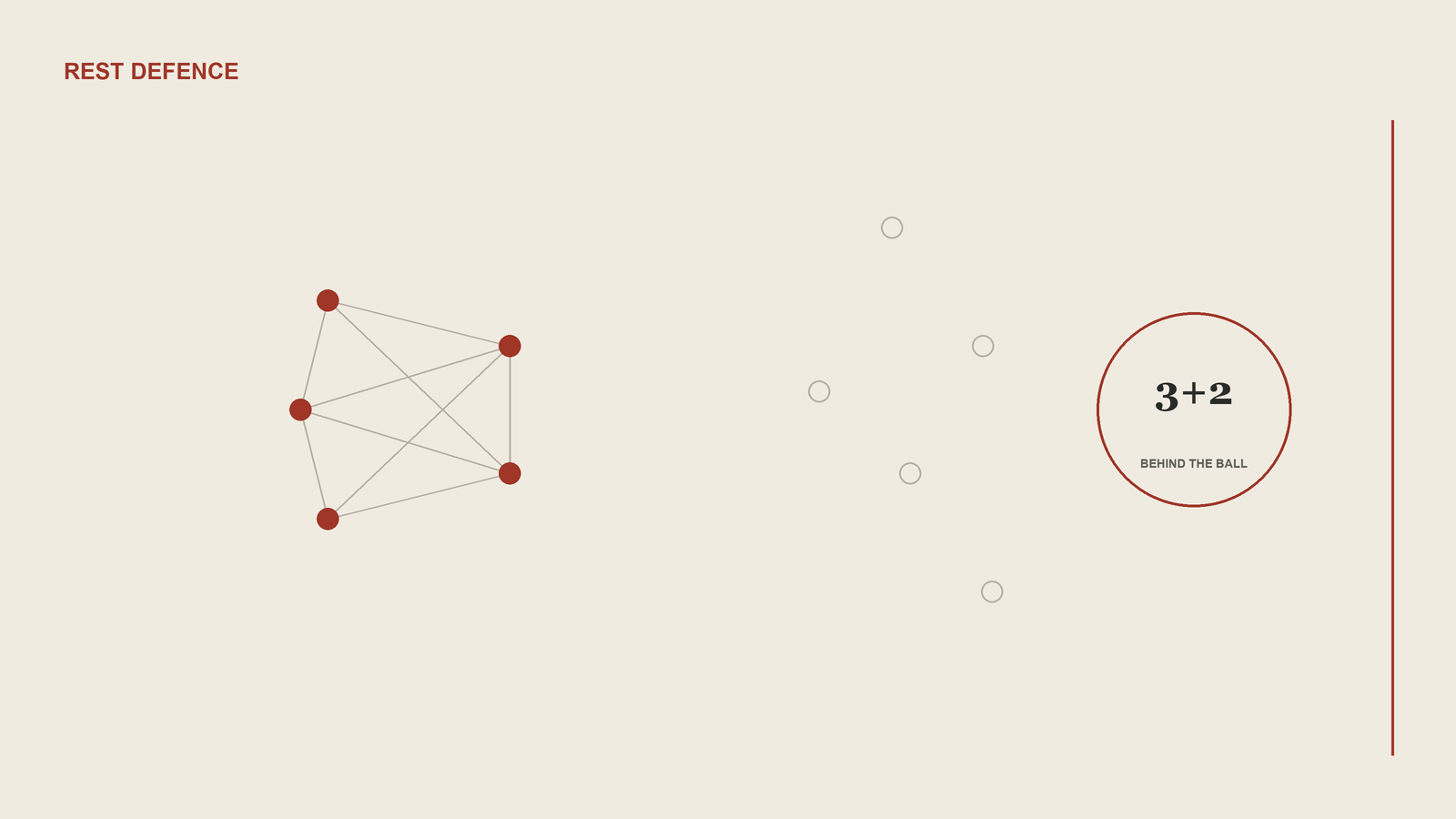
Two neighbouring ideas complete the picture. Pressing triggers are the cues that tell the first player when to go, and rest defence is the shape left behind the ball that makes winning it back within seconds possible at all.
Winning the ball back high up the pitch is older than the word gegenpressing. The Ajax and Netherlands teams of the early 1970s already hunted the ball as a group, as part of the style known as total football.
Is gegenpressing the same as a high press?
They overlap but aren't identical. A high press describes where a team defends: up near the opponent's own goal, regardless of when possession changed hands. Gegenpressing describes a specific moment: the seconds immediately after losing the ball, wherever on the pitch that happens. A team can play a high defensive line without gegenpressing hard after turnovers, and in principle a team could gegenpress intensely right after losing the ball even from a deeper base shape, though in practice the two tend to travel together because both demand the same aggressive, high-energy approach to winning the ball back.
Which coach is most associated with gegenpressing?
Gegenpressing is most associated with Jürgen Klopp's Borussia Dortmund and Liverpool sides. Klopp has described a well-timed counter-press as a better playmaker than any pass, because it wins the ball back close to a disorganised defence. Winning the ball back high as a group is older than the word, though: Ajax and the Netherlands of the early 1970s already did it.
What is the six-second rule in gegenpressing?
The six-second rule reflects how fast the value of pressing collapses after a turnover. Win the ball back within about six seconds of losing it and the opponent is still scrambling. Wait fifteen and it has reorganised, so the team is pressing a settled defence instead of catching one mid-transition. That is why gegenpressing is abandoned quickly if the first wave fails.
What are the risks of gegenpressing?
Gegenpressing asks forwards and midfielders to sprint again straight after the attack breaks down, so teams without the depth or conditioning tend to fade in the last twenty minutes. It also commits five or six players away from their defensive shape. If the counter-press fails, a single clean line-breaking pass through a half-collapsed midfield can open the space behind.
Sources and further reading
- Counterpressing — Spielverlagerung glossary (accessed 18 Sep 2026)
- Association football tactics — Wikipedia (accessed 18 Sep 2026)