Glossary · Essay
Overload: How Teams Manufacture a Spare Man Without Anyone Noticing
Football is often decided by moments where one side simply has more players than the other in a small area. An overload is how teams engineer that advantage on purpose.
By 01 Owen
· Updated 6 Oct 2026 · 5 min read
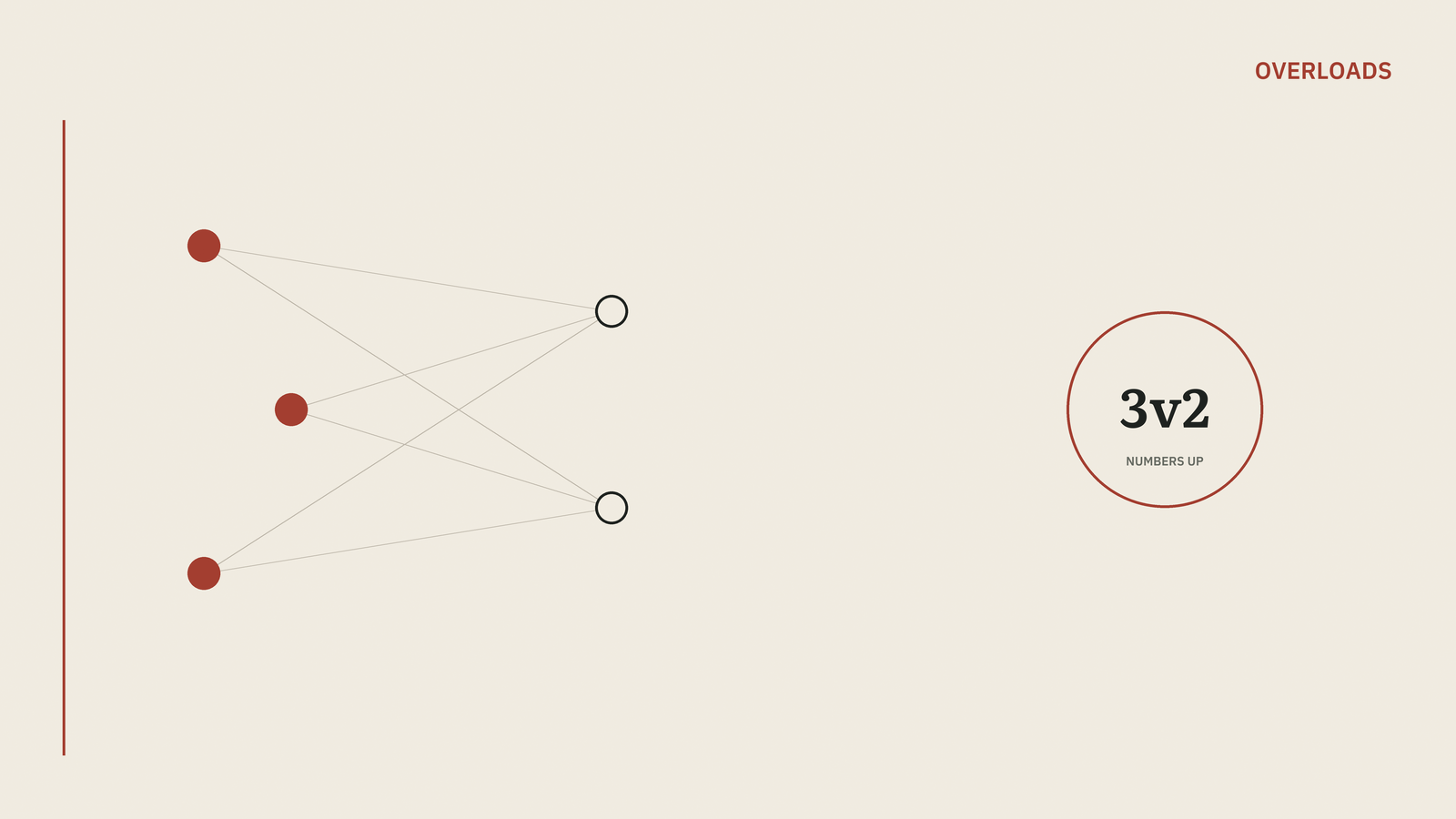
A lot of football tactics come down to a simple, almost embarrassingly basic idea: if you can get more of your players than their players into one small area of the pitch, something good is likely to happen there. An overload is the deliberate, engineered version of that numbers advantage, created on purpose rather than stumbled into.
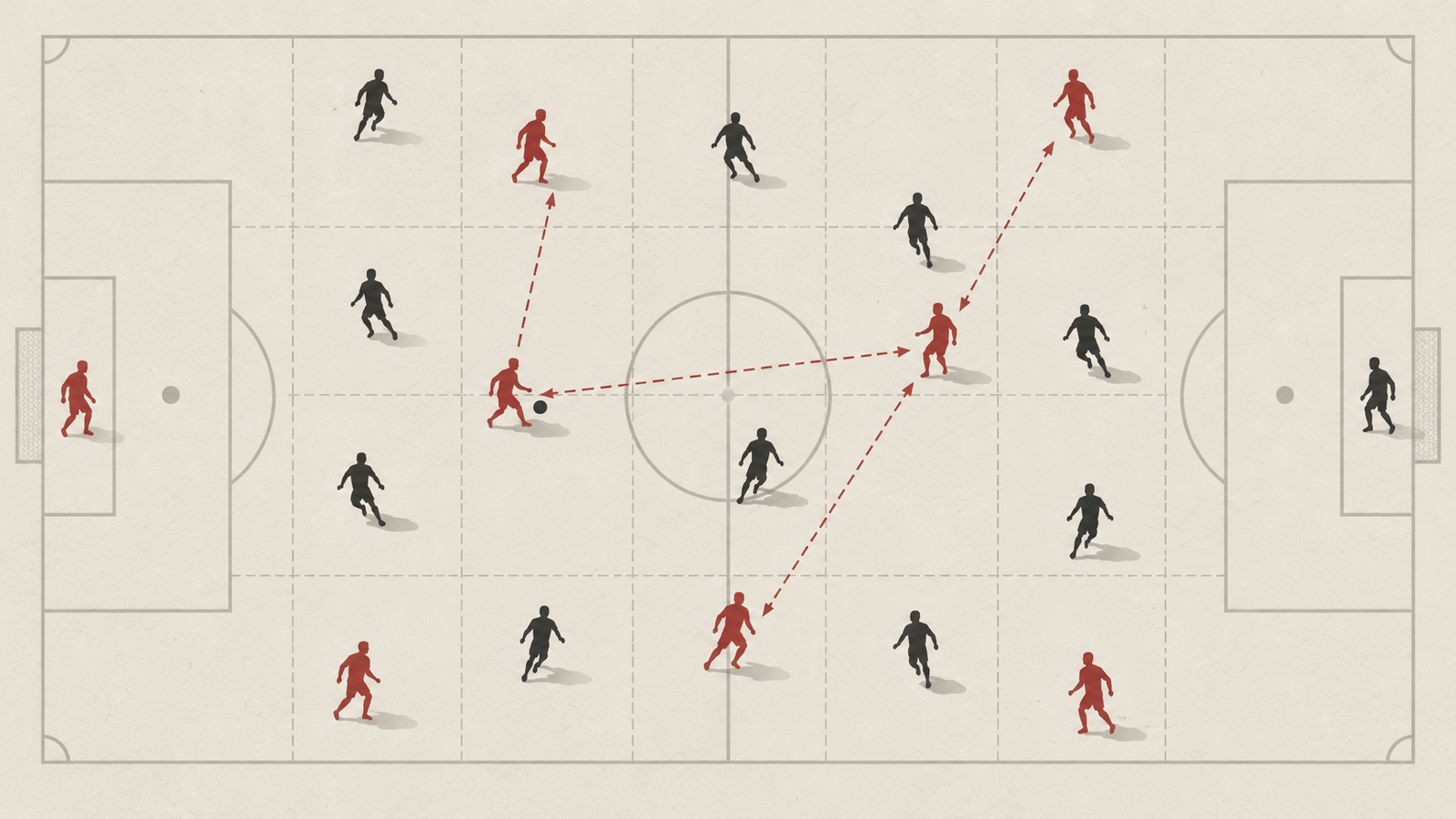
The clearest version happens out wide. A winger, a fullback, and an eight all drifting toward the same flank creates a three-on-two or even a four-on-three against whichever opposition players are responsible for defending that side, and a defense that hasn't shifted its own numbers to match is suddenly being asked to cover more attackers than it has defenders in position to mark. The attacking side doesn't need every player involved to be individually brilliant for this to work; the advantage is structural. Someone on the overloaded side is very likely to be open, and the only question is whether the team in possession can find and use that free player before the defense recovers its shape.
Overloads beyond the flanks
Overloads aren't limited to wide areas, though they're easiest to spot there because the touchline gives the defense a hard boundary to defend against. A team can just as easily overload central midfield by dropping a striker deep to join two central midfielders against a single opposing pivot, or overload the box at a corner by sending extra bodies forward, accepting the transition risk in exchange for a numbers advantage at the moment the ball is delivered. The common thread is always the same: identify a zone, get more of your players into it than the opponent has defenders, and make the defense solve a problem it doesn't have the bodies to solve cleanly.
The underload on the other side
Creating an overload deliberately usually means creating an underload somewhere else, since players don't appear from nowhere; shifting three attackers to one flank to outnumber the defense there means the opposite flank and often central areas are thinner than they'd otherwise be. Good teams treat this as an acceptable trade rather than a flaw, because the point isn't to be strong everywhere at once, it's to be temporarily overwhelming in the one place the ball actually is, and to shift that concentration of numbers around the pitch as play moves rather than spreading players evenly and being outnumbered nowhere but also dominant nowhere.
How defences deal with an overload
Defending against an overload is mostly about recognizing it early and shifting numbers to match before the attacking side can exploit the extra man, which is why teams that defend well against overloads tend to talk about it in terms of shape discipline and communication rather than individual duels; a back line that shifts as a unit the moment it sees three attackers drifting to one side can turn a three-on-two back into something closer to even, while a back line that reacts player by player, each defender tracking their own assigned man individually, tends to get pulled apart by the same overload repeatedly, since no single defender is actually responsible for closing the numbers gap.
Overloads in the half-space
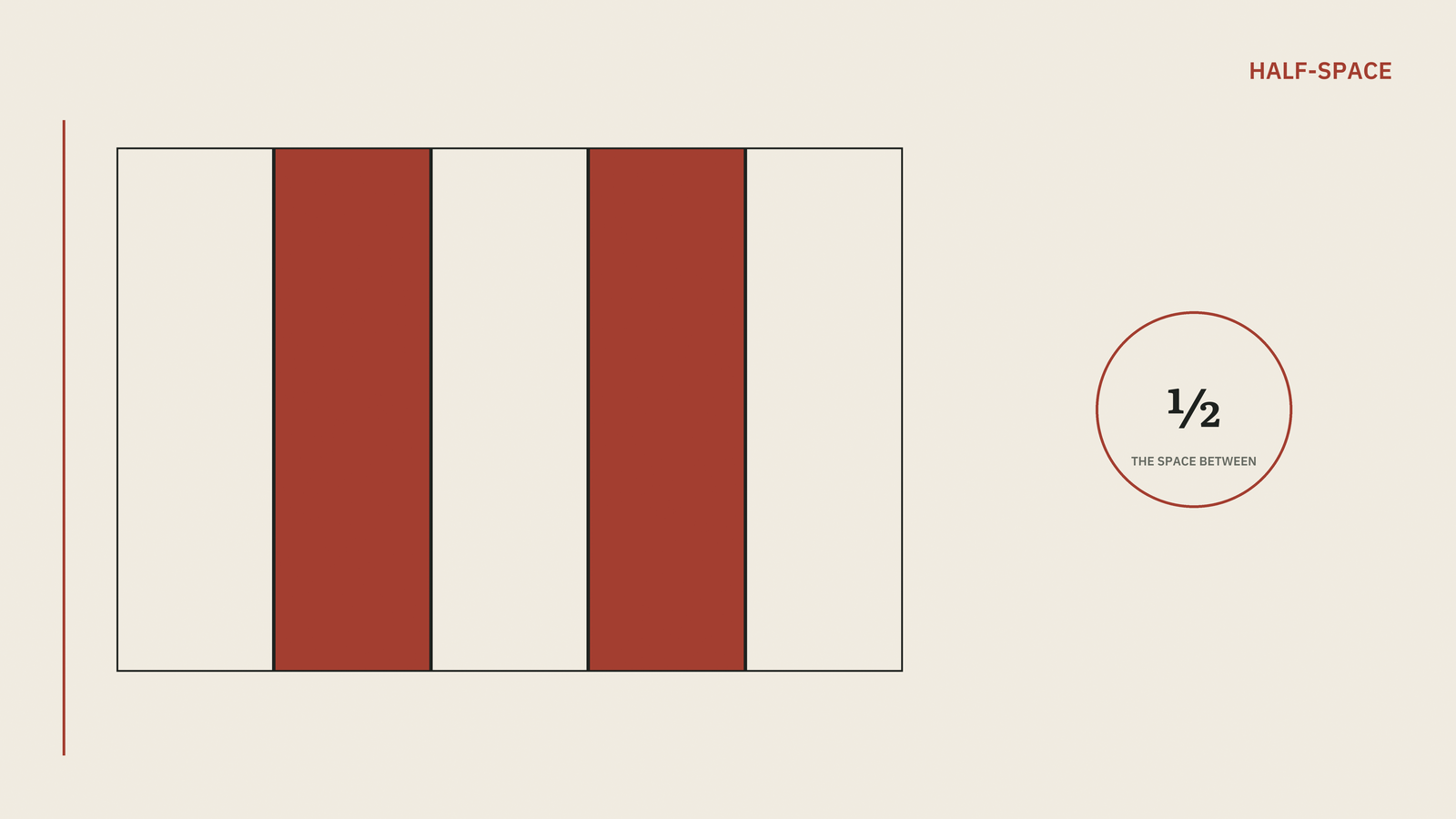
The half-space is one of the more common zones where overloads get engineered on purpose, since a fullback or winger tucking into that channel alongside a winger who stays wide creates exactly the kind of two-against-one on a single defender that the whole concept depends on, without requiring a big structural change to the team's base shape.
The half-space is one of the most common places this gets engineered, and once a pass actually breaks through the extra numbers, packing is the stat that measures how many defenders it took out.
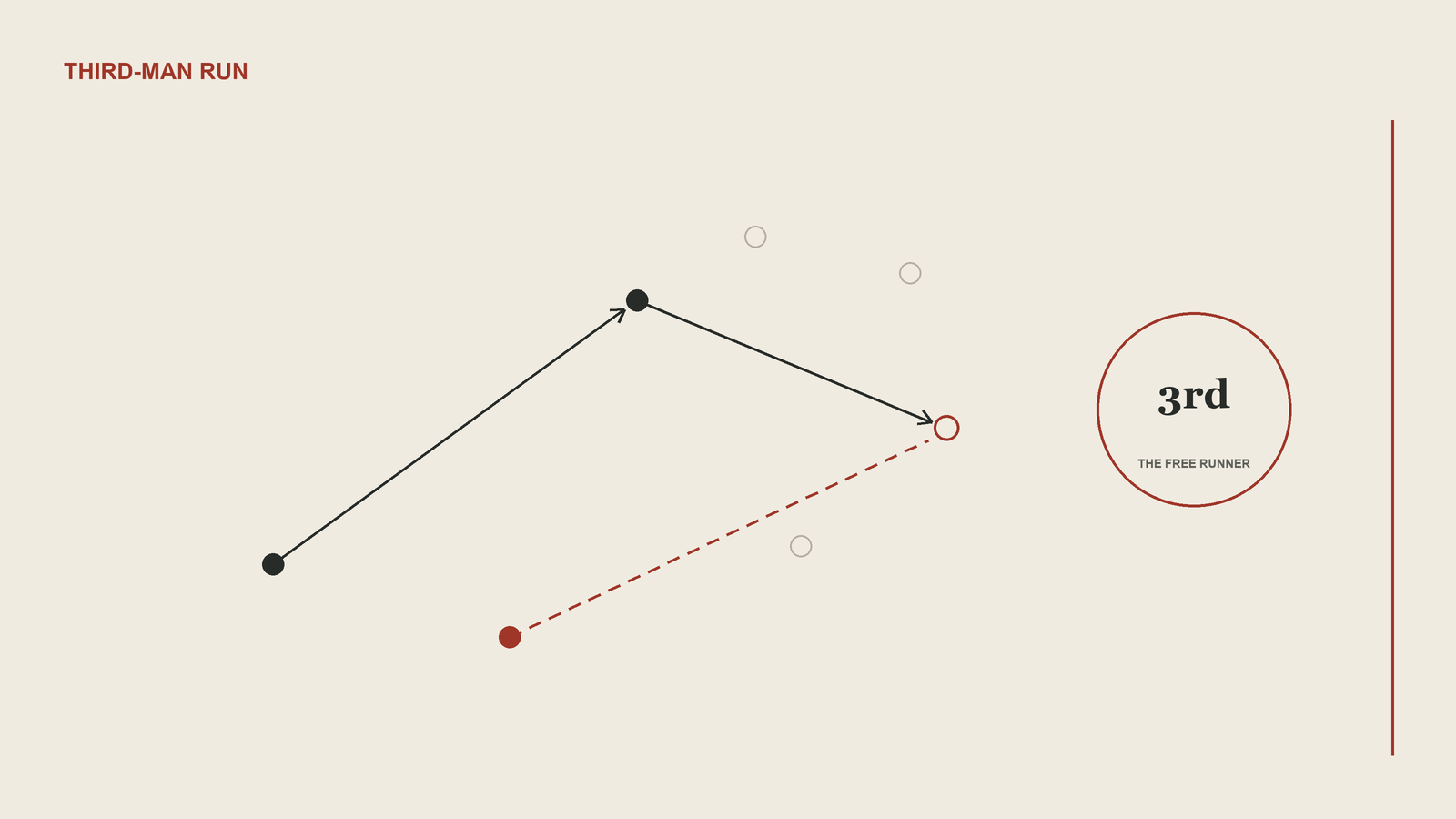
An overload is usually exploited through a third-man run, the spare player arriving where the defence has no one left to send. It also has a price: every body committed to one side is a body missing from the rest defence if the ball is lost.
The central trio of a 4-3-3 can outnumber a midfield pair. In a 3-5-2, a wide centre-back joining a wing-back and midfielder can create a local overload; two strikers against two centre-backs alone are an equal-number match-up.
The flank overload usually starts with the winger: by staying wide he pins the opposing full-back, and when he cuts inside he drags a defender with him and frees the touchline for the run from behind.
Is a 2v1 the minimum required for an overload?
Technically yes, in the sense that any numbers advantage in a defined zone qualifies, but a bare 2v1 is the least reliable version in practice, since a single well-positioned defender can often delay or force a mistake long enough for cover to arrive. Most coaches treat a genuine 3v2 as the more dependable threshold for actually creating a clean, repeatable advantage, because it gives the attacking side a spare option even if the first pass or dribble doesn't immediately break the line.
What is an example of an overload in football?
The clearest overload happens out wide: a winger, a full-back and an eight drift toward the same flank and create a three-on-two or four-on-three against the players defending that side. The advantage is structural, so nobody needs to be individually brilliant. Someone on the overloaded side is very likely to be open, and the question is whether the team finds him first.
How do you defend against an overload?
Defending an overload is mostly about recognising it early and shifting numbers to match before the extra man can be used. A back line that moves as a unit when it sees attackers drifting to one side can turn a three-on-two into something closer to even. A line that reacts player by player, each tracking his own man, tends to be pulled apart.
What is the downside of creating an overload?
Creating an overload usually means creating an underload elsewhere, because players do not appear from nowhere. Shifting attackers to one flank leaves the other flank and often central areas thinner. Good teams accept that trade. The overload also has a price if the ball is lost, since every player committed to one side is missing from the rest defence.
Sources and further reading
- Overloading — Spielverlagerung glossary (accessed 18 Sep 2026)