Formations and roles · Analysis
Winger: the wide attacker who beats the full-back
A winger attacks from the flank: beats the full-back, crosses or cuts inside to shoot. Classic and inverted wingers, the inside forward and famous examples.
By 01 Owen
· Updated 3 Oct 2026 · 6 min read
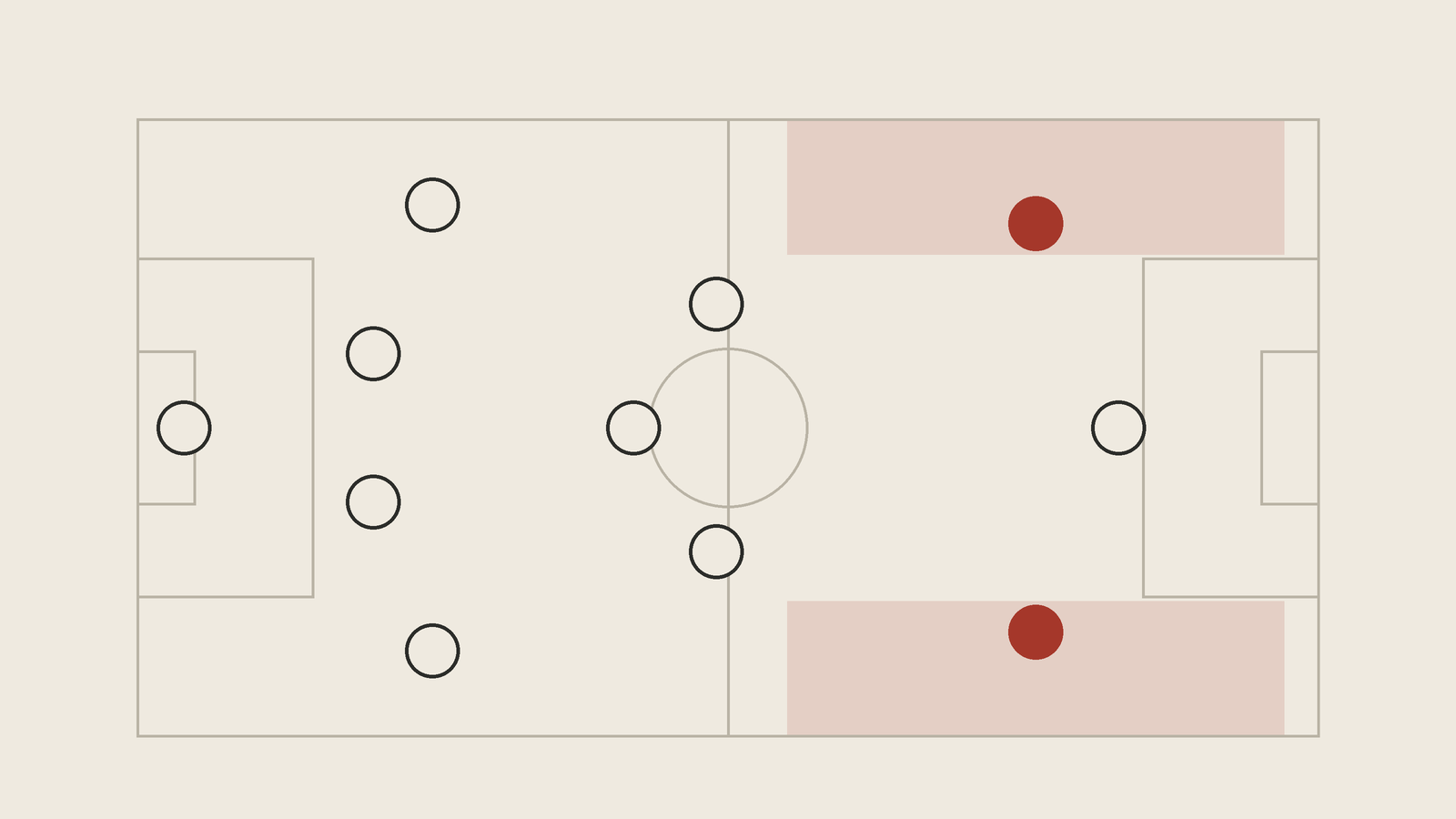
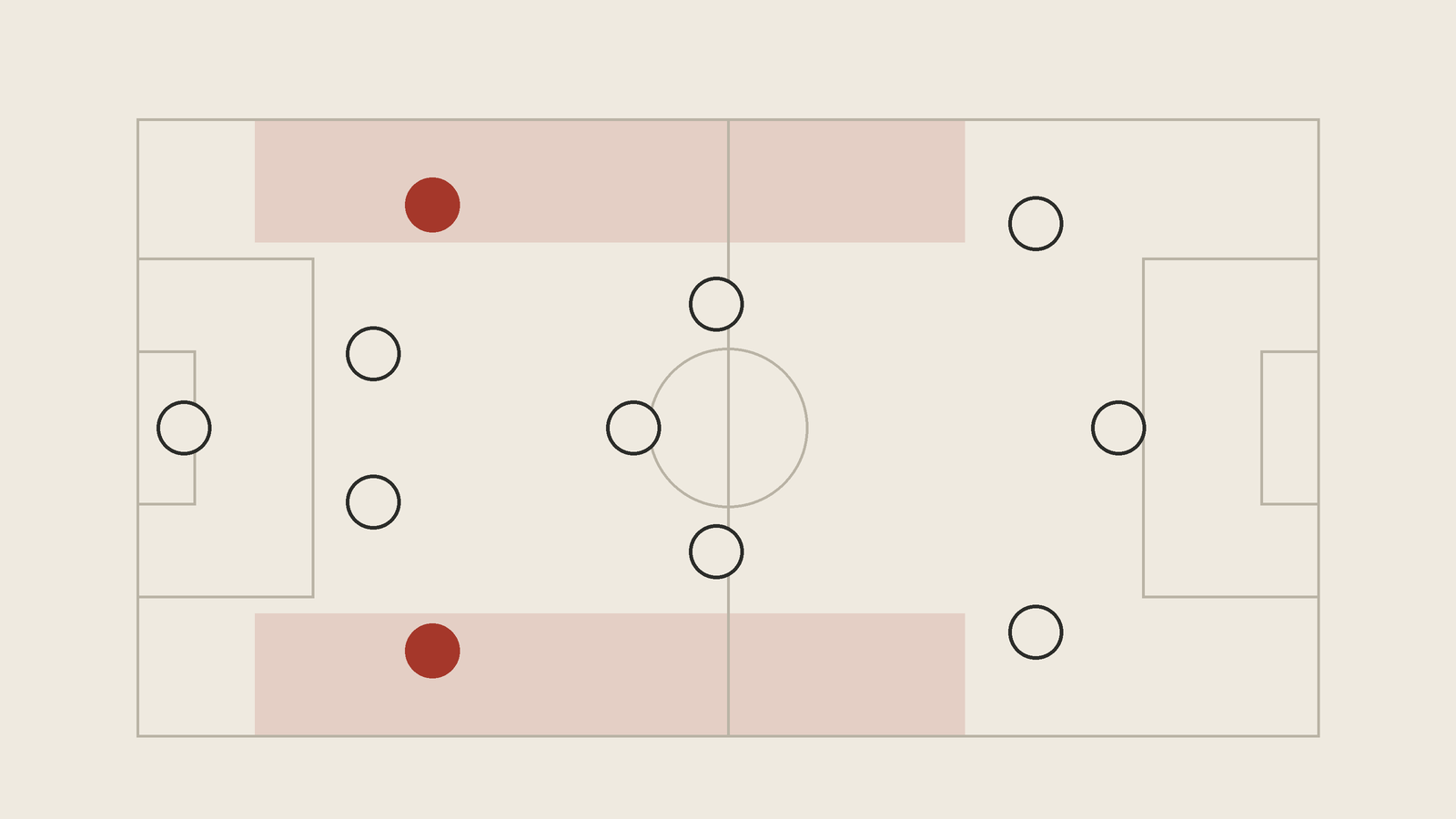
A winger is an attacking player who starts wide, near the touchline, and whose job is to beat the opposing full-back. From there he crosses, plays a cut-back or cuts inside to shoot, and in modern teams he is often one of the main goalscorers.
The two wingers are traditionally the 7 on the right and the 11 on the left, as shown in the guide to football positions. Full-backs, wing-backs and wide midfielders also play on the flanks, but they are usually not called wingers: the word is kept for the attacking players.
Where the position comes from
In the 2-3-5 the two outside forwards stayed close to the touchlines and crossed for the inside forwards and the centre-forward. They were purely attackers, rarely expected to track back. That changed in 1966, when England manager Alf Ramsey won the World Cup without wingers from the quarter-final onwards, the "Wingless Wonders". The flat 4-4-2 that followed turned many wingers into wide midfielders who also defended. The modern 4-3-3 brought them back as wide forwards.
What a winger does with the ball
Coaches' Voice describes the winger's core job in a 4-3-3 as isolating the full-back and attacking him one against one. From there he has two routes.
- Outside: he goes past the full-back on the line and crosses or pulls the ball back from near the byline.
- Inside: he cuts in towards the box and shoots, or plays a pass into the half-space or zone 14.
Without even touching the ball, a winger also stretches the opponent's back line. By staying wide he pins the full-back, which opens space in the middle for midfielders and the striker. Guardiola's Barcelona used wide players such as Pedro and David Villa this way, pinning the back line so the midfield could control the ball.
Classic and inverted wingers
A classic winger plays on the side of his stronger foot: a right-footer on the right, a left-footer on the left. He is built to go outside and cross, and his natural partner is a striker who is good in the air. Wikipedia names David Beckham and Ryan Giggs among the wide players of the 4-4-2 era.
An inverted winger plays on the "wrong" side: a left-footer on the right, a right-footer on the left. He cuts inside and shoots or passes with his stronger foot. Arjen Robben, a left-footer on the right, is the most cited example, along with Lionel Messi. At Real Madrid, José Mourinho often played Ángel Di María on the right and Cristiano Ronaldo on the left. At Jürgen Klopp's Liverpool, Mohamed Salah and Sadio Mané were wrong-footed wingers who moved inside while the full-backs Trent Alexander-Arnold and Andy Robertson gave the team its width.
The inside forward is the oldest name for a similar idea. In the 2-3-5 the inside forwards played between the wingers and the centre-forward; today the term is used for wide forwards who think like strikers and attack the goal from the flank.
Wingers and full-backs
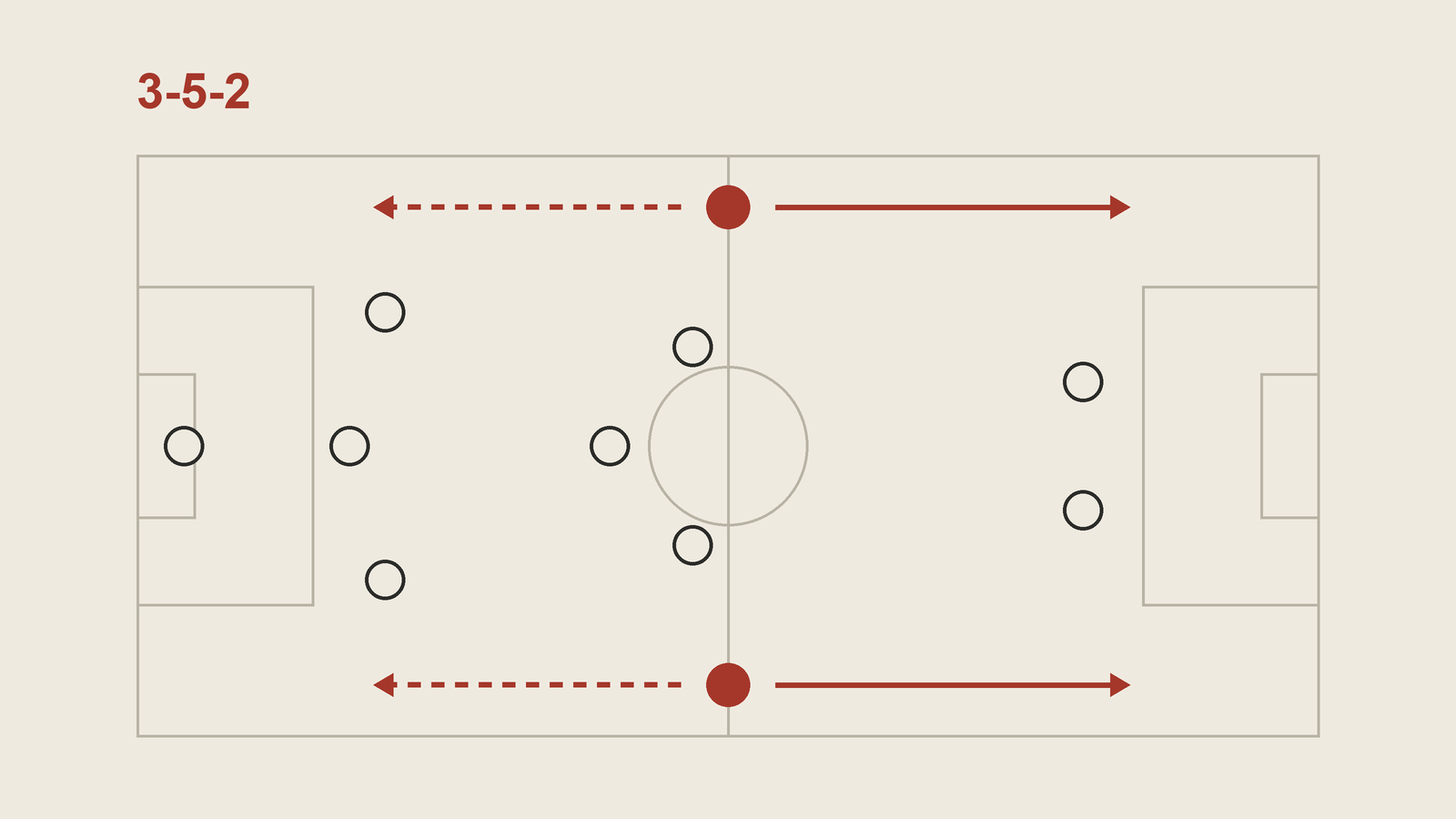
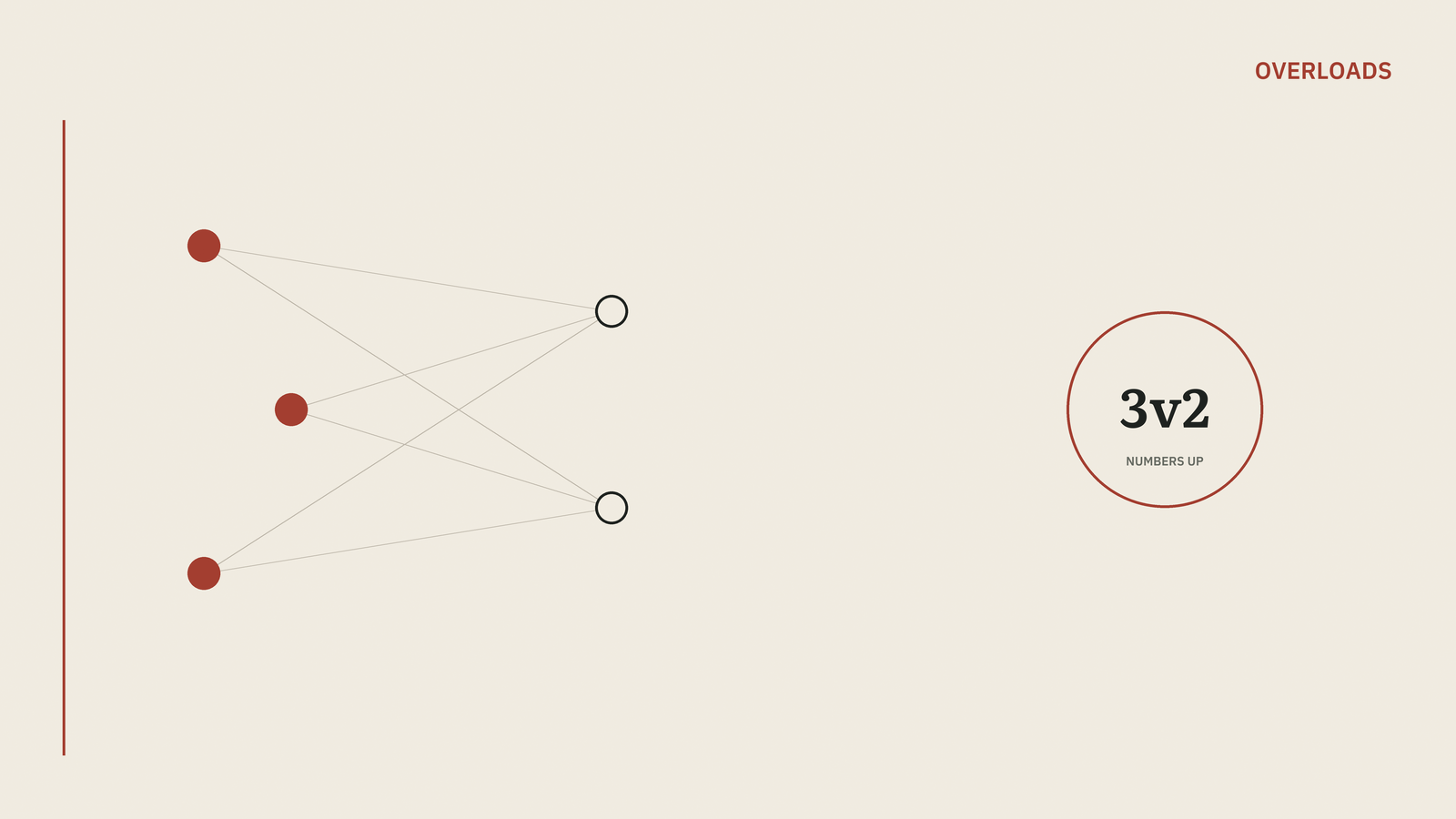
The winger and the full-back behind him work as a pair. When the winger cuts inside, the space on the outside is free for an overlapping full-back, and the opposing full-back faces two attackers: a classic overload. When the winger stays wide, the full-back can run inside him instead, or move into midfield as an inverted full-back. In a system with three centre-backs, wing-backs often take over the width, and the wide forwards play narrower, closer to the striker.
Wide midfielders, raumdeuters and false wingers
Not every wide player is a winger in the classic sense.
- The wide midfielder of a 4-4-2 or a 4-5-1 balances attack and defence. Jonathan Wilson, quoted on Wikipedia, describes how the winger became a shuttler who might still cross but was also meant to put in a defensive shift. Italian football calls this role the tornante, the one who comes back.
- The raumdeuter, a German word meaning space interpreter, starts wide but moves into central attacking areas to find spaces where he can receive and score. Thomas Müller is the best-known example.
- The false winger is a central player put on the wing on paper. In the match he moves inside to drag defenders out of position and crowd the midfield, leaving the touchline to an overlapping full-back. Samir Nasri described a version of this as a playmaker who does not play in the centre.
These variants show why the position is better read through movement than through the team sheet: two players listed as right wingers can spend a match in completely different zones.
What a winger does without the ball
The modern winger defends too. He presses the opposing full-back or centre-back, blocks the pass down the line and tracks the full-back's runs. Inverted wingers also leave the team with more players in the centre when the ball is lost, which helps a team that counter-presses straight away.
What makes a good winger
Pace and dribbling come first, because the job starts with beating a defender one against one. Then the end product: crossing, cut-backs, shooting and the decision of when to use which. Off-the-ball judgement matters as much: knowing when to stay wide and when to attack the space behind the full-back.
What the numbers show
Wingers are measured on what they create and finish. Expected assists capture the quality of their crosses and cut-backs, box entries count how often they carry or pass the ball into the area, and successful dribbles and expected goals show how dangerous they are when they cut inside.
How to spot the wingers' roles in a match
Look at their feet and their first touch. A winger who keeps receiving on the touchline and goes outside is a classic winger; one who receives wide but turns inside onto his stronger foot is an inverted winger. Then watch the full-back behind him: if he overlaps every time the winger moves inside, the pair is working as designed.
What does a winger do in football?
A winger attacks from a wide position near the touchline. He tries to beat the opposing full-back, then crosses, plays a cut-back or cuts inside to shoot. He also stretches the defence and, in modern teams, presses when the ball is lost.
What is an inverted winger?
An inverted winger plays on the side opposite his stronger foot, a left-footer on the right or a right-footer on the left. Instead of crossing from the line, he cuts inside to shoot or pass with his stronger foot.
What is the difference between a winger and a wing-back?
A winger is an attacker who plays high up the flank. A wing-back is a defender in a system with three centre-backs who covers the whole flank, from his own box to the opponent's, so he defends far more.
What number does a winger wear?
Traditionally the right winger wears 7 and the left winger 11, numbers that go back to the outside right and outside left of the 2-3-5. Today squad numbers are personal, so a winger may wear any number.
Sources and further reading
- Midfielder — Wikipedia
- Forward (association football) — Wikipedia
- The 4-3-3: football tactics explained — The Coaches' Voice
- Squad number (association football) — Wikipedia