Glossary · Essay
Packing: The Stat That Counts How Many Defenders One Pass Removes
A short pass through the right gap can do more damage than a long ball into open space. Packing counts how many defenders a single pass or dribble actually eliminates.

By 01 Owen
· Updated 9 Oct 2026 · 5 min read
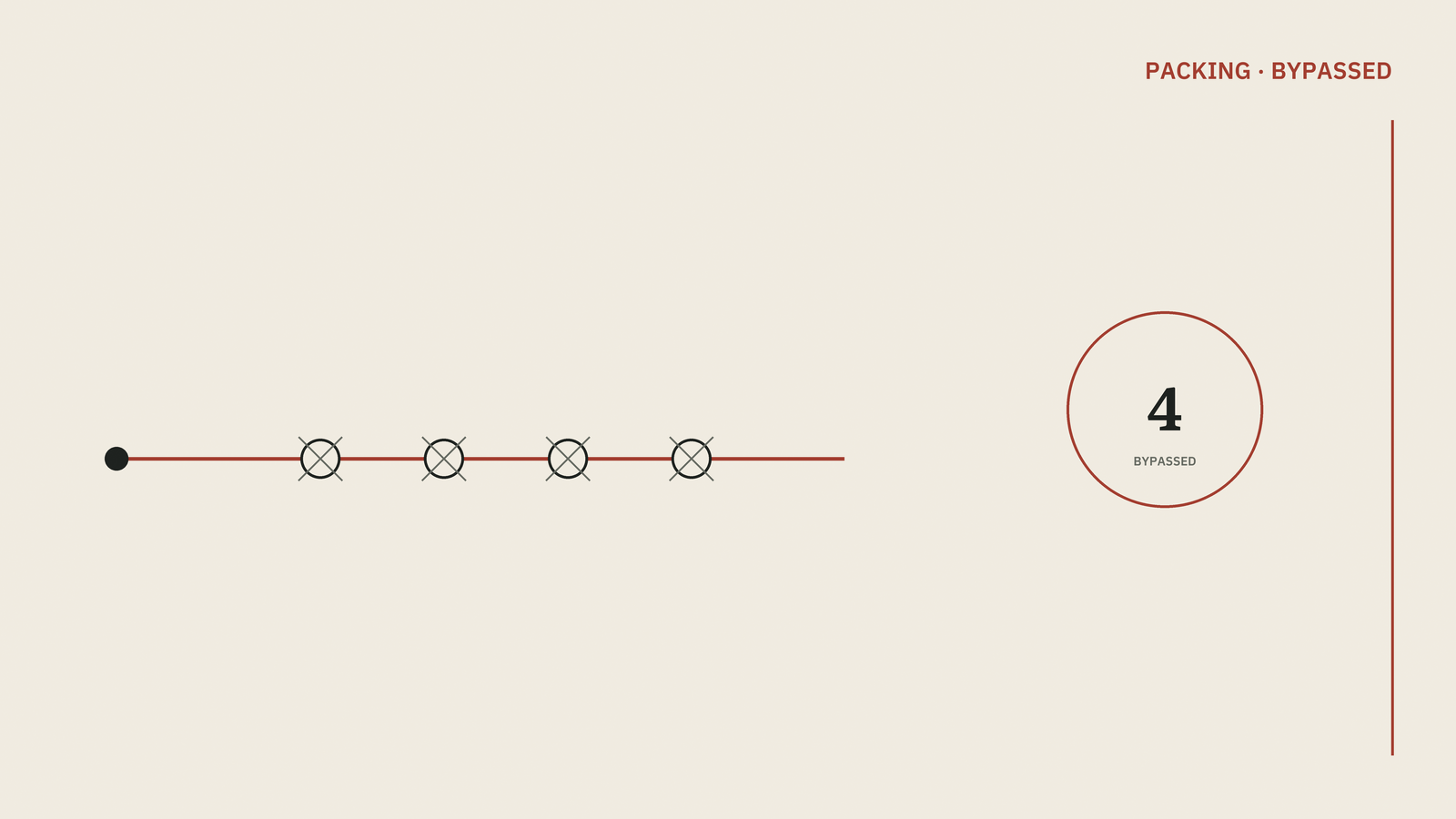
Some passes travel five yards and change a match. A ball threaded between two center backs into a striker's path takes out both defenders in one motion, even though the pass itself barely covers any ground. A forty-yard switch of play, by contrast, can look spectacular while bypassing nobody at all if the opposition's shape was already spread wide enough to cover it. Distance is a poor way to measure how much damage a pass actually does to a defense. Packing was built specifically to measure the damage instead.
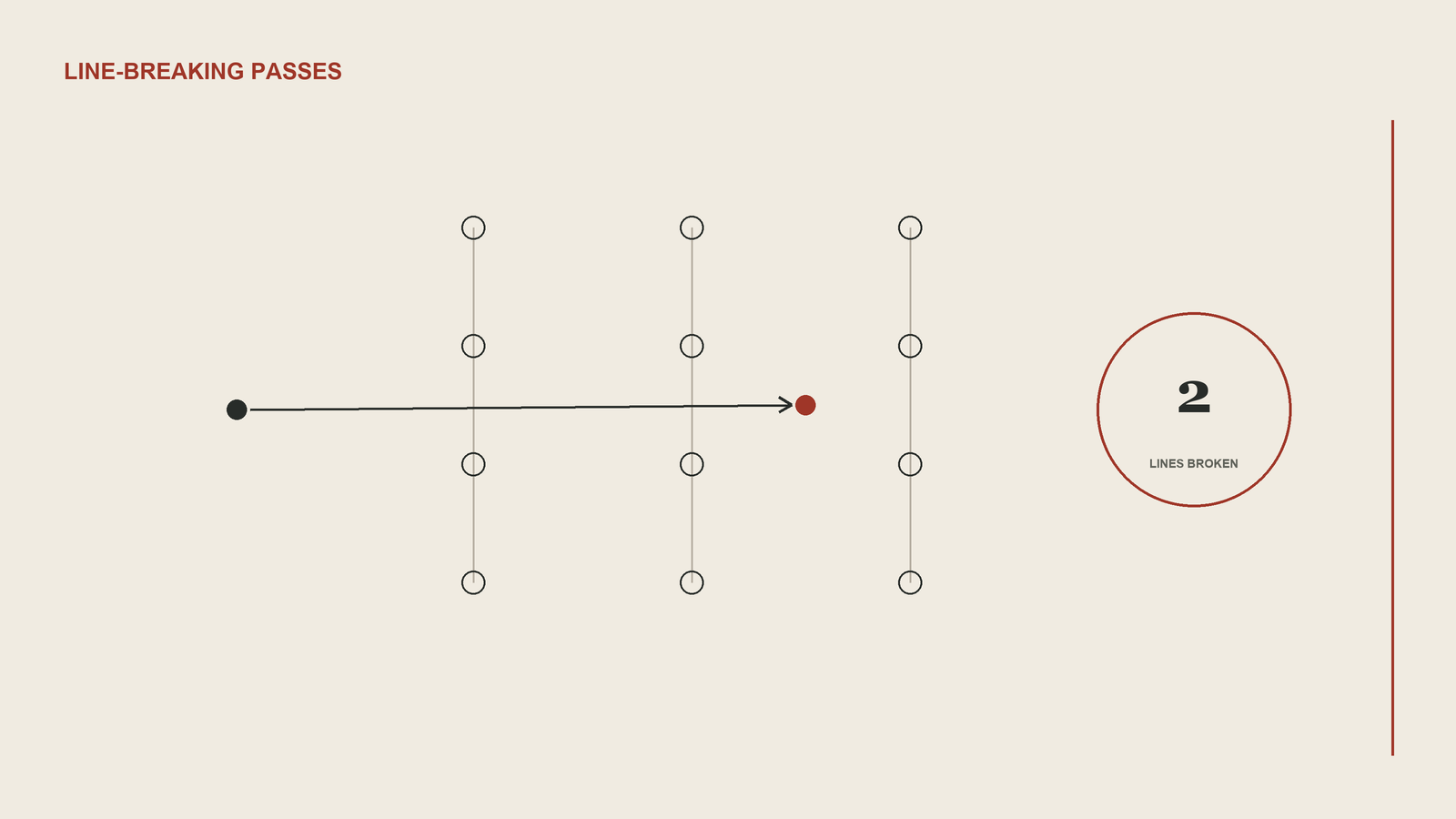
The concept, developed by the German analytics group Impect, counts how many opposition outfield players are taken out of the game by a pass or a dribble, meaning how many defenders end up between the ball and their own goal after the action that were in front of the ball before it. A pass that splits two center backs packs both of them. A dribble that beats a fullback one-on-one packs one. The count goes up the more central and the more advanced the removed defenders were, since bypassing a winger tracking back near the halfway line matters less than bypassing the last center back standing between the striker and the goalkeeper.
Packing versus progressive passing
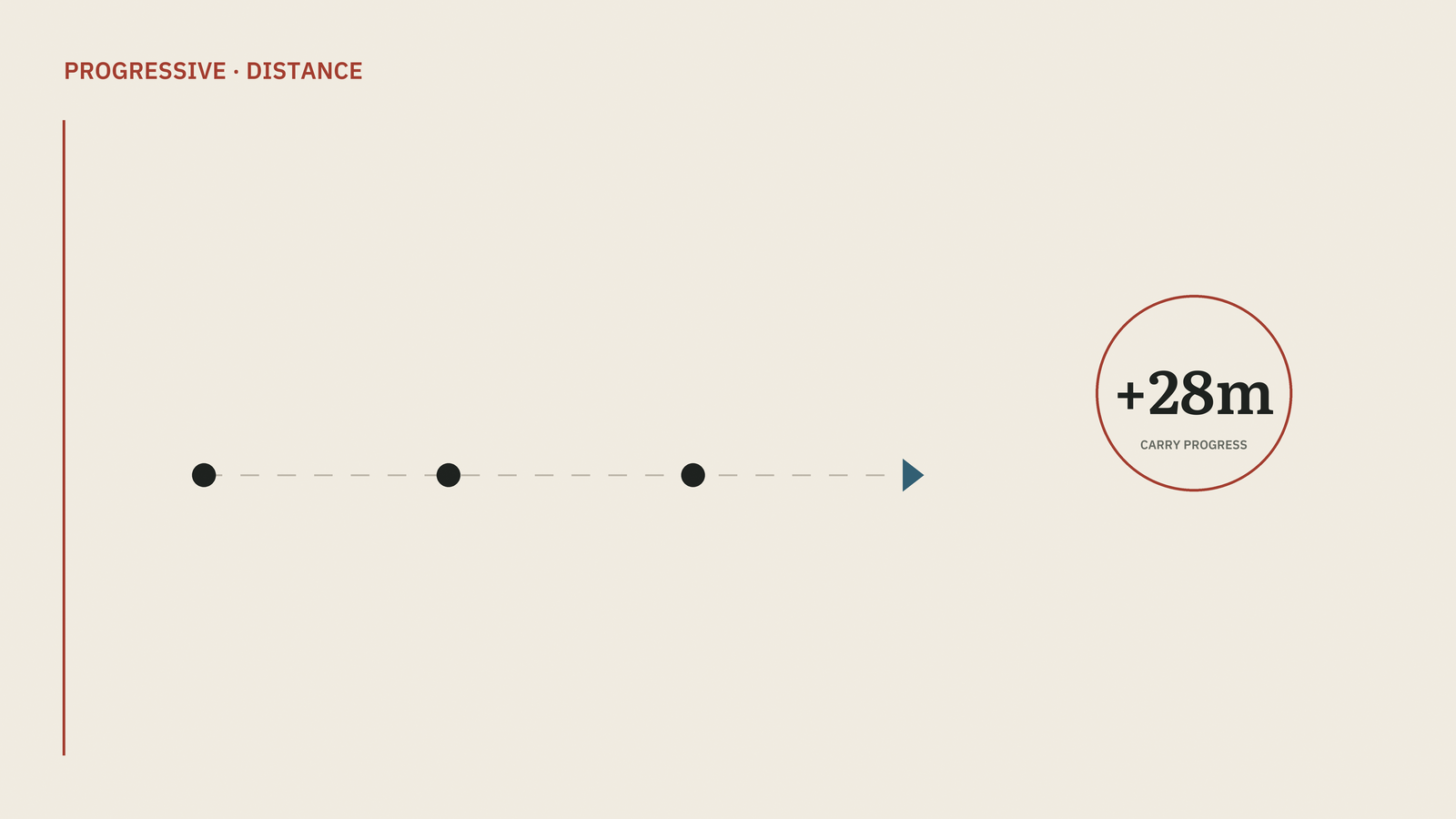
This is what separates packing from a simple progressive-pass count. A team can move the ball forward all day between banks of defenders without ever forcing them out of position, racking up progressive distance without packing anybody. A single vertical pass through a gap that a defense left open, even a short one, can pack three or four players in one action and do more to break the defensive structure down than ten sideways passes combined. It's a stat built around the idea that defenses lose matches by losing shape, not by losing ground.
Packing near the opponent's goal
The number that gets the most attention is packing near the opposition's own goal, sometimes broken out separately as a measure of how often a team's final actions strip away the last line of defense rather than just midfield congestion. A midfielder who consistently packs several defenders per ninety with line-breaking passes is doing something that assist counts and even progressive-passing numbers can undersell, because the pass itself might not lead directly to a shot. It just makes the next three or four seconds of attack dramatically easier for whoever receives it.
What the count cannot tell you
Packing has real limitations, most of them shared with other positional-data-lite stats. It doesn't know whether the pass was risky or safe, doesn't know if the receiving player was actually able to do anything with the extra space created, and doesn't distinguish between a defender who was genuinely eliminated from the play and one who could recover in half a second because he was already goal-side and sprinting back. A pass that technically bypasses a covering midfielder who was never going to reach the ball anyway still counts the same as one that bypasses a defender in perfect position.
Why packing stays inside clubs
It's also less widely available than xG or progressive passing, since it requires the kind of detailed positional tracking that not every provider publishes, which has kept it more of a scouting and recruitment tool used inside clubs than a stat regularly quoted in match coverage. Where it does show up, it's usually as a way of identifying passers whose value lies specifically in dismantling defensive structure, a skill that doesn't always translate into obvious numbers like goals or assists but tends to be very visible to anyone actually watching the buildup.
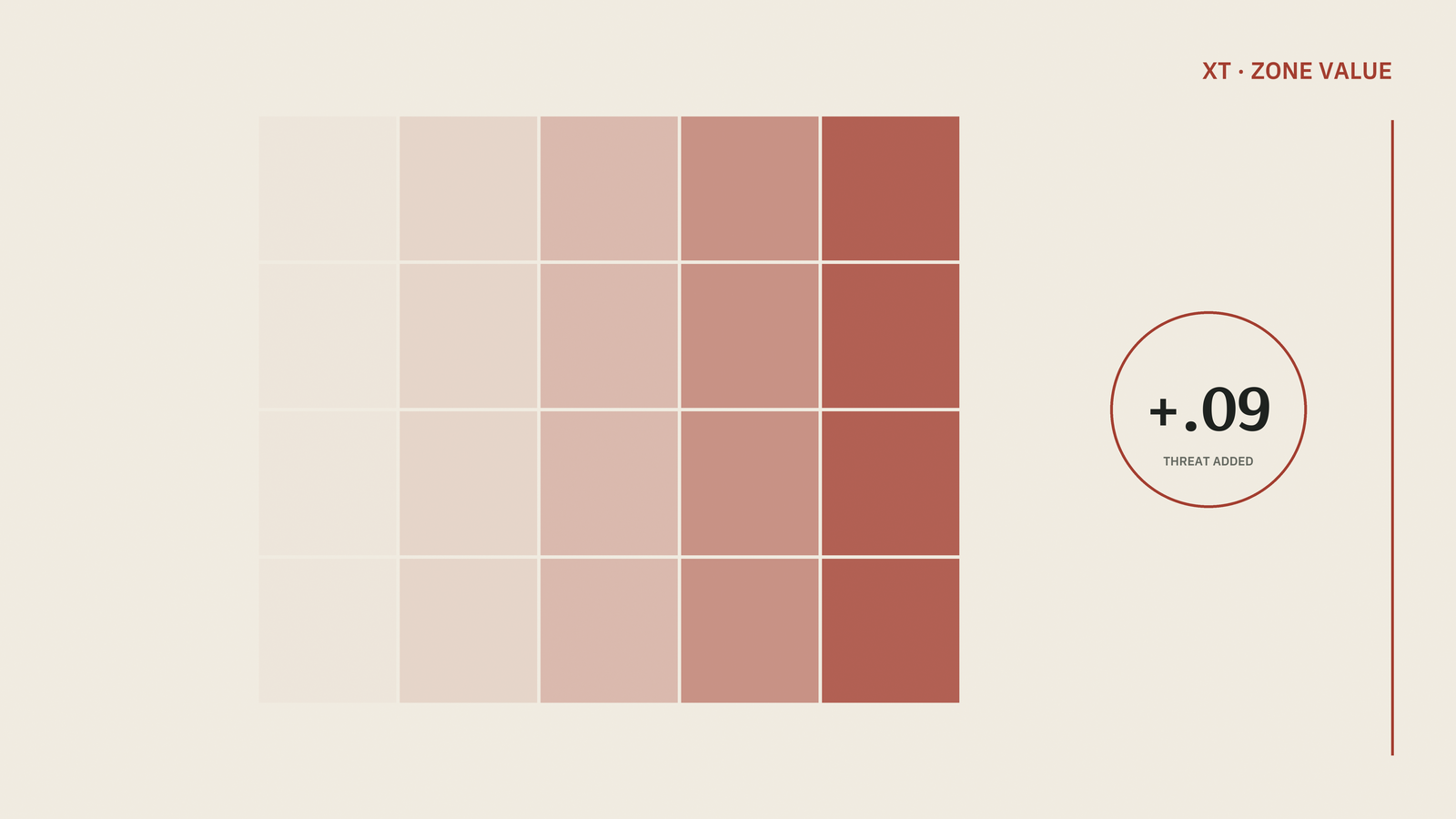
It answers a different question than expected threat or a simple count of progressive passes, both of which track where the ball went rather than how much defensive shape it broke on the way.
Packing is the scoring system for line-breaking passes: it counts what each one takes out. A pass network is the complementary view, showing who plays those passes to whom rather than how many defenders they remove.
Is packing data publicly available?
Not in any complete, free form. Packing was developed by the German analytics firm Impect, and the detailed player-by-player numbers live inside paid club and broadcaster analytics products rather than a public database or API. What does occasionally surface publicly are broadcast graphics during major tournament coverage, or isolated numbers cited in tactical analysis pieces, but there's no equivalent of a public xG or PPDA leaderboard for packing that a fan can browse directly.
How is packing calculated?
Packing, developed by the German analytics group Impect, counts how many opposition outfield players a pass or dribble takes out of the game, meaning defenders who end up between the ball and their own goal. A pass that splits two centre-backs packs both. The count rises the more central and advanced the removed defenders were.
How is packing different from progressive passes?
Progressive passes measure how far the ball moves toward goal. Packing measures how much defensive shape a pass breaks. A team can move the ball forward between banks of defenders without packing anyone, while a short vertical pass through a gap can pack three or four players at once. Packing is built on the idea that defences lose matches by losing shape.
What are the limitations of packing?
Packing does not know whether a pass was risky or safe, or whether the receiver could use the space created. It also cannot tell a defender who was truly eliminated from one already goal-side and sprinting back, so a pass bypassing a midfielder who was never going to reach the ball counts the same as one bypassing a defender in perfect position.
Sources and further reading
- The German analytics company who could revolutionise stats in England — Planet Football (accessed 18 Sep 2026)
- Packing Rate – Football Statistics Explained — The Football Analyst (accessed 18 Sep 2026)
- Stefan Reinartz — Wikipedia (accessed 18 Sep 2026)