Formations and roles · Analysis
Full-back: the wide defender who also has to attack
A full-back defends the flank and joins the attack: overlaps, underlaps, crosses and inverting into midfield. Types, famous examples, full-back vs wing-back.
By 01 Owen
· Updated 3 Oct 2026 · 6 min read
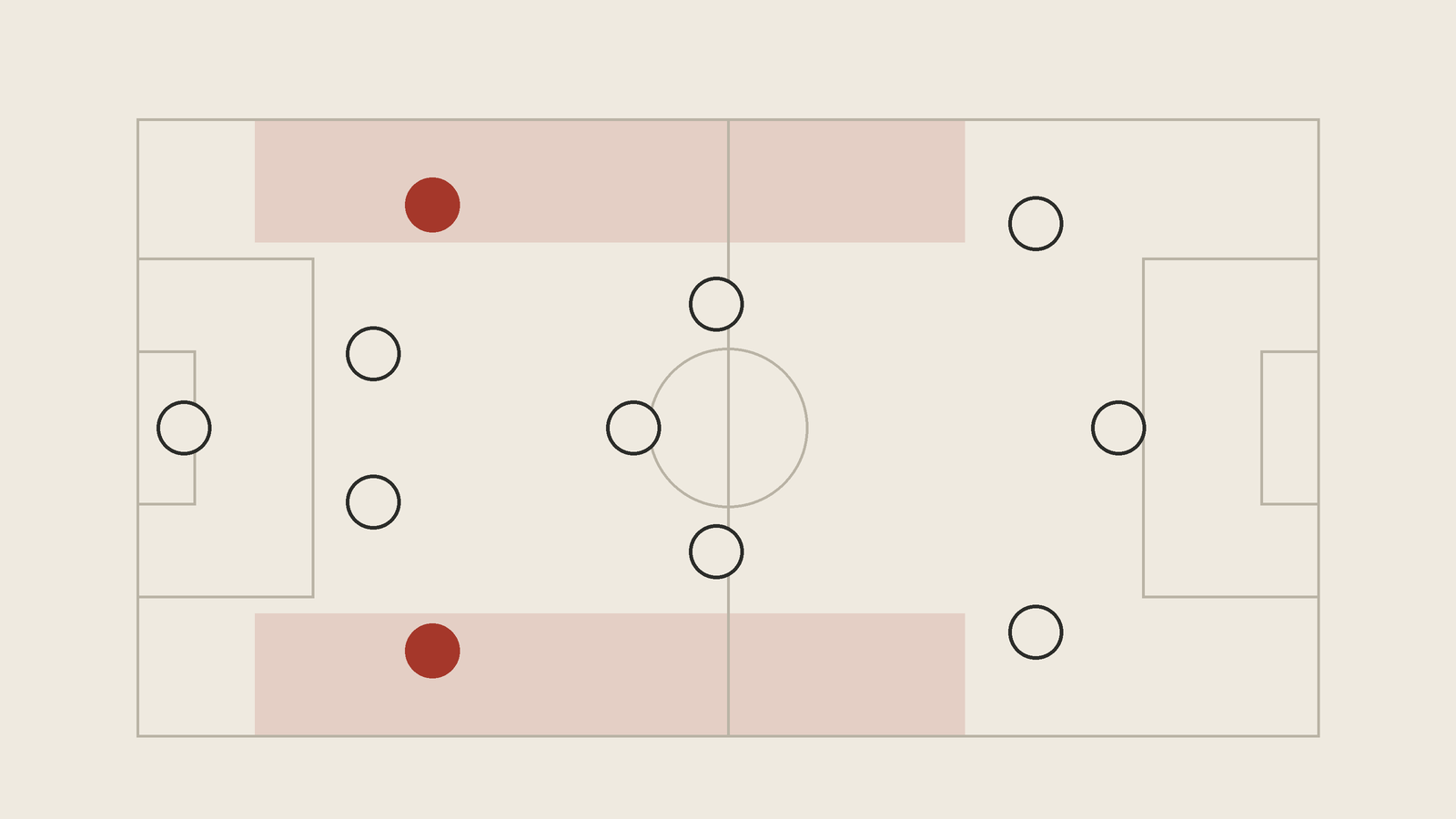
A full-back is a defender who plays on the right or left of a back four, outside the centre-backs. Without the ball he stops wingers and crosses; with it he supports the attack down his flank, which makes it one of the most demanding positions in the modern game.
The two full-backs are the right-back, traditionally number 2, and the left-back, traditionally number 3, as shown in the guide to football positions. Their job has changed more than almost any other position's in the last seventy years: from the last line of defence to a player who may spend more of a match in the opponent's half than in his own.
Where the position comes from
In the 2-3-5 formation the two full-backs were the only real defenders, covering the middle of the pitch in front of the goalkeeper. When the centre-half dropped back in the WM, they moved wider to face the opposing wingers. The 4-2-4 that Brazil used in the late 1950s pushed them wider still, and asked them to support the attack because there were only two midfielders. Brazil's Djalma Santos and Nílton Santos are often described as the first modern attacking full-backs. From then on the position was increasingly filled by players with pace and good crossing, not only defenders.
What a full-back does without the ball
The first duty is the one-against-one. The full-back faces the opposing winger, tries to keep him on the outside and away from goal, and has to be patient enough not to dive in. He also keeps the line with the centre-backs, so the back four steps up and drops together, and he tucks in to cover the far post when the ball is on the other side.
When the team presses high, full-backs often push up onto the opponent's full-backs or wide players. Then they have to close down the direct ball down the touchline into the space they left. After a turnover, the full-back's recovery run, sprinting back to protect the area outside the centre-back, decides many counter-attacks. That is why the position needs pace and stamina as much as defensive technique.
What a full-back does with the ball
In possession the full-back gives the team width. He offers a safe pass in build-up play, then moves forward depending on what his winger does.
- The overlap: the full-back runs outside and past the winger in front of him. The winger can pass to him or use him as a decoy to cut inside, and the opposing full-back suddenly faces two attackers.
- The underlap: the full-back runs inside the winger instead, into the half-space between the opposing full-back and centre-back. It works best when the winger stays wide and pins the defender.
- The final ball: crosses, cut-backs to the edge of the box, through balls down the line and switches of play to the other flank.
Coaches' Voice gives examples. Jordi Alba made deep overlapping runs down Barcelona's left and pulled the ball back for Lionel Messi at the edge of the box. At Liverpool under Jürgen Klopp, Andy Robertson beat defenders on the outside before crossing, while Trent Alexander-Arnold attacked with crosses from different positions and long switches of play.
Three kinds of full-back
- The defensive full-back stays at home, defends his flank and leaves the attacking to the winger. Teams often use one on the side opposite their attacking full-back.
- The overlapping full-back covers the whole flank in both directions and is one of the team's main sources of crosses. Total Football Analysis describes this type as a player constantly moving up and down the touchline.
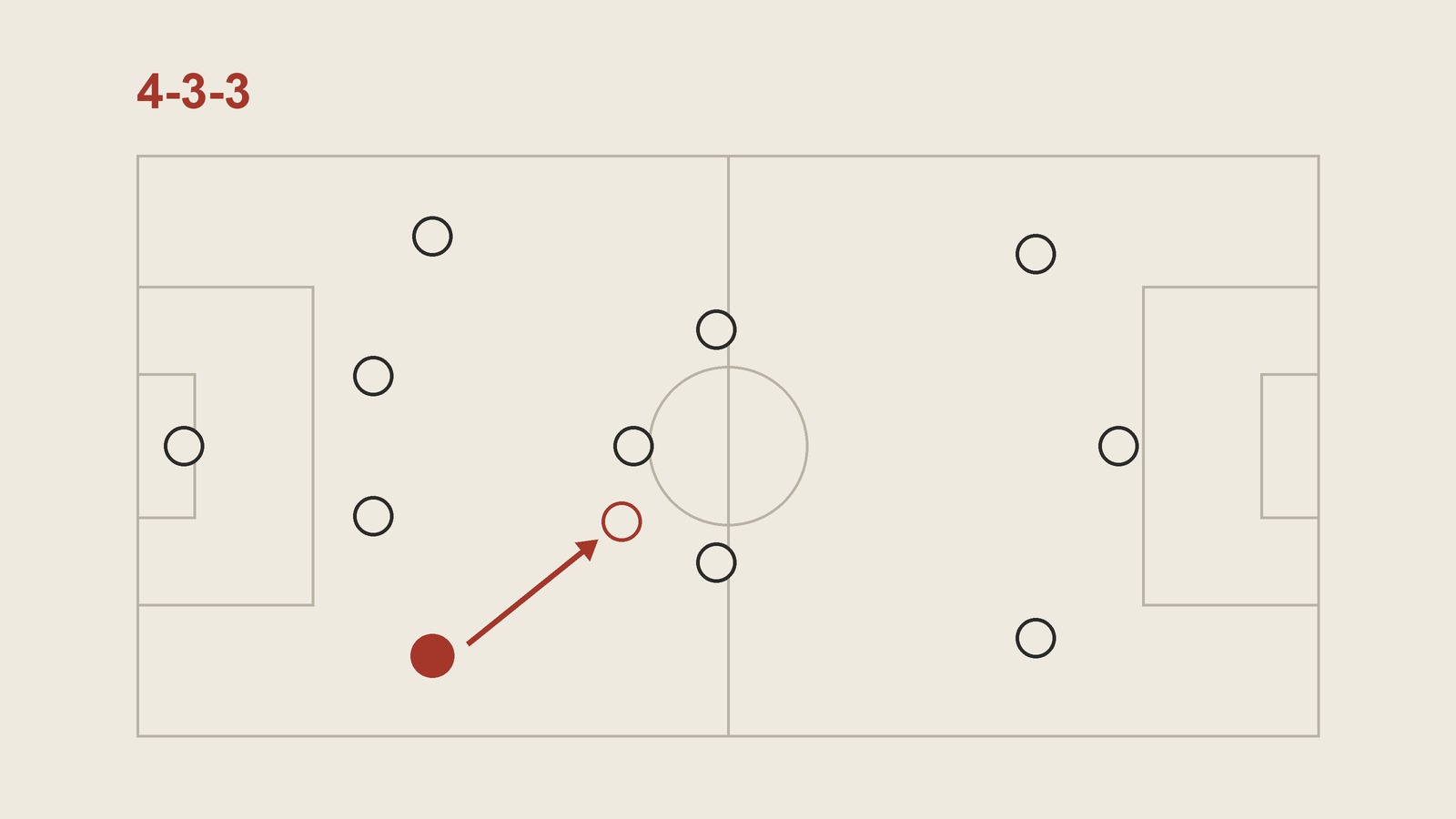
- The inverted full-back moves into central midfield in possession instead of going wide. Johan Cruyff's Barcelona used the idea early; Pep Guardiola made it famous with Philipp Lahm and David Alaba at Bayern Munich, then with players like João Cancelo at Manchester City. It adds a player in the middle and protects the team against counter-attacks.
Full-back or wing-back?
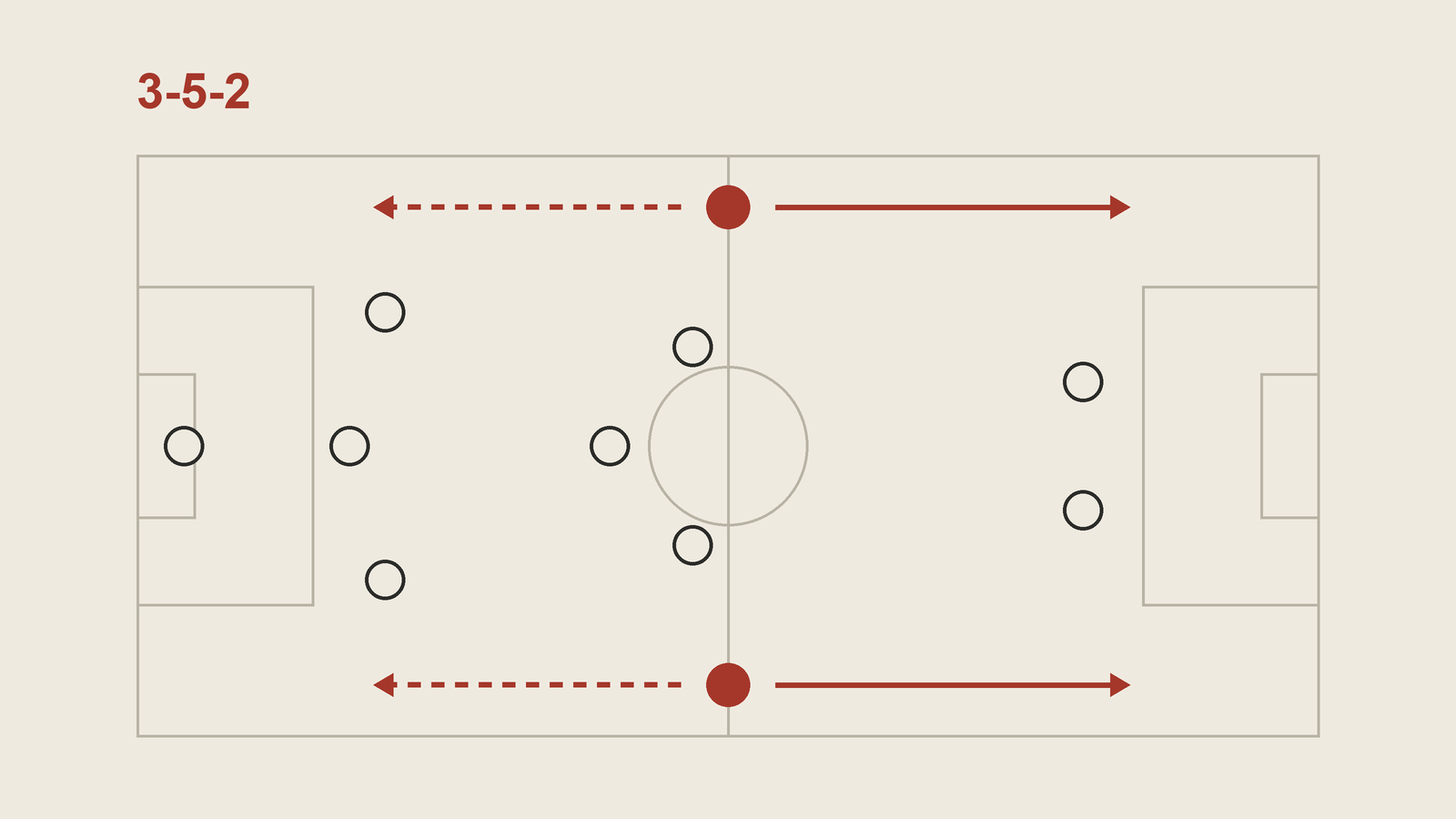
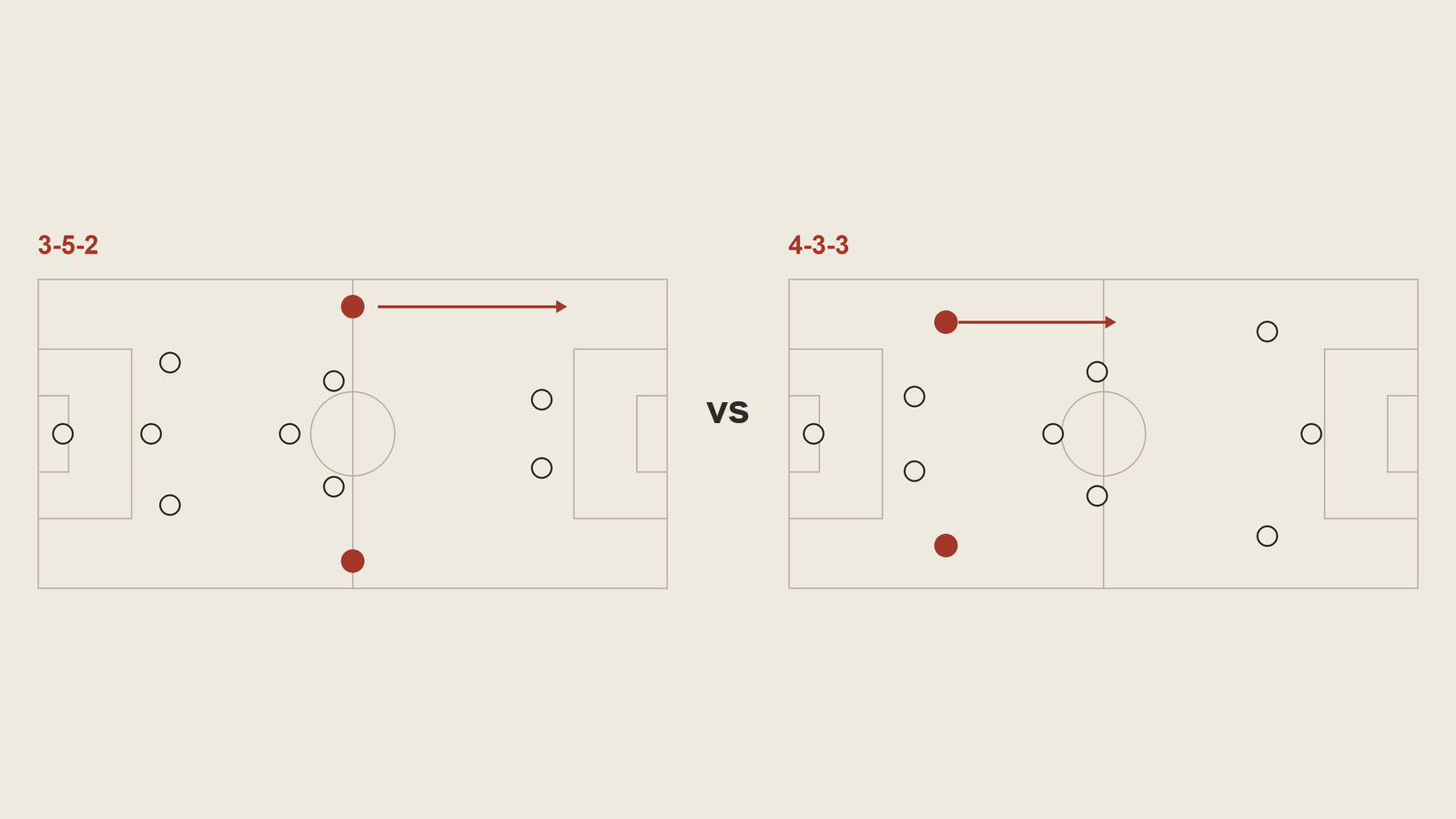
A wing-back is a variation of the full-back with more attacking responsibility. He plays in a system with three centre-backs, such as a 3-5-2 or a 3-4-3, and covers the whole flank on his own, often as the team's only width. The back three behind him lets him start higher than a full-back can. A full-back in a back four has a centre-back next to him and a winger or wide midfielder in front, so his job is more shared.
Two full-backs, two different jobs
Many teams balance their two full-backs. If one attacks, the other stays closer to the centre-backs, so three defenders remain behind the ball as rest defence. The usual choice depends on the wingers: a winger who cuts inside leaves the flank free for an overlapping full-back, while a winger who stays wide favours an underlap or an inverted full-back. A 4-3-3 often leans on its full-backs for width, because its midfield three plays narrow.
What makes a good full-back
Pace and endurance come first, because the position is a long series of sprints in both directions. Then defending one against one, positioning when the ball is on the far side, and decision-making in the final third: when to cross, when to cut back and when to recycle the ball.
What the numbers show
A full-back's data has two halves. In attack, expected assists and box entries show how much he creates from the flank, crosses and cut-backs show how he does it, and progressive actions show how often he carries or passes the ball up the line. In defence, tackles, interceptions and duels won against wingers describe the one-against-one work, while pressures and regains show how high and how often he presses.
Read together, the numbers usually tell you which kind of full-back he is. An overlapping full-back has high attacking numbers and a lot of ground covered; a defensive full-back wins more duels in his own half; an inverted full-back plays many short passes in central areas and has a low crossing count.
How to spot the full-backs' roles in a match
Watch the full-backs when their centre-back has the ball. If one moves up the touchline and the other stays level with the centre-backs, the team is using an asymmetric back four. If a full-back walks into midfield next to the defensive midfielder, he is an inverted full-back. Then watch who runs outside the winger and who runs inside him.
What is a full-back in football?
A full-back is a defender who plays on the right or left side of a back four. He defends against wingers and crosses, and in modern teams also supports attacks down his flank with overlapping runs, crosses and passes.
What is the difference between a full-back and a wing-back?
A full-back plays in a back four, with a centre-back beside him and a winger in front. A wing-back plays in a system with three centre-backs and covers the whole flank alone, so he usually starts higher and attacks more.
What is an overlapping full-back?
An overlapping full-back runs outside and past the winger in front of him to receive the ball near the touchline. The run creates two attackers against one defender and usually ends in a cross or a cut-back.
What number does a full-back wear?
Traditionally the right-back wears 2 and the left-back wears 3, numbers that go back to the 2-3-5 formation. Today squad numbers are personal, so a full-back may wear any number.
Sources and further reading
- Defender (association football) — Wikipedia
- The modern full-back: explained — The Coaches' Voice
- Tactical Theory: the role of the modern full-back — Total Football Analysis
- Squad number (association football) — Wikipedia