Formations and roles · Analysis
Three at the Back, Two Up Front, and Everything Depends on the Flanks
The 3-5-2 plays three centre-backs, two wing-backs, three central midfielders and two strikers. How it attacks and defends, and why the wing-backs decide it.
By 01 Owen
· Updated 22 Sep 2026 · 4 min read
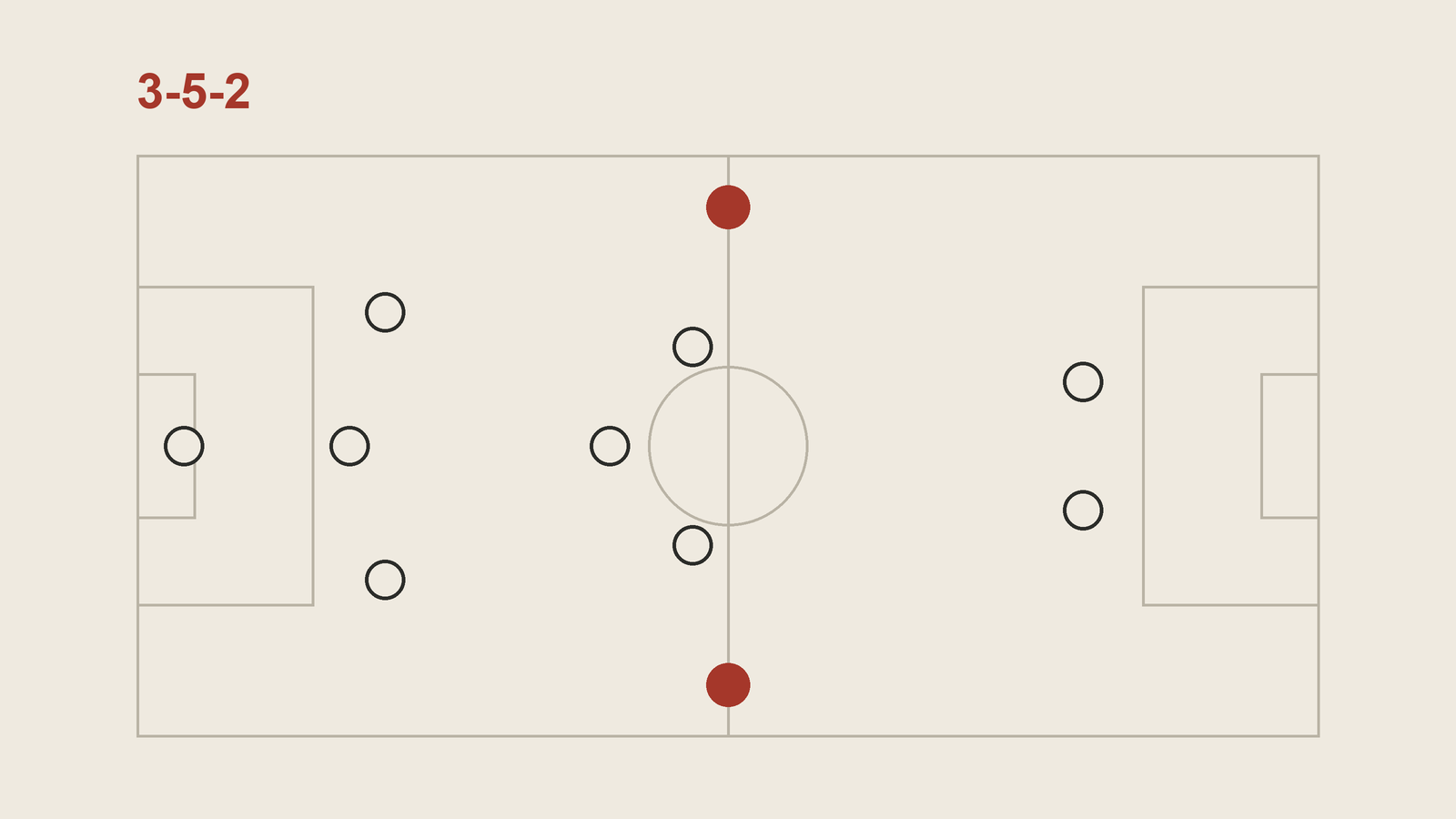
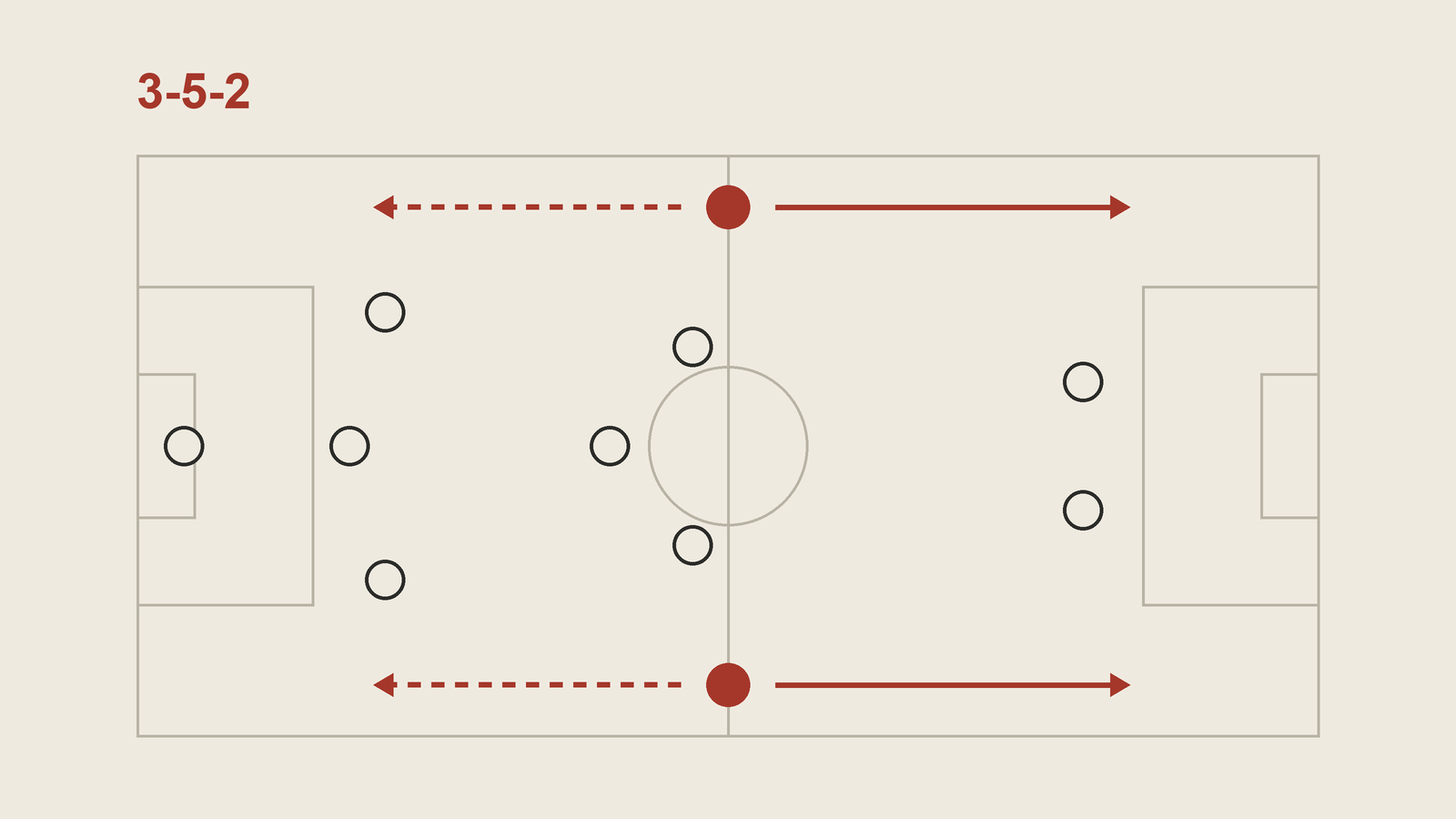
The 3-5-2 is a formation with three centre-backs, five players across midfield and two strikers. The five are really three central midfielders and two wing-backs, and those wing-backs are the only wide players in the team. When they are high the shape is a 3-3-4 that attacks with a front line of four; when they drop it is a 5-3-2 with five across the back. No other common formation changes character so completely depending on where two players stand.
Carlos Bilardo is usually credited with establishing it at the top level, with the Argentina side that won the 1986 World Cup: three central defenders, two wide players covering the whole flank, and a structure built to free Diego Maradona. It has never been out of use in Italy. Antonio Conte's Juventus won three straight league titles from 2012 with Andrea Barzagli, Leonardo Bonucci and Giorgio Chiellini as the back three and Andrea Pirlo as the regista in front of them. Conte won the title again with Inter in 2020-21 using the same shape and a strike partnership of Romelu Lukaku and Lautaro Martínez, and Simone Inzaghi's Inter reached the Champions League final in 2023 with it.
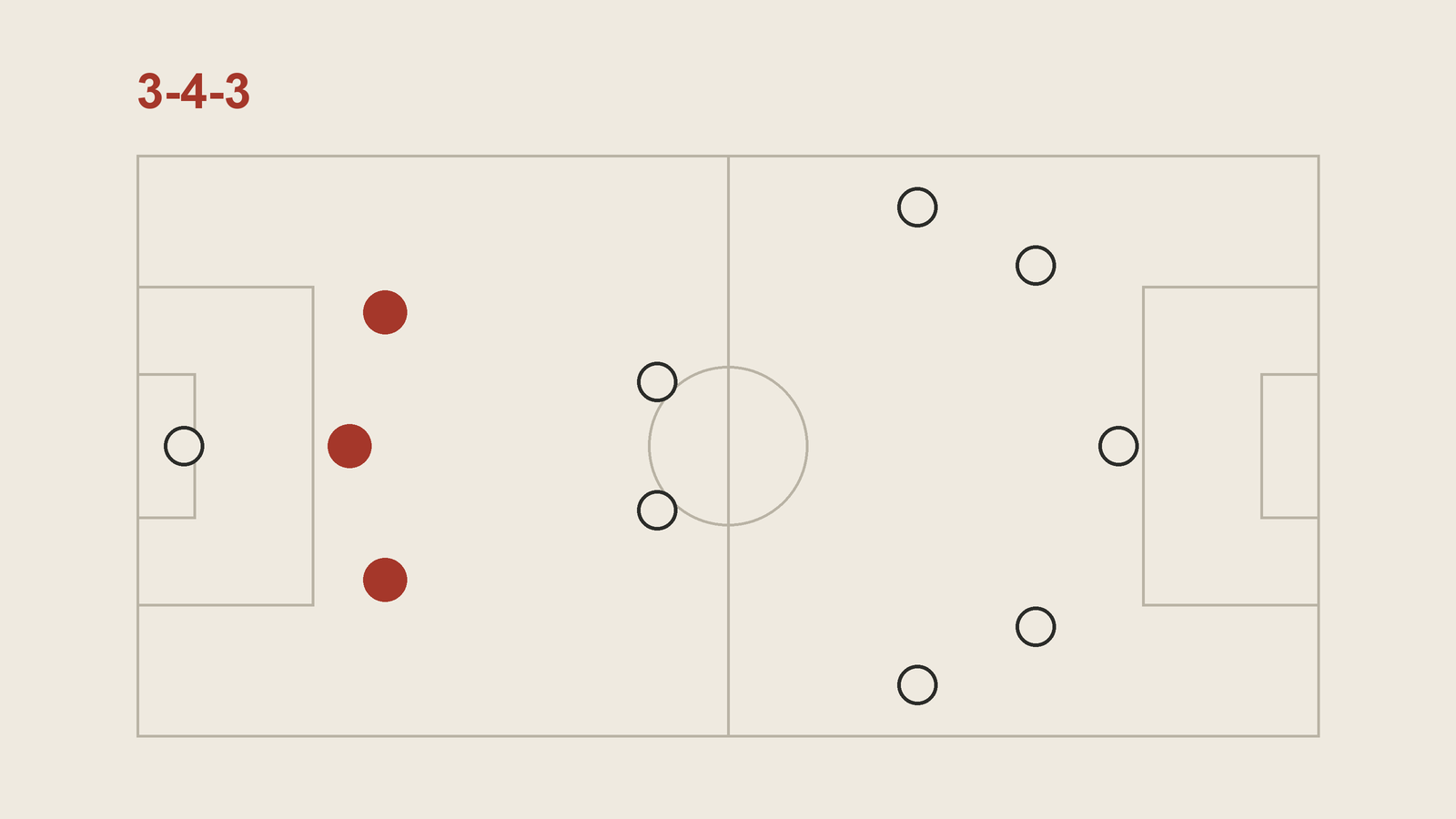
The back three is the first attraction. Against two strikers it leaves a spare defender; against one it leaves two, and one of them can step into midfield with the ball. In build-up play three centre-backs spread across the width of the penalty area are hard to press with a front two, and the wide centre-backs can carry the ball forward into the space a full-back would normally occupy. It also gives a team a ready-made rest defence: three behind the ball and a holding midfielder in front is already a 3+1 before anyone has been told to stay.
The second attraction is the pair of strikers. Most modern shapes ask one forward to occupy two centre-backs. Two forwards can pin a back four on their own, combine with each other, and split the jobs of coming short and running beyond. In Conte's teams the patterns between them were rehearsed like set pieces: one drops to receive with his back to goal, lays the ball off to a midfielder and spins, while the other attacks the space he has left. That is a third-man run built into the formation.
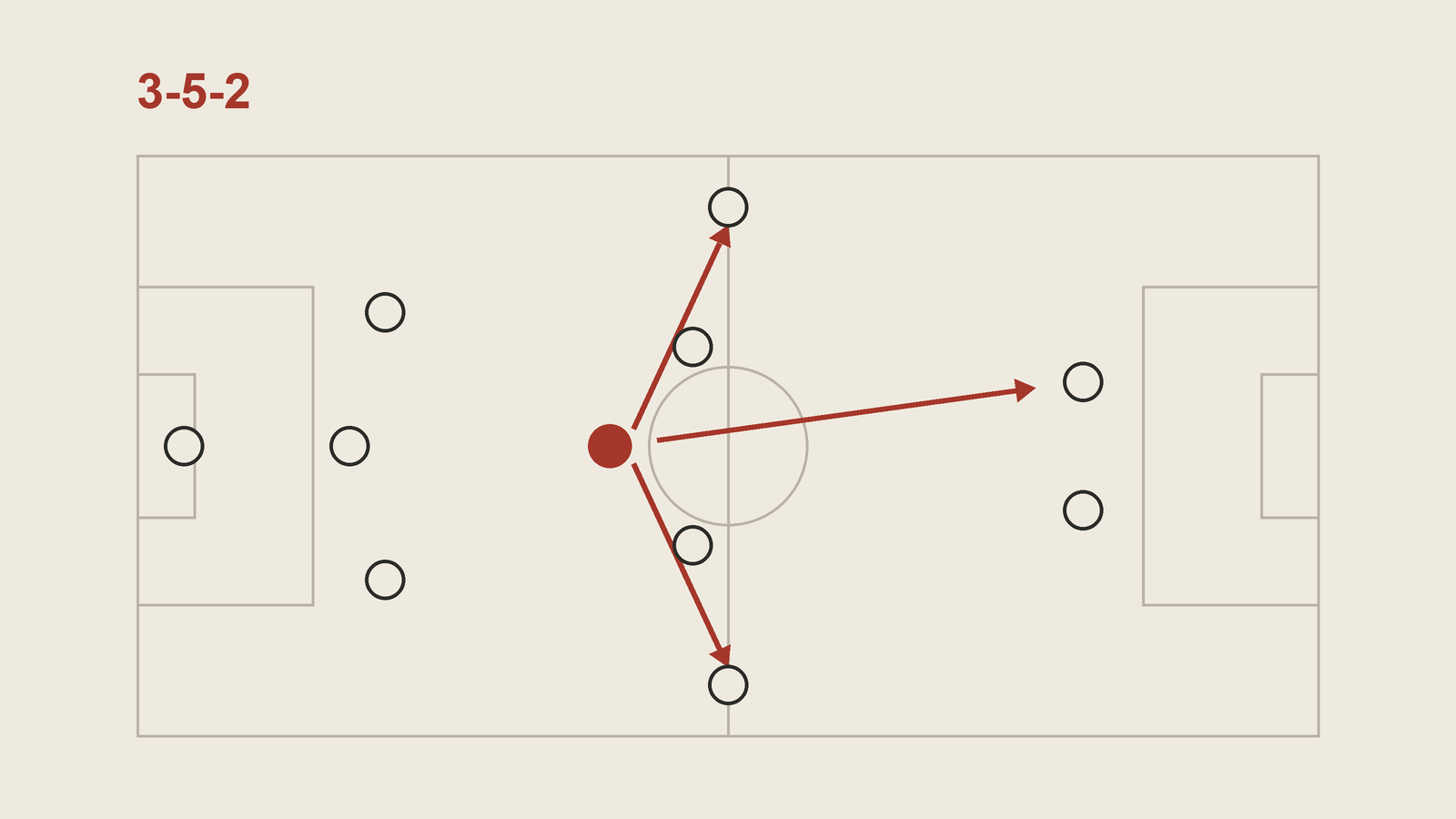
Everything else rests on the wing-backs. They have to give the team its width in attack, arriving at the far post when the ball is on the other side, and get back into a line of five when it is lost. If they are pinned deep by opposing wingers, the 3-5-2 becomes a 5-3-2 that cannot get out, and the three central midfielders have the whole width of the pitch to cover. That is the classic way to beat it: a front three whose wingers stay high and wide, so that each wing-back faces a choice between leaving his winger and leaving the flank empty. Switches of play hurt it too, because the midfield three cannot slide across as fast as the ball travels.
The central three varies. A single holding player with two box-to-box midfielders ahead of him is the common version; a regista with two runners is the Italian one; and a 3-4-1-2, with two holders and a ten, is a close cousin. What stays constant is that the team has numbers in the centre and is thin on the outside, so its overloads come from a wide centre-back, a wing-back and a midfielder forming triangles on one flank. You can put a 3-5-2 on the tactics board and pull the wing-backs back level with the defence to see the 5-3-2 it becomes without the ball. For the wider family of systems with three central defenders, see the back three.
Is a 3-5-2 the same as a 5-3-2?
They are the same eleven positions seen at different moments. With the wing-backs pushed up alongside the midfield it is a 3-5-2; with them level with the centre-backs it is a 5-3-2. Coaches tend to use the first name for teams that spend most of the game attacking and the second for teams that mostly defend, but every side that plays the shape moves between the two many times in a match.
Sources and further reading
- The 3-5-2 formation: five key points — The Coaches' Voice
- Wing-backs: football tactics explained — The Coaches' Voice
- Formation (association football) — Wikipedia