Playing styles · Analysis
Counter-attacking football: winning the ball and attacking before the opponent recovers
Counter-attacking football wins the ball and attacks at once, before the opponent recovers. How it works, who plays it, what the data shows, how to stop it.

By 01 Owen
· Updated 3 Oct 2026 · 6 min read
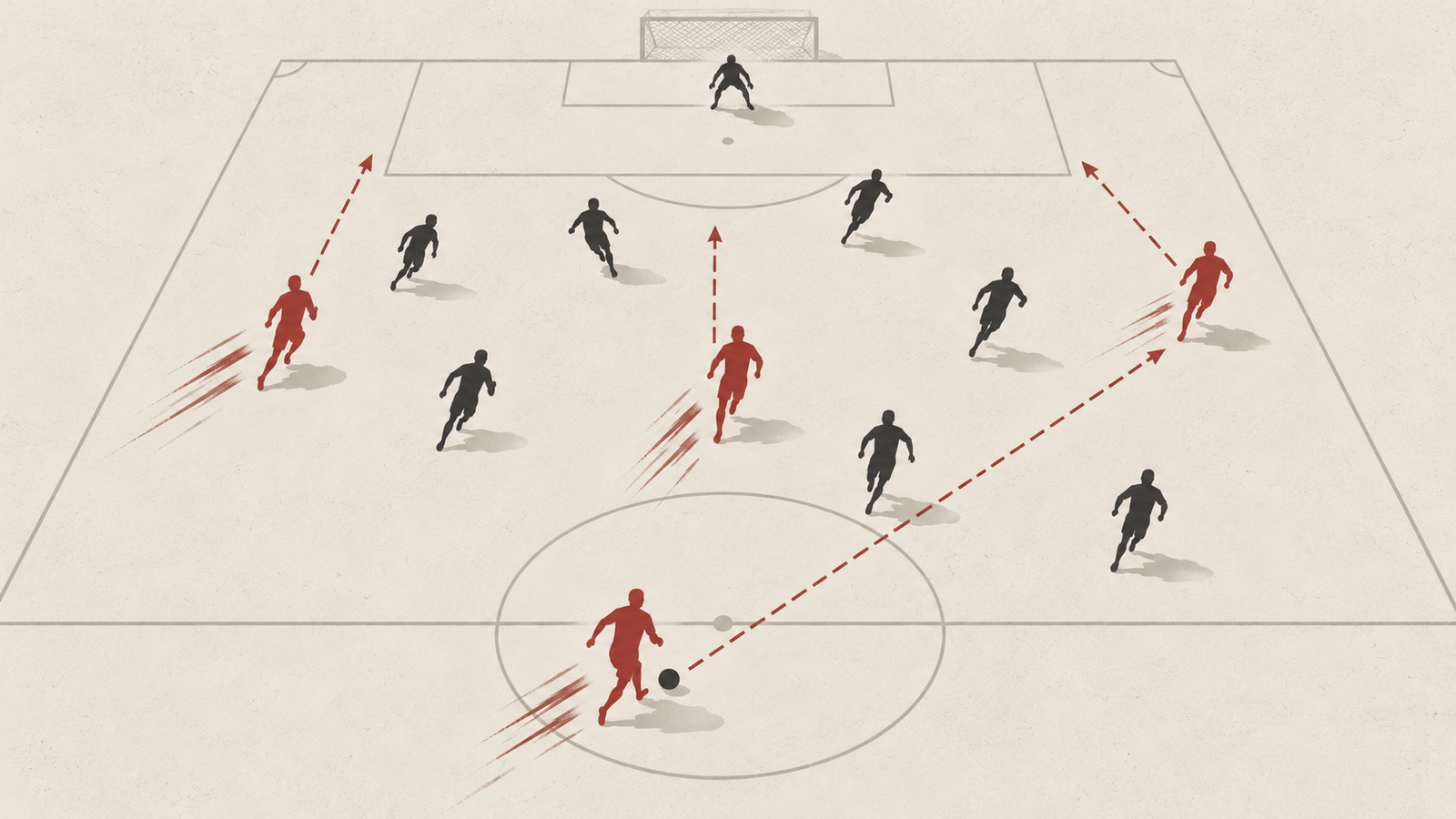
Counter-attacking football is a style built on winning the ball and attacking immediately, before the opponent can reorganise. Instead of building patiently, the team plays forward at the first chance and uses speed and space to reach goal in a few passes.
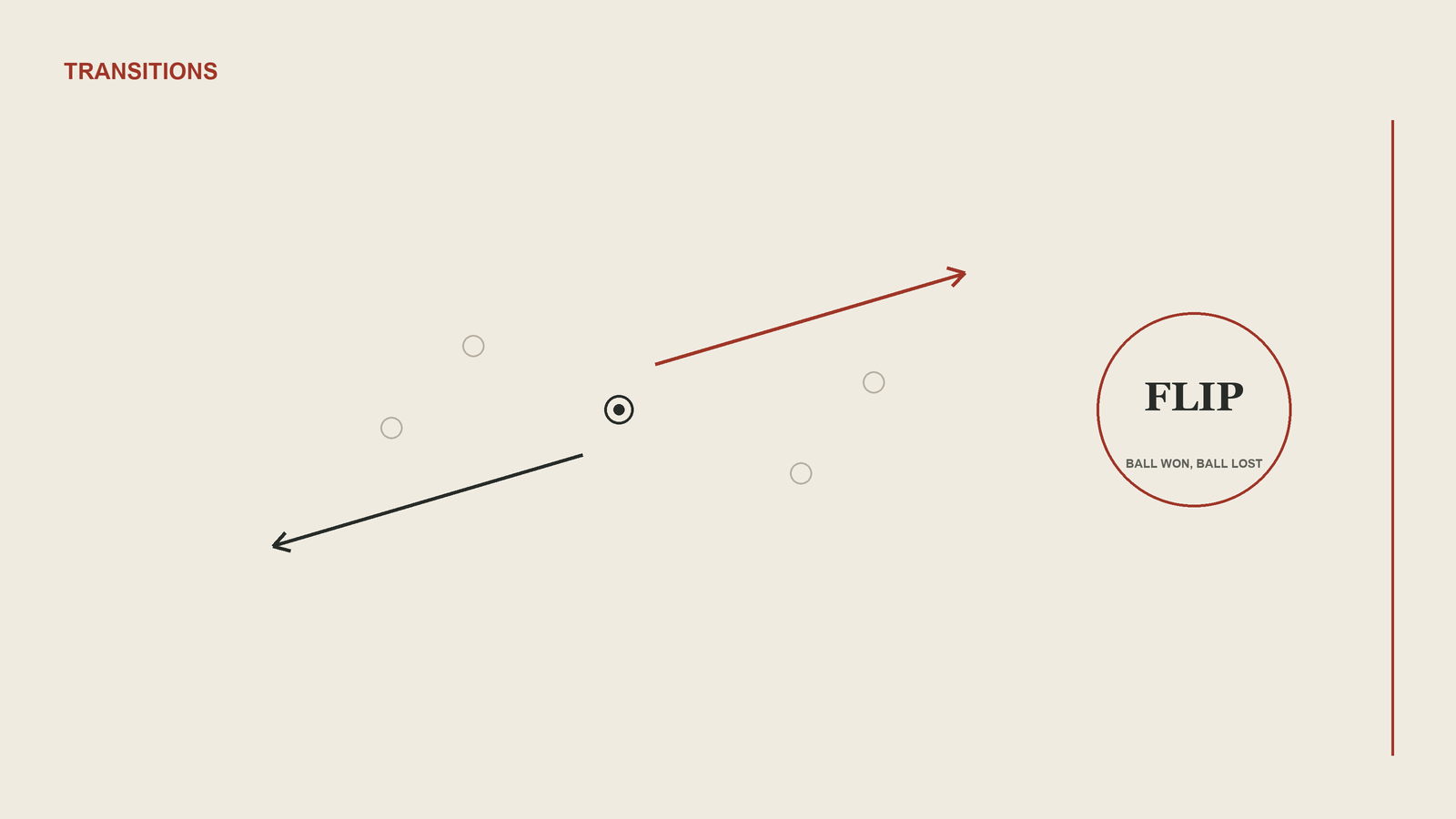
Coaches' Voice defines the moment it lives on, the attacking transition, as everything a team does straight after regaining possession, when the opponent is out of balance and its defensive structure is not yet in place. A counter-attacking team is one that plans its whole game around those seconds.
Why counter-attacks work
Every team that attacks commits players forward. Full-backs push up, midfielders arrive in the box and the defence stretches across the pitch. When the ball is lost, that shape is at its weakest: defenders face their own goal, gaps open between the lines and there is space behind. A team that can win the ball and move it forward quickly attacks exactly that moment.
José Mourinho, one of the best-known counter-attacking coaches, put it bluntly in 2015, as quoted by Coaches' Voice: not playing on the counter-attack is stupid, because a team caught off balance gives you a fantastic chance to score.
The data supports him. Premier League analysis published in late March 2025, with the 2024-25 season still running, found that shots from fast breaks averaged 0.17 expected goals, against 0.12 for other open-play shots: counter-attacks create better chances on average.
How a counter-attack works
Coaches' Voice breaks attacking transitions into four principles.
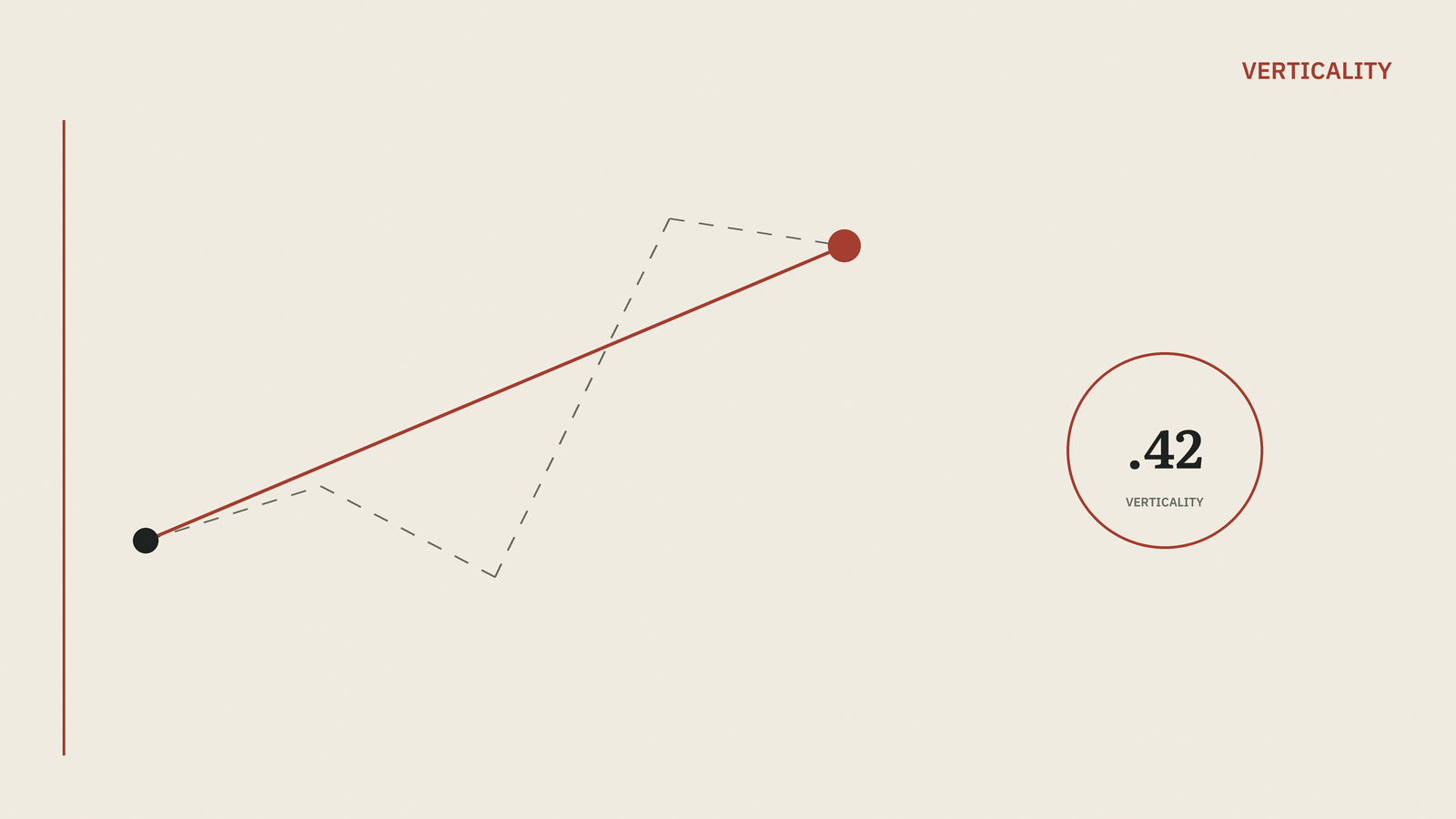
- Penetration: play forward at the earliest opportunity, through the opponent's lines. The first pass after winning the ball often decides whether a counter-attack exists at all, which is why line-breaking passes and verticality matter so much.
- Speed: move from a compact defensive shape to a wide attacking one in a few seconds.
- Creating space: wingers and strikers run behind or outside the defenders, stretching what is left of the opponent's shape.
- Support: deeper players sprint forward to give the ball-carrier options and to follow up if the first attempt fails.
The best counter-attacks use few passes, few touches and the full width of the pitch, so the defenders who are recovering have to cover too much ground.
Two ways to counter
Counter-attacking teams fall into two broad groups, depending on where they win the ball.
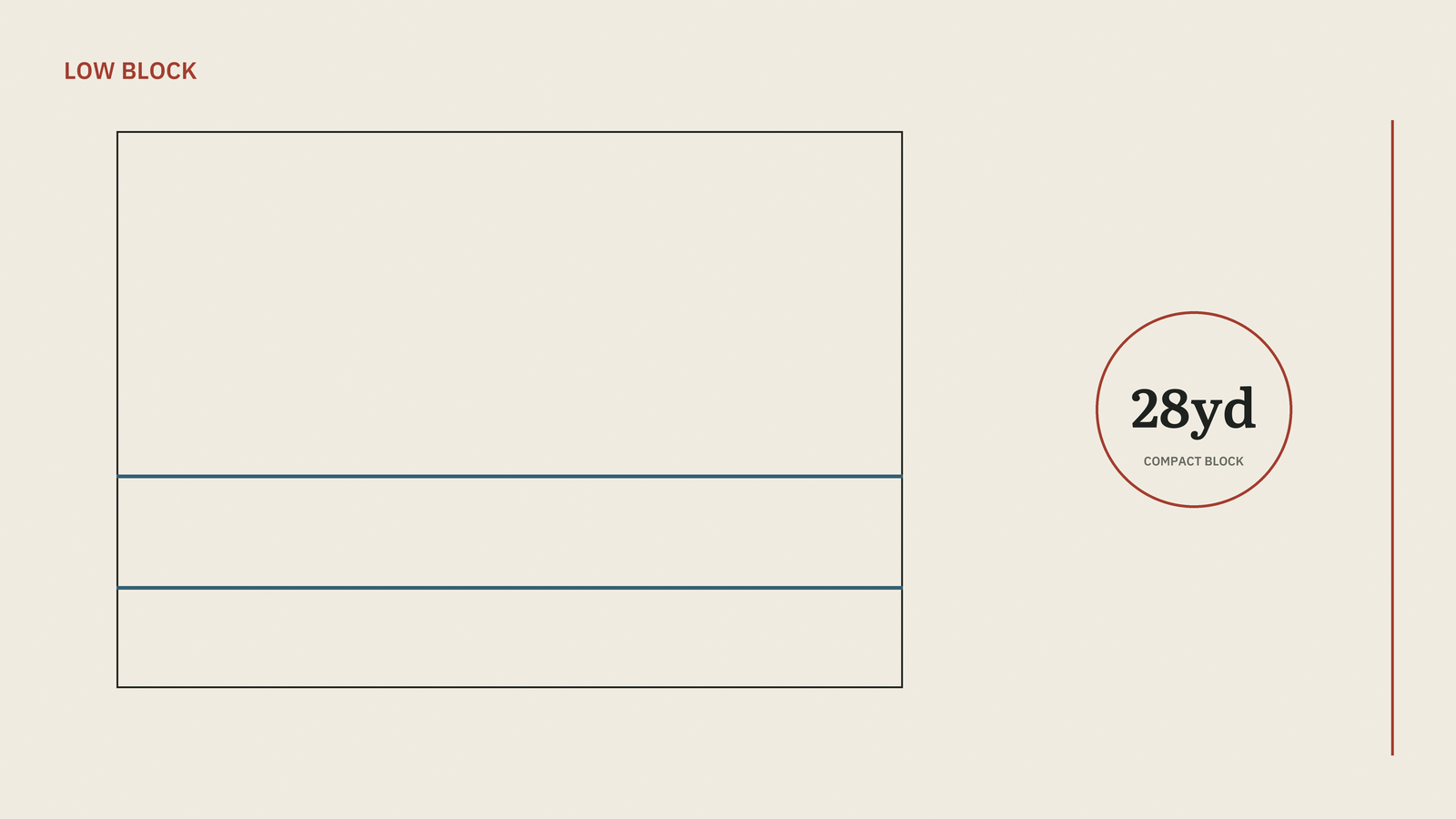
From deep. The team defends in a compact low block, invites the opponent forward and then breaks into the space behind. Coaches' Voice gives Antonio Conte's Napoli, which countered from a low block with wingers stretching the opposition, and Simone Inzaghi's Inter, which used the centre-forward as a focal point to break from defence. Coaches' Voice points out the difficulty: after a regain in a low block there are many players in a small area and a long way to goal, so the break needs quick, incisive actions, whether a pass, a dribble, a switch of play or a run. This is the heir of Italian catenaccio, which combined a tight defence with long, early passes to quick forwards.
From high up. The team presses high and counter-attacks from the turnovers it forces, close to the opponent's goal. This is the logic of gegenpressing: win the ball where the opponent is most disorganised. Coaches' Voice notes that Andoni Iraola's Bournemouth produced the most shot-ending and goal-ending fast breaks per game in Premier League history in 2024-25, using high pressing to win the ball near goal.
What the numbers show
Counter-attacking is not an old-fashioned idea that died with possession football. According to the Premier League's analysis, fast breaks in 2024-25 (as of late March) were producing 1.84 shots and 0.30 goals per game, both the highest since these records began in 2006-07. Fast breaks accounted for 10.2% of all shots and 7.1% of goals, up from 3.7% and 1.4% in 2015-16.
The same analysis named the teams: Liverpool scored 31 goals from transitions; Bournemouth led the league with 196 shots in transition, and had 57 shots after high turnovers; and Nottingham Forest had the lowest possession in the league, 39.5%, while relying heavily on breaks. Teams that scored from fast breaks lost only 16.7% of those matches, against 26.1% for teams that scored but not from transitions.
Even Pep Guardiola, the coach most associated with possession, acknowledged the shift: the Premier League quotes him saying that modern football is the way Bournemouth, Newcastle, Brighton and Liverpool play, and that it is not positional.
The players a counter-attack needs
A counter-attacking team needs specific profiles:
- a midfielder or centre-back who can play the first forward pass under pressure;
- fast wingers or forwards who attack space behind the defence;
- a striker who can hold the ball up or run in behind, giving the team a target;
- midfielders with the stamina to sprint forward in support and then back again.
How teams defend against counter-attacks
Because counters punish a team that loses the ball while unbalanced, the main defence is structure before the ball is lost. Teams keep a planned rest defence, the players who stay behind the ball, so that there are enough defenders in place when possession goes. They counter-press immediately to stop the first forward pass, and they make tactical fouls when a break is already on. The Premier League notes that Manchester City conceded 34 shots from fast breaks in 2024-25, among the most in the league, a sign of how exposed even the best possession teams can be.
Strengths and criticism
Counter-attacking lets weaker teams compete with stronger ones, because it does not require dominating the ball. It also creates high-quality chances. The criticism is that it can leave a team passive for long periods, and that it depends on the opponent attacking: against a team that is also happy to sit back, a counter-attacking side may struggle to create anything.
How to recognise a counter-attacking team in a match
Watch what happens in the first five seconds after the team wins the ball. A counter-attacking team immediately looks forward: the first pass goes long or through the lines, several players sprint forward at once, and the attack ends in a shot or a cross within a handful of passes. Then look at possession figures: a team that has less of the ball but creates good chances is often playing this way deliberately.
What is counter-attacking football?
Counter-attacking football is a style built on winning the ball and attacking straight away, before the opponent can reorganise its defence. The team plays forward quickly, with few passes, into the space the opponent left while attacking.
Is counter-attacking football effective?
Yes. Premier League analysis from March 2025 found that fast-break shots averaged 0.17 expected goals that season, against 0.12 for other open-play shots, and that fast breaks produced a record share of goals that season.
What is the difference between a counter-attack and a transition?
A transition is the moment the ball changes hands. A counter-attack is one way of using an attacking transition: playing forward quickly to exploit the opponent's lack of balance. A team can also choose to keep the ball after winning it.
How do you stop a counter-attack?
Keep enough players behind the ball before possession is lost, counter-press immediately to block the first forward pass, and, when necessary, stop the break with a tactical foul.
Sources and further reading
- Attacking transitions: football tactics explained — The Coaches' Voice
- Analysis: Fast breaks are back in style as tactics evolve — Premier League
- The low block: football tactics explained — The Coaches' Voice