Playing styles · Analysis
Catenaccio: the Italian door-bolt defence built around a free sweeper
Catenaccio is Italy's door-bolt defence: man-markers with a free sweeper behind them. Its origins, Rocco and Herrera's Inter, why it faded and what remains.
By 01 Owen
· Updated 3 Oct 2026 · 6 min read
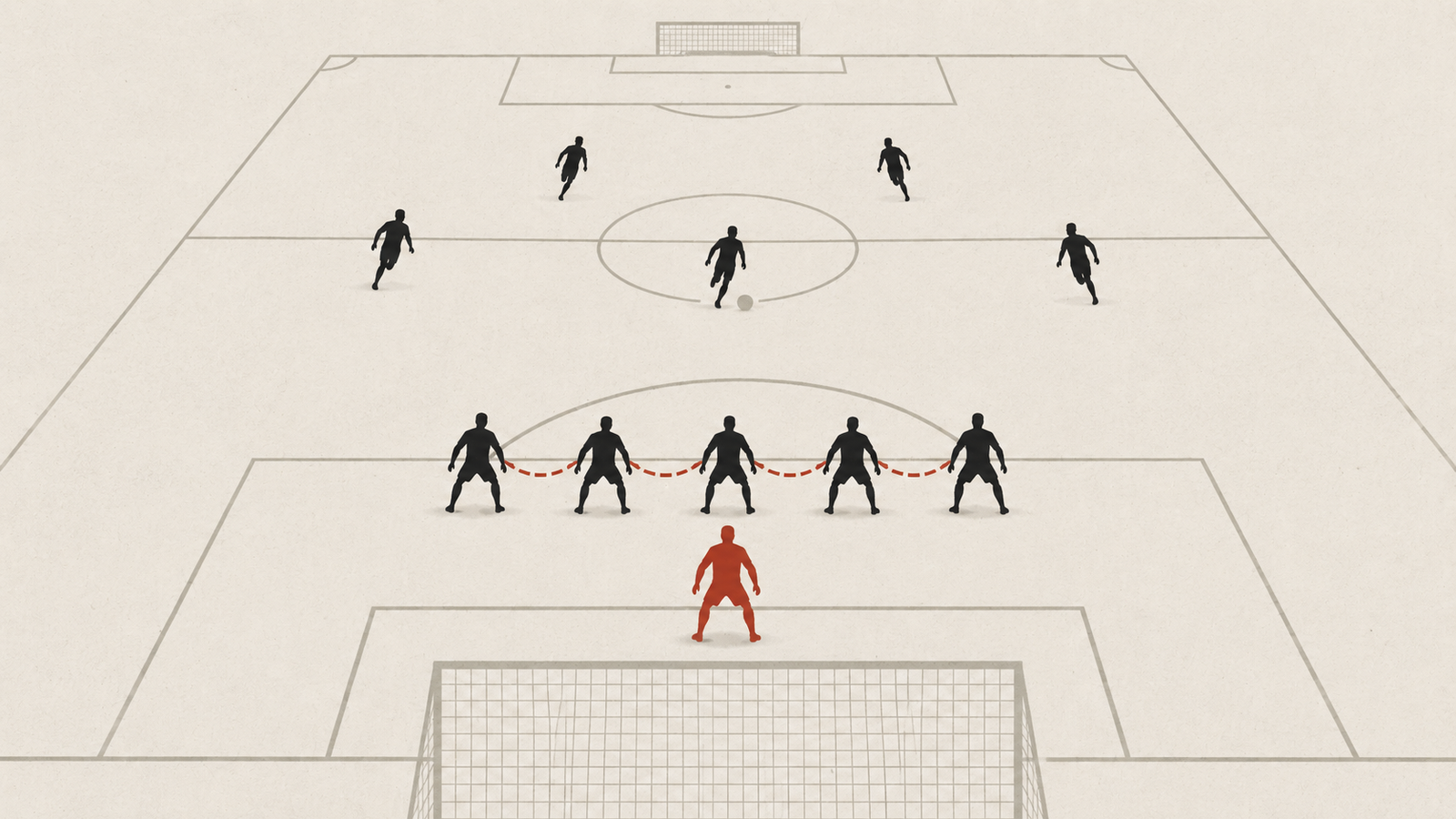
Catenaccio is a defensive system in which man-marking defenders are backed by a free sweeper who covers behind them. The name is Italian for door-bolt: the idea is to lock the space in front of goal, then hit the opponent on the counter-attack.
It is the most famous defensive idea in football history and one of the most misunderstood. Catenaccio was never just "parking the bus". At its peak, with Helenio Herrera's Inter of the 1960s, it combined a very tight defence with fast, direct counter-attacks and one of the first attacking full-backs in the game.
Where it came from
The system did not start in Italy. Wikipedia credits Karl Rappan, an Austrian coaching Switzerland, with inventing the verrou (bolt) in 1932. His team played with a defender who stayed back as a last line of cover, the verrouilleur, behind the other defenders.
Italian coaches took up the idea in the 1940s. Mario Villini at Triestina, Ottavio Barbieri at Spezia and Gipo Viani at Salernitana all used versions of it, and Nereo Rocco built what Wikipedia calls the "real" catenaccio at Triestina from 1947. Rocco later took it to Padova and then to Milan, where he won two European Cups in the 1960s and early 1970s.
How catenaccio worked
The core of the system was a back line of man-markers with one free player behind them.
- The man-markers each took one opposing forward and followed him. They did not need to think about zones; their job was to stop one man.
- The libero (free man) had no marking job. He stood behind the markers, swept up loose balls, covered any marker who was beaten, and could double up on the most dangerous attacker.
- The midfield sat deep and compact, closing the space in front of the defence.
- The counter-attack followed every ball won: long passes from the back to quick forwards, before the opponent could reorganise.
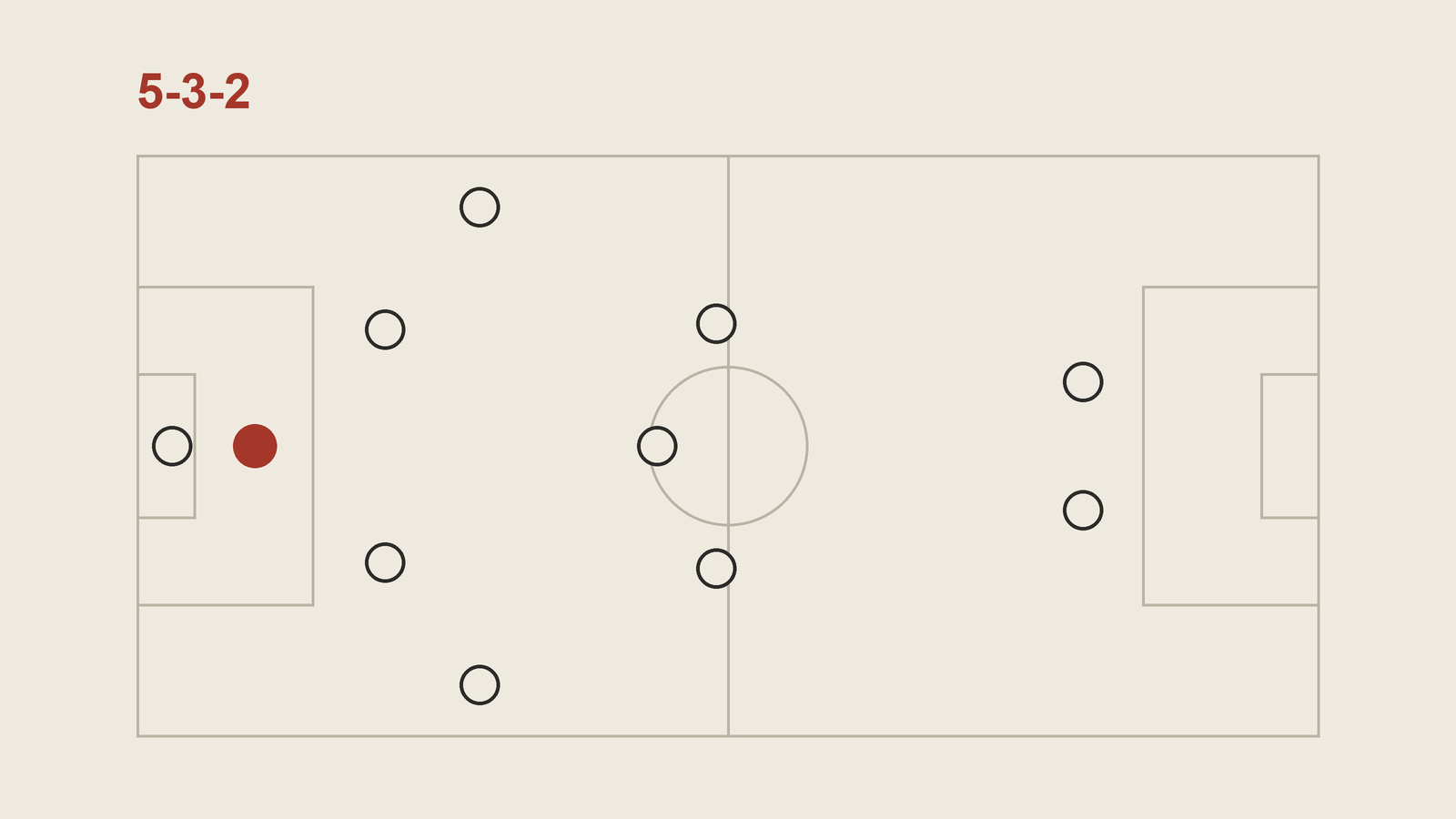
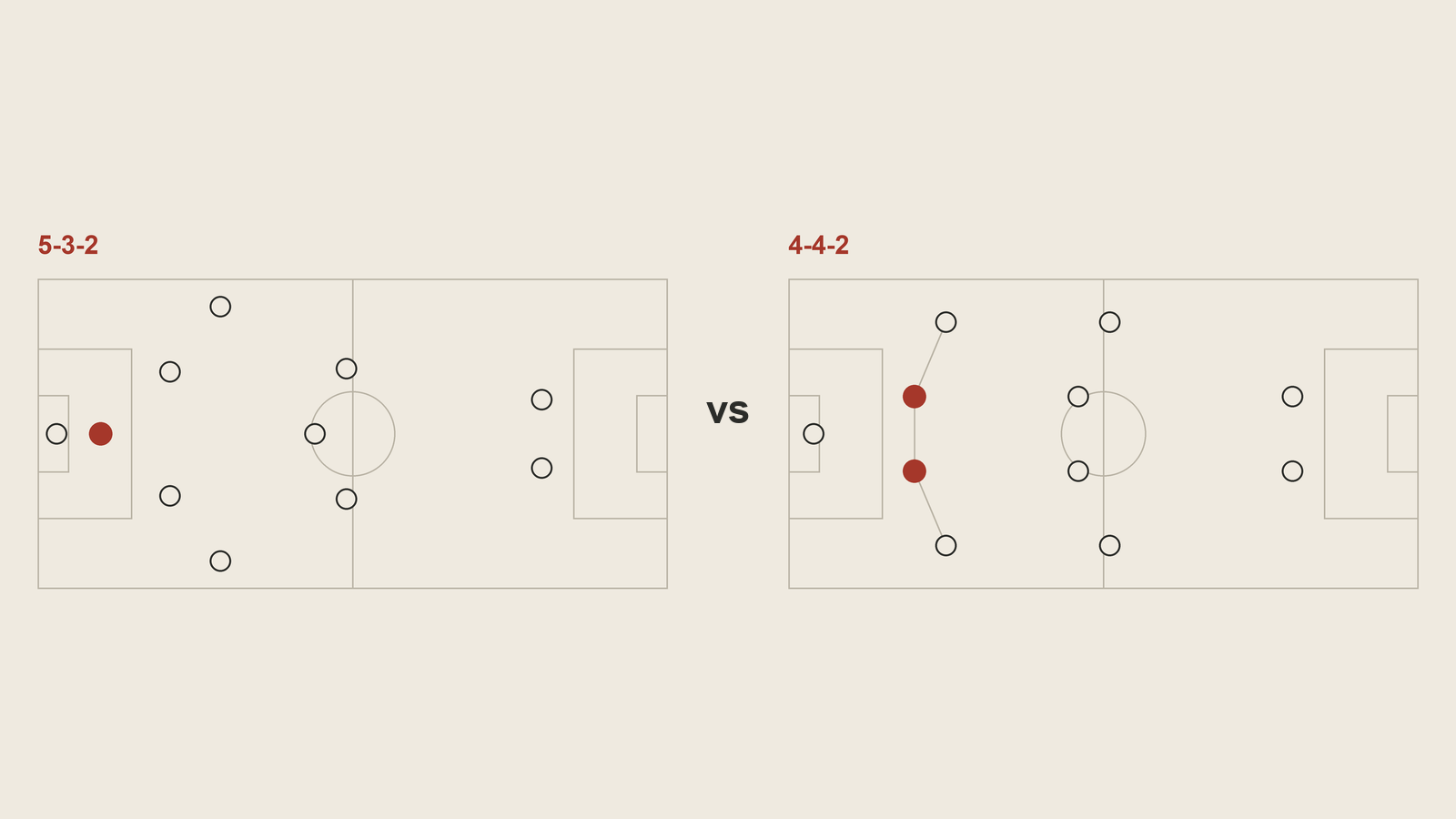
Wikipedia lists several shapes used under the catenaccio label, including 1-3-3-3, 1-4-4-1 and 1-4-3-2, with the "1" being the sweeper. Herrera's Inter is usually described as a 5-3-2 with four man-marking defenders and a sweeper. The modern descendant of this structure is the back five, as in a 5-3-2 or a back three with wing-backs.
Herrera's Grande Inter
Helenio Herrera, nicknamed Il Mago (the Wizard), did not invent catenaccio, but UEFA calls him perhaps its most successful exponent. At Inter he used a midfielder who dropped back as sweeper and a rigid man-marking policy, which freed his left-back to attack.
The results were remarkable. Inter won three Serie A titles (1962-63, 1964-65 and 1965-66) and back-to-back European Cups: 3-1 against Real Madrid in Vienna in 1964, with two goals from Sandro Mazzola, and again against Benfica in 1965. UEFA notes that Inter conceded fewer than one goal per game in that period, only 20 in the 1962-63 league season.
The key players show how the system worked:
- Armando Picchi was the libero, the free man behind the defence.
- Tarcisio Burgnich was one of the man-markers.
- Giacinto Facchetti was the attacking left-back, scoring 75 goals for the club from defence, according to UEFA, a revolutionary number for a full-back at the time.
- Luis Suárez directed play from deep, launching the quick counter-attacks.
- Sandro Mazzola, Jair and Mario Corso supplied the goals and the creativity.
Herrera wanted to reach the opponent's box quickly; UEFA quotes his rule of no more than three passes to get there. He also later insisted that his system was more attacking than people remembered.
The decline
Two European Cup finals are usually told as the end of catenaccio's dominance. In 1967 Celtic beat Inter 2-1 in Lisbon by attacking relentlessly. In 1972 Ajax beat Inter 2-0, and Wikipedia describes that final as a symbol of the destruction of catenaccio by total football: the Dutch players kept swapping positions, so man-markers had nobody fixed to follow.
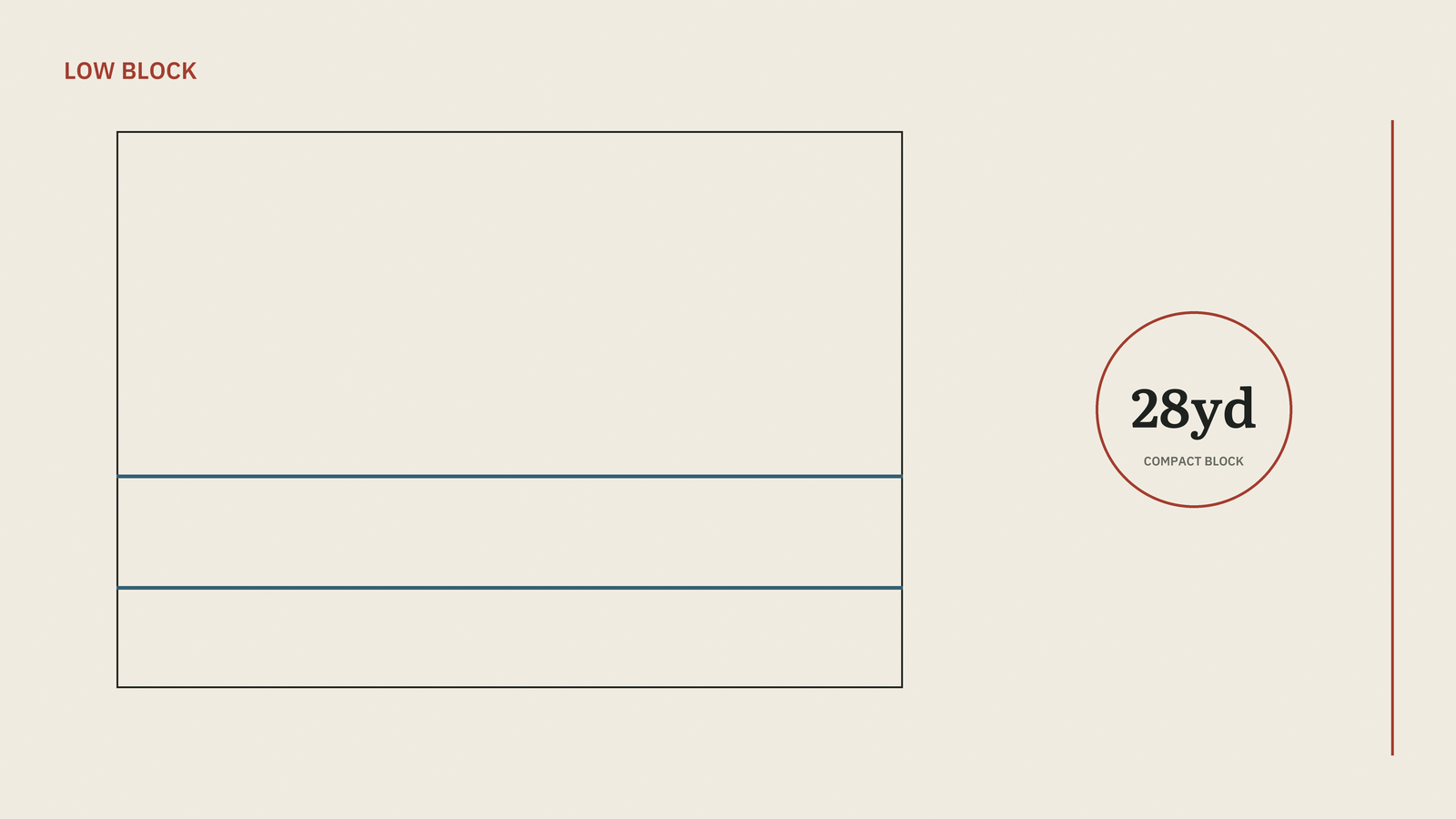
The bigger change came from zonal defending. Instead of following one opponent, each defender covers a zone and the line moves together. Arrigo Sacchi's Milan of the late 1980s took Italian football in that direction. Coaches' Voice describes his 4-4-2 with zonal defending instead of man-marking, no more than 25 metres between the defensive and front lines, and a back line that stepped up as one on Franco Baresi's signal to leave receivers offside. Sacchi rejected the catenaccio tradition and looked to Dutch total football instead, and his Milan won the European Cup in 1989 and 1990. The libero gradually disappeared, replaced by two centre-backs who defend zones and pass the ball out.
What remains of it
Catenaccio as a full system is gone, but its ideas survive.
- Compact defending: teams that sit in a low block and protect the space in front of goal follow the same priority.
- Counter-attacking: winning the ball deep and attacking fast, with few passes, is still a style of its own, built on quick transitions and verticality.
- The spare defender: many back threes keep one centre-back free to cover the other two, a modern echo of the sweeper.
Wikipedia also points out that the media often misuse the word: a team that simply defends deep is not playing catenaccio unless it has the system's structure and its counter-attacks.
Catenaccio and its reputation
For many fans, catenaccio stands for defensive, boring football, and the label often became an insult aimed at Italian teams. The record of Rocco's Milan and Herrera's Inter, with European Cups and attacking full-backs, shows a more complicated picture: it was a highly organised system designed to win, and at its best it produced dangerous counter-attacking football.
How to recognise catenaccio-style defending in a match
Watch the defence when the opponent attacks. If each defender follows one forward wherever he goes, and one extra defender stays behind them all without a direct opponent, the structure is close to classic catenaccio. Then watch what happens when the ball is won: a long, early pass forward into space, rather than patient build-up, is the other half of the system. In modern matches the closest picture is a back five without the ball, with the middle centre-back staying a step deeper than the two beside him.
What does catenaccio mean in football?
Catenaccio is Italian for door-bolt. In football it is a defensive system with man-marking defenders and a free sweeper, the libero, covering behind them, combined with fast counter-attacks after the ball is won.
Who invented catenaccio?
Its roots lie in the verrou system of Karl Rappan, an Austrian coaching Switzerland, from 1932. In Italy, Nereo Rocco at Triestina from 1947 built the classic version, and Helenio Herrera's Inter of the 1960s made it famous.
Is catenaccio the same as parking the bus?
No. Parking the bus usually means a team simply defends deep with many players. Catenaccio was a specific structure, with man-markers and a free sweeper, and it relied on quick counter-attacks, not only on defending.
Why did catenaccio disappear?
Zonal defending and teams with fluid movement, such as Ajax's total football, made strict man-marking less effective. From the late 1980s, Sacchi's Milan pushed Italian football towards a zonal back four and pressing, and the libero faded out.
Sources and further reading
- Catenaccio — Wikipedia
- The greatest teams of all time: Inter 1962–67 — UEFA
- In profile: Helenio Herrera — UEFA
- Arrigo Sacchi: AC Milan and Italy tactics — The Coaches' Voice