Formations and roles · Analysis
Striker: the number 9 whose first job is to score
A striker, the number 9, is the most advanced player and main goalscorer. Target man, poacher, complete forward, false nine, second striker, and what xG says.
By 01 Owen
· Updated 3 Oct 2026 · 6 min read
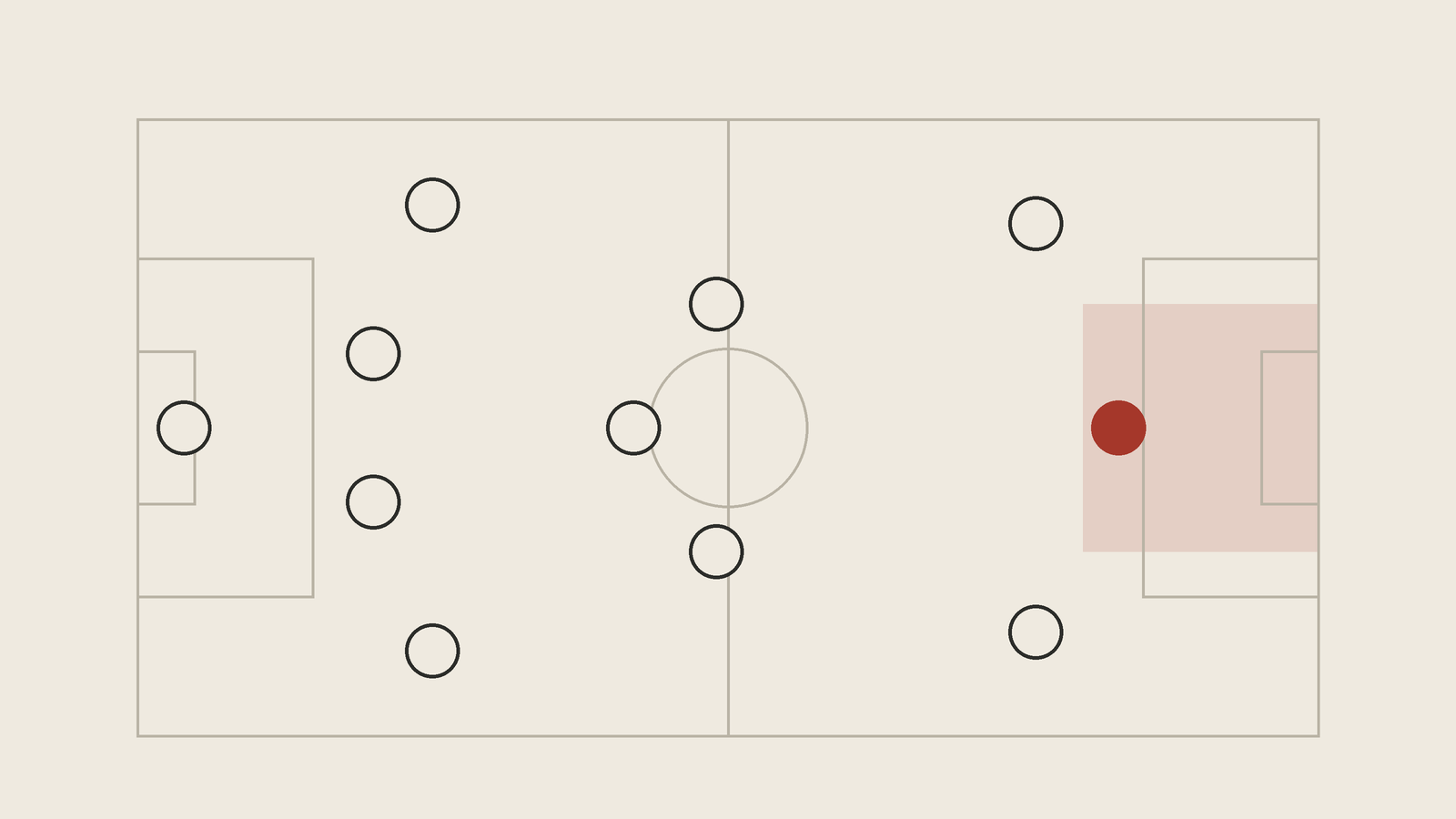
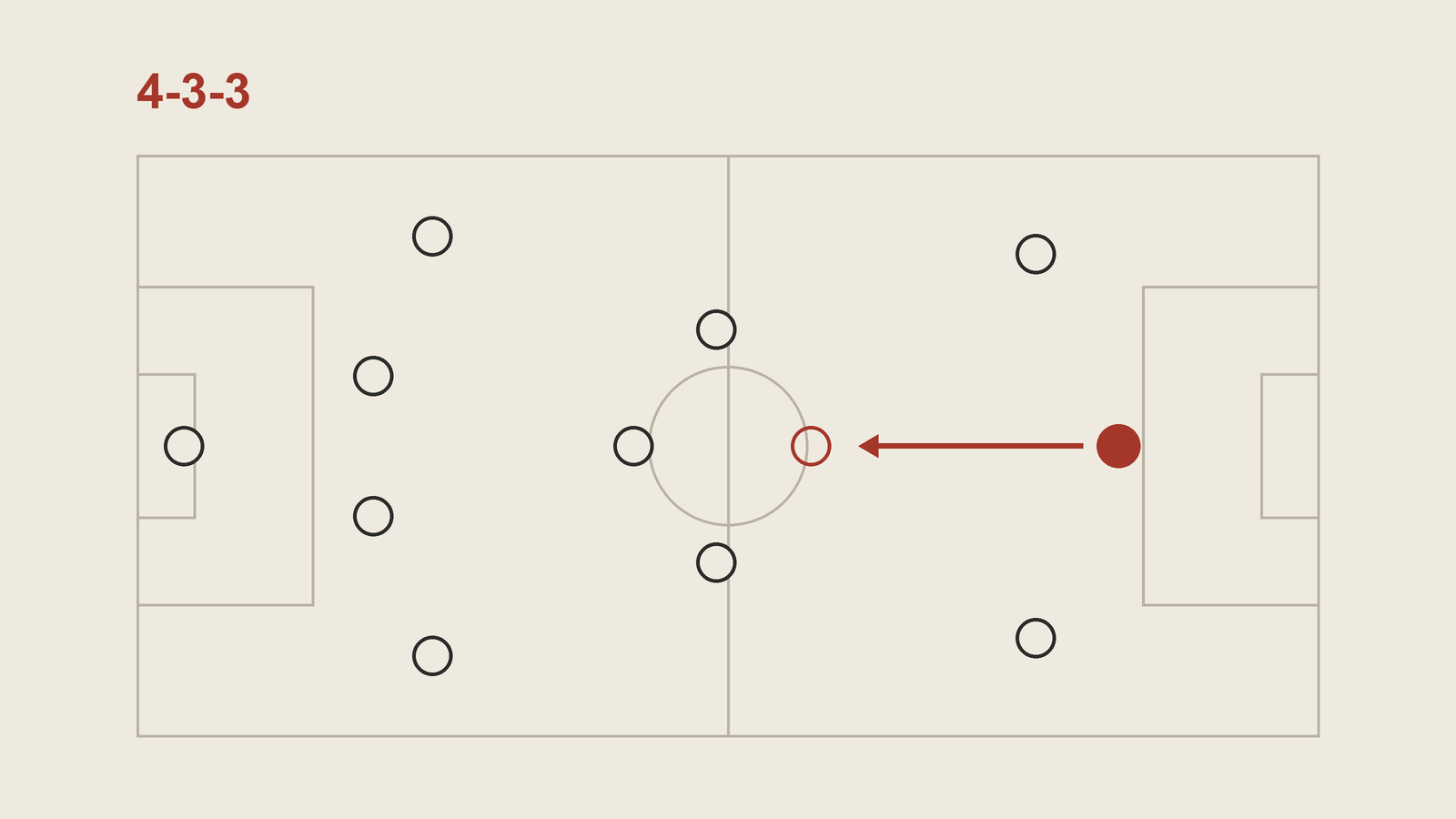
A striker is the most advanced player in a team and its main goalscorer. He plays closest to the opponent's goal, between or in front of the centre-backs, and is traditionally the number 9, which is why the position is also called the centre-forward or simply the 9.
Scoring is the core of the job, but not all of it. A striker also pins the opposing centre-backs, holds the ball up while team-mates arrive, links with midfield and, in modern teams, starts the press. Different strikers do these things in very different proportions, which is why the position has more named types than almost any other.
Where the position comes from
In the 2-3-5 the centre-forward stood in the middle of five forwards, with an inside forward and a winger on each side, as explained in the guide to football positions. He wore 9 and his job was to score most of the team's goals. As formations moved players back into midfield, the five forwards became three, then two, then often one. The lone striker of a 4-2-3-1 or a 4-3-3 has far more ground to cover alone than the old centre-forward did.
What a striker does with the ball
- Finish: the main job. Strikers score from inside the box, often first time, under pressure and from difficult angles, which is why late, sharp runs into the area matter as much as technique.
- Run in behind: a striker who threatens the space behind the defence pushes the back line deeper and opens room in midfield.
- Hold up and link: with his back to goal, he receives long or forward passes, keeps the ball and lays it off to arriving midfielders.
- Drop short: Coaches' Voice describes how Roberto Firmino at Klopp's Liverpool both ran in behind and dropped into midfield to create overloads.
What a striker does without the ball
The striker is the first defender. He decides where the opponent's build-up can go: he can press the centre-back with the ball, screen the pass into the defensive midfielder, or show play to one side so the team can trap it there. Many pressing triggers start with the striker's run. After losing the ball, he often counter-presses to win it back high up the pitch.
Types of striker
- The target man wins high balls, holds the ball up and creates chances for others. He is usually tall and strong in the air. Wikipedia names Didier Drogba, Olivier Giroud and Fernando Llorente.
- The poacher lives in the box and rarely touches the ball elsewhere. His value is timing and finishing: being in the right place when the ball arrives.
- The complete or mobile striker combines pace and technique and can score in every way. Wikipedia cites Ronaldo, Andriy Shevchenko and Thierry Henry as strikers known for peeling off defenders and running into space.
- The false nine starts as the striker but keeps dropping into midfield to receive between the lines. Lionel Messi under Pep Guardiola at Barcelona is the classic example; Coaches' Voice adds Cesc Fàbregas, Harry Kane, Firmino and Karim Benzema at Zidane's Real Madrid.
- The second striker, or deep-lying forward, plays in a free role between the main striker and the 10. Dennis Bergkamp and Alessandro Del Piero are the usual examples.
Between the 9 and the 10
Some forwards do not fit neatly into either box. Michel Platini described Roberto Baggio as a "nine and a half": halfway between a goalscoring forward and a playmaking attacking midfielder. The second striker or deep-lying forward plays in that space on purpose, in a free role behind or around the main striker, as Dennis Bergkamp and Alessandro Del Piero did. In a front two, he is the one who drops to receive and turns to play the final pass, while his partner stays on the last line.
The false nine reaches the same space from the other direction. He starts as the only striker and drops into it. The difference matters for the opponent: a second striker gives the centre-backs someone to mark ahead of him, while a false nine can leave them with nobody, which is exactly why he drags one of them out of the line.
What makes a good striker
Movement comes first: timing runs to lose a marker, attacking the near post or peeling away to the far one, and arriving in the box at the right moment. Then finishing with both feet and the head, often first time. Wikipedia points out that shorter strikers such as Sergio Agüero rely on short bursts of speed, while target men rely on strength and heading, so there is no single body type. Composure matters as much as technique, because chances arrive under pressure and rarely twice.
One striker or two
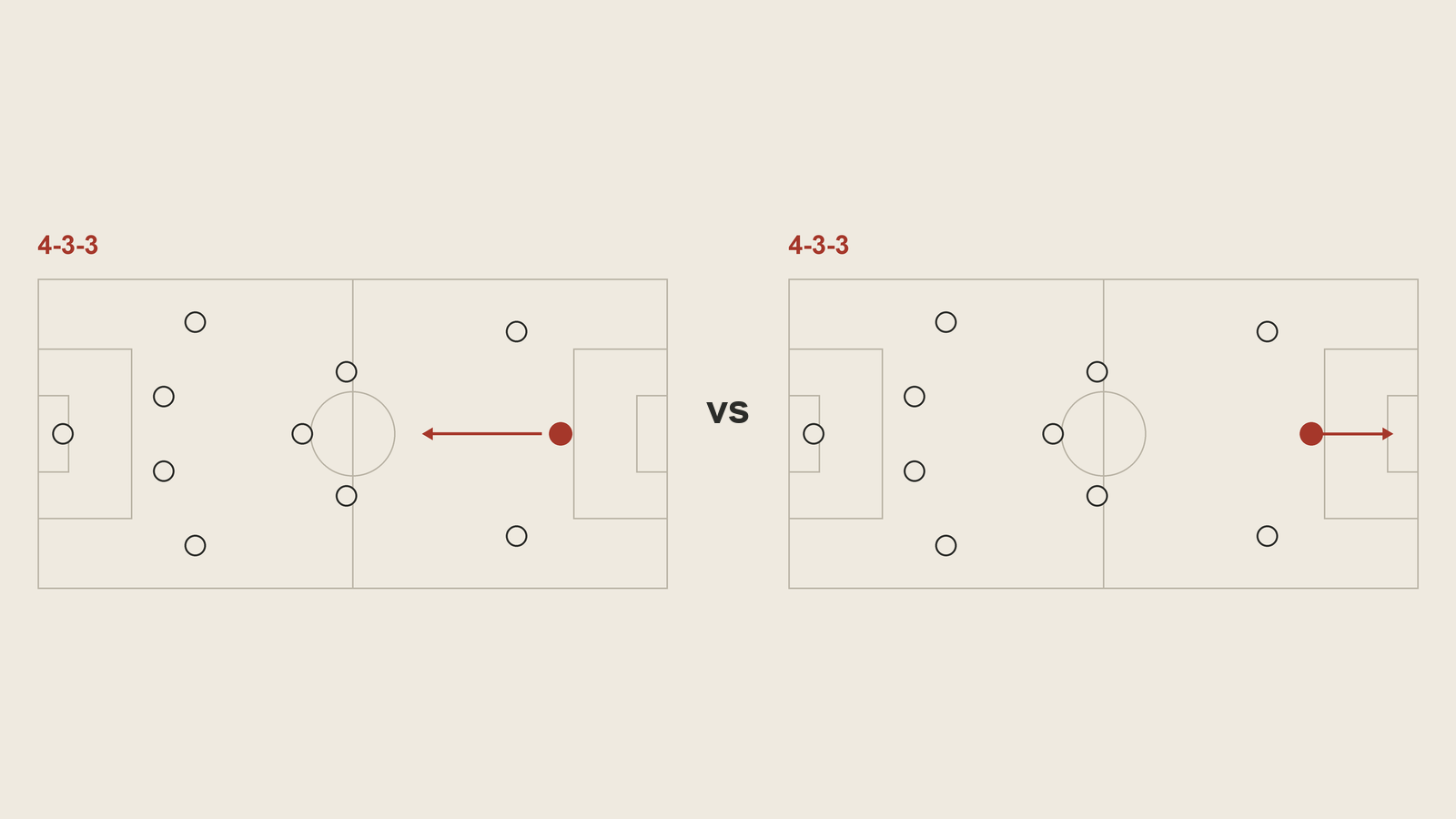
A 4-4-2 or a 3-5-2 uses two strikers, who can split the work: one stays high, the other drops; one goes in behind, the other holds up. A target man with a quick partner is the classic pairing. With a lone striker, the other jobs move elsewhere: a 10 or wingers arrive in the box, and the striker has to be more complete.
What the numbers show
Goals alone can mislead, because luck and penalties play a big part. Analysts look at expected goals (xG), which measure the quality of the chances a striker gets, and non-penalty xG, which removes penalties. Shot quality, the average xG per shot, separates a striker who takes good chances from one who shoots from anywhere. A striker who keeps getting high xG is moving well, even in a run without goals; one who keeps scoring far above his xG may be finishing exceptionally, or riding his luck.
How to spot the striker's type in a match
Watch where he receives. A striker who keeps receiving with his back to goal and laying the ball off is a target man or a link striker. One who is only seen in the box is a poacher. One who keeps showing up in midfield, between the opponent's lines, is playing as a false nine. Then watch the first seconds after his team loses the ball: does he press, or wait?
What does a striker do in football?
A striker is the most advanced player and the main goalscorer. He finishes chances, runs in behind the defence, holds the ball up for team-mates and, without the ball, starts the team's press against the opponent's defenders.
What is the difference between a striker and a centre-forward?
In everyday use they mean the same thing: the central attacker who leads the line, usually the number 9. Some writers keep "centre-forward" for a striker who also links play and "striker" for a pure goalscorer.
What is a target man in football?
A target man is a striker, usually tall and strong, whose main job is to win high balls, hold the ball up with his back to goal and lay it off to team-mates. Didier Drogba and Olivier Giroud are well-known examples.
What is a false nine?
A false nine is a striker who starts in the centre-forward position but keeps dropping into midfield to receive the ball. He pulls centre-backs out of position or leaves them with no one to mark, creating space for runners.
Sources and further reading
- Forward (association football) — Wikipedia
- The false nine: explained — The Coaches' Voice
- The 4-3-3: football tactics explained — The Coaches' Voice
- Squad number (association football) — Wikipedia