Glossary · Essay
Verticality: Not All Forward Passes Move at the Same Speed
Two teams can complete the same number of passes and advance the ball at completely different speeds. Verticality measures how directly a team goes toward goal.

By 01 Owen
· Updated 6 Oct 2026 · 5 min read
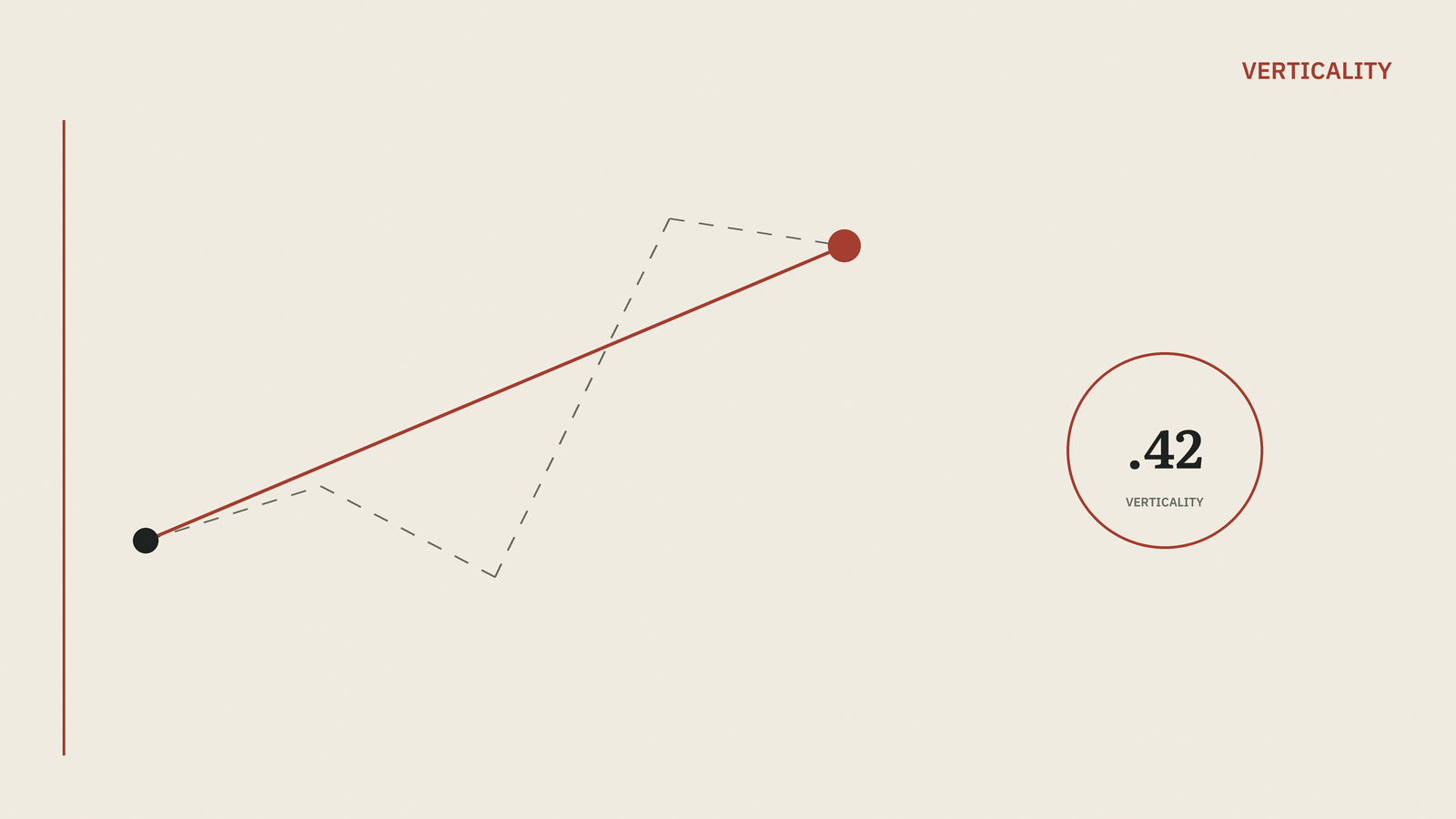
Two teams can complete the exact same number of passes in a match and be doing almost opposite things with the ball. One might be moving it steadily toward the opponent's goal with every third or fourth pass, while the other circulates it sideways and backward for long stretches before finally committing forward. Verticality is the metric built to tell those two teams apart, since a raw pass count treats them identically.
The basic calculation looks at the net forward progress the ball makes per pass, or sometimes per possession, measured as the straight-line distance gained toward the opponent's goal divided by the total distance the ball actually traveled across all the passes in that sequence. A team that strings together five passes covering sixty total yards of ball movement but only advances the ball twenty yards toward goal has a lower verticality score than a team that covers the same sixty yards in three direct passes that advance the ball forty-five yards, even though both teams technically moved the ball the same amount.
Direct and patient styles
High verticality tends to correlate with direct, transition-heavy styles: teams that look to spring forward the moment they win the ball, favoring fewer, longer, more purposeful passes over patient buildup. Low verticality tends to describe possession-based teams that value control and patience, happy to circulate the ball across the back line and through midfield until a genuine opening appears, even if that means a lot of the passing in a given sequence doesn't advance the ball much at all. Neither is inherently better; they're different theories of how to create danger, and the metric is descriptive rather than a judgment about which approach is correct.
What verticality does not measure
It's worth being careful about what verticality does and doesn't measure. A high verticality number doesn't necessarily mean a team is dangerous, only that it moves the ball forward efficiently relative to the passes it plays; a team can have excellent verticality while consistently losing the ball in dangerous transition moments, or while advancing the ball forward into areas that don't actually threaten the goal. Similarly, a low verticality score doesn't mean a team is toothless in possession; some of the most dominant possession sides in the sport's history have posted modest verticality numbers specifically because their patient circulation is the mechanism that eventually creates the opening for a genuinely progressive pass, rather than a sign they can't or won't play forward.
Pairing it with other metrics
The metric is most useful in combination with others rather than on its own, which is a common thread running through most of the counting and ratio-based stats in this glossary. Pairing verticality with expected threat or progressive-passing numbers starts to separate teams that move the ball forward efficiently and dangerously from teams that move it forward efficiently into areas that don't matter much, a distinction that verticality alone can't make since it only cares about net distance gained toward goal, not what that distance is actually worth.
How game state changes the number
It also shifts meaningfully by game state, which is worth remembering before comparing two teams' season-long verticality numbers at face value. A team trailing late in a match will almost always show higher verticality than the same team protecting a one-goal lead, simply because urgency changes how directly a team plays regardless of its default style, so a single match's verticality number says as much about the scoreline at the time as it does about the team's underlying identity.
It's a close cousin of a simple count of progressive passes and carries, and pairing it with expected threat separates forward movement that's merely efficient from forward movement that's actually dangerous.
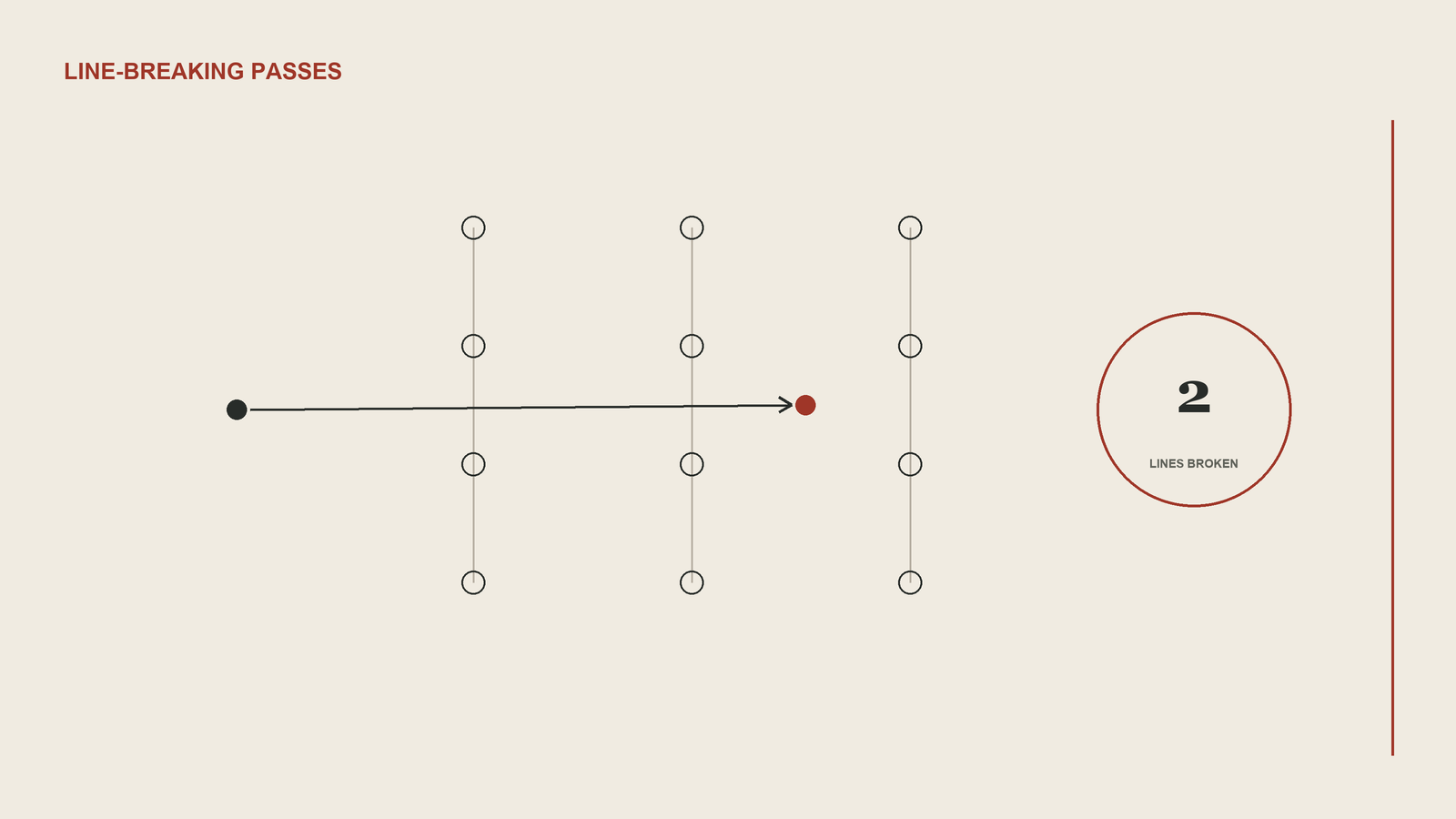
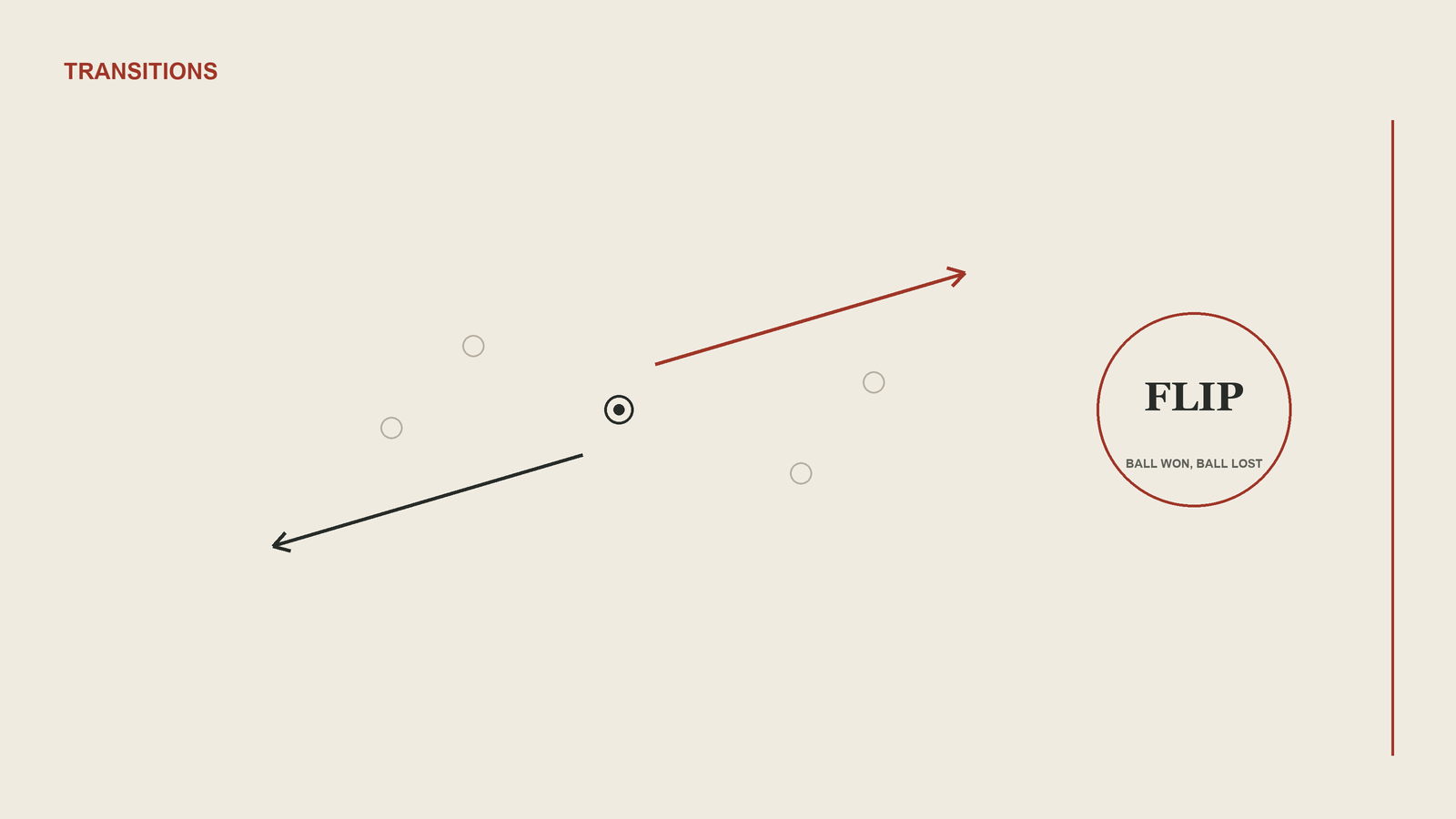
Verticality shows up most clearly in two situations: in transitions, when a team attacks before the opponent is set, and in settled play through line-breaking passes that skip a whole band of defenders at once.
Is high verticality always a good sign?
No. It describes how directly a team moves the ball, not how dangerously. A team can post high verticality by repeatedly launching long balls that get won back immediately, which looks direct on the metric but produces very little actual threat. Verticality is best read alongside a value-based number like expected threat or shot-creating actions, since those distinguish direct play that actually threatens goal from direct play that just loses the ball further up the pitch.
How is verticality calculated?
Verticality divides the straight-line distance the ball gains toward the opponent's goal by the total distance it travels across the passes in a sequence or possession. Five passes covering sixty yards but advancing the ball twenty score lower than three direct passes covering the same sixty yards and advancing it forty-five, even though the ball moved the same amount.
Does low verticality mean a team is not dangerous?
No. Some of the most dominant possession sides have posted modest verticality numbers because patient circulation is the mechanism that eventually creates the opening for a progressive pass. Low verticality describes a style that values control, not a team that cannot play forward. Verticality is descriptive, not a judgment about which approach is correct.
Why does verticality change with the score?
Verticality shifts with game state. A team trailing late in a match will almost always play more directly than the same team protecting a one-goal lead, simply because urgency changes how it plays. That means a single match's verticality says as much about the scoreline at the time as about the team's identity, so season figures need care.
Sources and further reading
- Verticality in Possession – Football Tactics Explained — The Football Analyst (accessed 18 Sep 2026)
- The individuality behind the collective, part 3: Vertical progressive play — FIFA Training Centre (accessed 18 Sep 2026)
- Glossary: football tactics and coaching definitions — Coaches' Voice (accessed 18 Sep 2026)