Formations and roles · Analysis
Goalkeeper: the last defender and the first passer
A goalkeeper stops shots, commands the box and starts attacks. The role at a glance in a table, a 4-3-3 diagram, the laws, examples and how to read one.
By 01 Owen
· Updated 7 Oct 2026 · 7 min read
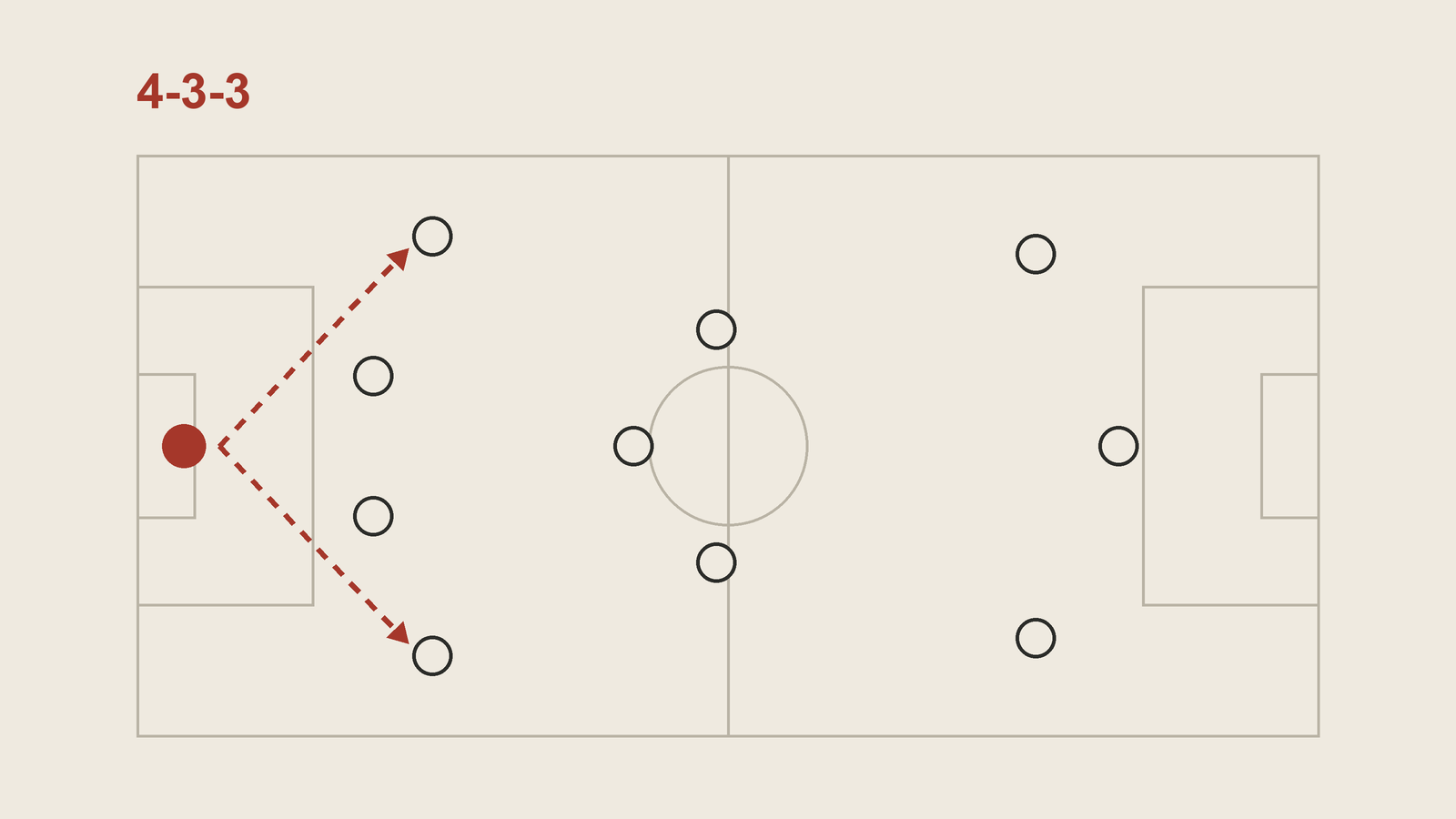
The goalkeeper defends his team's goal and is the only player allowed to handle the ball, inside his own penalty area only. His first job is stopping shots, but the modern keeper also commands his box and starts attacks with his feet.
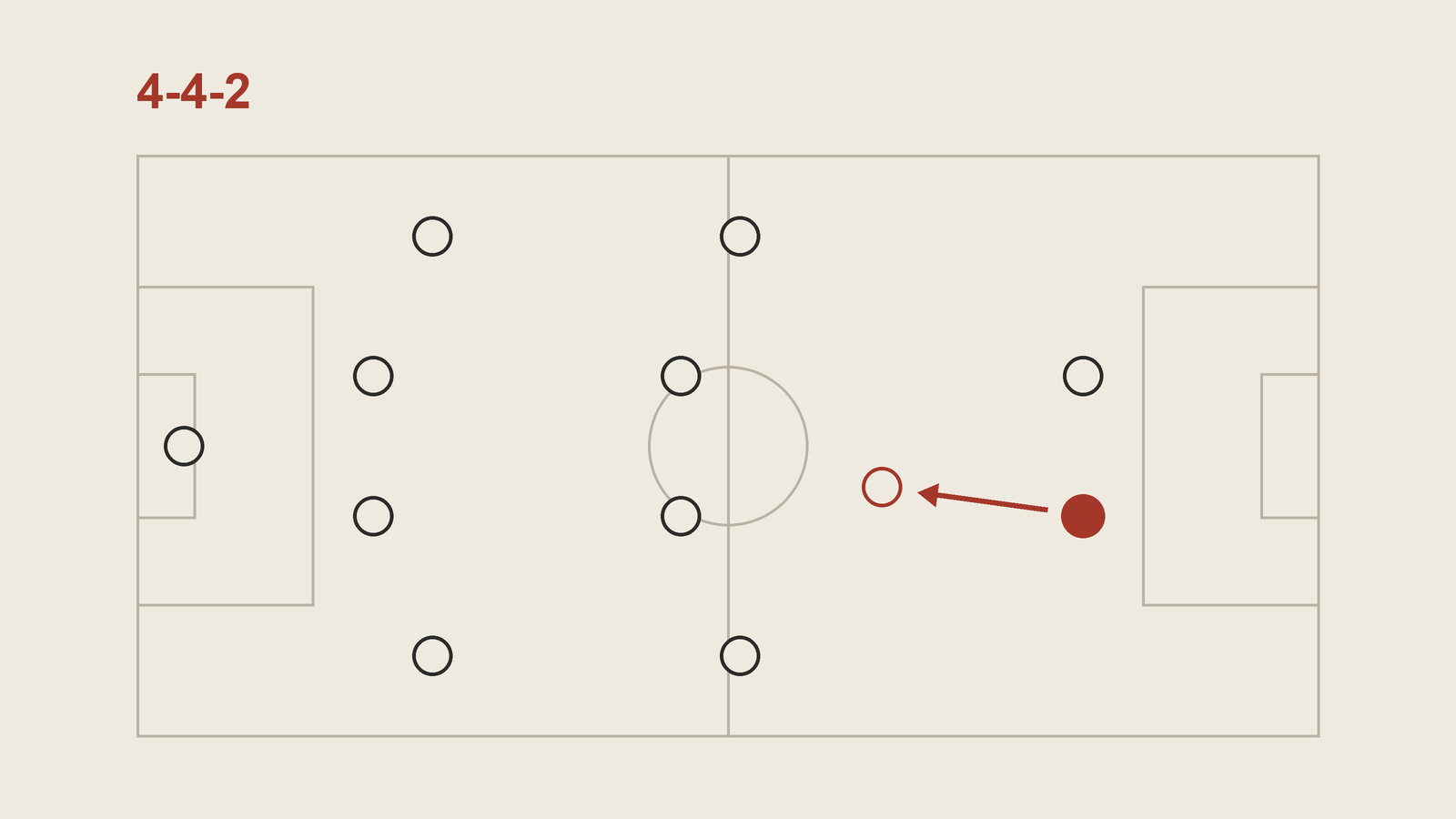
He is the one compulsory position among the football positions, yet he is not even counted in formations: a 4-3-3 means ten outfield players in front of him. As Coaches' Voice puts it, his actions can now change a team's whole style of play.
The goalkeeper at a glance
| Where he plays | In and around his own penalty area; higher when his team defends with a high line |
| Main job | Stop shots; start attacks as the first passer |
| Without the ball | Claims crosses, organises walls and markers at set pieces, covers the space behind the defence |
| Typical formations | Every formation; his job changes most with how the team builds up and how high it defends |
| Typical shirt number | 1 for the first choice, 13 for the usual back-up |
| Related roles | Sweeper-keeper, centre-back, libero |
| Well-known examples | Lev Yashin, Oliver Kahn, Gianluigi Buffon, Iker Casillas, Manuel Neuer, Ederson, Alisson |
What the laws allow him
The goalkeeper's special status is written into the Laws of the Game, and most of it is about limits. The handling privilege stops at the edge of his penalty area; the laws fixed that in 1912. Since 1992 he may not pick up a ball deliberately kicked to him by a team-mate, and since 1997 the same applies to a throw-in taken by a team-mate. The IFAB's Law 12 answers both with an indirect free kick to the opponents.
The newest restriction is on time. Since the 2025/26 Laws came into force on 1 July 2025, a goalkeeper who controls the ball in his hands for more than eight seconds concedes a corner kick. It replaced a six-second rule that referees rarely enforced. Once he has the ball in his hands, opponents may not challenge him for it.
The 1992 back-pass rule is where the modern goalkeeper begins. From then on the keeper had to control and pass like an outfield player, and his feet started to matter as much as his hands.
With the ball
In possession, the goalkeeper is the first player in build-up play. Coaches' Voice lists his options: a pass to a centre-back, a pass to a midfielder who drops in, or a ball clipped out to a full-back or wide midfielder. After the first pass he moves to offer a return.
The tactical point is numbers. The opposing goalkeeper does not come out to mark anyone, so a team that uses its own keeper in build-up has eleven against ten in its own half. If the opponents press with many players, someone further up should be free once the press is beaten.
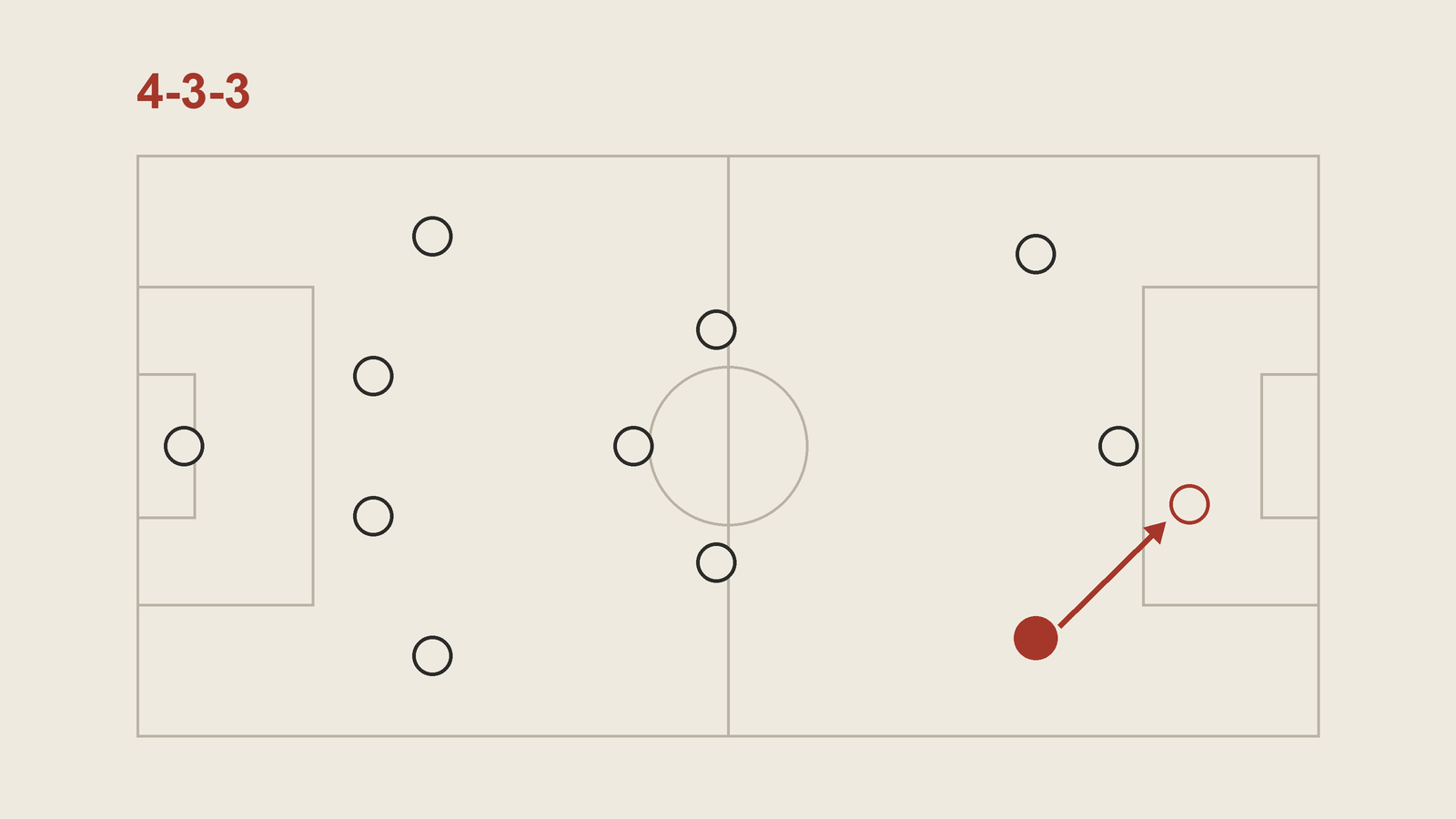
Ray Clemence, the former Liverpool goalkeeper, then head of England's national teams, described distribution to the FA as a golf bag: a keeper needs "three or four clubs in their bag". An 80-yard kick down the field, a chip to halfway, and a short clip over an opponent to a full-back 30 yards away are all different shots, and a good keeper has all of them. The diagram above shows that last option in a 4-3-3, the keeper picking out either full-back.
Without the ball
Shot-stopping is still the core. Clemence told the FA that everything about the job has changed except the need to stop the ball going in the net. Keepers now parry more than they used to, the lighter ball moves later in the air, and they are coached to push shots into wide, safe areas rather than back into the path of a forward.
The second job is the penalty area. He claims or punches crosses and sets up the defence at free kicks: how many go in the wall and who marks whom.
The third job is the space behind the defence. When a team pushes its line up, often with an offside trap, the ball over the top becomes the danger, and the keeper's starting position moves up with it. A goalkeeper who rushes out to clear these balls is usually called a sweeper-keeper. Gyula Grosics of Hungary's 1950s side is often named as the first, and Manuel Neuer is a modern example.
Formations
The goalkeeper plays in every system, but the shape in front of him decides how he builds up.
- In a 4-3-3 the two centre-backs often split wide of the penalty area, the full-backs push on, and the single holding midfielder can drop. The keeper's passing lanes are to the centre-backs and the chipped ball to the full-backs.
- In a 4-2-3-1 the double pivot gives him two midfielders to find in front of the centre-backs, so the short pass into midfield can be his first option.
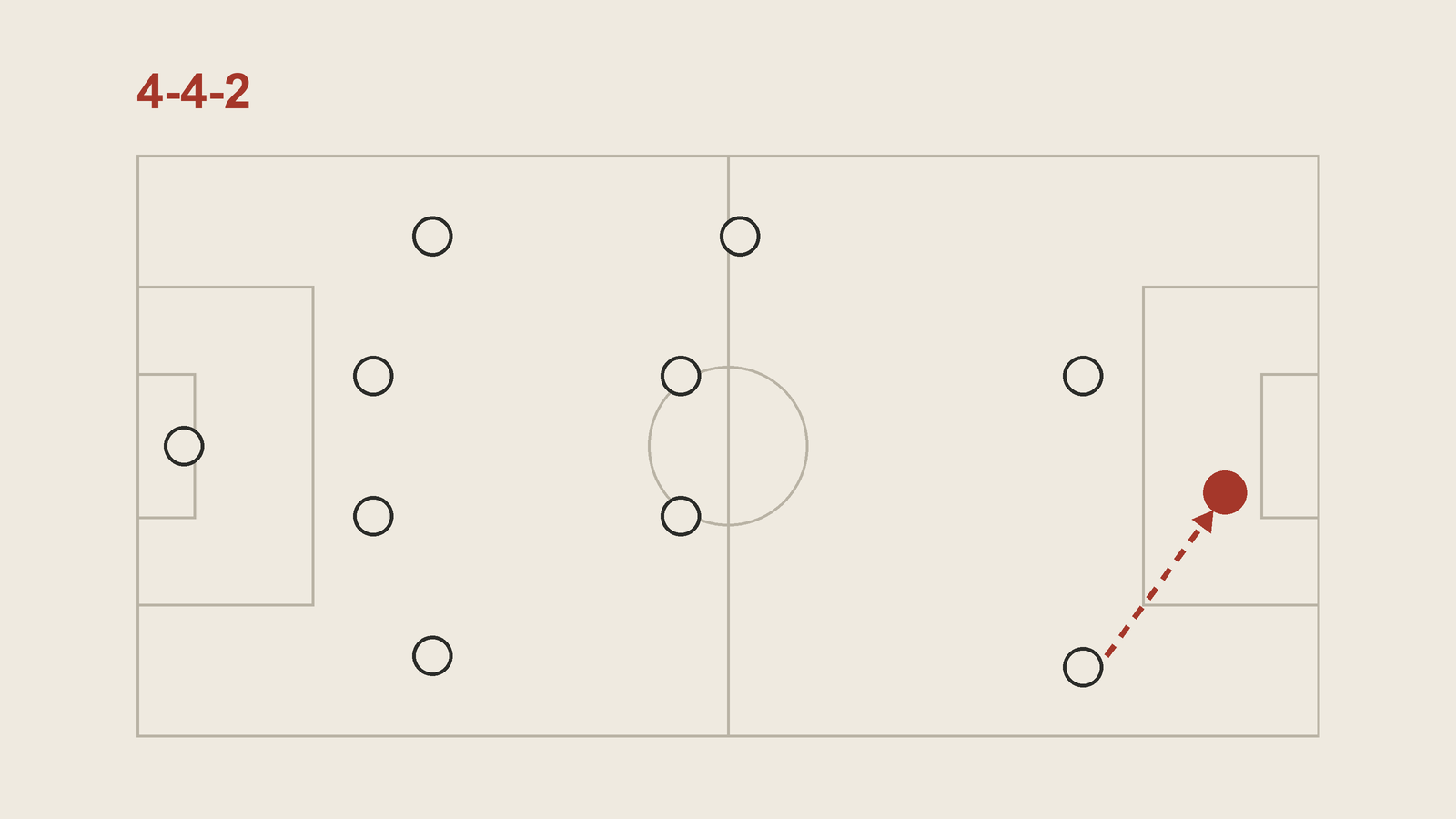
- In a 3-5-2 three centre-backs already give width at the back, so the keeper can become the fourth player in a back line in possession.
The higher a team defends, the more ground the keeper covers behind it, and his positioning becomes part of its rest defence.
Examples
Lev Yashin of the Soviet Union is the only goalkeeper to have won the Ballon d'Or. Oliver Kahn is the only one to win the Golden Ball as the best player at a World Cup, in 2002. Gianluigi Buffon is the only goalkeeper to win the UEFA Club Footballer of the Year award, and Iker Casillas holds the record for international clean sheets by a male goalkeeper, 102.
For the modern, ball-playing keeper, a 2022 Coaches' Voice analysis picked out four. Marc-André ter Stegen, then at Barcelona, acted as an extra outfield player in build-up and played risky one-twos. Ederson, then Pep Guardiola's keeper at Manchester City, looked for the free man and could find a striker with one long ball. Alisson, then at Liverpool, took fewer risks but moved play calmly from side to side. Thibaut Courtois, then at Real Madrid, contributed more in defence than in build-up, sweeping behind his team when it pushed for a goal.
How the goalkeeper differs from neighbouring roles
The sweeper-keeper is a style of goalkeeping, not a different position: a keeper who starts high and leaves his area to clear through balls.
The libero was an outfield player who swept behind the defence and stepped into midfield with the ball. As defensive lines rose, much of his covering work passed to the goalkeeper; the libero vs centre-back comparison shows the outfield side of that change.
How to spot it in a match
Watch where the keeper stands when his team attacks: near the edge of his area means he is covering for a high line. Watch goal kicks: short to a centre-back means a team that builds through him; long to the forwards means one that skips the first line. When he catches a cross, see how fast the ball leaves his hands. For shot-stopping, post-shot expected goals compares the quality of the shots he faced with the goals he conceded.
When a coach picks which goalkeeper
The real choice is the type. A coach who builds short and defends high needs a keeper who passes well under pressure and reads balls over the top. A deep team that clears long can live with a pure shot-stopper who dominates his box. Coaches' Voice is clear about the cost of the first choice: playing out through the keeper raises the risk of losing the ball close to goal.
What is the main role of a goalkeeper?
His main role is to stop the opposition scoring, by saving shots and dealing with crosses. In the modern game he also organises the defence and starts attacks with his feet. The modern game asks for both.
Can a goalkeeper pick up a back-pass?
No, not if a team-mate deliberately kicked it to him or threw it to him from a throw-in. He can still play it with his feet. A pass with the head, chest or knee can be picked up, unless it is a deliberate trick to get round the law.
Why does the goalkeeper wear number 1?
Number 1 is the traditional shirt of the first-choice goalkeeper, and 13 is often worn by the back-up. Shirt numbers are not fixed by the laws, so any keeper can wear any number.
What is the difference between a goalkeeper and a sweeper-keeper?
A sweeper-keeper is a goalkeeper who plays further off his line and clears balls played behind his defence. The position is the same; the difference is how high he stands and how often he leaves his area. Teams with a high defensive line need it most.
Sources and further reading
- Goalkeeper (association football) — Wikipedia
- Law 12 - Fouls and Misconduct — IFAB
- The modern goalkeeper: football tactics explained — Coaches' Voice
- Ray Clemence: the changing role of the goalkeeper — The FA Boot Room