Formations and roles · Analysis
The Playmaker Who Runs the Game From in Front of His Own Defence
A regista is a deep-lying playmaker who directs his team's passing from in front of the defence. How Pirlo defined the role and how opponents try to stop it.

By 01 Owen
· Updated 22 Sep 2026 · 4 min read
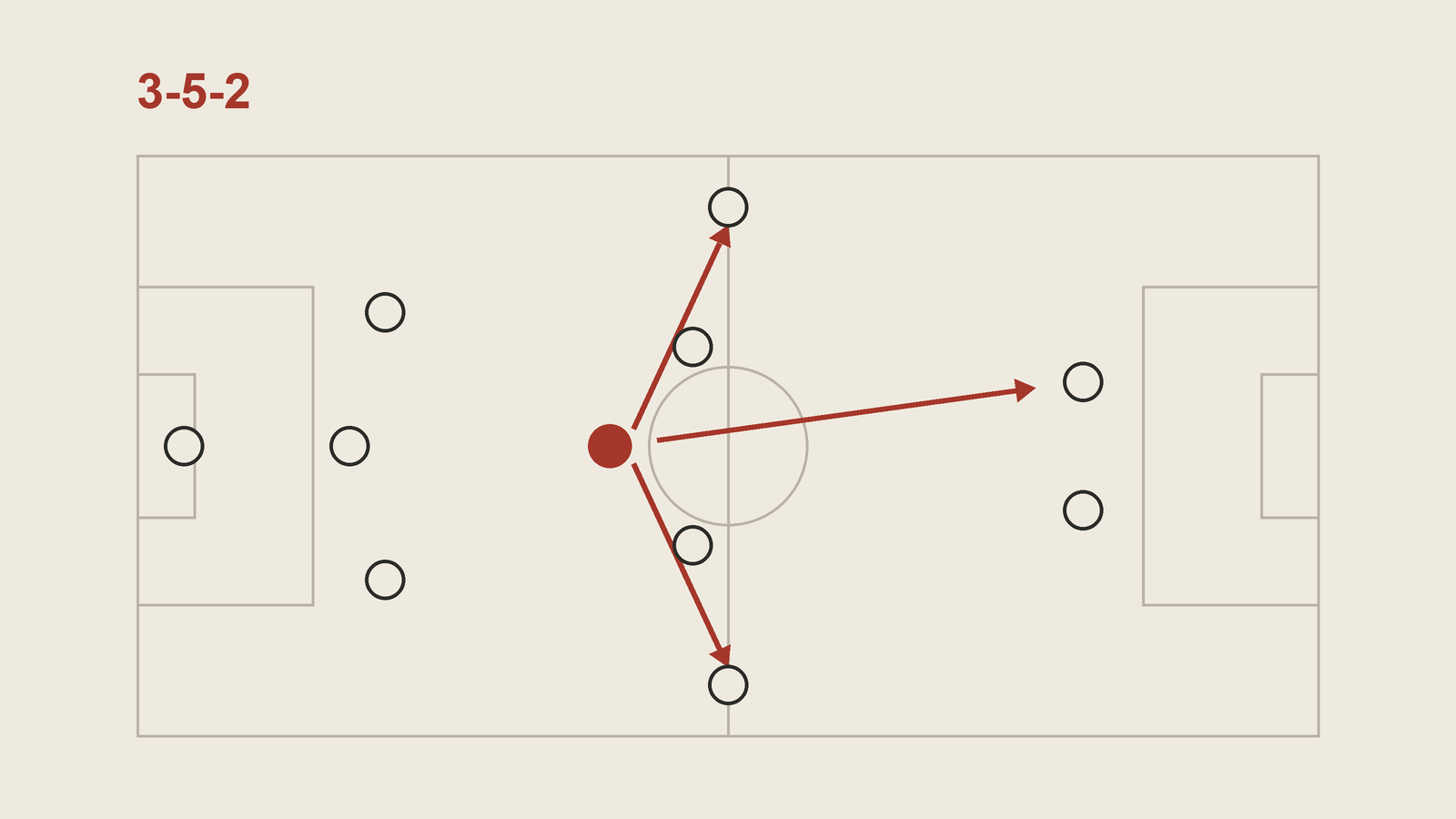
A regista is a deep-lying playmaker: a midfielder who stands in front of his own defence and directs the team's passing from there. The word is Italian for a film director, which is the right image. He plays in the position of a holding midfielder but his job is distribution rather than destruction. He wants the ball as often as possible, he decides whether the next pass is short or long, left or right, slow or quick, and the rest of the team moves to his tempo.
The player who defines the role is Andrea Pirlo. He began in a more advanced creative role. In 2001, on loan at Brescia, where Roberto Baggio already occupied the ten's position, the coach Carlo Mazzone moved him back in front of the defence. Carlo Ancelotti kept him there at Milan, and from that position Pirlo won two Champions Leagues and the 2006 World Cup, then moved to Juventus in 2011 and won four league titles. Xabi Alonso played a similar role for Liverpool, Real Madrid and Bayern Munich, and Jorginho did for the Italy side that won Euro 2020.
Why put the best passer so far from goal? Because that is where the time is. A number ten receives with a defender on his back and a second closing in. A regista receives facing the whole pitch, usually from a centre-back, with the play in front of him. From there he can switch the ball to the far wing-back, clip a pass over the top for a striker's run, or play the line-breaking pass through midfield that turns possession into an attack. In build-up play he is the hub that the first passes go through, which is why he shows up as the biggest node in a team's pass network and near the top of its counts for progressive passes.
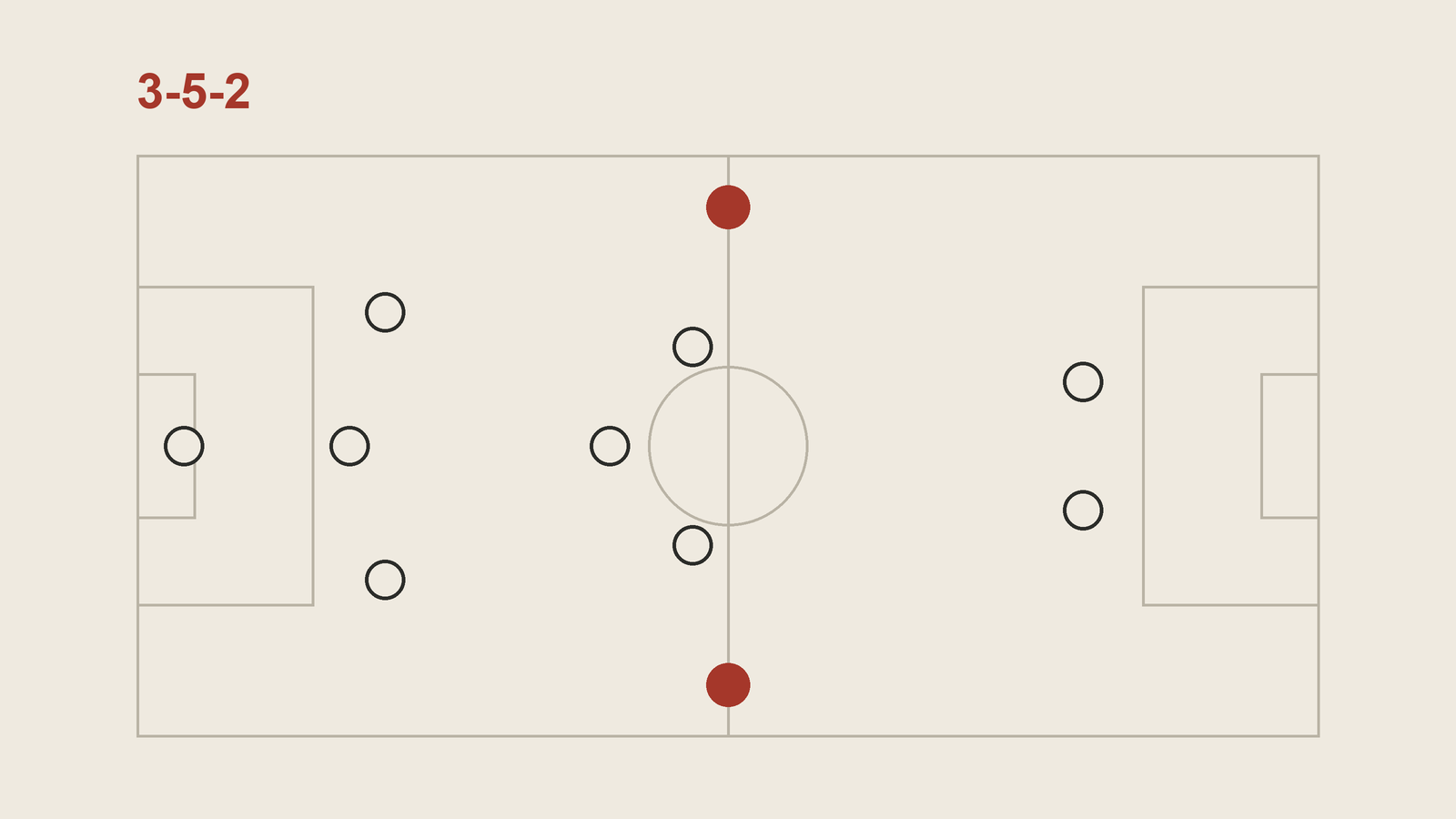
The role comes with a bill that somebody else pays. A specialist passer still needs defensive support when he moves to receive or is drawn out of position. At Milan that was Gennaro Gattuso and Massimo Ambrosini; at Juventus, Arturo Vidal and Claudio Marchisio, who played as mezzali either side of him. A back three behind him also helps, which is one reason the regista has been most at home in the Italian 3-5-2: three centre-backs can provide additional cover, provided they coordinate their movements. In a back four with a single pivot, the area around him is the first place an opponent looks.
Stopping him is conceptually simple. A team that lets the regista receive facing forward has conceded control of the game, so the usual answer is to assign someone to him. The best-known case is Manchester United against Milan in the Champions League in March 2010, when Park Ji-sung was given the single task of following Pirlo wherever he went. Milan lost 4-0, and Pirlo later wrote about the evening with some feeling. The modern version is a striker or number ten who screens him as a pressing trigger: the moment the ball goes to the regista, the press goes. Teams with a regista respond by having him drop between the centre-backs to find room, or by using a second playmaker so the ball has another route.
The pure regista has become rarer. Pressing has reduced the time available in front of the defence, and most coaches now want their deepest midfielder to win duels and cover ground as well as pass. Rodri in Manchester City’s 2023 treble-winning side illustrates how directing play can be combined with duels and defensive coverage. The idea has survived better than the specialist: every team that builds from the back needs someone in that position who can see the whole pitch. You can put a 3-5-2 on the tactics board and look at how many passing options the central midfielder in front of the back three has compared with anyone else.
What is the difference between a regista and a defensive midfielder?
Position, none; purpose, a great deal. Both play in front of the defence. A defensive midfielder is there mainly to protect it: to screen, tackle and intercept. A regista is there mainly to start attacks, but he must still contribute to defensive coverage. Many modern holding midfielders are expected to do both jobs, which is why the pure regista has become unusual.
Sources and further reading
- The regista: explained — The Coaches' Voice
- The Regista: football tactics explained — FourFourTwo
- The Evolution of the Deep-Lying Playmaker: From Pirlo to Rodri — Breaking The Lines