Formations and roles · Analysis
Two Players, One Job: Guarding the Space in Front of the Defence
A double pivot is a pair of holding midfielders in front of the defence, most often in a 4-2-3-1. How the two split the work, and how a single pivot differs.
By 01 Owen
· Updated 22 Sep 2026 · 4 min read
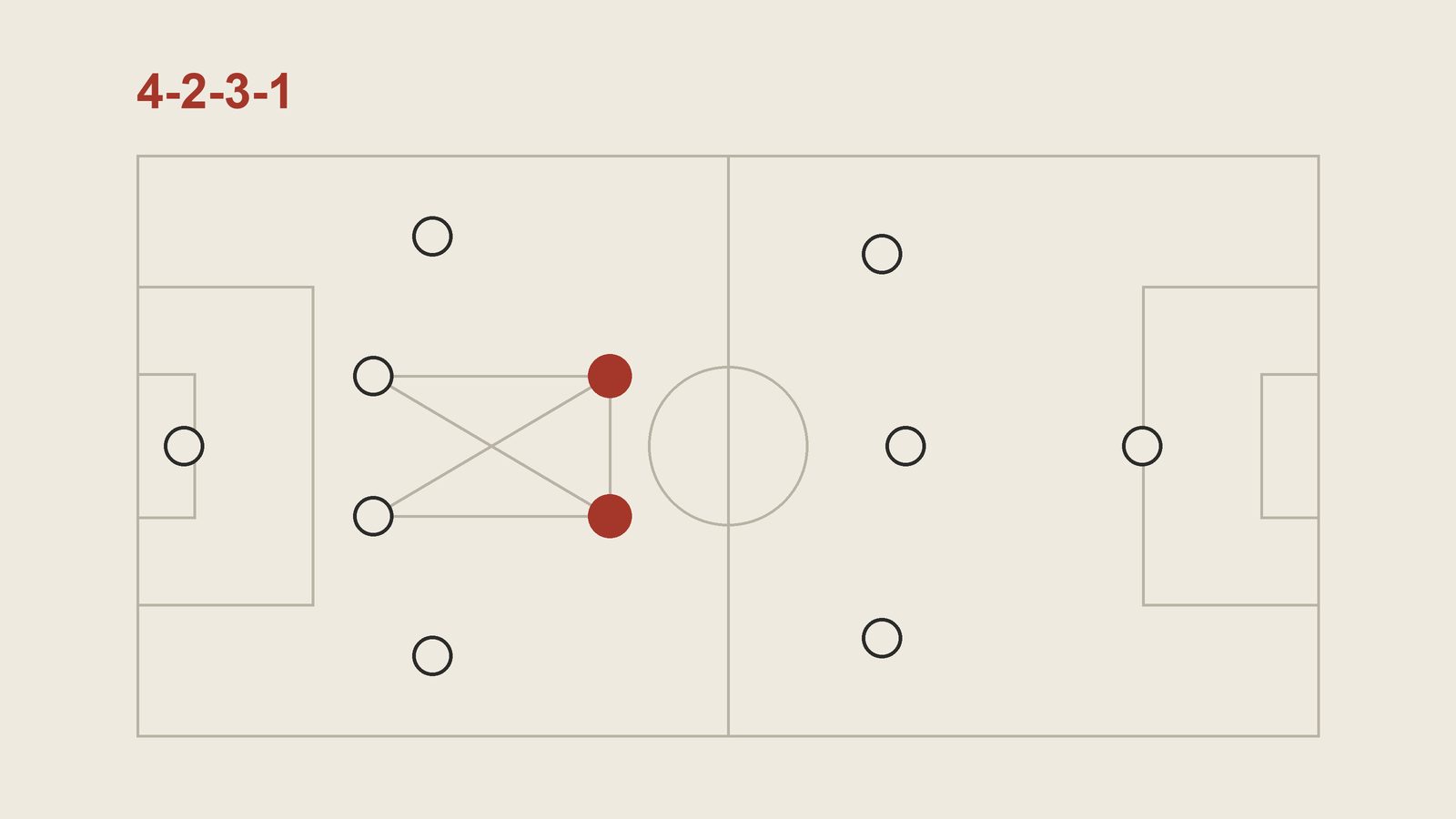
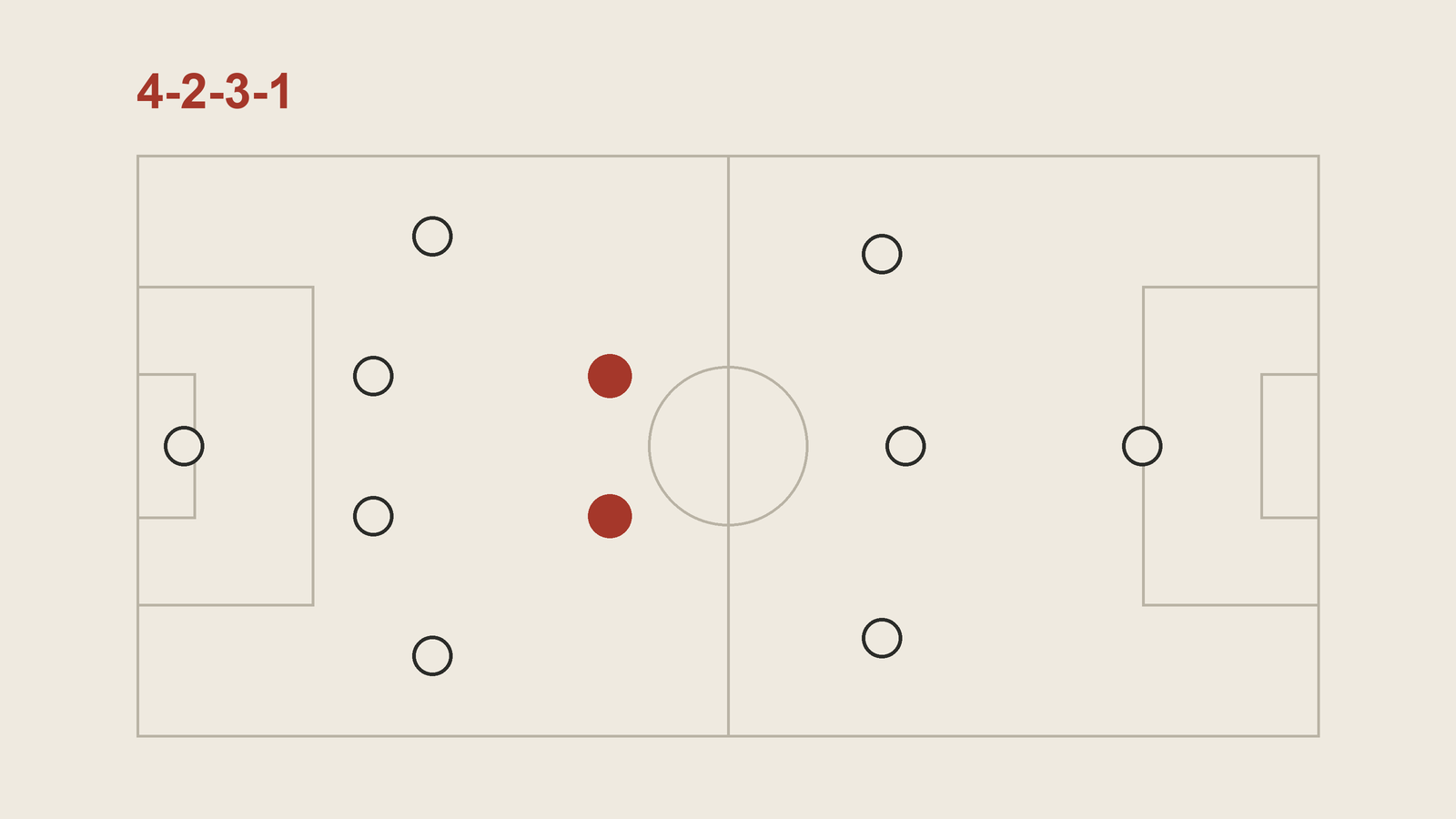
A double pivot is a pair of central midfielders who play side by side in front of the defence. They sit inside the full-backs, ahead of the centre-backs and behind the attacking midfielders, and between them they are responsible for the most valuable strip of the pitch: the space in front of the back line. The term comes from the Spanish doble pivote. It is most closely tied to the 4-2-3-1, but the same pair appears in a 3-4-3, a 4-4-2 and a 4-2-2-2.
The well-known examples come from the period when the 4-2-3-1 ruled. Spain won the 2010 World Cup with Sergio Busquets and Xabi Alonso together, a pairing some critics thought too cautious and which conceded two goals in seven matches. Germany's version in the same tournament was Bastian Schweinsteiger and Sami Khedira, and Schweinsteiger later formed the base of Bayern Munich's 2013 treble side alongside Javi Martínez.
The traditional way to split the work is a destroyer and a passer: one wins the ball, the other uses it. That division still exists, but the better pairs are harder to label. What matters is that they are never on the same line at the same time. When one steps forward to press or to support an attack, the other holds. When one moves towards the ball to receive from a centre-back, the other takes up a position diagonally behind or ahead, so that the pair always offers two passing angles rather than one. Two holders standing side by side, both asking for the ball to feet, are easy to mark and useless to their centre-backs.
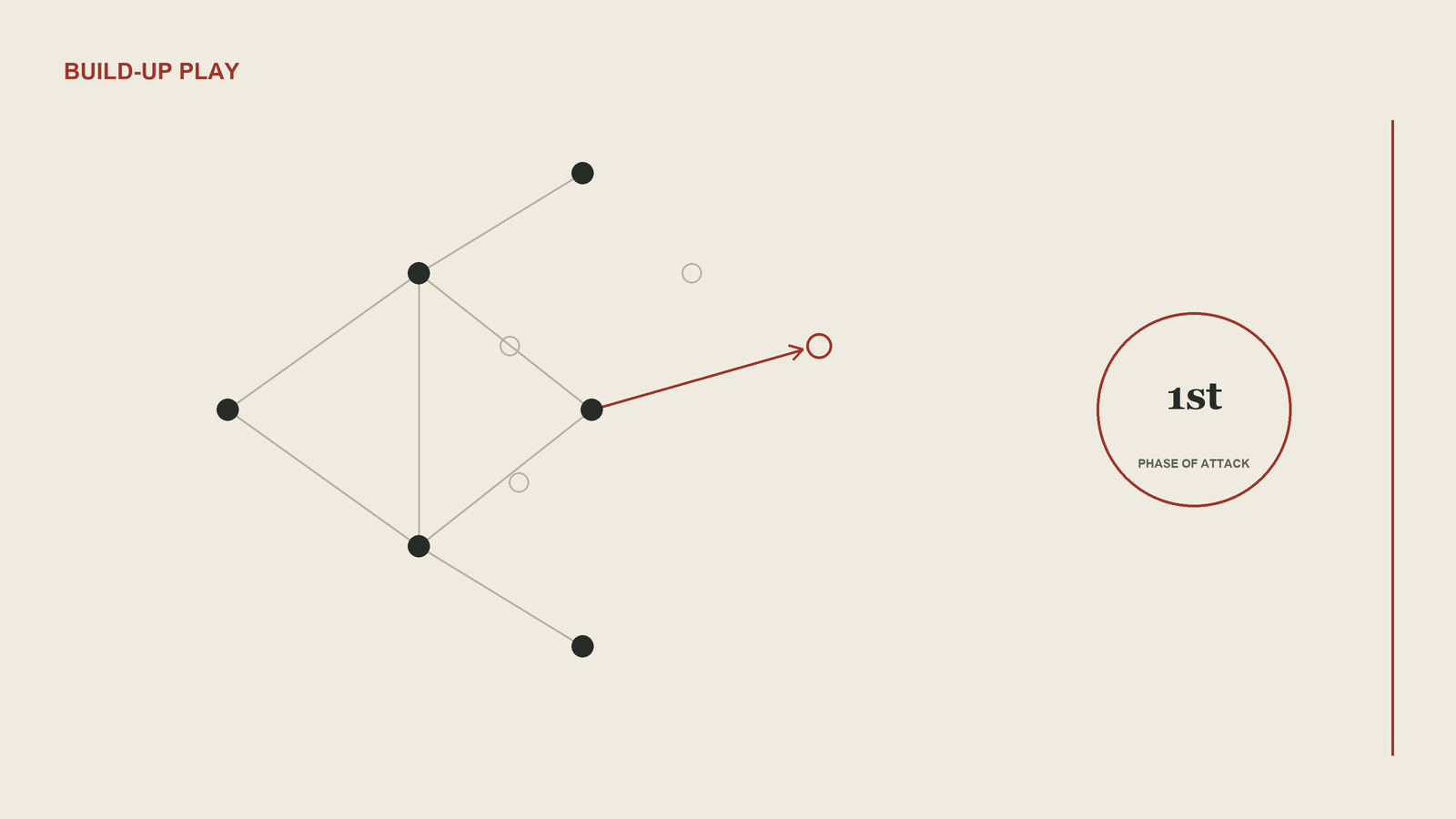
With the ball they give build-up play its first platform. Against a front two, one of the pivots can drop beside or between the centre-backs to make a three, and the other stays beyond the first line of pressure, which produces the 3-1 or 3-2 shapes most teams build from. Against a single striker they can both stay high and form a box with the centre-backs. They are also the natural players to switch the play and to find line-breaking passes into the ten and the wide attackers.
Without the ball the pair screens passes into the opponent's most dangerous players, the ones who want to receive between the lines in Zone 14 and the half-spaces. They cover behind full-backs who have gone forward, and they are the core of the team's rest defence: with two centre-backs behind them they make a 2+2 block in the middle of the pitch when the rest of the team is attacking. That security is the reason the shape allows a number ten with few defensive duties.
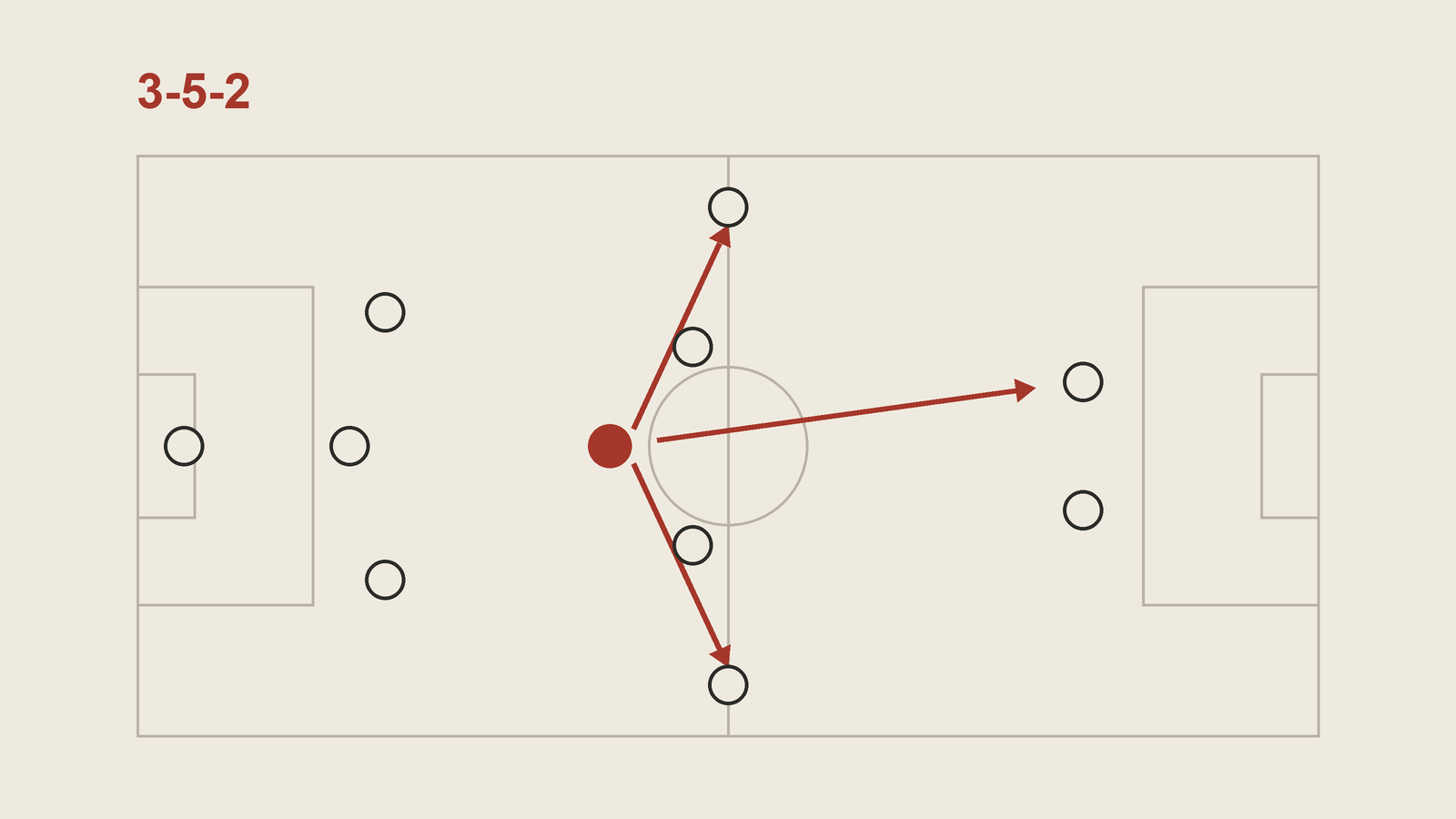
The comparison that matters is with a single pivot, as in a 4-3-3. One holding player frees an extra man to play further forward, so the team has more presence between the lines and presses higher with more bodies. But he has to cover the full width of the pitch alone, and the spaces either side of him are where a 4-3-3 gets hurt. Two holders close those spaces at the cost of a player higher up. A double pivot is safer, a single pivot is more ambitious, and many teams switch between the two during a match depending on the score.
The weakness of the double pivot is mostly about what it takes away. Two players who stay deep leave the team with fewer runners beyond the ball, and if they both sit too close to their own defence a gap opens to the attackers and the team splits in two. Against a midfield three they can also be outnumbered unless the ten drops in to help. You can open a 4-2-3-1 on the tactics board and move one of the two holders up and down to see how the passing angles to the centre-backs change.
What is the difference between a double pivot and a box-to-box midfielder?
They describe different things. A double pivot is a pairing and a position: two players stationed in front of the defence. Box-to-box describes what one midfielder does, covering the whole length of the pitch from his own penalty area to the opponent's. A double pivot can contain a box-to-box player, as long as his partner holds when he goes, but a pair in which both go forward is no longer doing the pivot's job.
Sources and further reading
- Double pivot: football tactics explained — The Coaches' Voice
- The 4-2-3-1: football tactics explained — The Coaches' Voice