Formations and roles · Analysis
Defensive midfielder: the 6 who screens the defence and starts the play
A defensive midfielder (CDM, the 6) screens the back four, wins the ball back and keeps it moving. Its three types, famous examples and how to spot one.
By 01 Owen
· Updated 3 Oct 2026 · 6 min read
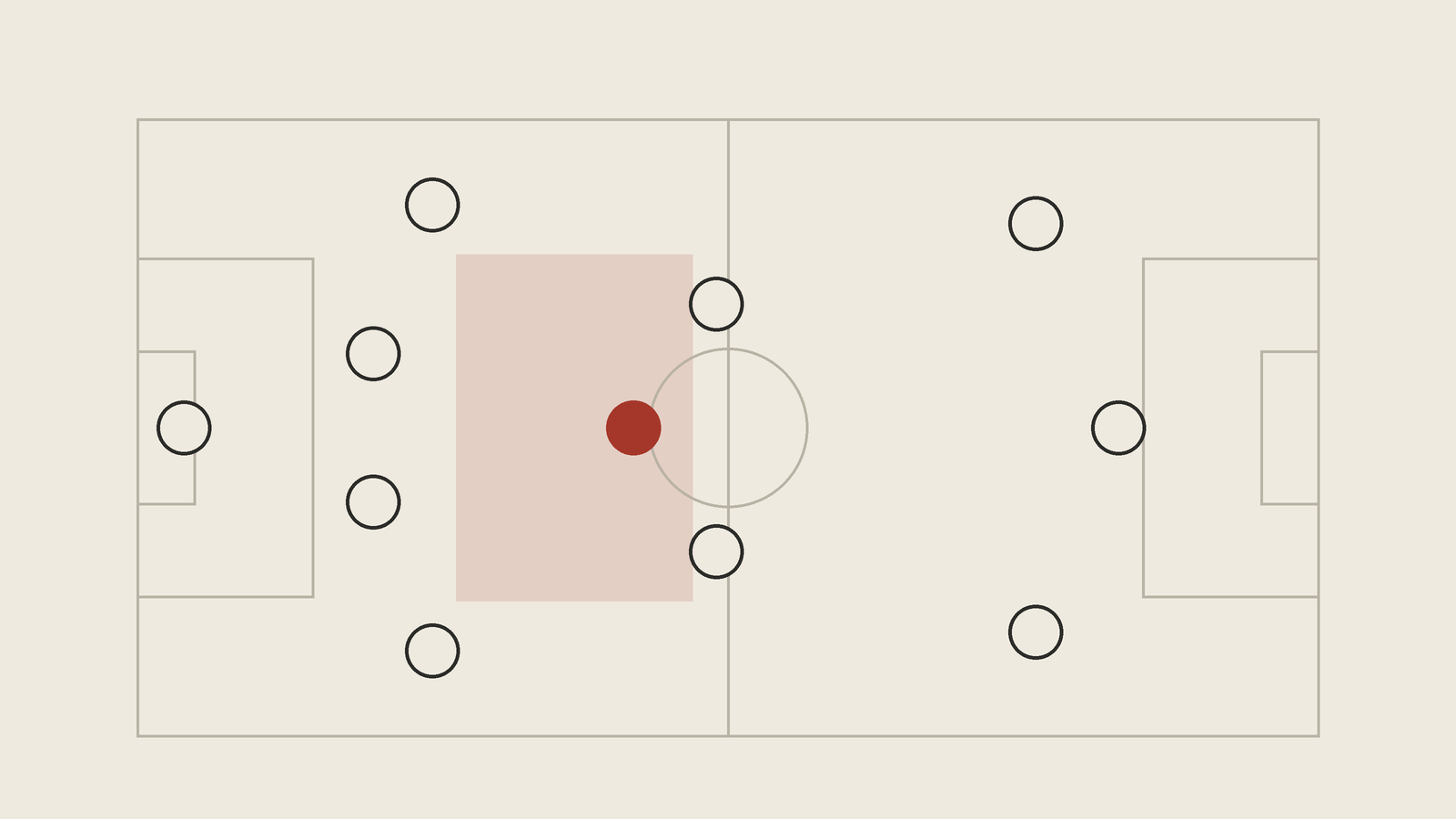
A defensive midfielder plays directly in front of his own defence, protecting it without the ball and offering it a safe pass with it. He is also called the holding midfielder, the CDM or simply the 6, after the shirt number the role carries in most of Europe.
Every team defends the space between its back four and its midfield, but not every team gives one player the job of living there. When it does, that player becomes the hinge of the side: the first passer after the centre-backs, the last midfielder between the opponent and his own penalty area, and usually the player who decides how quickly the team can move from defending to attacking.
What a defensive midfielder does
Without the ball the job has three parts. He screens, standing in the passing lanes that lead into the opponent's forwards so that a straight ball into the striker or into zone 14 is not on. He covers, filling the gap when a centre-back steps out or a full-back is caught upfield. And he wins the ball back, by tackling, intercepting or simply arriving first at second balls.
With the ball the job is to keep it moving. He drops to receive from the centre-backs, turns or plays first time, and switches the play when one side is crowded. A good 6 rarely loses possession, because a turnover in his zone puts the opponent straight through the middle. When a team builds from the back, he is the player the opponent's press is designed around, which is why build-up play so often starts with someone trying to find him.
The names: CDM, holding midfielder, the 6, the anchor
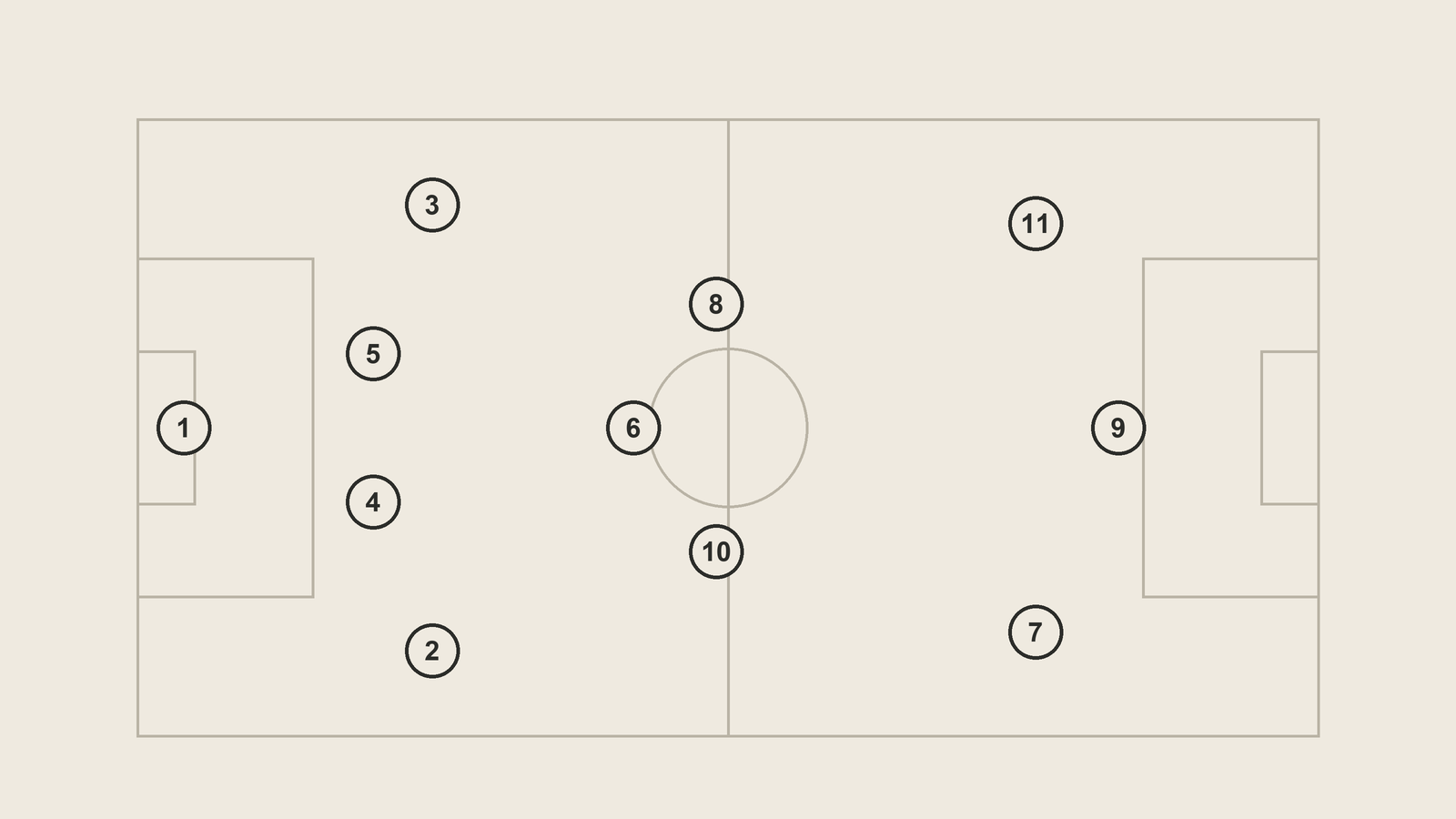
The labels describe the same zone with different emphasis. "Defensive midfielder" and "holding midfielder" are the general English terms; holding means he stays close to the defence while other midfielders go forward. "CDM", central defensive midfielder, comes from player-position codes used in games and scouting databases. "The 6" comes from shirt numbering, explained in the guide to football positions: German football calls him the Sechser, while in Argentina and Brazil the same job traditionally carried the number 5. "Anchor" and "pivot" are coaching words for a single 6 who holds the middle while everything moves around him.
Three kinds of 6
Defensive midfielders are usually sorted into three broad types.
- The destroyer is above all a ball-winner: tackles, interceptions, duels, then a simple pass. Nobby Stiles, Marco Tardelli, Claude Makélélé and Javier Mascherano are classic examples.
- The creator keeps the ball moving and dictates the tempo, often with long passes out to the flanks. Gérson, Glenn Hoddle, Xabi Alonso and Michael Carrick played this way, and the most creative version of it is the Italian regista.
- The carrier covers ground in both directions and drives forward with the ball, closer to a box-to-box midfielder. Bastian Schweinsteiger, Fernandinho and N'Golo Kanté fit here.
Few players are pure types, and coaches often pair them: a destroyer next to a creator is the classic recipe for a double pivot.
The Makélélé role
The modern idea of the holding midfielder owes a lot to Claude Makélélé. At Real Madrid between 2000 and 2003 he played in front of the back four behind a team of attacking stars, and Arrigo Sacchi later explained that Madrid needed him precisely because forwards like Zidane, Raúl and Figo did not track back. Makélélé joined Chelsea in 2003 and won the Premier League with them in 2004–05 and 2005–06. His job was so specific that the position is still sometimes called the "Makélélé role": read the game, break up attacks, and give the ball to someone better placed to use it.
The positional 6: Busquets
Sergio Busquets showed a different way to play the role. At Barcelona's first team from 2008 to 2023 he was neither quick nor a great tackler, yet he controlled matches through positioning, reading the game and short, calm passing with one or two touches. He was described as a deep-lying playmaker who rarely gave the ball away and, alongside Xavi and Iniesta, set the team's tempo. Italian writers compared him to the old metodista, the centre-half who directed play from the middle. Busquets made the case that a 6 can defend mainly by being in the right place before the ball arrives.
One 6 or two
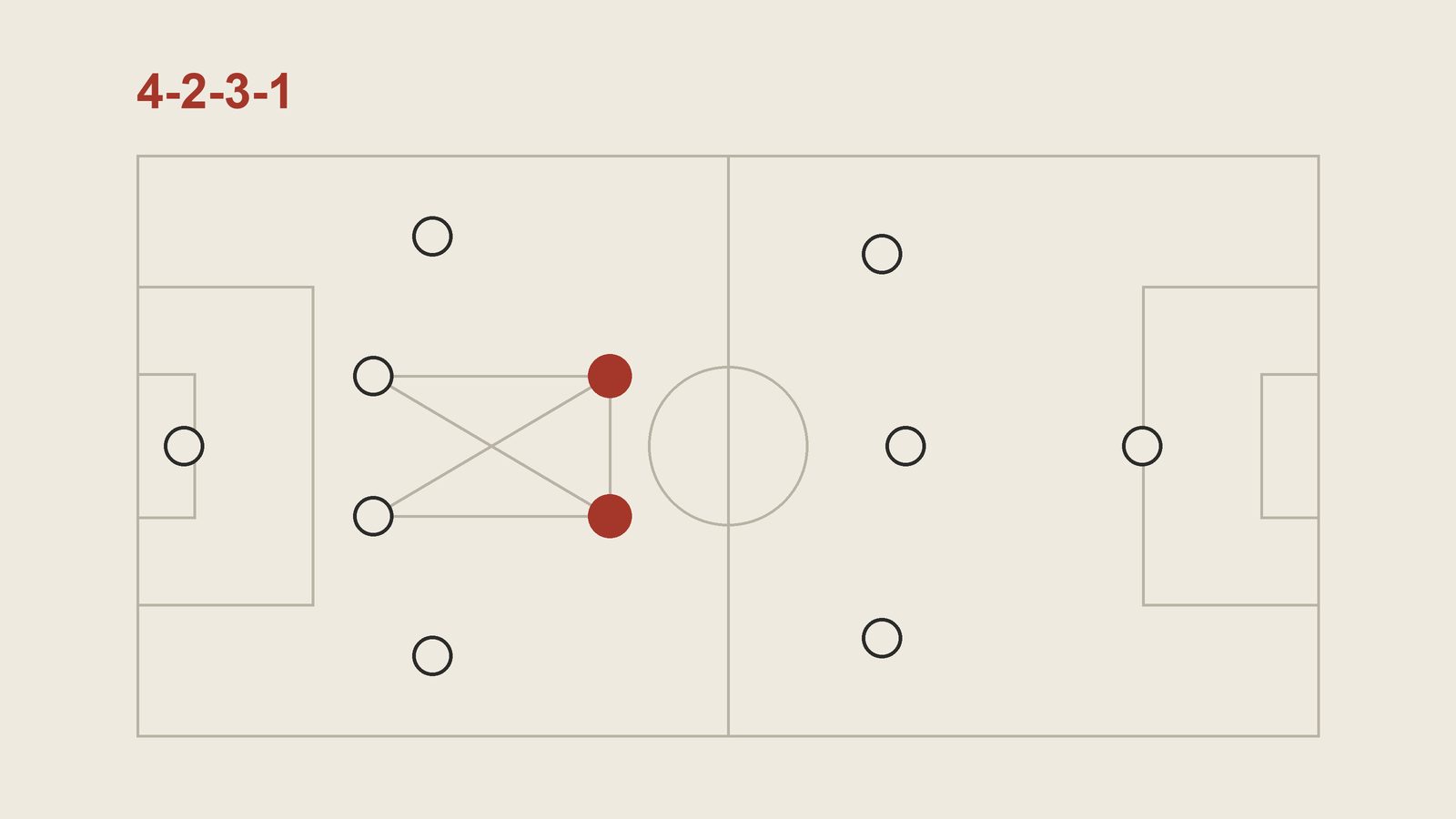
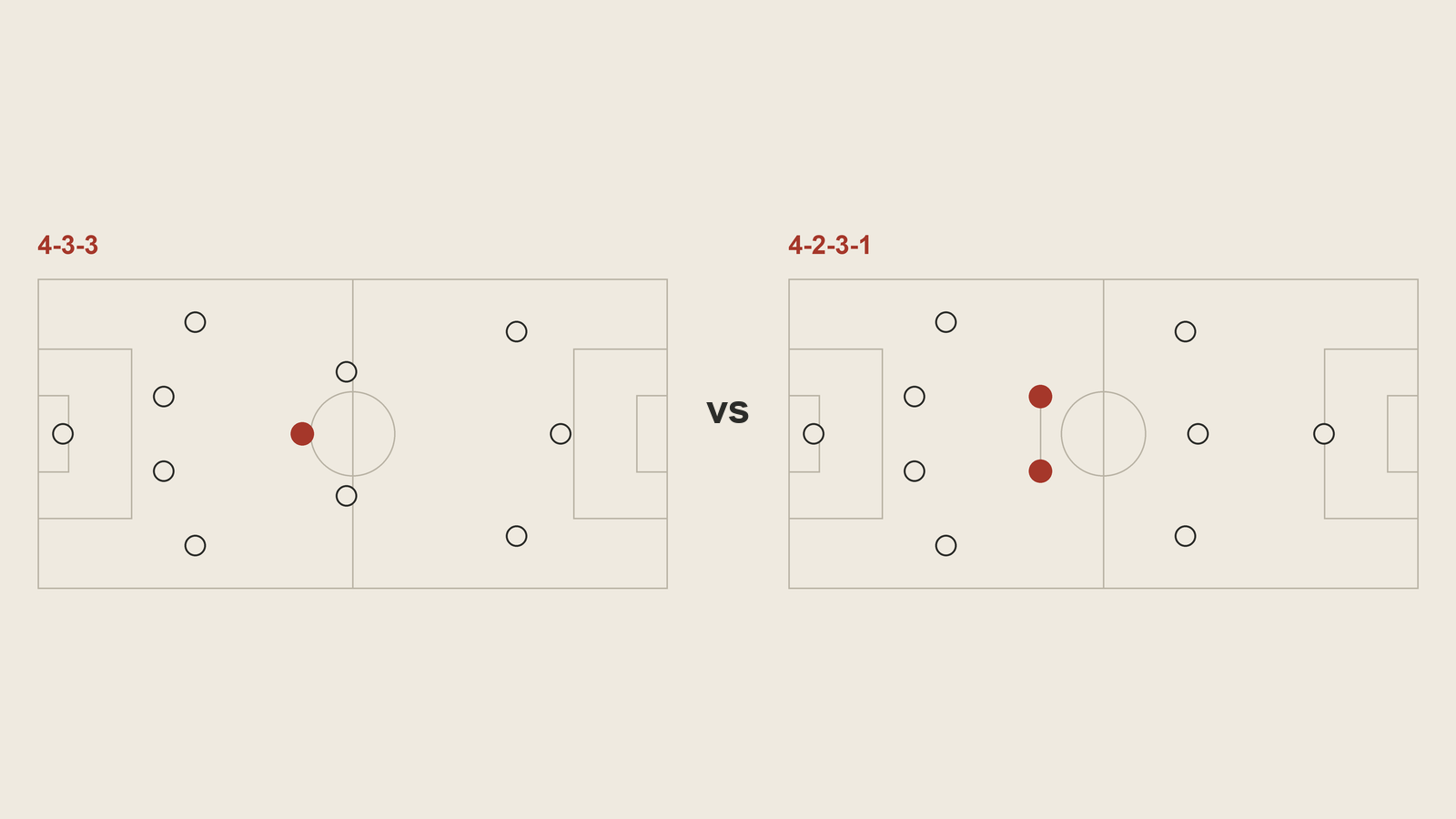
A 4-3-3 usually plays with a single 6 at the base of a midfield three. He has two midfielders ahead of him who can press and run, but he has to cover the full width of the pitch on his own when the team loses the ball. A 4-2-3-1 uses two holding midfielders side by side, which protects the defence better and lets one of them step forward while the other stays. Many teams switch between the two during a match: two 6s without the ball, one with it.
Dropping between the centre-backs
In possession, many 6s drop between the two centre-backs. The team then builds with three at the back, the full-backs can push high, and the opponent's two strikers have three defenders to press instead of two. The move also changes the team's rest defence: the 6 is already in place behind the ball if the attack breaks down. Some coaches get the same shape another way, with a full-back stepping into midfield as an inverted full-back while the 6 stays where he is.
What the numbers show, and what they miss
A defensive midfielder's best work often leaves no trace in a highlight reel, so analysts look at a few kinds of data. Ball-winning shows up in pressures and regains and interceptions. Distribution shows up in pass completion, in progressive actions and in a team's pass network, where a good 6 usually sits at the centre with the thickest connections. What the numbers miss is the pass he prevented by standing in the right lane, which is why scouts still watch him without the ball.
How to spot the 6 in a match
Watch the team when the goalkeeper or a centre-back has the ball. The defensive midfielder is the player who shows for the pass in the middle, often with his back to the opponent's goal. Then watch the moment possession is lost: he is the midfielder who does not run forward but stops, turns and closes the middle.
What does CDM mean in football?
CDM stands for central defensive midfielder. It is the code football games and scouting databases use for the midfielder who plays directly in front of the defence, also called the holding midfielder or the 6.
Is a defensive midfielder the same as a holding midfielder?
In everyday use, yes. Holding midfielder stresses that the player stays in position while others attack. Some coaches keep "holding" for the more positional version and "defensive" for a ball-winner, but most writers use the two as synonyms.
What is the difference between a 6 and an 8?
The 6 stays in front of the defence and protects it; the 8 moves between defence and attack, arriving in the opponent's half and pressing higher. In a midfield three, the 6 usually sits at the base with an 8 on one side and a more attacking midfielder on the other.
What makes a good defensive midfielder?
Positioning first: being between the ball and his own goal before the opponent passes. Then calm passing under pressure, the timing to win the ball back without diving in, and the discipline to stay when everyone else wants to attack.
Sources and further reading
- Midfielder — Wikipedia
- Claude Makélélé — Wikipedia
- Sergio Busquets — Wikipedia
- Squad number (association football) — Wikipedia