Formations and roles · Analysis
4-3-3 vs 4-2-3-1: One Midfield Triangle, Turned Upside Down
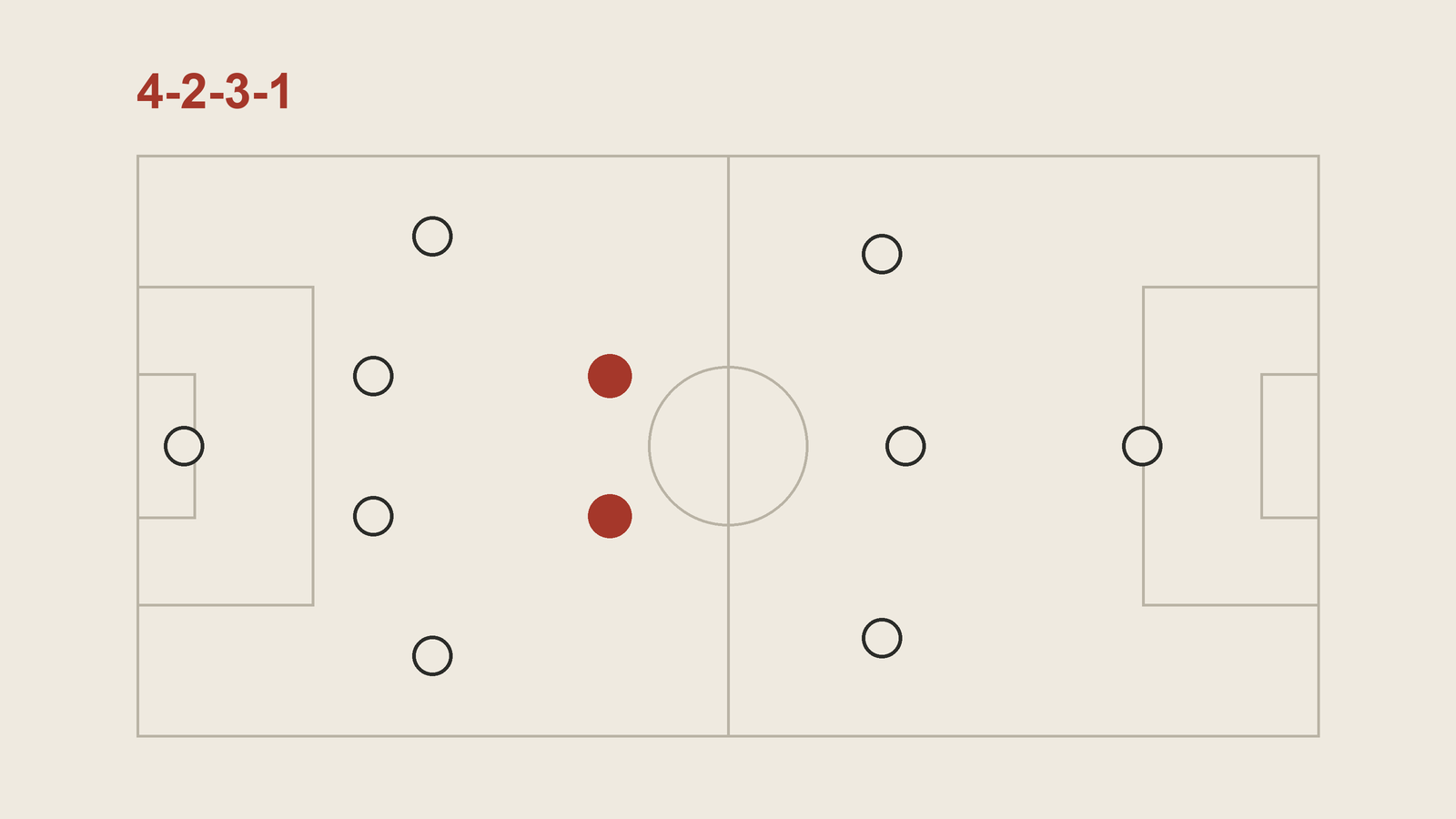
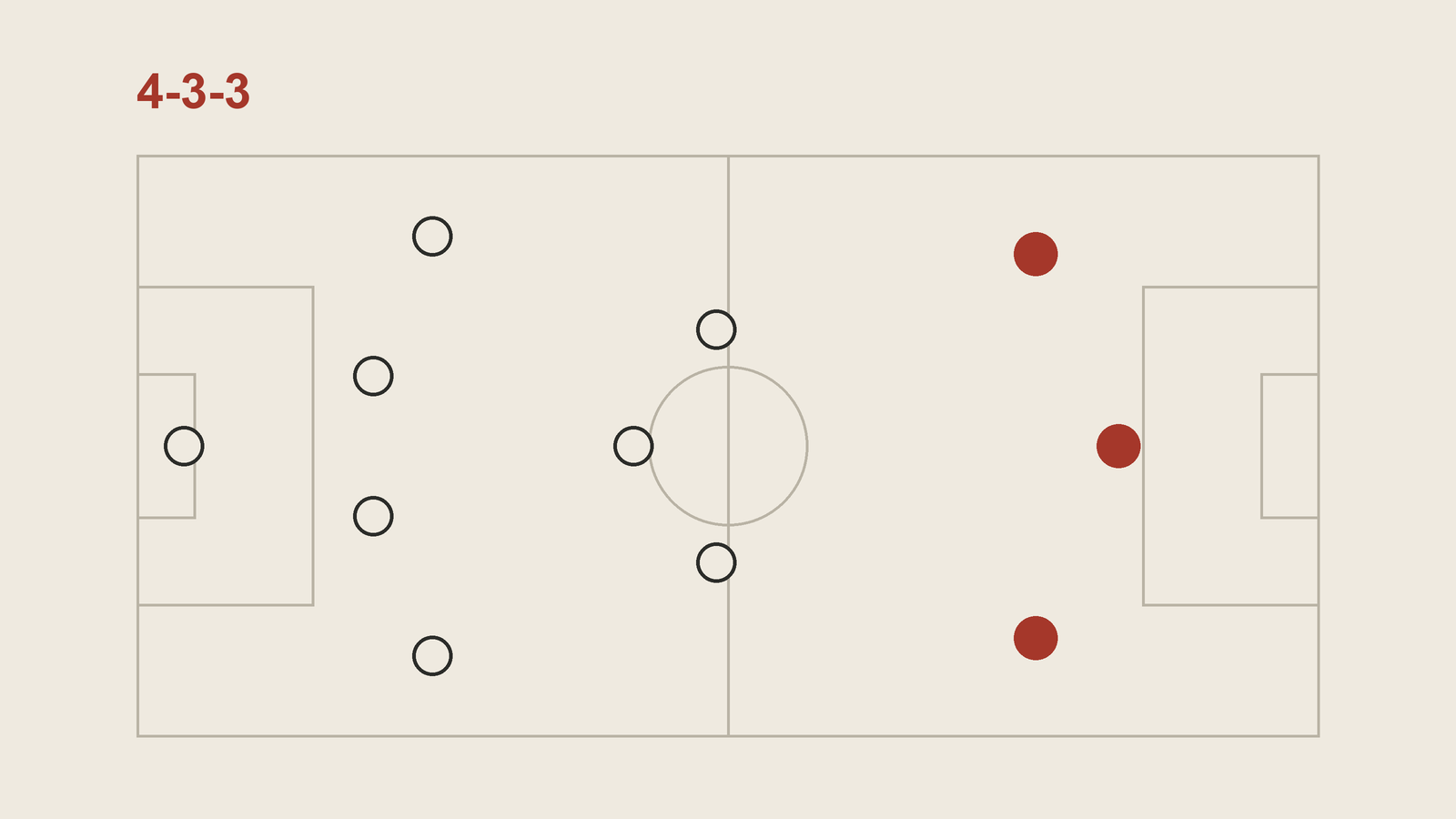
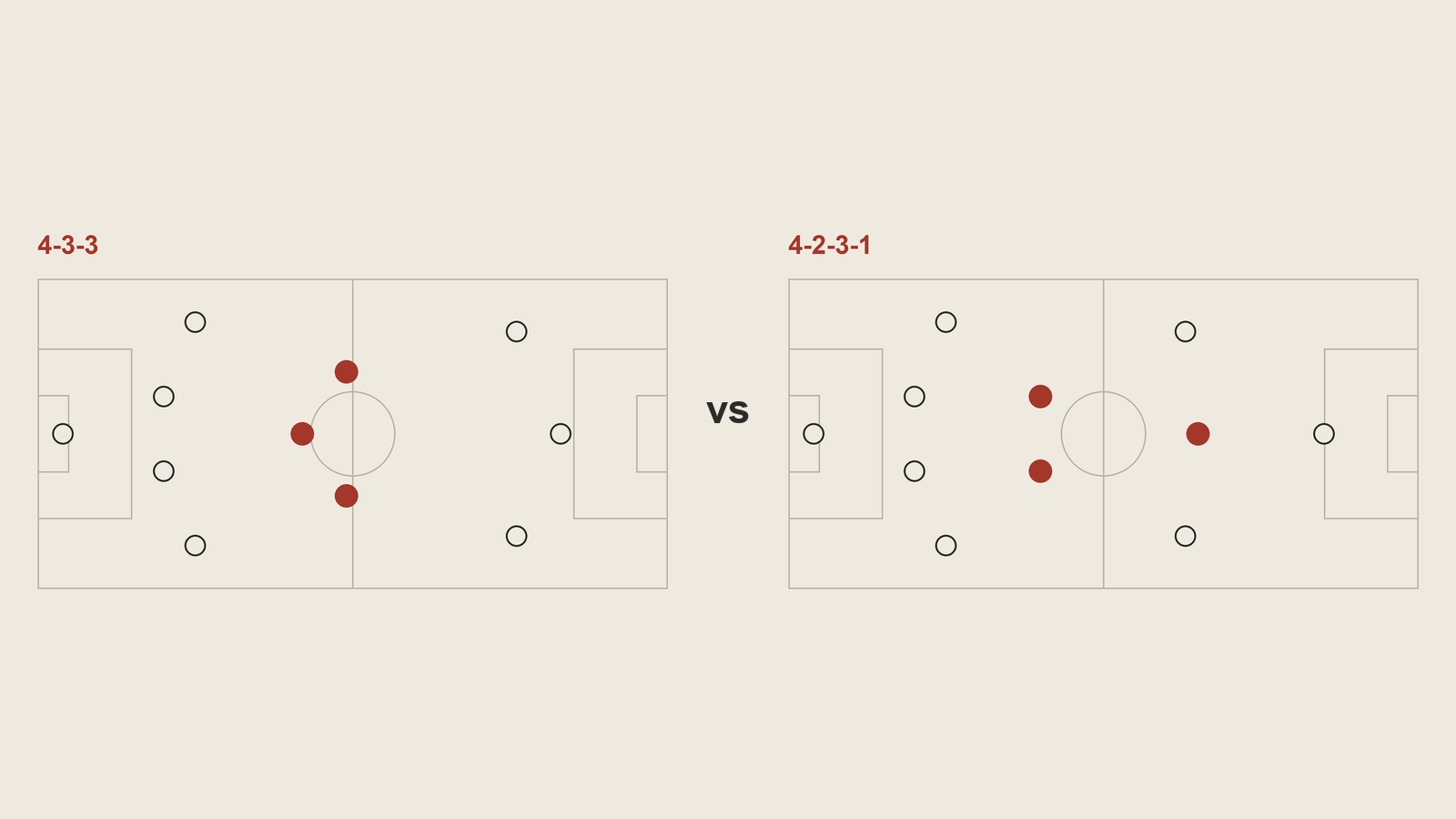
A 4-3-3 plays one pivot behind two 8s; a 4-2-3-1 plays two holding midfielders behind a 10. Side-by-side table, diagram and how to tell them apart.
Tagged
Formations and roles · Analysis
A 4-3-3 plays one pivot behind two 8s; a 4-2-3-1 plays two holding midfielders behind a 10. Side-by-side table, diagram and how to tell them apart.
Formations and roles · Analysis
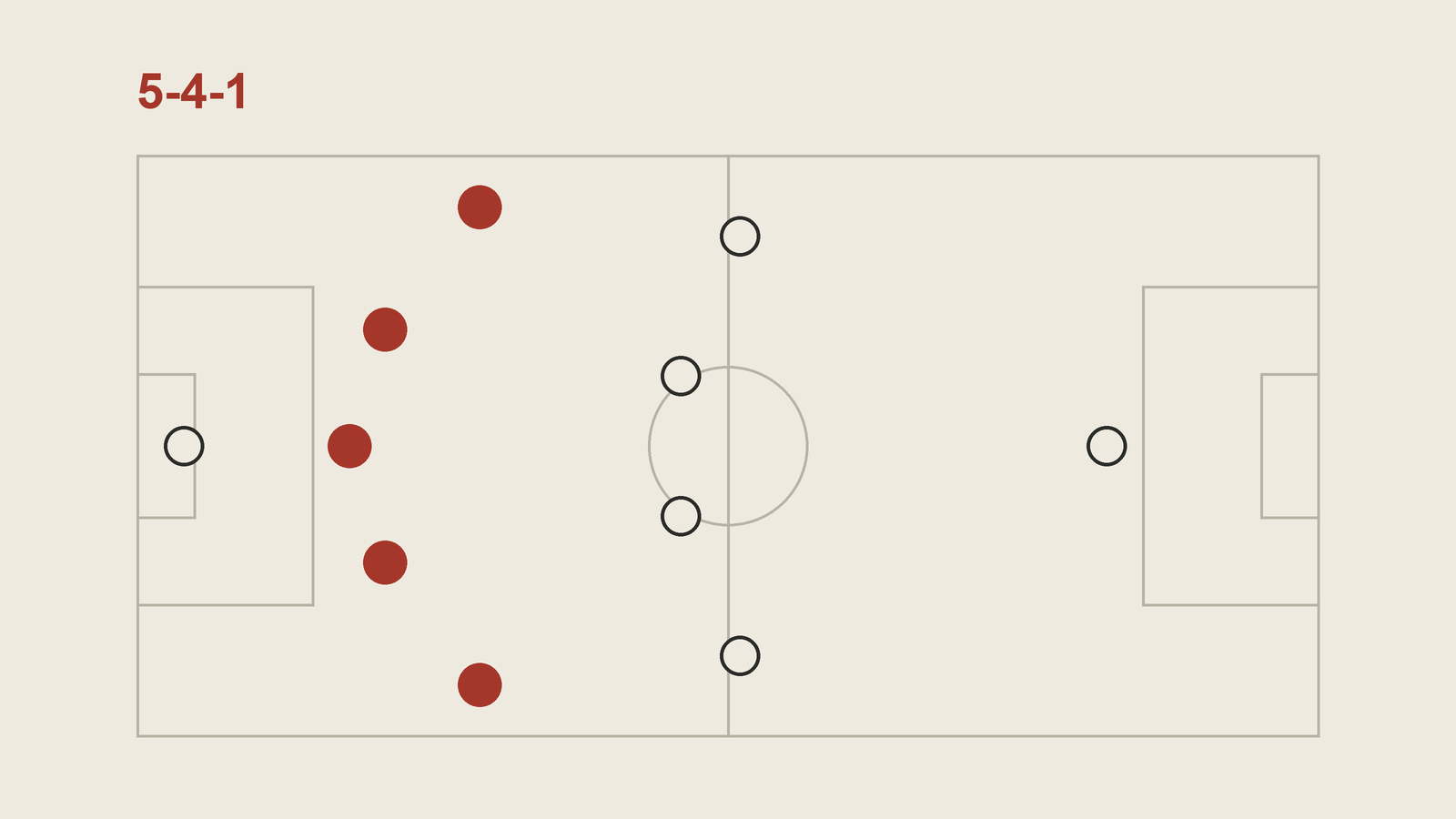
The 5-4-1 plays five defenders, four midfielders and a lone striker. How the back five defends deep, where it counters, and how to break it down.
Formations and roles · Analysis
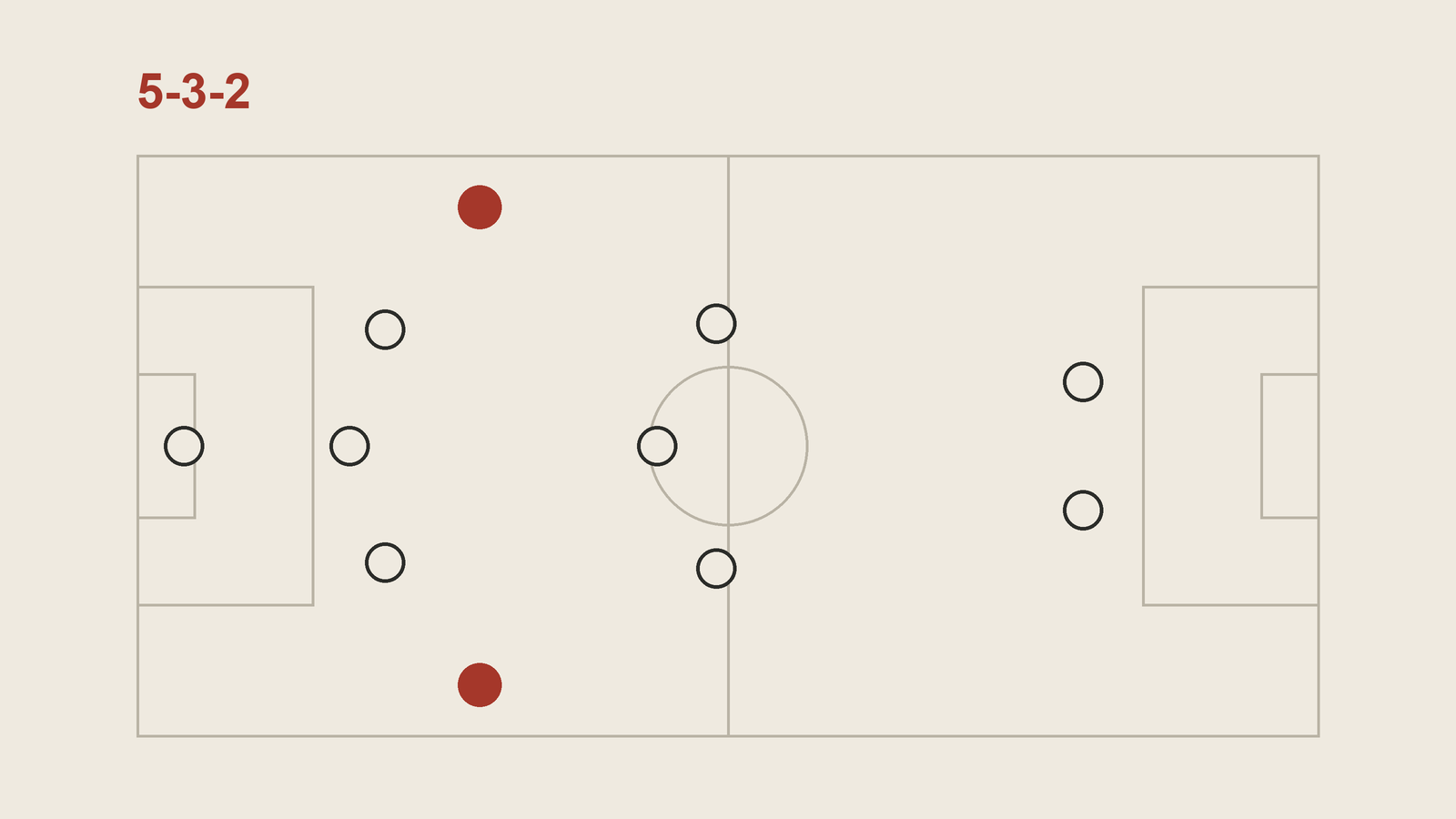
The 5-3-2 plays three centre-backs, two deep wing-backs, three central midfielders and two strikers. How it defends, counters, and how to break it down.
Formations and roles · Analysis
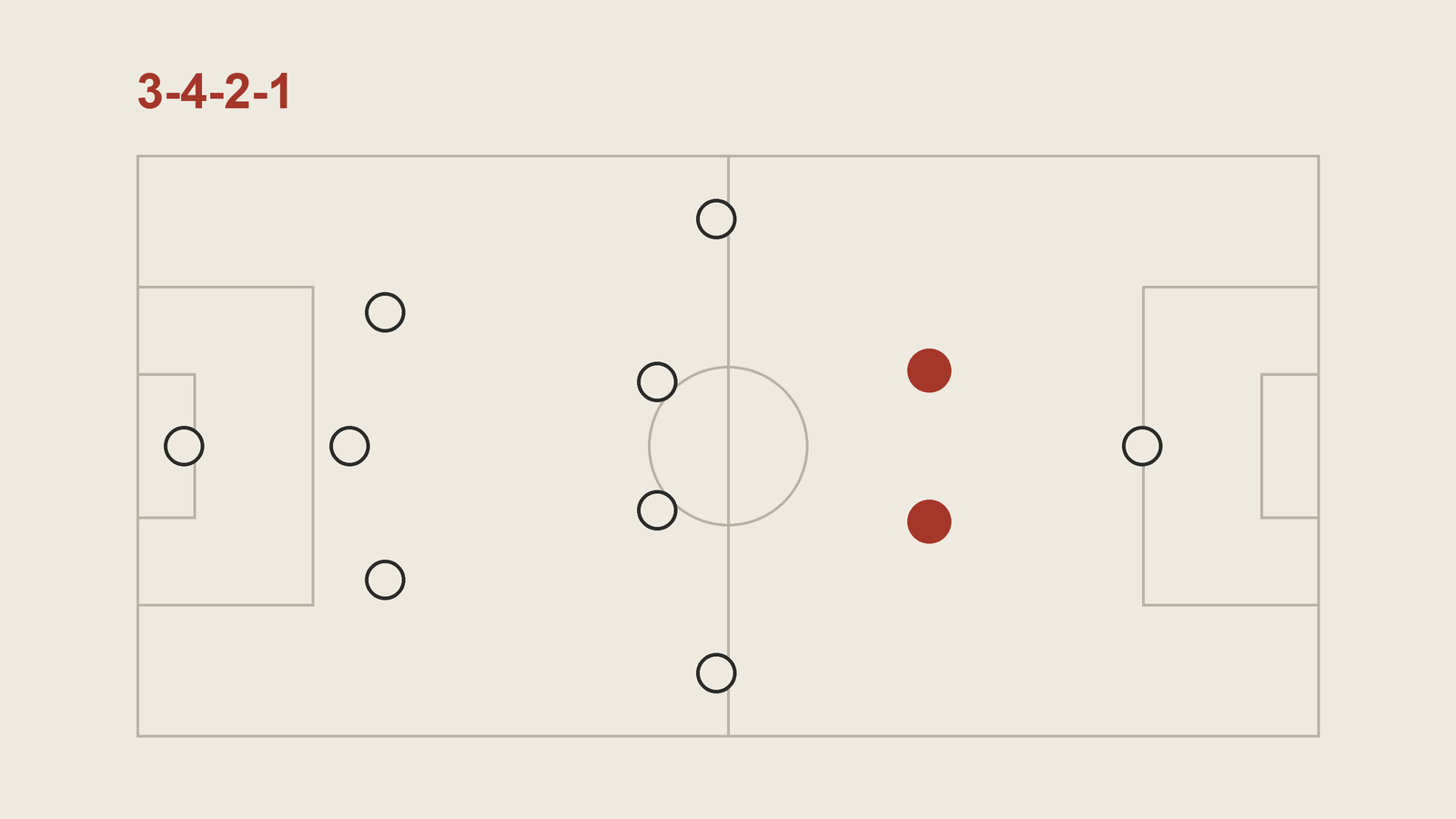
The 3-4-2-1 uses three centre-backs, two wing-backs, a double pivot and two tens behind one striker. How it attacks, defends and differs from a 3-4-3.
Formations and roles · Analysis
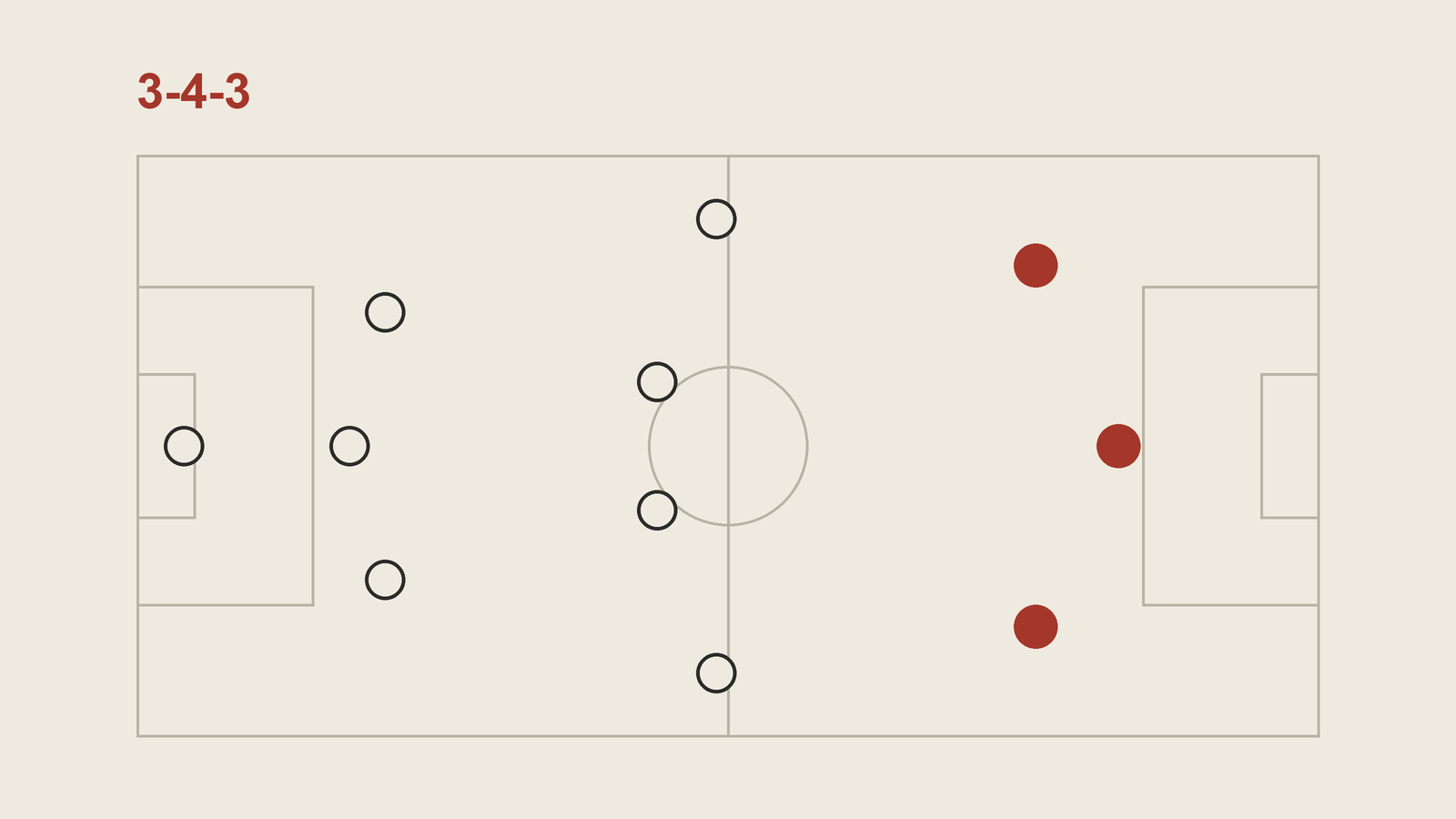
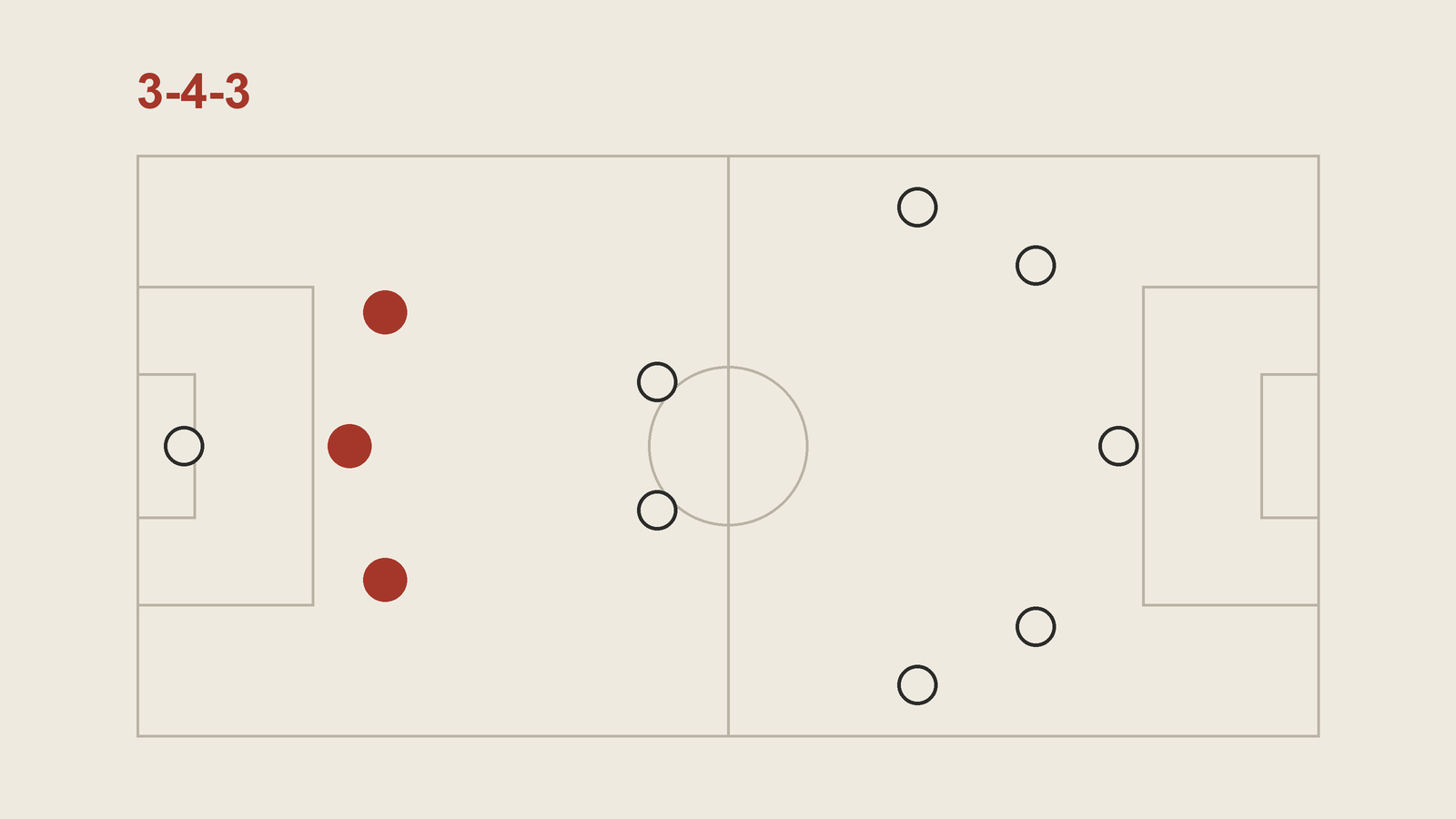
The 3-4-3 plays three centre-backs, two wing-backs, a double pivot and a front three. How it attacks, how it presses, who made it famous and how to beat it.
Formations and roles · Analysis
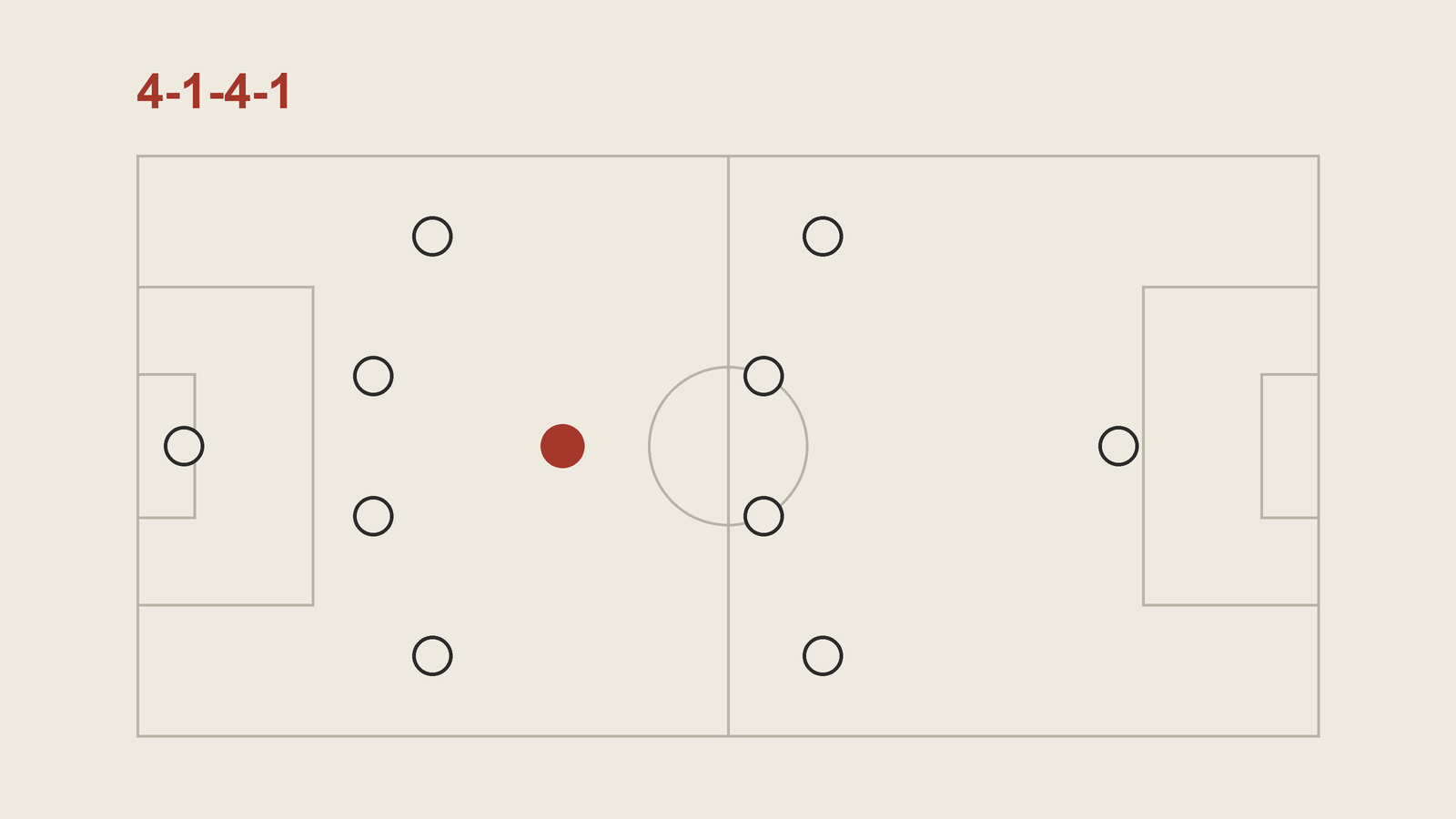
The 4-1-4-1 plays a back four, one holding midfielder, a line of four and a lone striker. How it attacks, defends, and turns into a 4-3-3 or 4-5-1.
Formations and roles · Analysis
What really happens when three central midfielders meet two? Move through four tactical scenes, then test the idea against Liverpool, City, Atlético and Barcelona.
Formations and roles · Analysis
A back three uses three centre-backs instead of two. How 3-4-3 and 3-4-2-1 systems work, why back fours turn into back threes in possession, and what it costs.
Formations and roles · Analysis
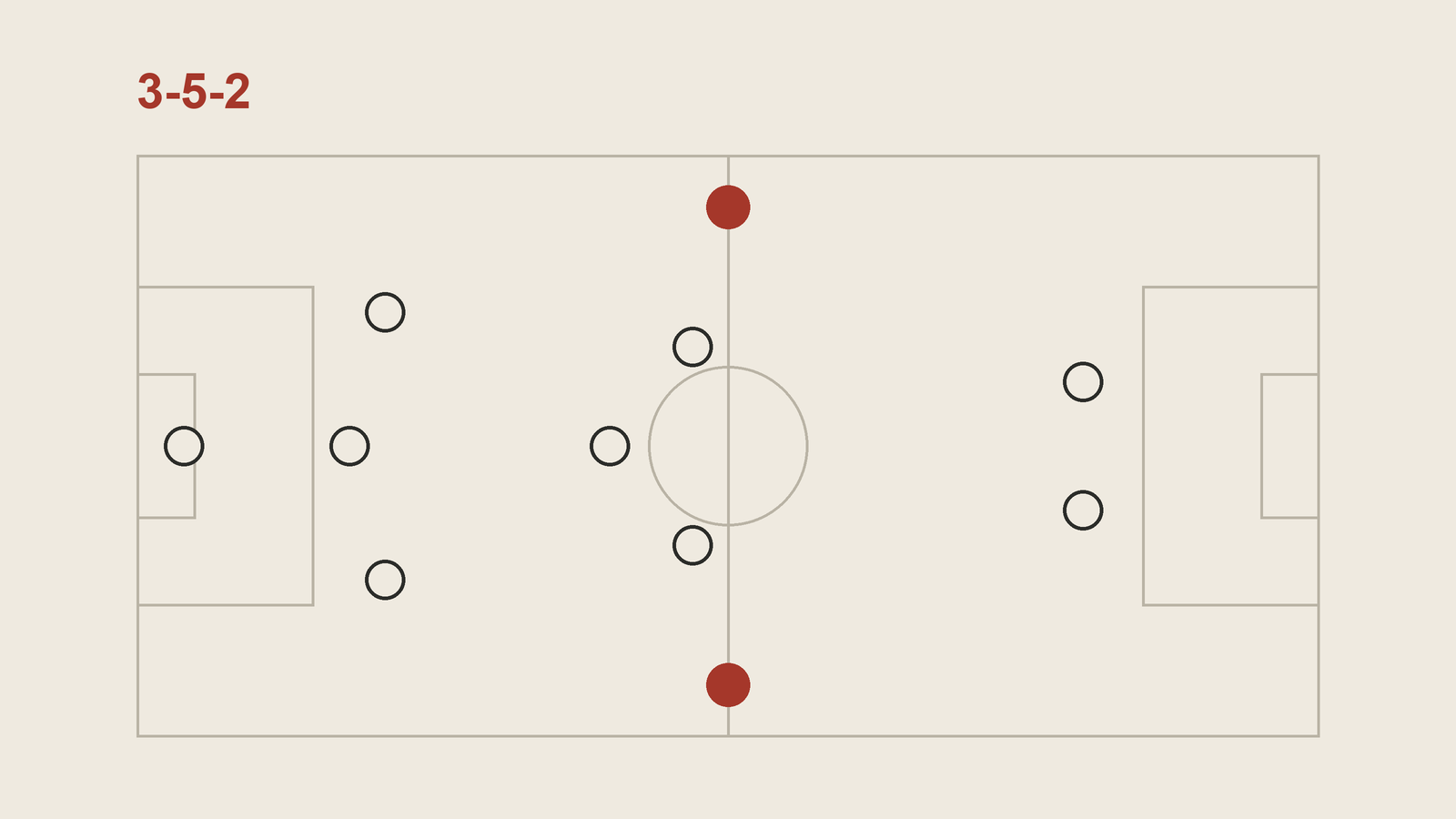
The 3-5-2 plays three centre-backs, two wing-backs, three central midfielders and two strikers. How it attacks and defends, and why the wing-backs decide it.
Formations and roles · Analysis
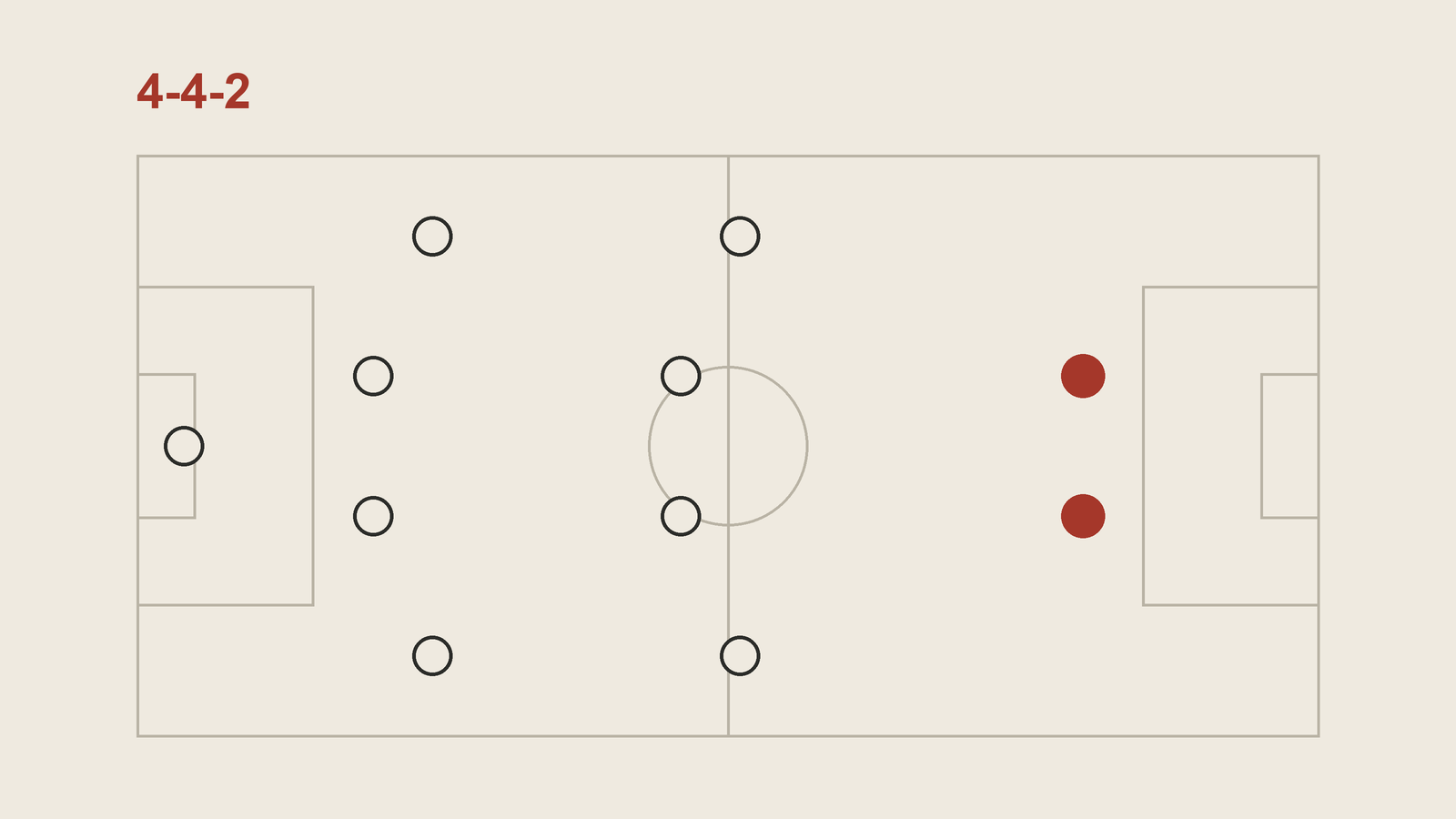
The 4-4-2 sets up four defenders, four midfielders and two strikers in three flat lines. Why it defends so well, where it is outnumbered, and who uses it.
Formations and roles · Analysis
The 4-2-3-1 uses four defenders, two holding midfielders, three attacking midfielders and one striker. How the double pivot and the number ten make it work.
Formations and roles · Analysis
The 4-3-3 lines up four defenders, three midfielders and three forwards. How the single pivot, the two number eights and the wingers work, and where it breaks.