Formations and roles · Analysis
Why So Many Teams Now Defend With Three and Attack With Three
A back three uses three centre-backs instead of two. How 3-4-3 and 3-4-2-1 systems work, why back fours turn into back threes in possession, and what it costs.
By 01 Owen
· Updated 22 Sep 2026 · 4 min read
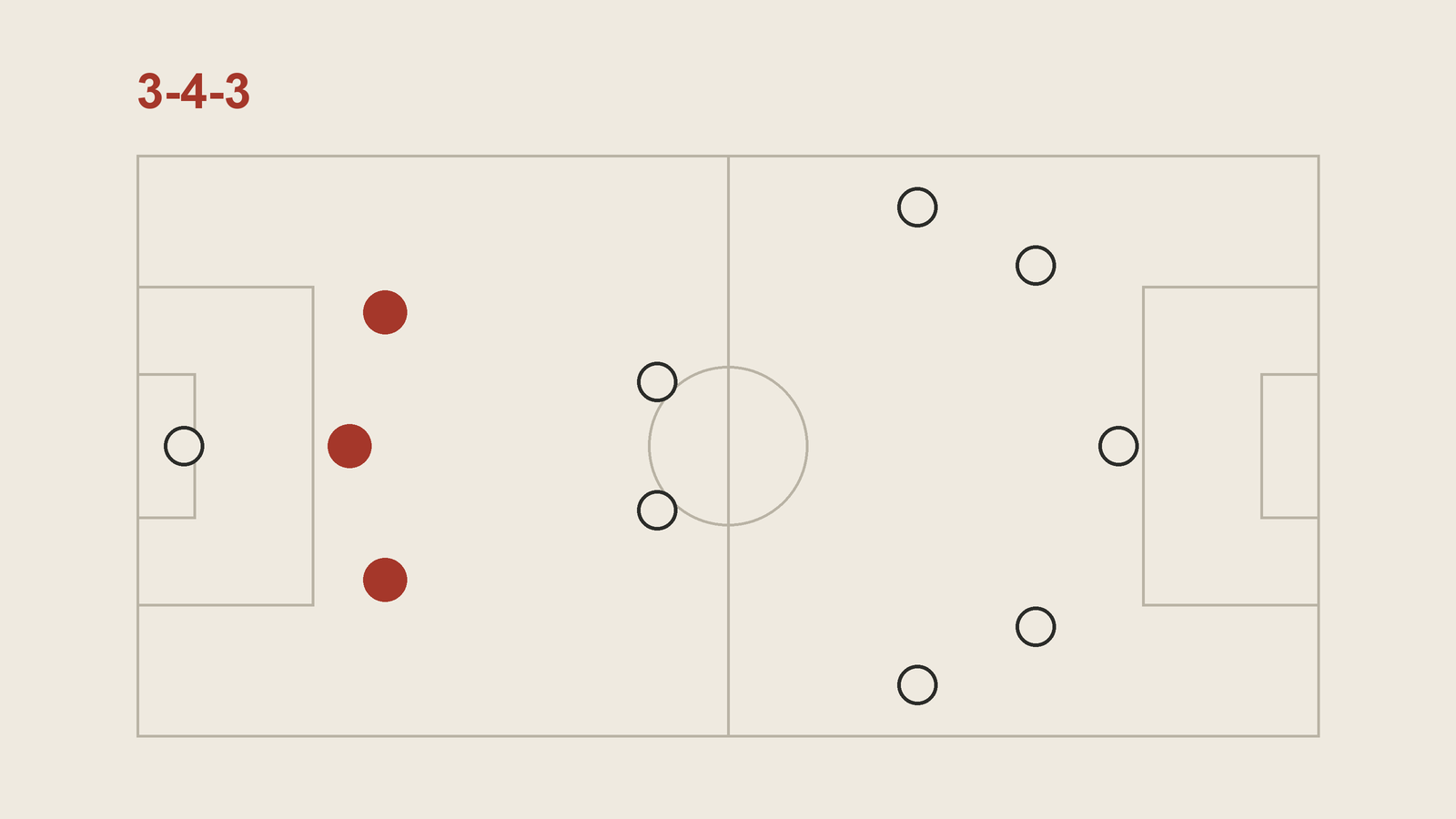
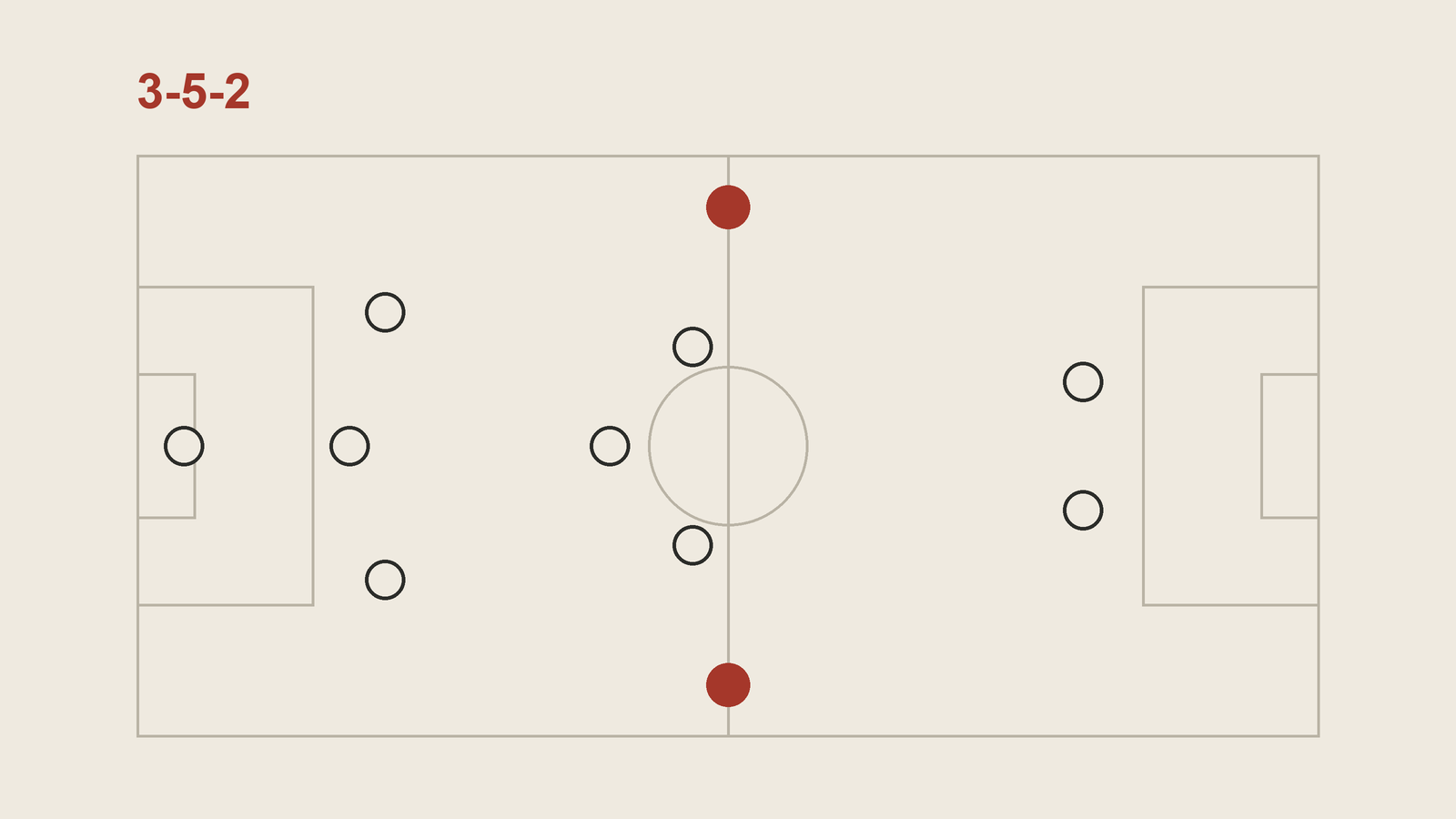
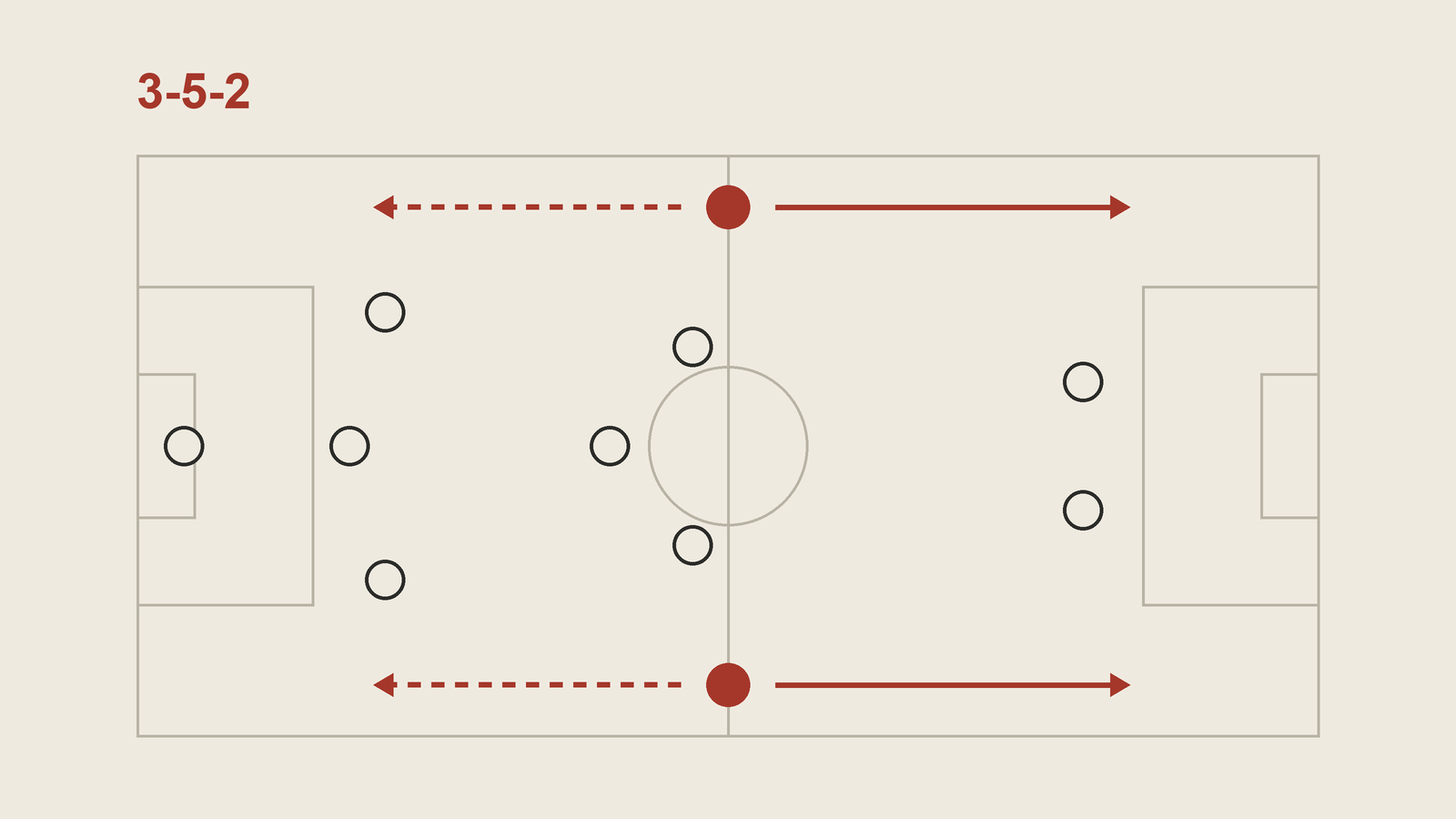
A back three is a defensive line of three centre-backs rather than two centre-backs flanked by full-backs. The width that full-backs would provide comes instead from wing-backs playing further forward, so the same system is a back three with the ball and a back five without it. The label covers a family of formations, the 3-5-2, the 3-4-3, the 3-4-2-1 and the 3-4-1-2, that share this base and differ in what stands in front of it.
The idea is older than the modern back four. The W-M formation that dominated from the 1930s to the 1950s had three defenders, and the libero systems of the 1960s to 1990s put a spare man behind two markers. What changed is the purpose. Those were ways of adding a defender; today's back three is usually chosen for what it does in possession.
Three reasons come up again and again. The first is build-up play. Most teams press with one or two forwards, and three centre-backs spread across the pitch always have a free player against them, so the ball can be carried out rather than kicked. The second is cover. Three central defenders and one or two midfielders in front of them form a rest defence of 3+1 or 3+2 automatically, which lets the wing-backs and attackers commit forward. The third is the front line: with wing-backs high and wide, a 3-4-3 attacks with five players across the width of the pitch, one in each lane, against a back four that has only four.
The best-known recent example is Antonio Conte's Chelsea. In September 2016, after a 3-0 defeat at Arsenal, he moved from a back four to a 3-4-3 with Victor Moses and Marcos Alonso as wing-backs, won the next thirteen league games and took the title. Thomas Tuchel won the 2021 Champions League with Chelsea in a 3-4-2-1, in which two narrow number tens played in the half-spaces behind the striker. Gian Piero Gasperini's Atalanta used a back three for aggressive man-to-man pressing all over the pitch, and Chris Wilder's Sheffield United had their wide centre-backs overlap the wing-backs, which nobody had a ready answer to for most of a season.
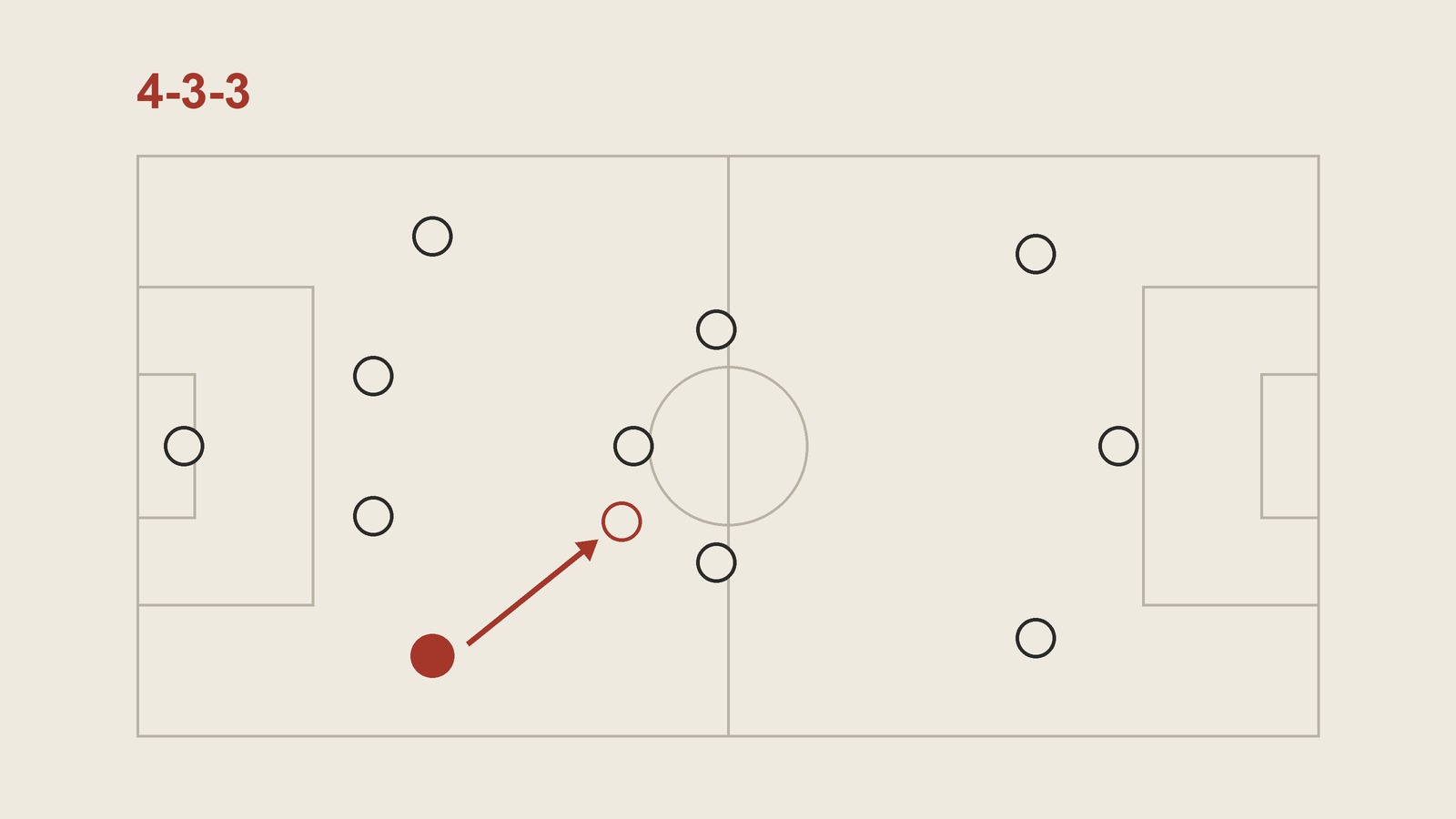
The more important development is that many back fours now become back threes as soon as the team has the ball. There are three common ways to do it. A holding midfielder can drop between the centre-backs, a movement associated with the Mexican coach Ricardo La Volpe. One full-back can stay back while the other goes forward. Or an inverted full-back can move inside, leaving three behind him. The 3-2-5 that results, three defenders, two midfielders and five attackers, is the most common attacking structure in elite football today, whatever the team sheet said before kick-off. This is why a line-up graphic showing 4-3-3 is often a poor guide to what you will see.
The costs are real. A team with three centre-backs has one fewer player somewhere else, and it is usually in midfield or out wide. The channels between a wide centre-back and his wing-back are the natural target: a winger who stays high pins the wing-back, and a runner into the space behind him drags a centre-back out to the touchline, where he is least comfortable. If the wing-backs are forced deep for long periods the system turns into a passive 5-4-1. And it needs particular players. Wide centre-backs must defend in space and carry the ball, and wing-backs must run for ninety minutes, and squads built for a back four rarely have both.
A reasonable way to think about it is that the number of defenders matters less than the number of players ahead of the ball when it is lost, and the back three is one way of managing that number. You can set up a 3-4-3 on the tactics board, or start from a 4-3-3 and drop the pivot between the centre-backs, to see how close the two really are.
Is a back three more defensive than a back four?
Not necessarily. With the wing-backs high it puts five players in the attacking line and only three behind the ball, which is more adventurous than most back-four systems. With the wing-backs deep it is a back five and one of the most defensive shapes available. The same formation covers both, so the honest answer is that it depends on where the wing-backs spend the game.
Sources and further reading
- The 3-4-3: football tactics explained — The Coaches' Voice
- The 3-2-4-1 formation: football tactics explained — The Coaches' Voice
- Wing-backs: football tactics explained — The Coaches' Voice