Formations and roles · Analysis
Two Banks of Four: The Formation Everyone Learns First
The 4-4-2 sets up four defenders, four midfielders and two strikers in three flat lines. Why it defends so well, where it is outnumbered, and who uses it.
By 01 Owen
· Updated 22 Sep 2026 · 4 min read
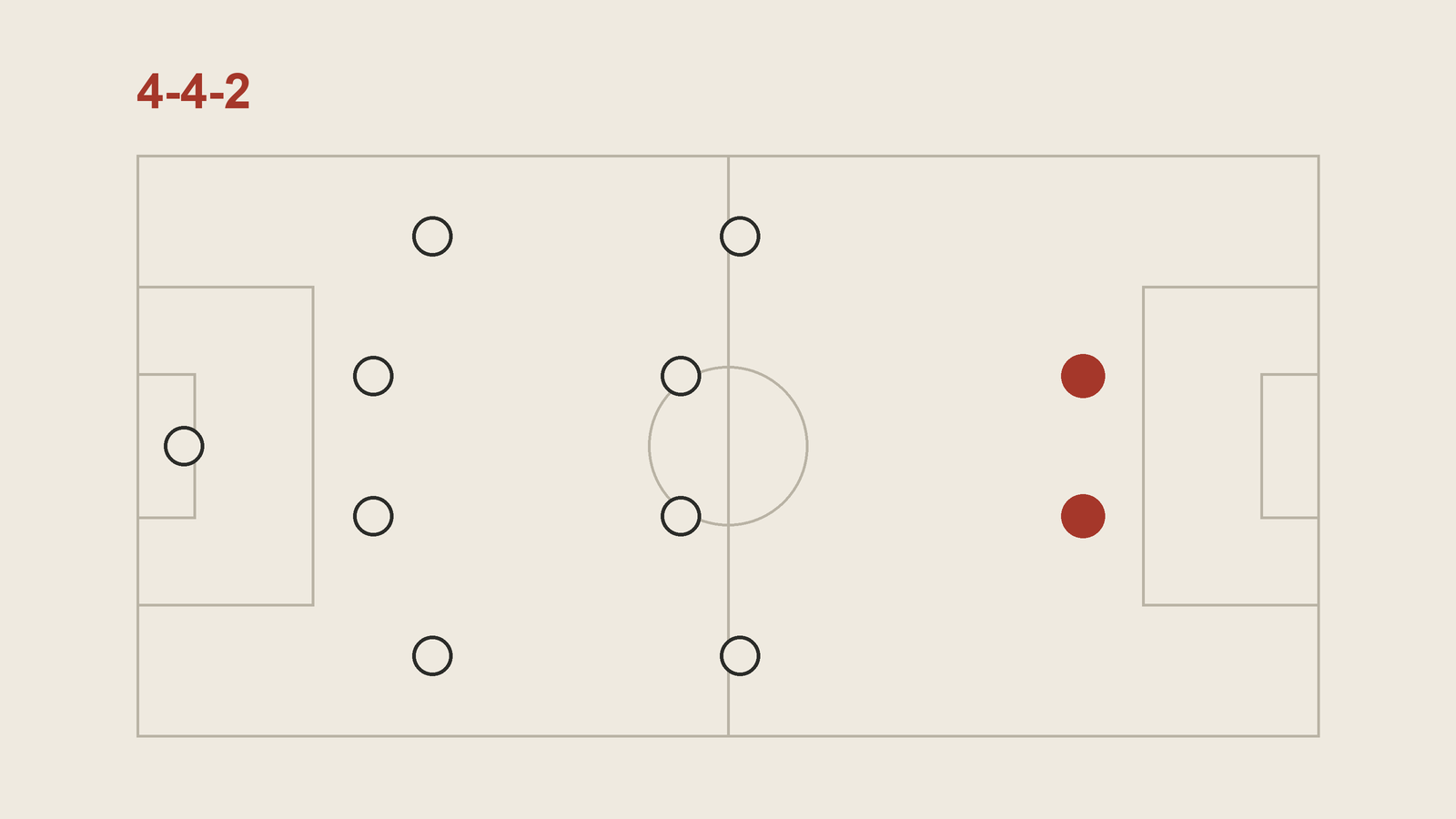
The 4-4-2 is a formation with four defenders, four midfielders and two strikers, arranged in three flat lines. It covers the width of the pitch twice over, with a full-back and a wide midfielder on each side, and it gives every player a partner: two centre-backs, two central midfielders, two forwards. That symmetry is why it is the first shape most players are taught and why, decades after it stopped being fashionable, it is still the shape many teams fall back into when they defend.
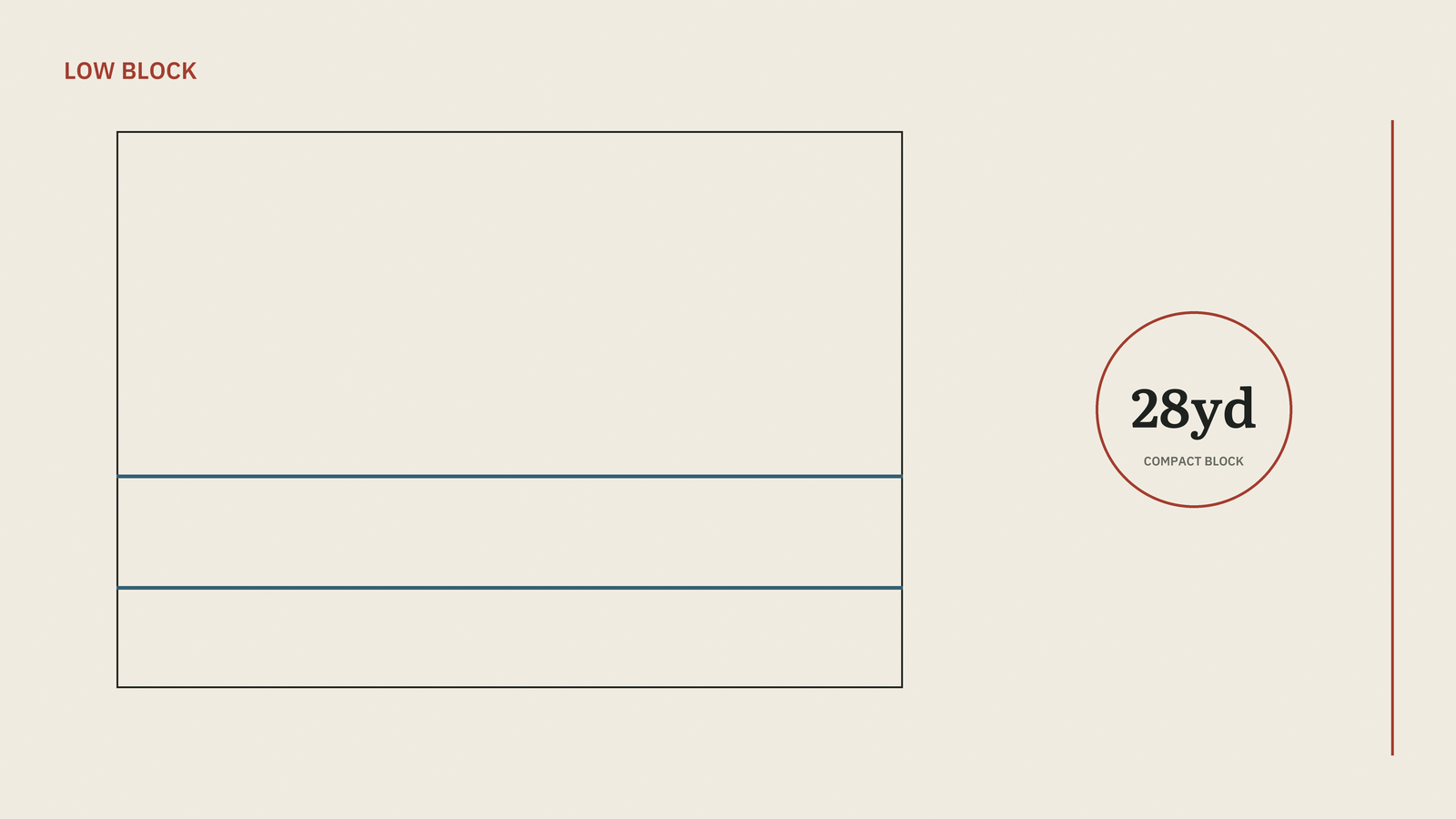
It emerged in the 1960s, when the four forwards of the 4-2-4 proved too expensive to carry. Viktor Maslov at Dynamo Kyiv pulled his wingers back into midfield, and Alf Ramsey's England won the 1966 World Cup without conventional wingers at all. In England it became the national default for thirty years. Its most influential version, though, was Italian. Arrigo Sacchi's Milan, European champions in 1989 and 1990, played a 4-4-2 with zonal marking, a high offside line and coordinated pressing, and Sacchi wanted the distance from his last defender to his first forward kept to about twenty-five metres. That compactness, more than the numbers, is what people mean when they praise a good 4-4-2.
Defensively the appeal is obvious. Two banks of four, close together, leave very little room between the lines, and the two forwards can screen passes into the opponent's holding midfielder. It works as a mid-block and it works as a low block: Diego Simeone's Atlético Madrid won La Liga in 2013-14 with a narrow 4-4-2 that pushed opponents out to the wings and defended the crosses, and Leicester City's title in 2015-16 came from a deep 4-4-2 and fast transitions through Jamie Vardy and Riyad Mahrez. The pairs on each flank make doubling up on a winger natural.
In attack the shape relies on partnerships. The classic front two is a target player and a runner, or one who drops short and one who goes beyond. The wide midfielders supply crosses, and the full-backs overlap to create two-against-one situations on the outside. Manchester United's treble winners of 1999 are the usual example of how much football can come from that simple structure when the wide players, David Beckham and Ryan Giggs, are good enough.
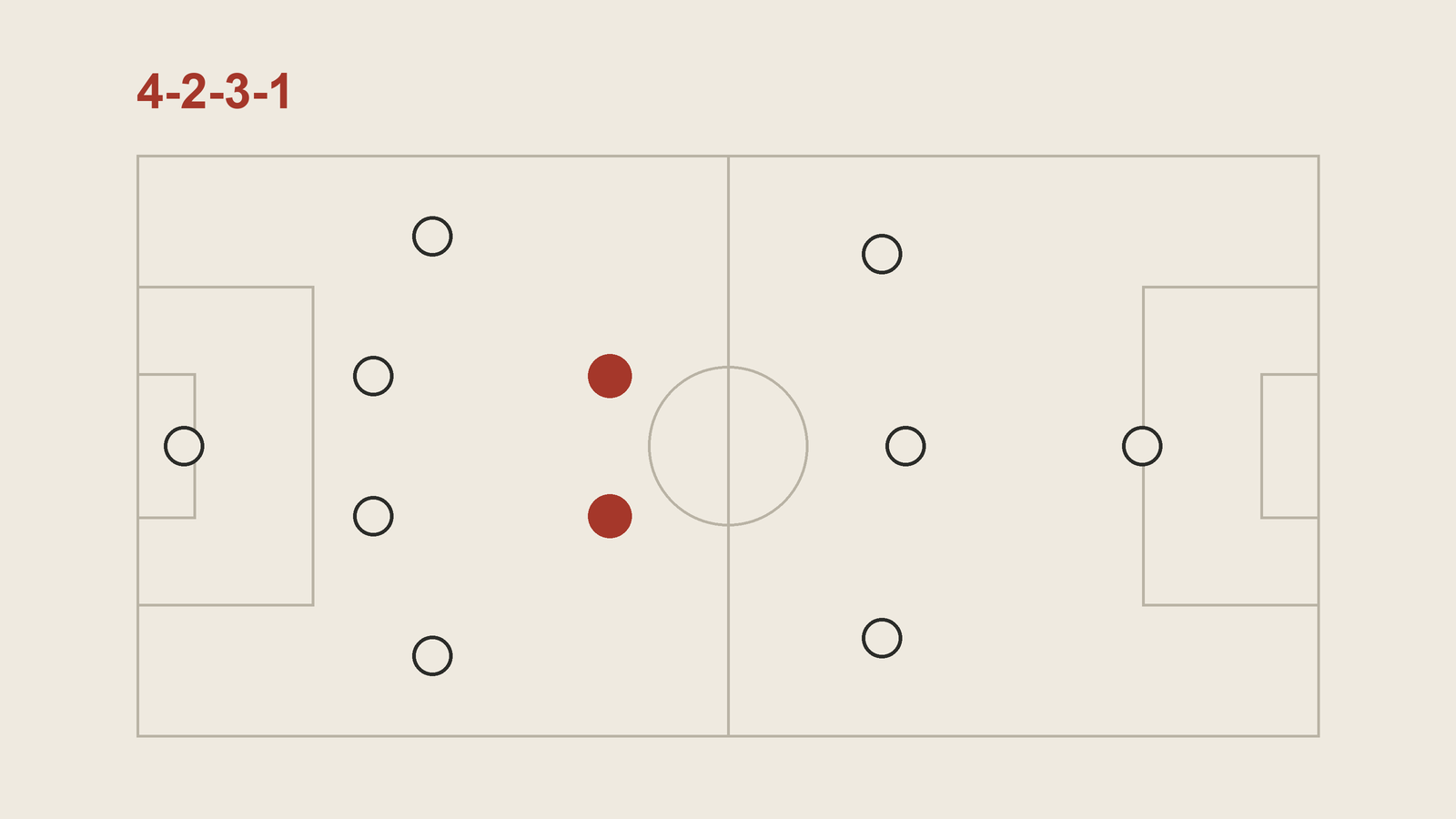
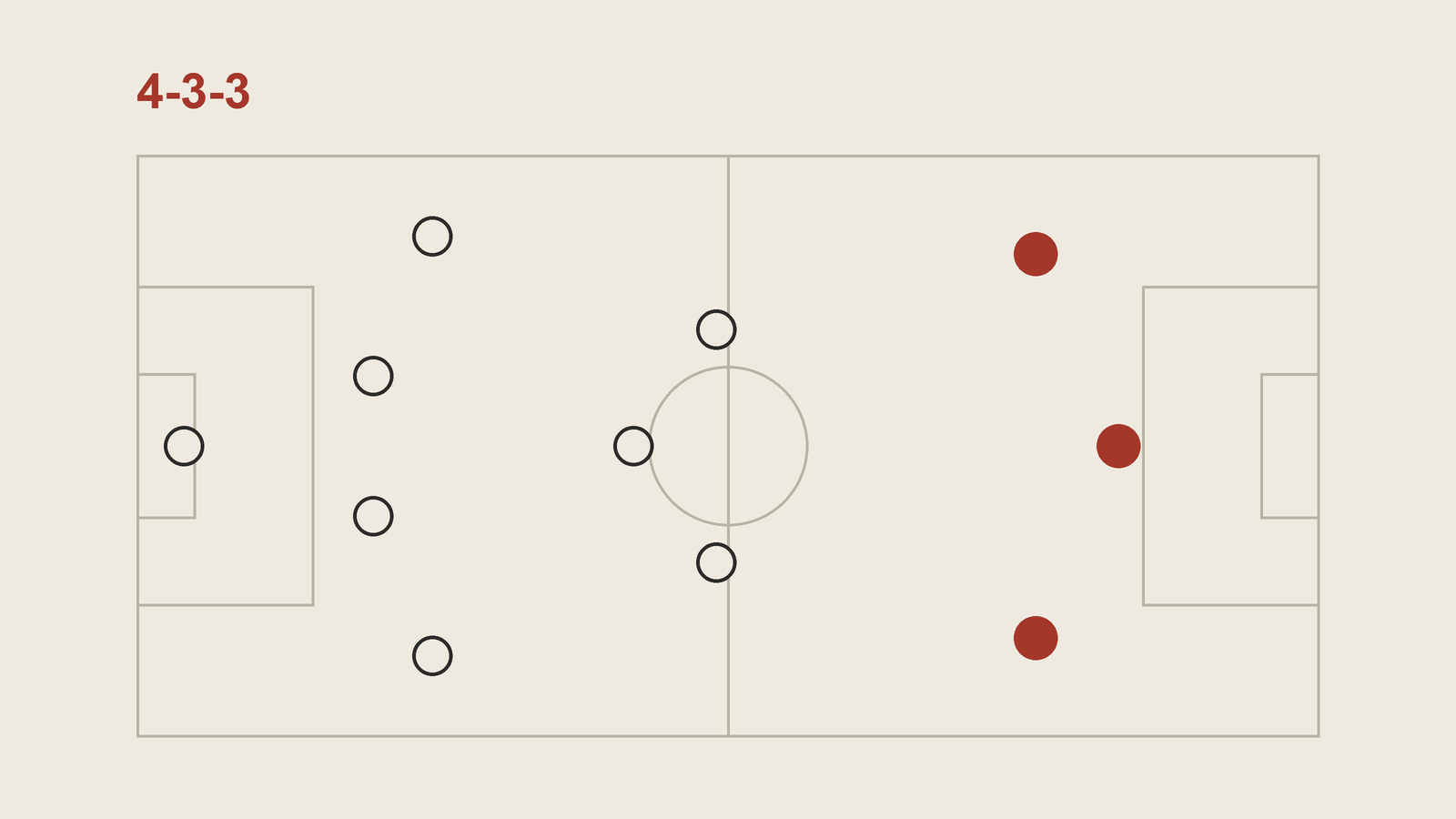
Its problem is the middle of the pitch. Against a 4-3-3 or a 4-2-3-1 the two central midfielders face three, and no amount of running fixes simple arithmetic. If a striker drops in to help, the team loses its second forward; if nobody does, the opponent has a free player in build-up play every time. The flat lines are the second issue. With no one stationed between midfield and attack, a 4-4-2 finds it hard to receive in the pocket in front of the opposing defence, and its passing can become a U-shape around the block, from full-back to centre-back to full-back. And line-breaking passes that get between the two banks have only one line left to beat.
Coaches have patched those holes without abandoning the shape. The diamond, a 4-4-2 with one holding midfielder, two shuttlers and a ten, fixes the numbers in the centre at the cost of natural width. Ralf Rangnick's 4-2-2-2 narrows the wide players into the half-spaces and uses the shape for pressing rather than crossing. And many teams that attack in another formation still defend in a 4-4-2, because it is the quickest way to get two compact lines behind the ball. You can lay out a 4-4-2 on the tactics board and add an opponent in a 4-3-3 to see the spare man in midfield for yourself.
Why did top teams stop playing 4-4-2?
Mostly because of the numbers in central midfield. Once most opponents fielded three players there, two were permanently outnumbered, and possession-based teams could keep the ball at will. A lone striker with a ten or three midfielders behind him solved that. The 4-4-2 did not disappear, though: it survives as a defensive shape, in pressing systems like the 4-2-2-2, and in teams that are happy to concede the ball and counter.
Sources and further reading
- The 4-4-2: football tactics explained — The Coaches' Voice
- Formations: football tactics explained — The Coaches' Voice
- Formation (association football) — Wikipedia