Formations and roles · Analysis
One Player, the Whole Flank: The Most Demanding Job in a Back Three
A wing-back is the wide player in a back-three system: a winger in attack, a full-back in defence. What the role demands and how it differs from a full-back.
By 01 Owen
· Updated 22 Sep 2026 · 4 min read
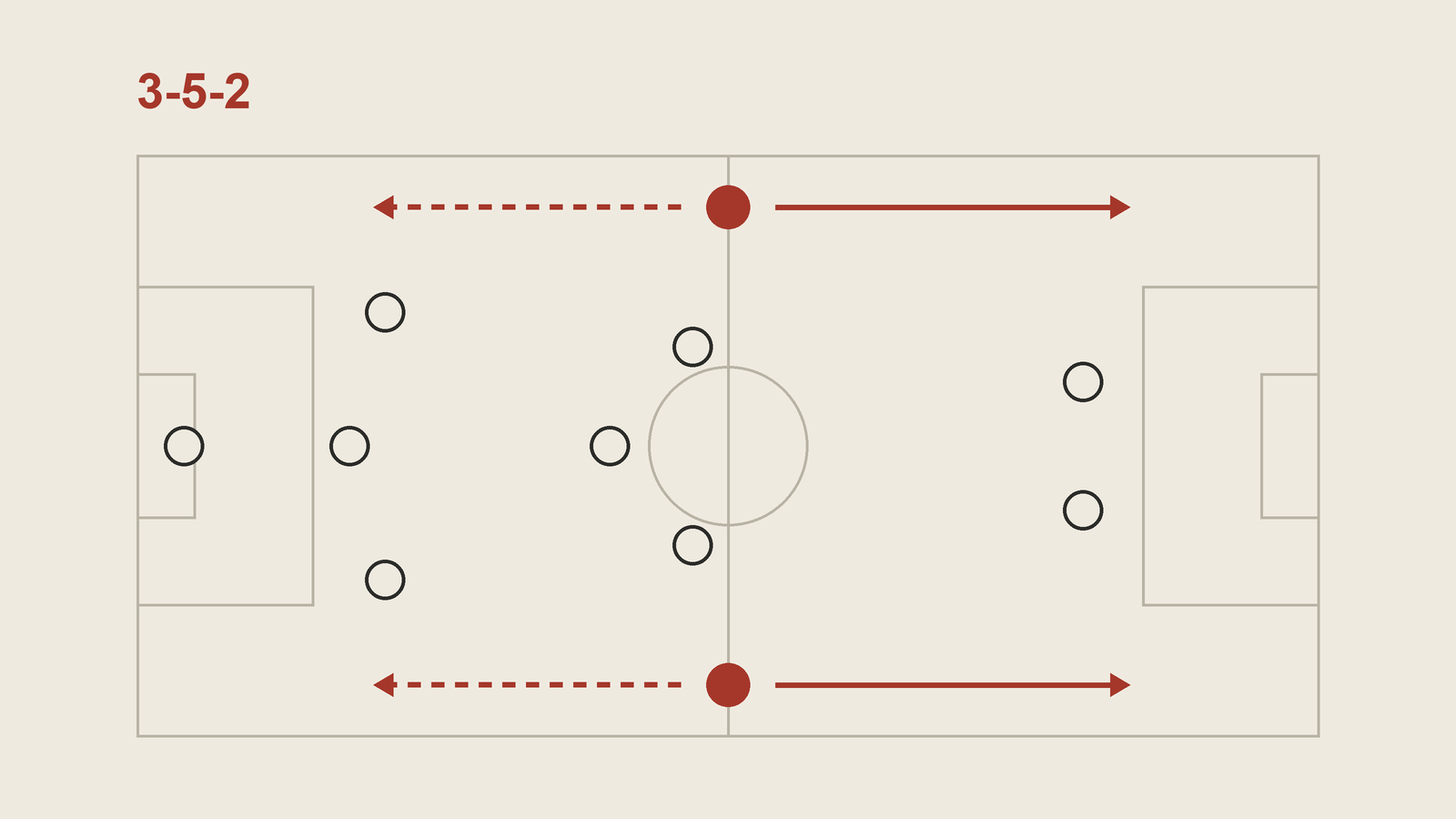
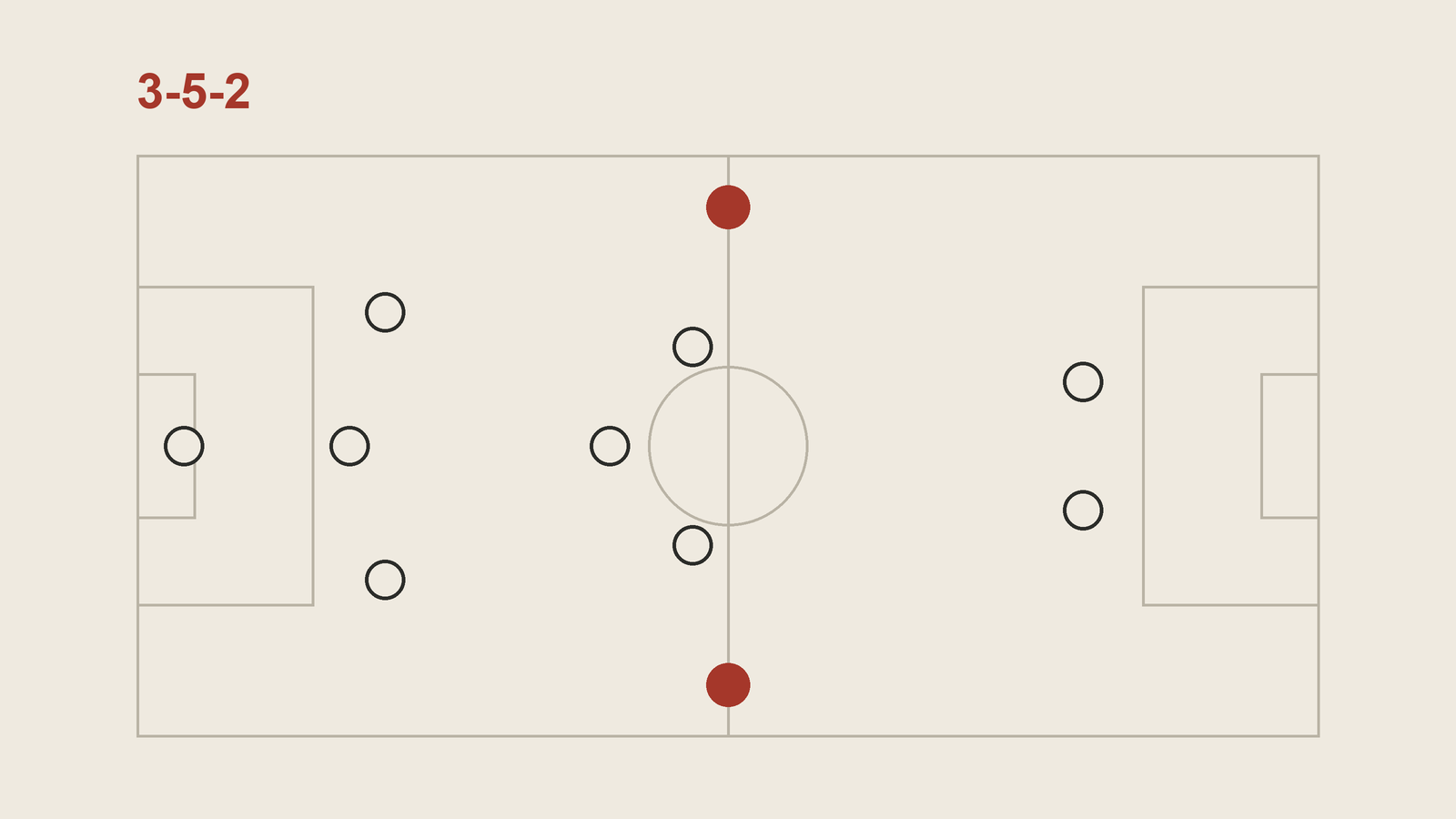
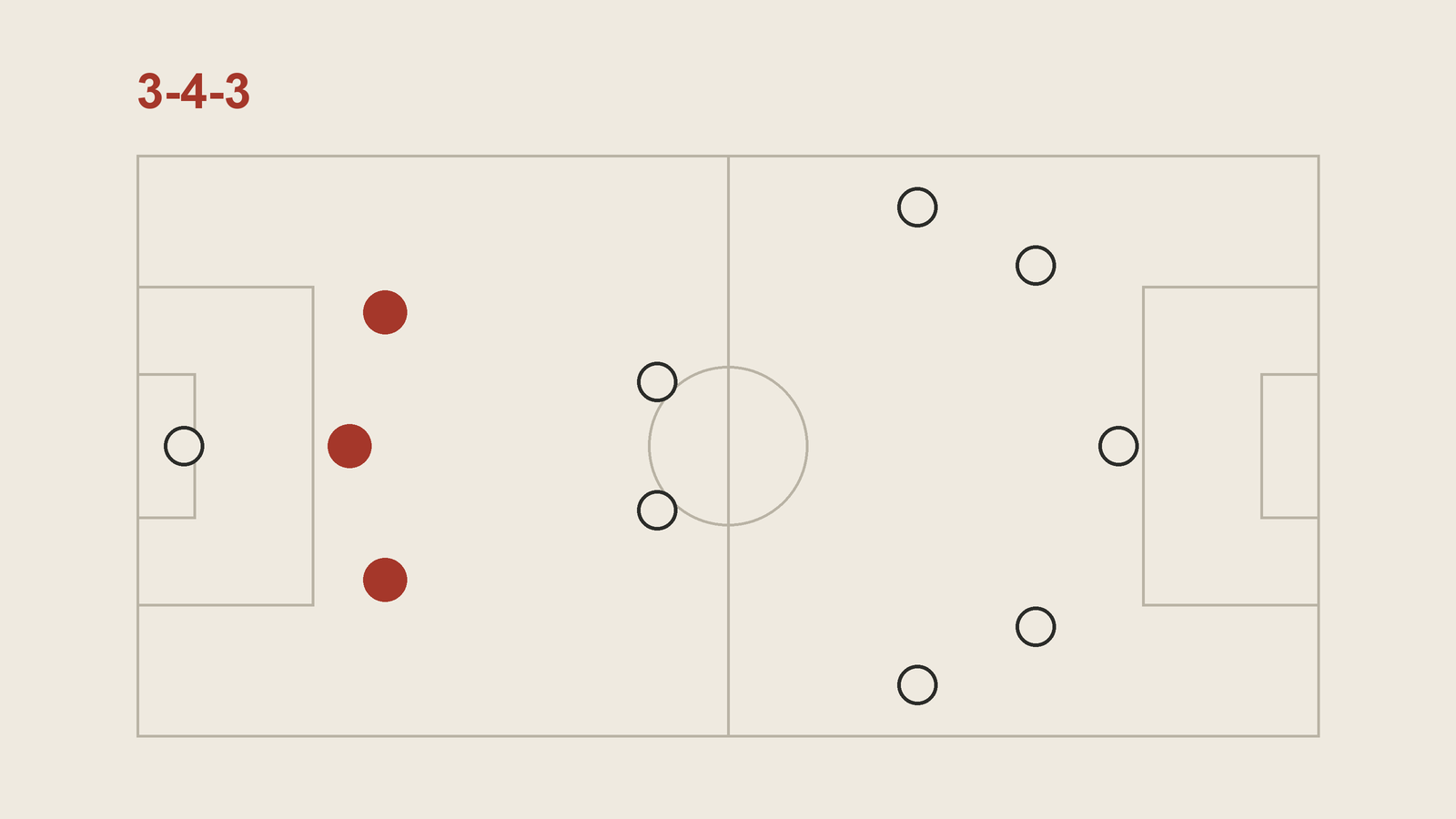
A wing-back is the wide player in a system with three centre-backs. He has the whole flank to himself. With the ball he pushes up to provide his team's width, often as high as the forwards; without it he drops next to the centre-backs to make a line of five. A full-back has a winger in front of him to share the work. A wing-back, in a 3-5-2 or a 3-4-3, usually has nobody.
The position came with the back three. When teams added a third central defender they had to take a player from somewhere, and the solution was to merge full-back and winger into one role on each side. Brazil won the 2002 World Cup with Cafu and Roberto Carlos as wing-backs either side of three centre-backs, which was close to the ideal use of two of the most attacking full-backs the game has produced. Antonio Conte's Chelsea won the league in 2016-17 with Victor Moses, a converted winger, on the right and Marcos Alonso on the left, and Achraf Hakimi's running from right wing-back was central to Inter's title in 2020-21.
In attack the wing-back's first job is simply to be wide and high. By standing on the touchline level with the opponent's back line he stretches it, which opens the half-spaces for the players inside him. In a 3-4-3 those are the two narrow forwards; in a 3-5-2 it is a mezzala arriving from midfield. His second job is the far post. When the ball is on the other flank, the opposite wing-back is often the free player at the back of the box, and a striking number of goals in back-three systems are scored by one wing-back from the other's cross. Because nobody else is out there, he also has to be able to beat a full-back or deliver a cross himself, not just overlap and hand the ball to a winger.
In defence he has to get back, and how far back decides the character of the team. If the wing-backs drop all the way, the side defends in a 5-3-2 or 5-4-1, which covers the width of the penalty area and is very hard to cross against, but leaves only five players to press and to counter. If they hold a higher line and jump out to the opponent's full-backs, the team presses in something like a 3-4-3 and the wide centre-backs have to defend the channels behind them. Coaches choose between those options game by game, and often side by side: one wing-back aggressive, the other cautious.
The physical demand comes from repeated changes of direction and long recovery runs. A wing-back must judge when to accelerate and when to hold position; running forward on every attack can leave him unable to recover. Workload depends on the team’s instructions, possession and the opponent, so it cannot be inferred from the role alone.
The standard way to attack a wing-back is to make him choose. An opposing winger who stays high and wide pins him back and turns the back three into a passive back five. A winger and an overlapping full-back together give him two players to watch, and the wide centre-back who comes across to help leaves a gap in the middle. Quick switches of play are the other method: a wing-back who has tucked in to stay compact is a long way from the touchline when the ball arrives on it. In transitions, the space behind an advanced wing-back is the first place counter-attacking teams look, which puts a lot of weight on the wide centre-backs and on the team's rest defence.
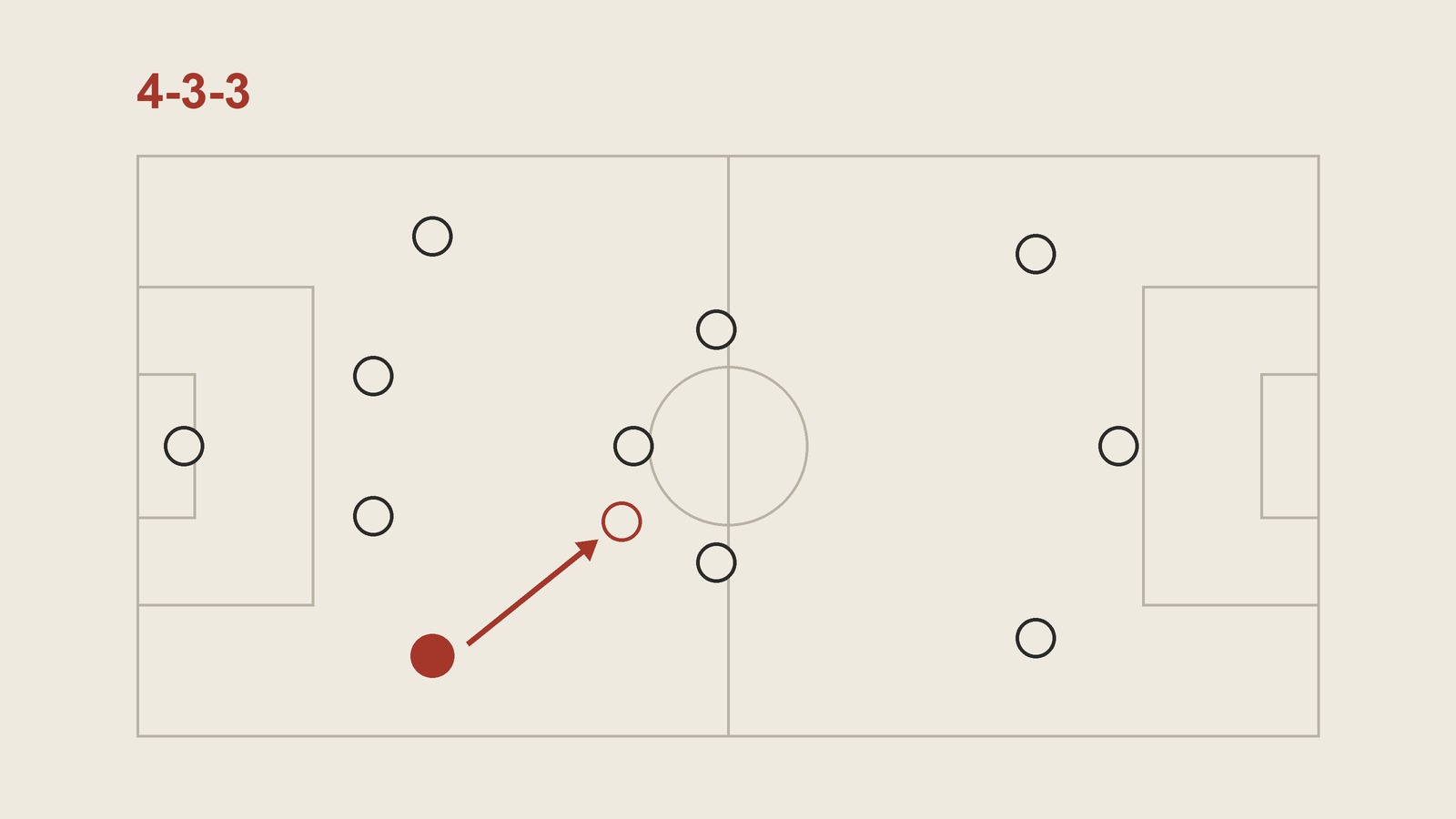
The line between wing-back and full-back has blurred. Many back fours now attack with one full-back as high as any wing-back while the other stays back or becomes an inverted full-back, so the same player can be a full-back without the ball and a wing-back with it. You can put a 3-4-3 on the tactics board and drag the two wide midfielders first up level with the forwards, then back level with the defence, to see the two teams that live inside the same formation.
What is the difference between a wing-back and a full-back?
A full-back is part of a back four and normally has a winger ahead of him, so he shares the flank: he defends first and joins attacks when he can. A wing-back plays in front of a back three, has no winger ahead of him, and is responsible for the whole flank in both directions. The wing-back starts higher, attacks more and needs the cover of a third centre-back behind him to do it.
Sources and further reading
- Wing-backs: football tactics explained — The Coaches' Voice
- The 3-5-2 formation: five key points — The Coaches' Voice
- The 3-4-3: football tactics explained — The Coaches' Voice