Formations and roles · Analysis
Libero vs Centre-Back: The Free Man and the Flat Line
A libero is a free defender behind man-markers; a centre-back defends a zone in a flat line. Side-by-side table, diagram, history and examples.
By 01 Owen
· Updated 7 Oct 2026 · 7 min read
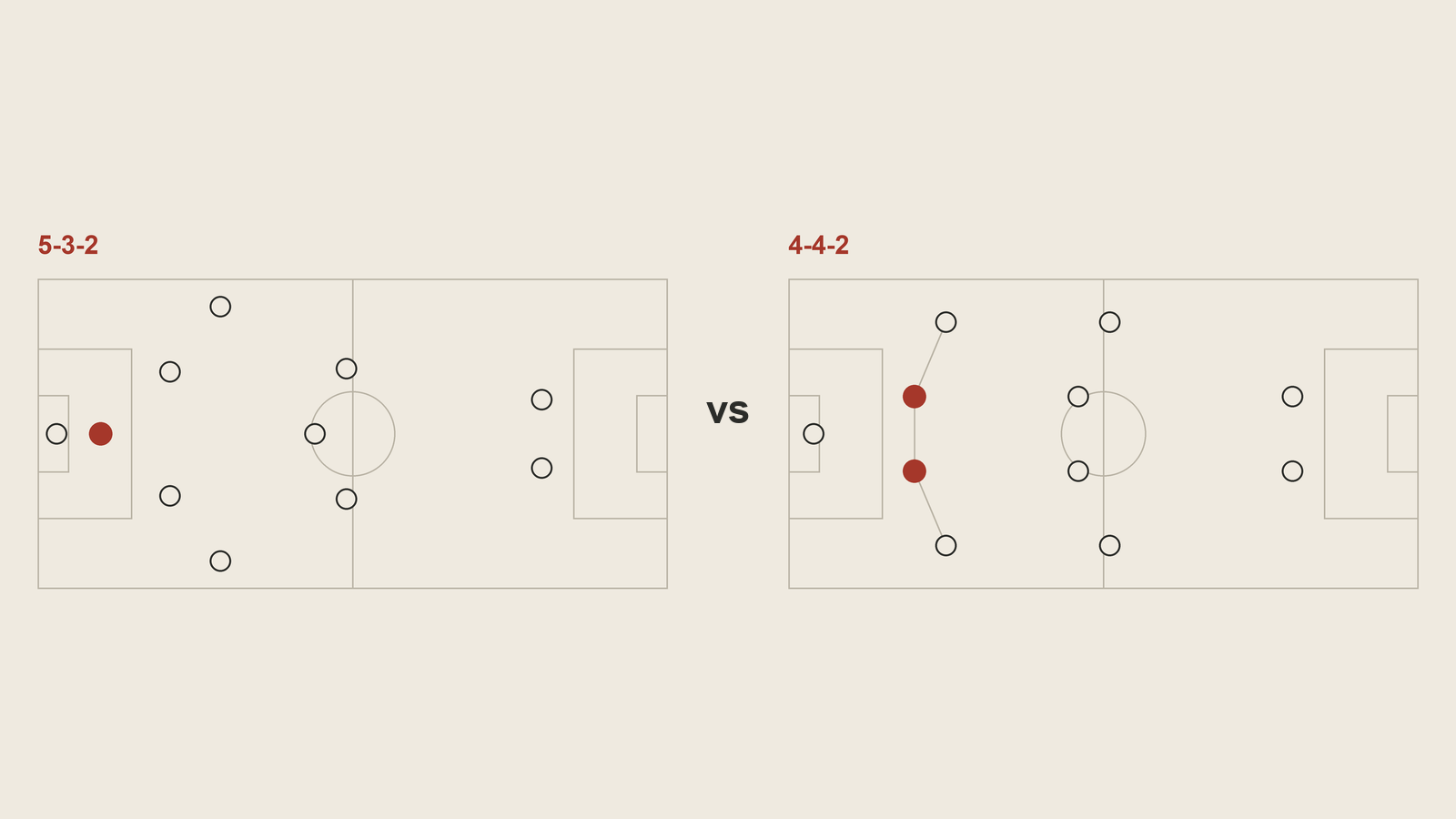
A libero is a free defender who marks nobody and stands behind the other defenders to cover them. A centre-back in a flat back four defends a zone level with his partner, and the line itself provides the cover.
Both are central defenders; the difference is the system around them. The libero belongs to man-marking defences, where every other defender follows an attacker. The modern centre-back belongs to zonal defences, where everyone guards space and nobody is spare.
| Libero (sweeper) | Centre-back in a flat back four | |
|---|---|---|
| Where he stands | Behind the rest of the back line, in a deep central position | Level with the other defenders, one of two in the middle |
| Main job | Cover the spaces behind the markers and clean up loose balls | Defend his zone in front of goal and hold the line with his partner |
| Marking | None: "free" from man-marking | Zonal: he covers an area and passes runners on |
| With the ball | Free to carry it out into midfield (the Beckenbauer version) | First passer in the build-up; the ball-playing type also carries |
| Typical formations | 5-3-2 and other back-five shapes of the man-marking era | 4-4-2, 4-3-3, 4-2-3-1 |
| Typical number | 6 in Italian football | 5 or 6 in traditional English numbering |
| Well-known examples | Armando Picchi, Franz Beckenbauer, Matthias Sammer | Carles Puyol and Gerard Piqué, Diego Godín and José María Giménez |
What each does without the ball
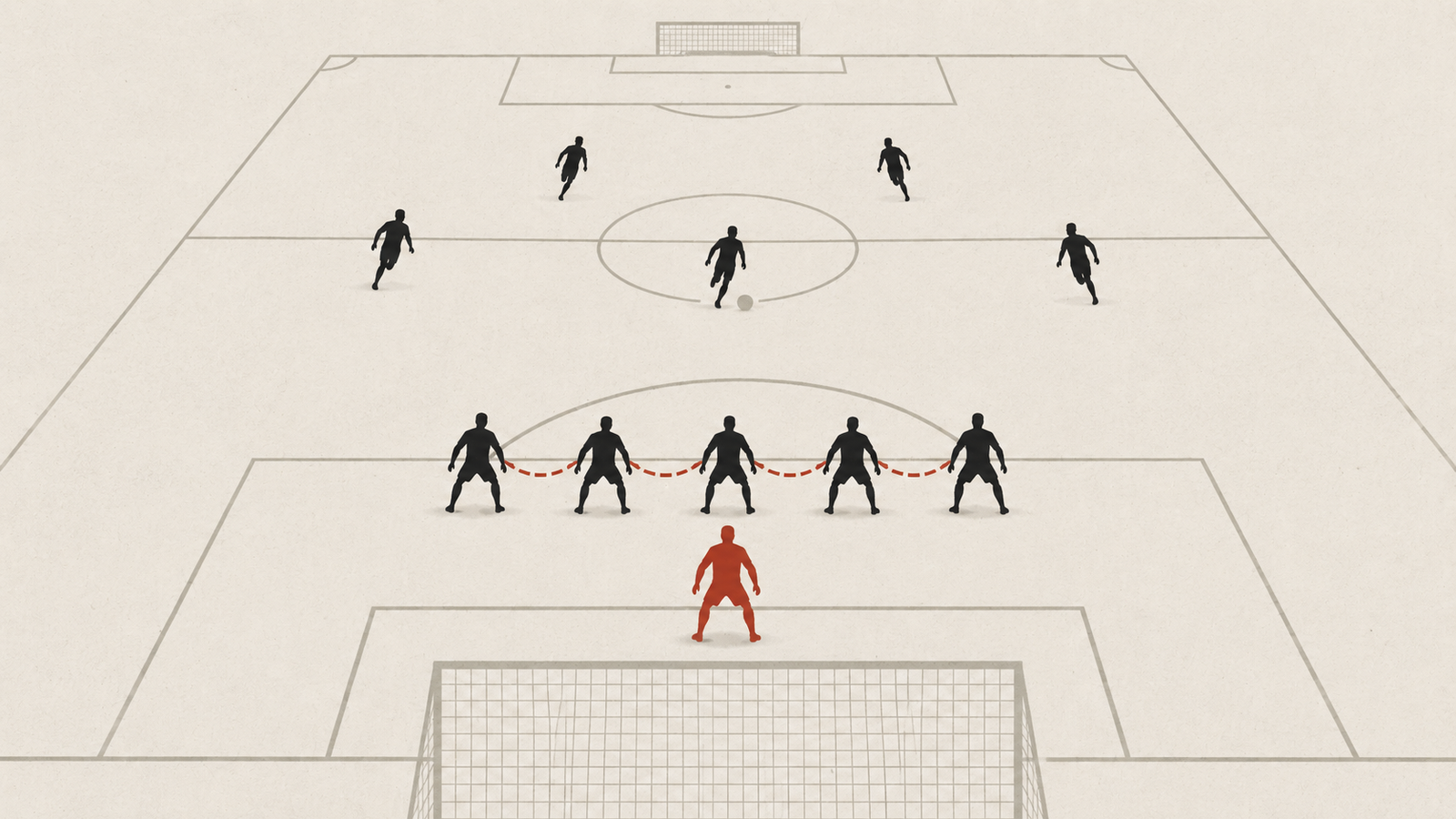
The word libero is Italian for "free", and the freedom is the point. In a man-marking system each defender is assigned an attacker and follows him. If one of them loses his duel, the attacker is through on goal. The libero is the insurance: he stays behind the markers, reads where the danger will come from and sweeps across the inside channels to deal with it. Coaches' Voice describes the job as covering the central area close to goal and the spaces behind the other defenders, which is why English calls him the sweeper.
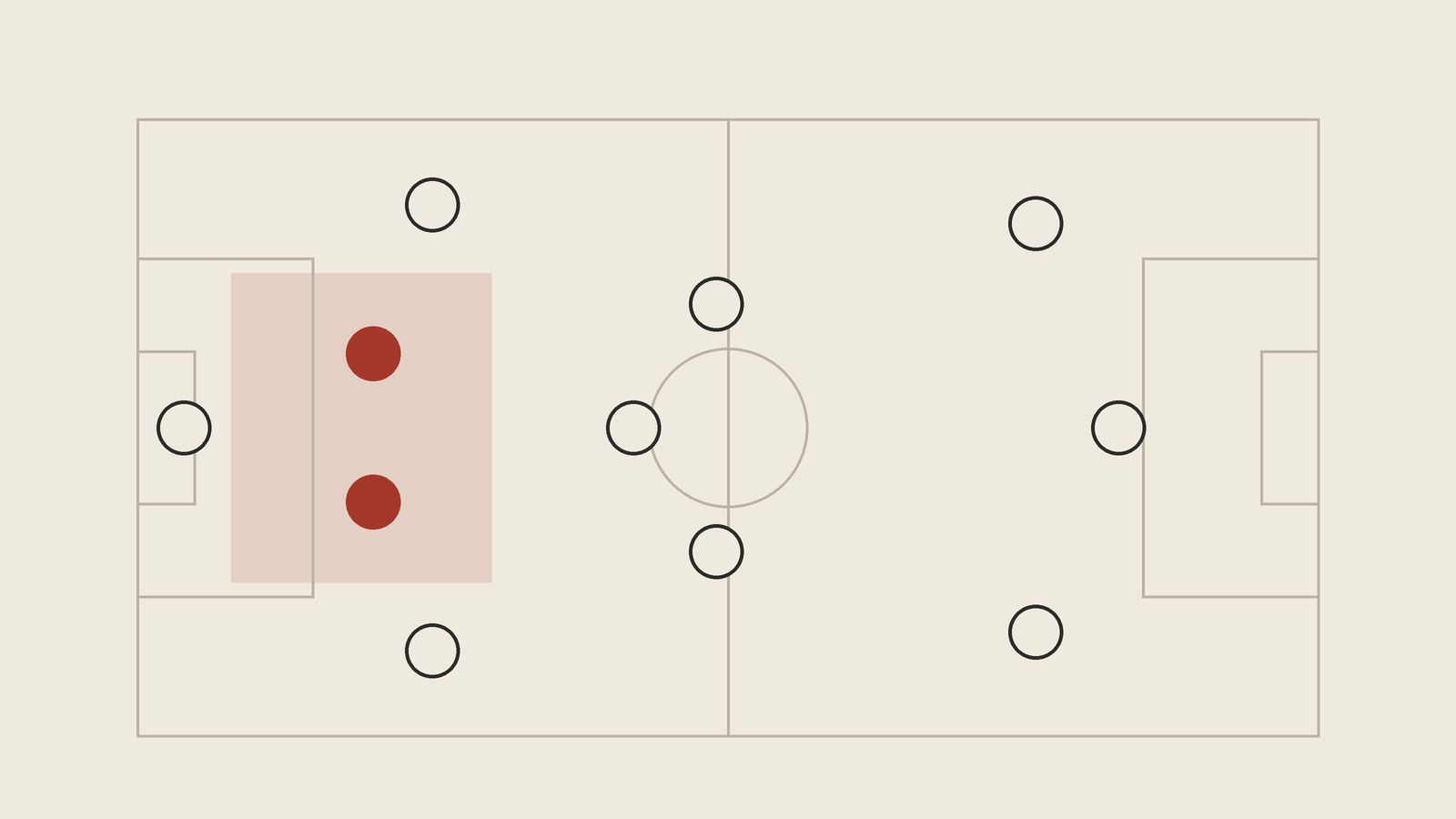
A centre-back in a flat back four has no player behind him except the goalkeeper. He and his partner each guard an area in front of goal, marking whichever striker enters it. Cover comes from the line rather than from a spare man: when one centre-back steps out to challenge a forward, the other and the full-backs shuffle across to close the gap. The pair also decide together when the line steps up to catch attackers offside, and when it drops.
The libero is cover that stands behind the others. The flat line is cover that moves with the ball.
What each does with the ball
The first liberos mostly just cleared the ball. Franz Beckenbauer changed that at Bayern Munich and with West Germany. He used his freedom to step into midfield with the ball and start moves. He captained West Germany to the 1972 European Championship and the 1974 World Cup, and Bayern to three European Cups in a row from 1974 to 1976. Matthias Sammer later played libero for Germany: he was named player of the tournament at Euro 96 and won the Ballon d'Or that year, the first defender to do so since Beckenbauer in 1976.
The modern centre-back has inherited much of that job. In most teams he is the first outfield passer, receiving from the goalkeeper and choosing between a short pass, a pass wide or a ball through the first line of pressure. The ball-playing centre-back goes further, carrying the ball into midfield when nobody presses him. The difference is that he does it from a line he has to return to, while the libero had no fixed place to return to at all.
Why the libero largely disappeared
Arrigo Sacchi's AC Milan showed the alternative. Sacchi dropped the libero and replaced man-marking with zonal marking and a flat back four in a 4-4-2. Milan defended with a high line, used the offside trap and pressed high up the pitch. With Franco Baresi, Paolo Maldini, Alessandro Costacurta and Mauro Tassotti at the back, they won the European Cup in 1989 and 1990.
Each part of that system worked against the libero:
- Zonal marking removed the need for a spare man. If nobody is chasing a single opponent, there is no gap that one lost duel opens up for a sweeper to fill.
- The offside trap needs every defender on the same line. A player standing a few metres behind the others plays every forward onside, so the trap cannot be sprung.
- Pressing pushed the whole team up the pitch and needed the defence to follow, not to sit deep.
Coaches' Voice adds that the deep starting position also suits modern attacks badly, especially against three forwards. Total football had already shown in the 1970s that man-marking struggled when attackers did not stay in fixed positions.
Where the libero's ideas survive
The functions were shared out rather than lost.
- The middle centre-back of a back three. In a back three, the central defender often plays the most libero-like role: Leonardo Bonucci at Juventus, David Luiz in Antonio Conte's Chelsea and John Stones have all played as ball-playing central defenders in a 3-5-2 or 3-4-3.
- The ball-playing centre-back. Coaches' Voice points to Stones and Harry Maguire as defenders with a libero's willingness to dribble into midfield.
- The sweeper-keeper. Covering the space behind a high line is now often the goalkeeper's job. Manuel Neuer and Edwin van der Sar are among the keepers described as sweeper-keepers.
The safety the libero gave behind an attacking team is now organised collectively, as rest defence.
Which formations use each
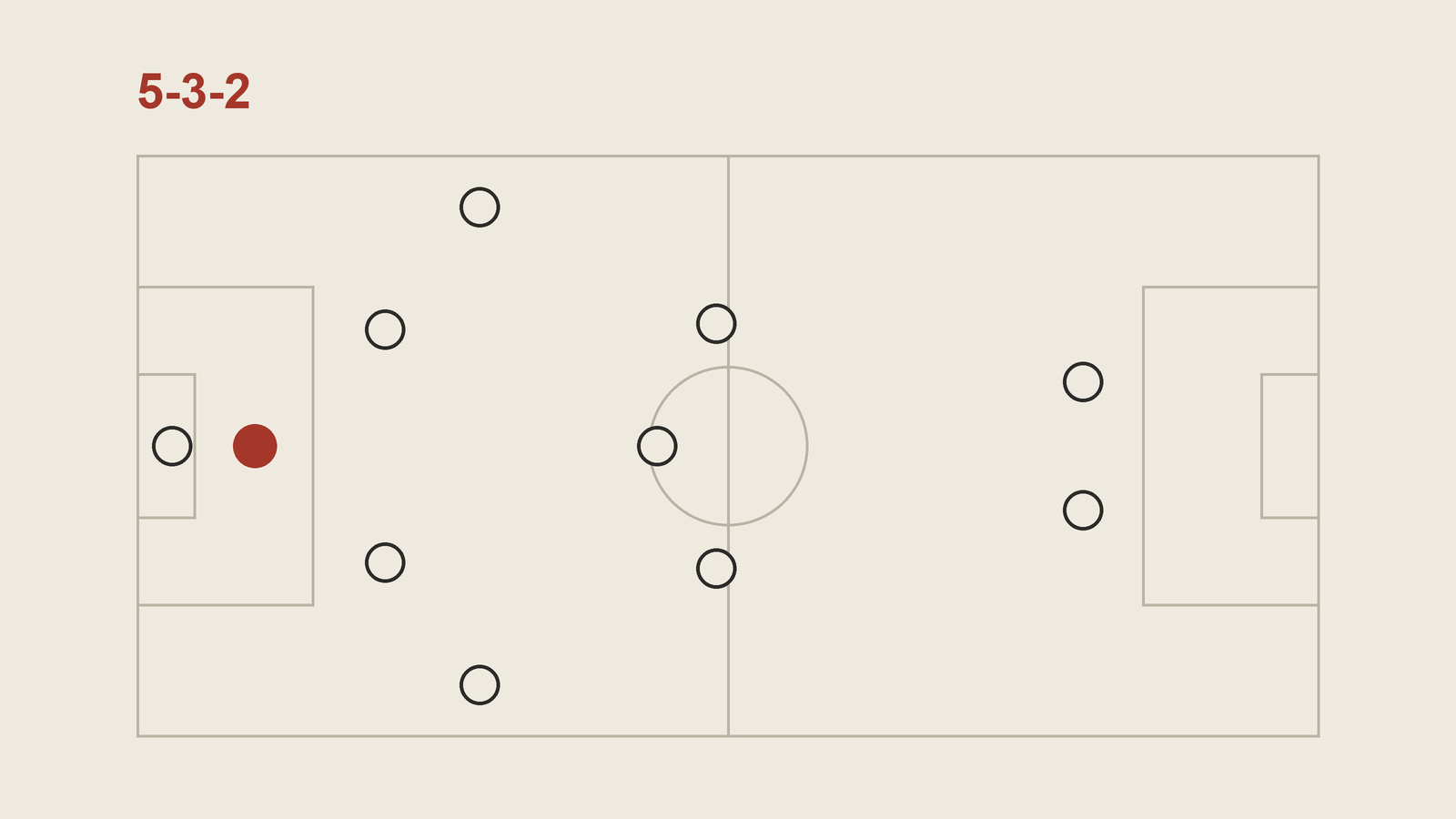
The libero's natural home is a back five of the man-marking era. Helenio Herrera's Inter, which won the European Cup in 1964 and 1965 with Armando Picchi as sweeper, are described as playing a 5-3-2: four man-markers tightly assigned to the attackers, and a free man behind them: Herrera's version of catenaccio. See the 5-3-2 formation diagram and the 5-3-2 formation article, and picture the middle defender a few metres deeper than the rest.
The centre-back in a flat line belongs to back-four shapes: the 4-4-2 Sacchi used, and the 4-3-3 common today. The 4-4-2 formation and 4-3-3 formation articles explain the back four in each. A modern 3-5-2 or 3-4-3 sits in between: three centre-backs in one line, with the middle one often the team's organiser and first passer.
How to tell them apart in a match
Watch the back line when the opponents attack. If one central defender consistently stays a few metres behind the others while his team-mates follow individual forwards, that is a sweeper. If the defenders hold a straight line and move across together as the ball moves, they are zonal centre-backs.
Then watch the offside line. A flat back four steps up together to catch forwards offside; a team with a libero rarely can.
With the ball, look at who carries it out. A libero who joins the midfield leaves no opponent unmarked, because he had none. A centre-back who carries forward from a back four usually needs a defensive midfielder or a full-back to cover his place.
When a coach picks one over the other
Almost every coach now picks the zonal centre-back: the flat line allows a high line, an offside trap and pressing, and does not spend a player on cover alone. A true libero only makes sense in a man-marking defence, and the role is now largely obsolete. A coach who wants a free defender's qualities today gets them through a back three with a ball-playing middle centre-back, or through a goalkeeper who can sweep behind a high line.
What is the difference between a libero and a centre-back?
A libero has no direct opponent and stays behind the other defenders to cover them. A centre-back in a back four defends a zone level with his partner.
Why don't teams play with a sweeper any more?
Zonal marking took away the need for a spare man, and the offside trap needs every defender on one line. A sweeper standing deeper than the others plays forwards onside and stops the team defending high.
Is the middle centre-back in a back three a libero?
Not strictly, because he usually plays in line with the other two. But he often does what the attacking libero did, organising the line and stepping out with the ball, which is why players like Bonucci and David Luiz are compared to liberos.
Is a sweeper-keeper the modern libero?
In part. The sweeper-keeper covers the space behind a high defensive line, which was the libero's main defensive job. The libero's work with the ball has passed mostly to ball-playing centre-backs.
Sources and further reading
- The libero: explained — Coaches' Voice
- Sweeper (association football) — Wikipedia
- Defender (association football) — Wikipedia
- Catenaccio — Wikipedia
- Arrigo Sacchi — Wikipedia