Formations and roles · Analysis
Centre-back: the defender who guards the middle and starts the build-up
A centre-back defends the middle of the pitch in front of goal: duels, headers, covering and, more and more, passing. Pairs, back threes, types and history.
By 01 Owen
· Updated 3 Oct 2026 · 6 min read
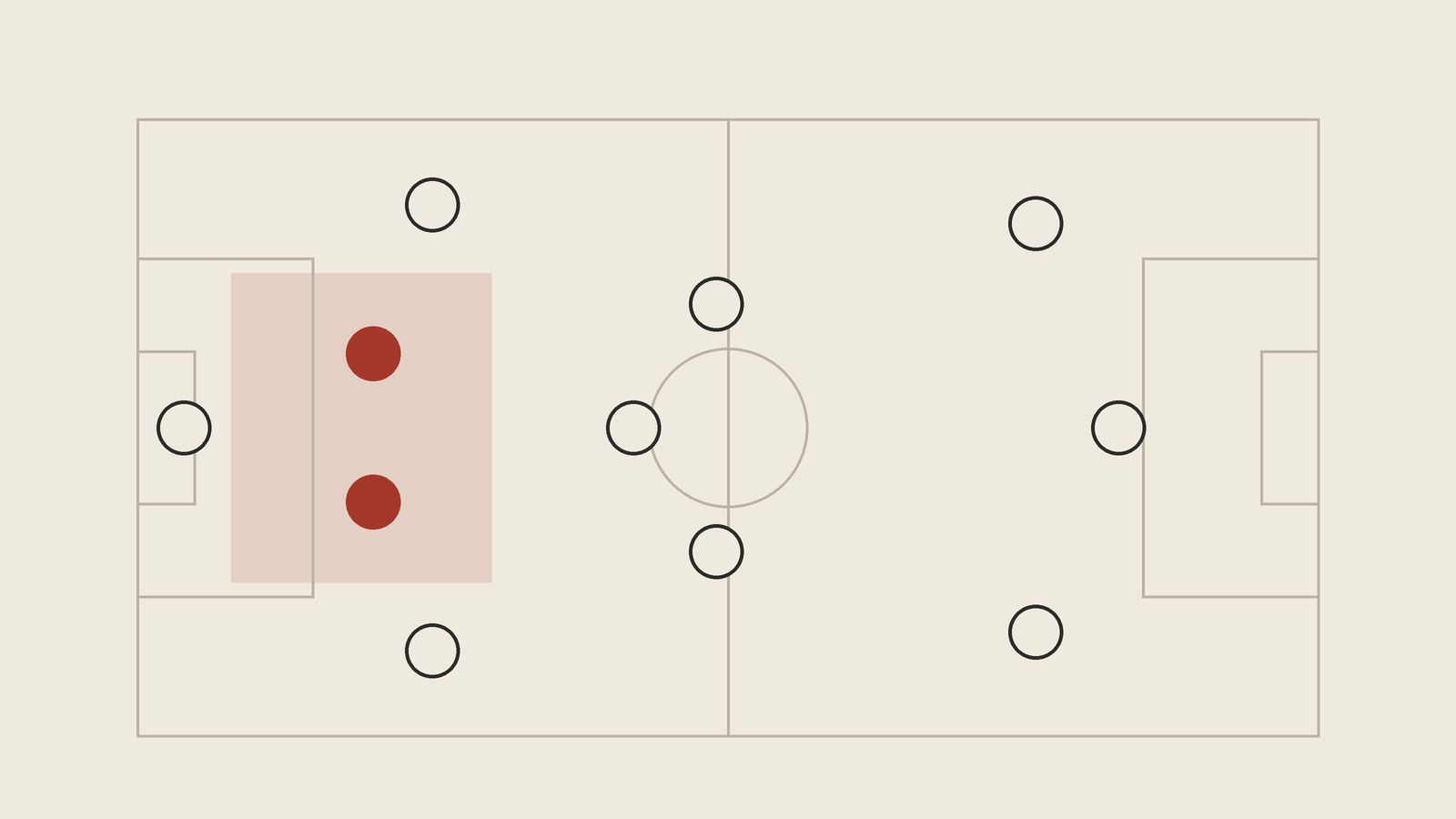
A centre-back is a defender who plays in the middle of the defence, directly in front of his own goal, and whose first job is to stop the opposing striker. Most teams use two, side by side; teams with a back three use three.
Centre-backs block shots, win headers, tackle, intercept passes and mark the forwards who get closest to goal. In the modern game they are also the first outfield passers in most attacks, which is why the position now asks for a footballer as much as for a stopper.
Where the position comes from
The centre-back grew out of the old centre-half. In the 2-3-5 formation the centre-half was a midfielder. In 1925 the offside law changed: an attacker now needed only two opponents, not three, between himself and the goal line to be onside. Strikers suddenly had more room, and Herbert Chapman of Arsenal answered in the mid-1920s with the WM formation, which dropped the centre-half back to stop the opposing centre-forward. That "third back" is the ancestor of every centre-back, and the reason the number 5, the old centre-half's shirt, became a defender's number in England, as explained in the guide to football positions.
What a centre-back does without the ball
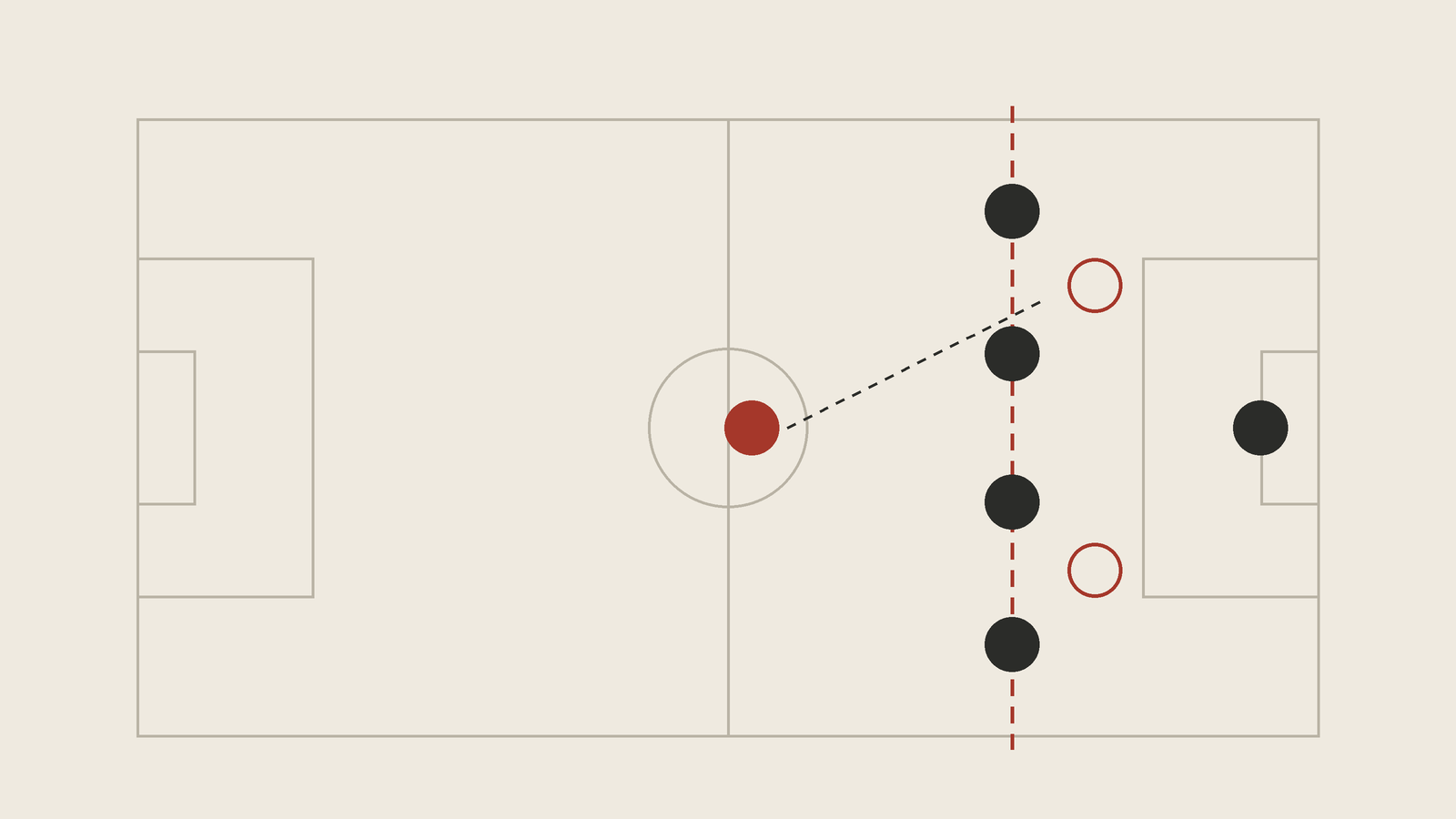
The core job is the area in front of goal. A centre-back marks the striker or the space the striker wants, wins aerial duels from crosses and long balls, and blocks shots. Just as important is the line: the centre-backs decide together when the defence steps up to squeeze the pitch and catch forwards offside, and when it drops to protect the space behind. When a full-back is pulled wide or goes forward, a centre-back covers the channel he left. When the team presses high, the centre-backs hold a high line so the whole team stays compact.
Communication is part of the job description. Centre-backs see the whole pitch in front of them, so they organise the line, pass on runners and tell midfielders when to drop.
What a centre-back does with the ball
Most attacks now start with a centre-back. He receives from the goalkeeper, draws the first presser, and has to choose between a short pass to the defensive midfielder, a pass wide to a full-back, a ball through the opponent's first line, or a carry into midfield when nobody presses him. Coaches value centre-backs who can play line-breaking passes and switch the play with diagonals, because that skips the press entirely. A defender who does all this is called a ball-playing defender: one who combines the usual defensive work with a role in possession and in building attacks.
That is why build-up play is so often designed around the centre-backs' feet. Coaches' Voice gives modern examples: Virgil van Dijk switching play to Mohamed Salah on Liverpool's right wing, Rúben Dias stepping into midfield in Pep Guardiola's Manchester City, Sergio Ramos carrying the ball forward after winning it, and Leonardo Bonucci passing like a quarterback from the middle of Juventus's back three.
Two kinds of centre-back, and why they pair up
Historically, many teams split the job. One centre-back, the stopper, marked the opposing striker man to man; the other, the sweeper or libero, stayed behind him as a free defender to cover. Zonal defending made that split less rigid, but pairs are still built on complementary profiles: a physical, aerial defender next to a quicker one who is comfortable on the ball. Carles Puyol and Gerard Piqué at Barcelona, or Diego Godín and José María Giménez at Atlético Madrid, are often cited as pairs of that kind.
Footedness matters too. A left-footed centre-back on the left side can open his body and pass down the line or into midfield without turning, which is why coaches often look for one left-footer in the pair.
Two centre-backs or three
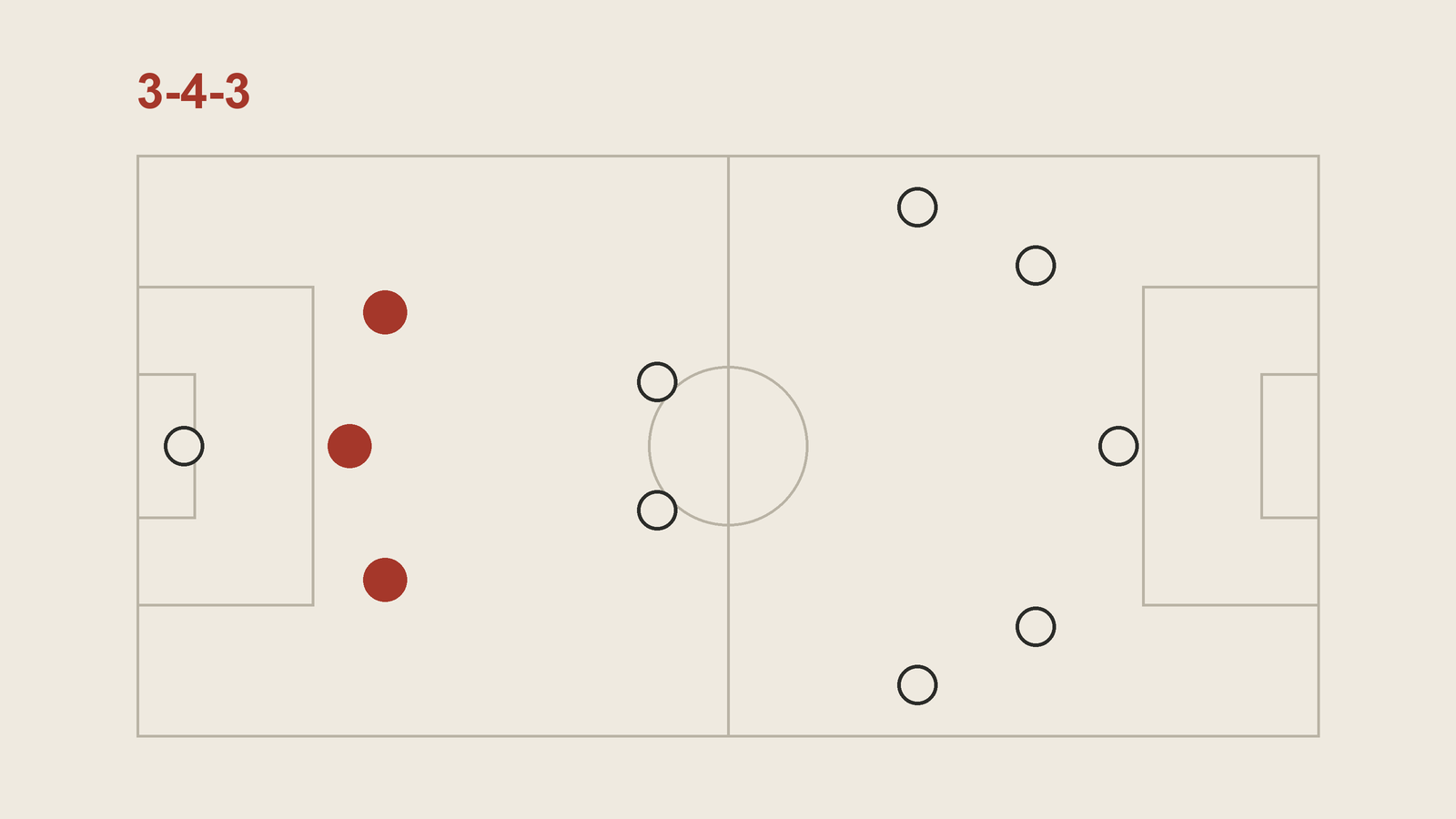
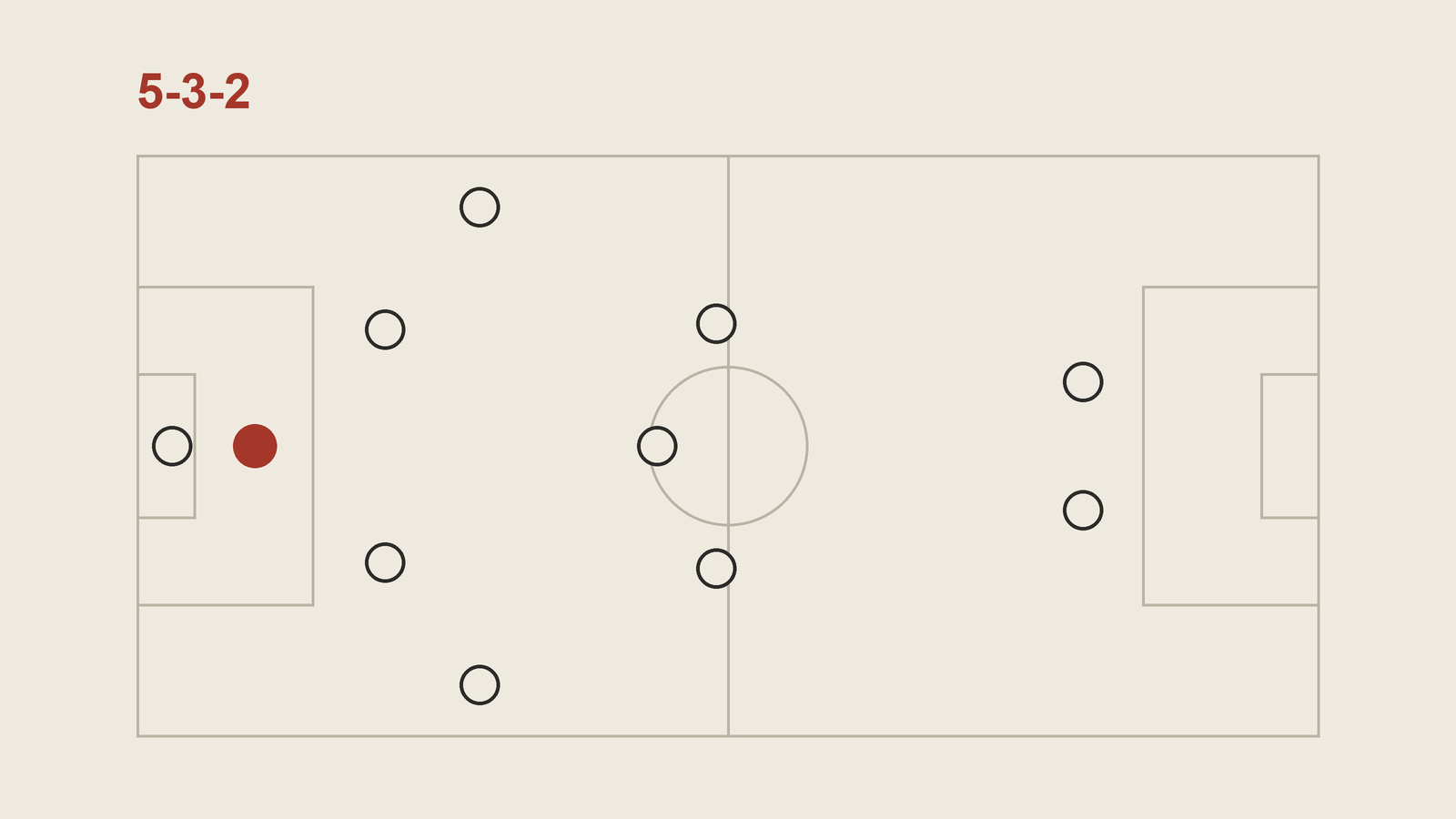
A back four uses two centre-backs, as in a 4-3-3, a 4-2-3-1 or a 4-4-2. A back three uses three. The extra centre-back gives cover against two strikers and lets the outer centre-backs step out aggressively, carrying the ball into midfield or pressing a forward who drops off, because two team-mates are still behind them. In a 3-5-2 the outer centre-backs also cover the space behind the wing-backs.
Many teams change between the two in a single match. A back four without the ball can become a back three with it when the defensive midfielder drops between the centre-backs or a full-back stays at home, which is also how a team arranges its rest defence behind the attack.
What makes a good centre-back
Reading the game comes first: anticipating where the ball and the striker will go, and being there earlier. Then the physical side: aerial strength, enough speed to recover, and the timing to tackle without conceding fouls in dangerous areas. Then calm on the ball under pressure. Few centre-backs are elite at everything, which is exactly why pairs are built to complement each other.
What the numbers show, and what they miss
Defending is hard to count, because the best defending often prevents an action rather than ending one. Analysts still look at a few kinds of data. Aerial duels won and blocked shots describe the work in front of goal. Tackles and interceptions describe the ball-winning, though a centre-back who is always well placed may need fewer of them. With the ball, pass completion says little on its own, because short sideways passes are easy; progressive actions, line-breaking passes and packing show whether he actually moves the ball past opponents. In a team's pass network, a ball-playing centre-back usually has thick links into midfield as well as to his partner and the goalkeeper.
What the numbers miss is positioning: the run he tracked, the pass he made impossible, the line he held at the right moment. That is why scouts still watch centre-backs off the ball, and why a quiet match for a centre-back is often a good one.
How to spot the centre-backs' roles in a match
Watch who steps up when a striker drops to receive and who stays behind: that is the old stopper and cover split, still alive in zonal defences. Then watch the goal kicks and the first passes: the centre-back who receives most, and who carries the ball forward when given space, is the team's ball-playing defender.
Centre-backs usually lead the line's step up, which is the basis of the offside trap: the defence moves together just before the pass so that the attackers end up beyond it.
What is a centre-back in football?
A centre-back is a defender who plays in the middle of the defence, in front of his own goal. He stops the opposing strikers, wins headers and blocks shots, and in modern teams he also starts many attacks with his passing.
Is centre-back the same as centre-half?
In English football, yes: "centre-half" is the older name and is still used for centre-backs. It comes from the 2-3-5 era, when the centre-half was a midfielder who later dropped into defence in the WM formation.
What is a ball-playing centre-back?
A ball-playing centre-back is a defender who, besides defending, takes an active part in possession: receiving under pressure, passing through the opponent's lines, switching play and carrying the ball into midfield when there is space.
Why do teams play with three centre-backs?
Three centre-backs give cover against two strikers and let the outer centre-backs step out to press or to carry the ball, because two team-mates stay behind. A back three also lets the wing-backs push high on both flanks.
Sources and further reading
- Defender (association football) — Wikipedia
- The modern centre-back: football tactics explained — The Coaches' Voice
- Formation (association football) — Wikipedia
- Squad number (association football) — Wikipedia