Formations and roles · Analysis
The Defender Who Walks Into Midfield When His Team Has the Ball
An inverted full-back moves into central midfield in possession instead of overlapping. Why Guardiola's teams use the role, what it protects and what it costs.
By 01 Owen
· Updated 22 Sep 2026 · 4 min read
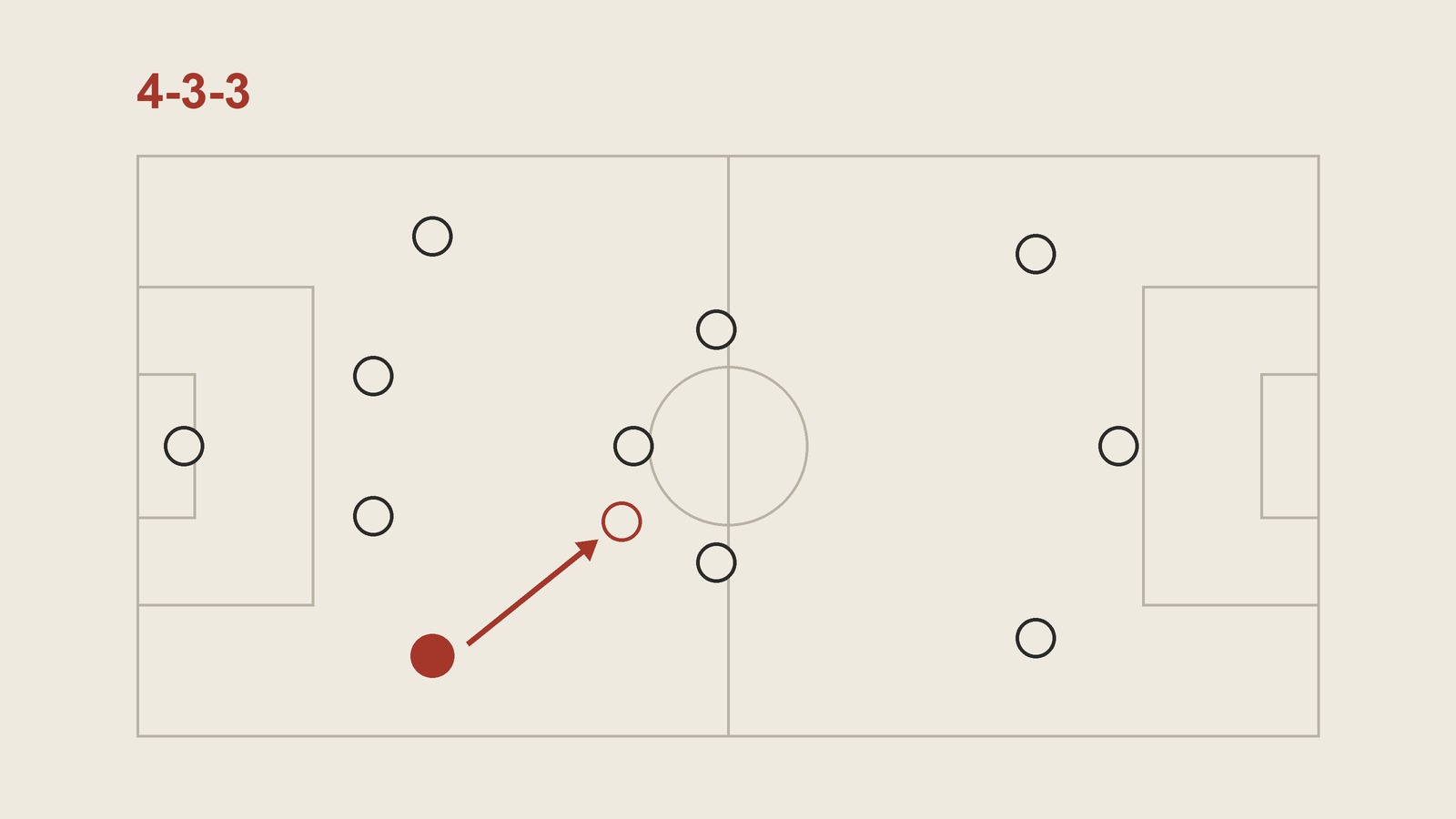
An inverted full-back is a full-back who moves inside into central midfield when his team has the ball, instead of running down the touchline. He defends as a normal full-back in a back four. In possession he stands next to the holding midfielder, and the team's shape changes around him.
The role is associated above all with Pep Guardiola. At Bayern Munich from 2013 he had Philipp Lahm and David Alaba step into midfield from full-back. At Manchester City the job passed through Fabian Delph, Oleksandr Zinchenko and João Cancelo, and in the treble season of 2022-23 it was taken to its logical end when John Stones, a centre-back, stepped forward beside Rodri. Mikel Arteta, Guardiola's former assistant, used Zinchenko the same way at Arsenal. The word "inverted" is borrowed from inverted wingers, who also move in from the flank rather than staying on it.
The first reason to do it is numbers in the middle. A full-back who stands wide during build-up play is easy to press: the touchline takes away half his options. Moved inside, he becomes an extra midfielder, the team has an overload in the centre, and the opponent's wide midfielder has to decide whether to follow him inside or hold his position. Either choice opens something. If he follows, the passing lane from centre-back straight to the winger is clear, and the winger receives with only a full-back to beat.
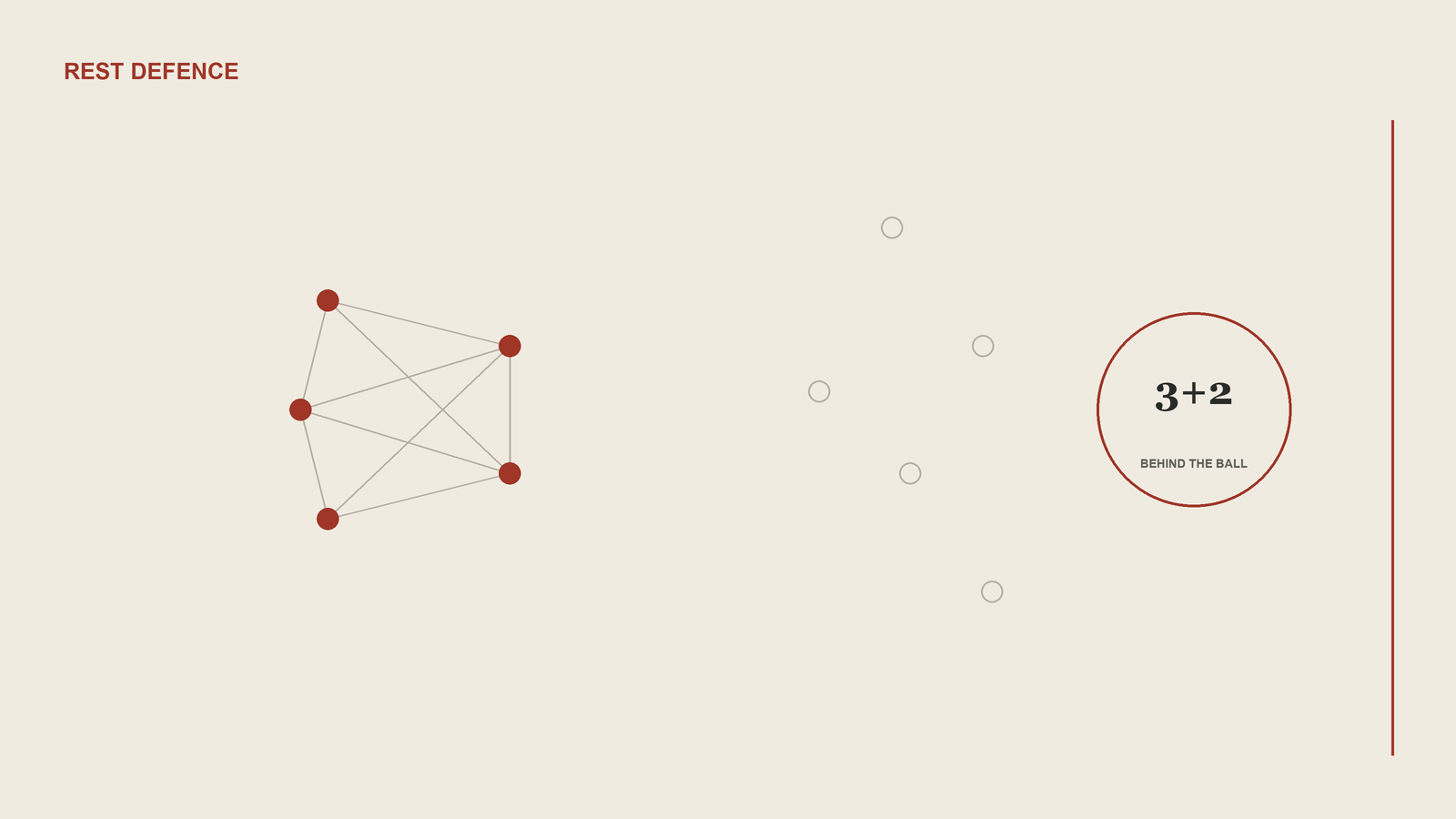
The second reason is what happens when the ball is lost. A team with both full-backs overlapping has its two centre-backs and perhaps one midfielder behind the ball. A team with an inverted full-back has a block of five in the centre of the pitch, three defenders and two midfielders or two and three, exactly where counter-attacks want to go. That 3+2 structure is a rest defence built into the shape, and it puts players close to the ball for gegenpressing. Much of City's ability to keep opponents pinned in their own half came from this rather than from anything the forwards did.
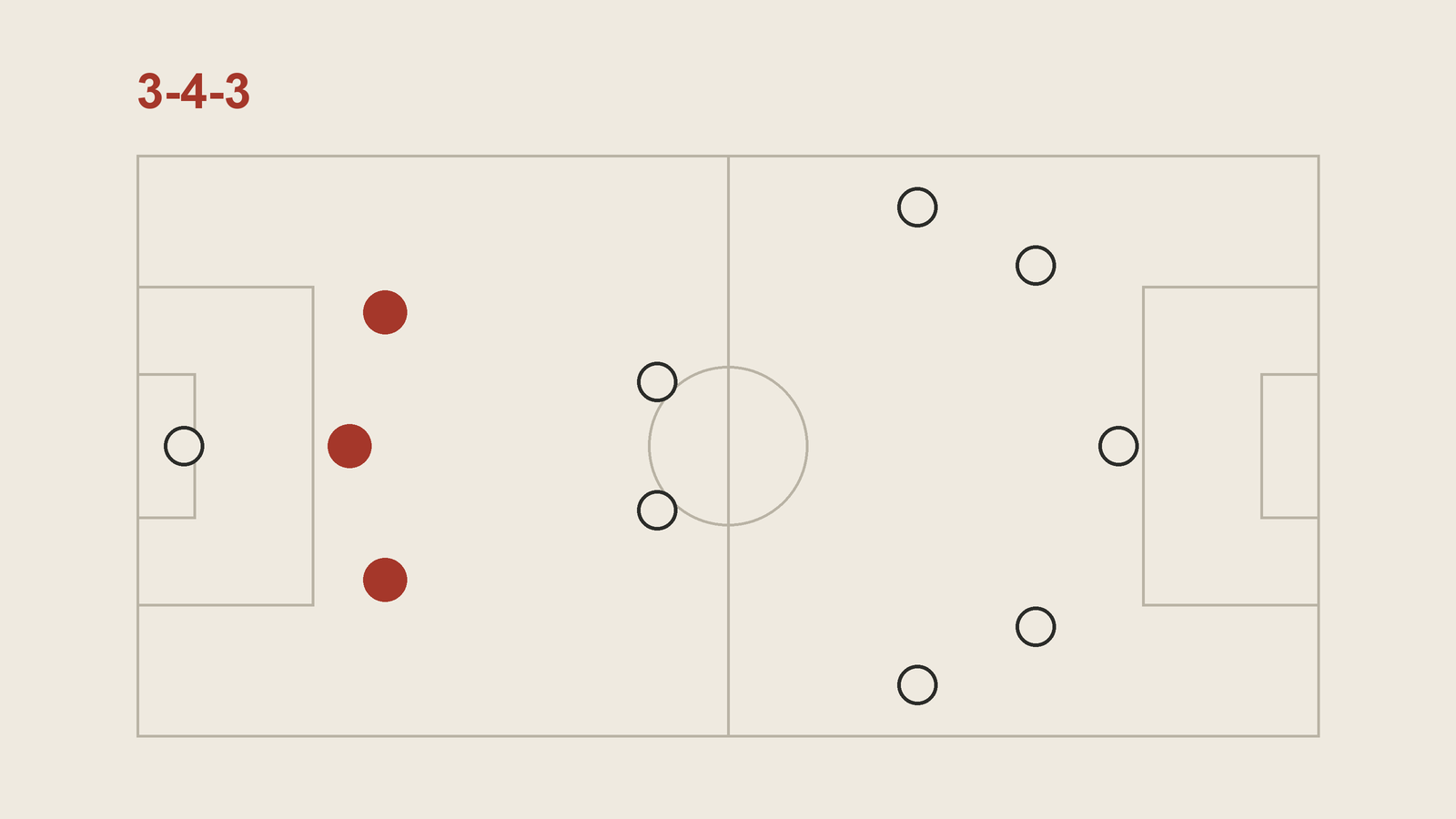
The knock-on effect is on the wingers. With no full-back overlapping, the winger must hold the width himself and beat his man one against one, which is why teams that play this way buy wingers who can dribble. The attacking shape becomes a 3-2-5 or 2-3-5: five players across the front line, one in each lane including the half-spaces, with the inverted full-back as one of the two or three behind them. From a nominal 4-3-3 that is a big change, and it is the clearest modern example of a back four turning into a back three in possession.
The demands on the player are unusual. He has to defend the flank against a winger, then receive the ball in the middle of the pitch with opponents on every side, which is a central midfielder's skill and not one most full-backs have practised. Lahm had played in midfield; Zinchenko and Stones were converted from other positions. The risk is the space he leaves. If the ball is lost and the first pass goes quickly to the wing he has vacated, the nearest centre-back is pulled out wide and the whole line shifts. Opponents with a fast winger who stays high on that side aim for exactly this, and it is the reason some coaches invert only one full-back and keep the other one at home.
You can start from a 4-3-3 on the tactics board, drag one full-back next to the holding midfielder and push the two number eights forward to see the 3-2-5 appear.
Is an inverted full-back the same as a wing-back?
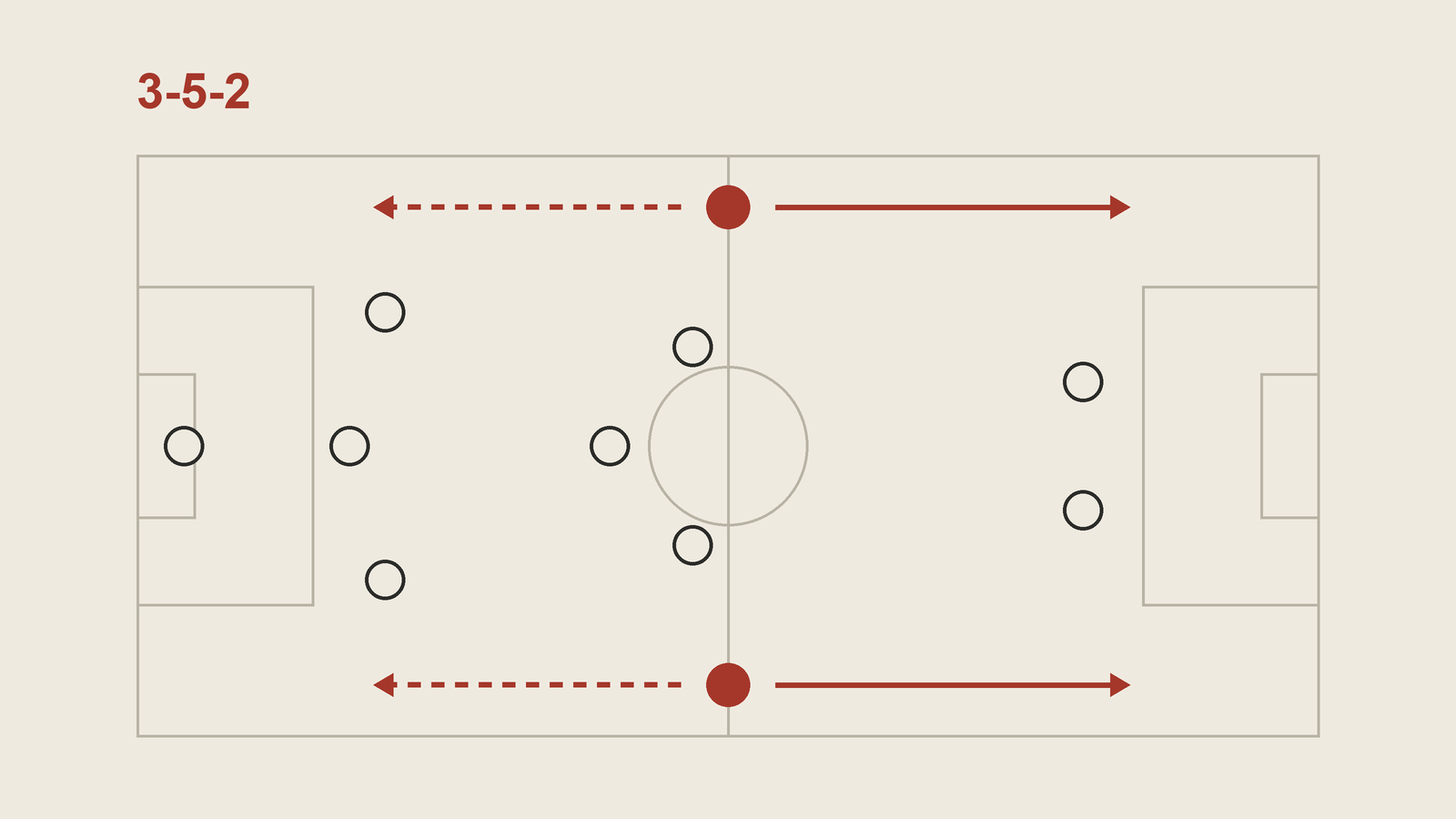
No, they move in opposite directions. A wing-back plays in front of a back three and provides his team's width by running up and down the touchline. An inverted full-back starts in a back four and moves away from the touchline into midfield, leaving the width to the winger ahead of him. Both change the team's shape in possession, but one adds a player on the outside and the other adds one in the centre.
Sources and further reading
- Inverted full-backs: football tactics explained — The Coaches' Voice
- The tactical evolution of Pep Guardiola's Manchester City — The Coaches' Voice