Formations and roles · Analysis
Football positions: every role on the pitch, its number and what it does
Football has eleven positions in four groups. What each one does with and without the ball, what shirt numbers 1 to 11 mean, and why a 6 differs by country.
By 01 Owen
· Updated 1 Oct 2026 · 6 min read
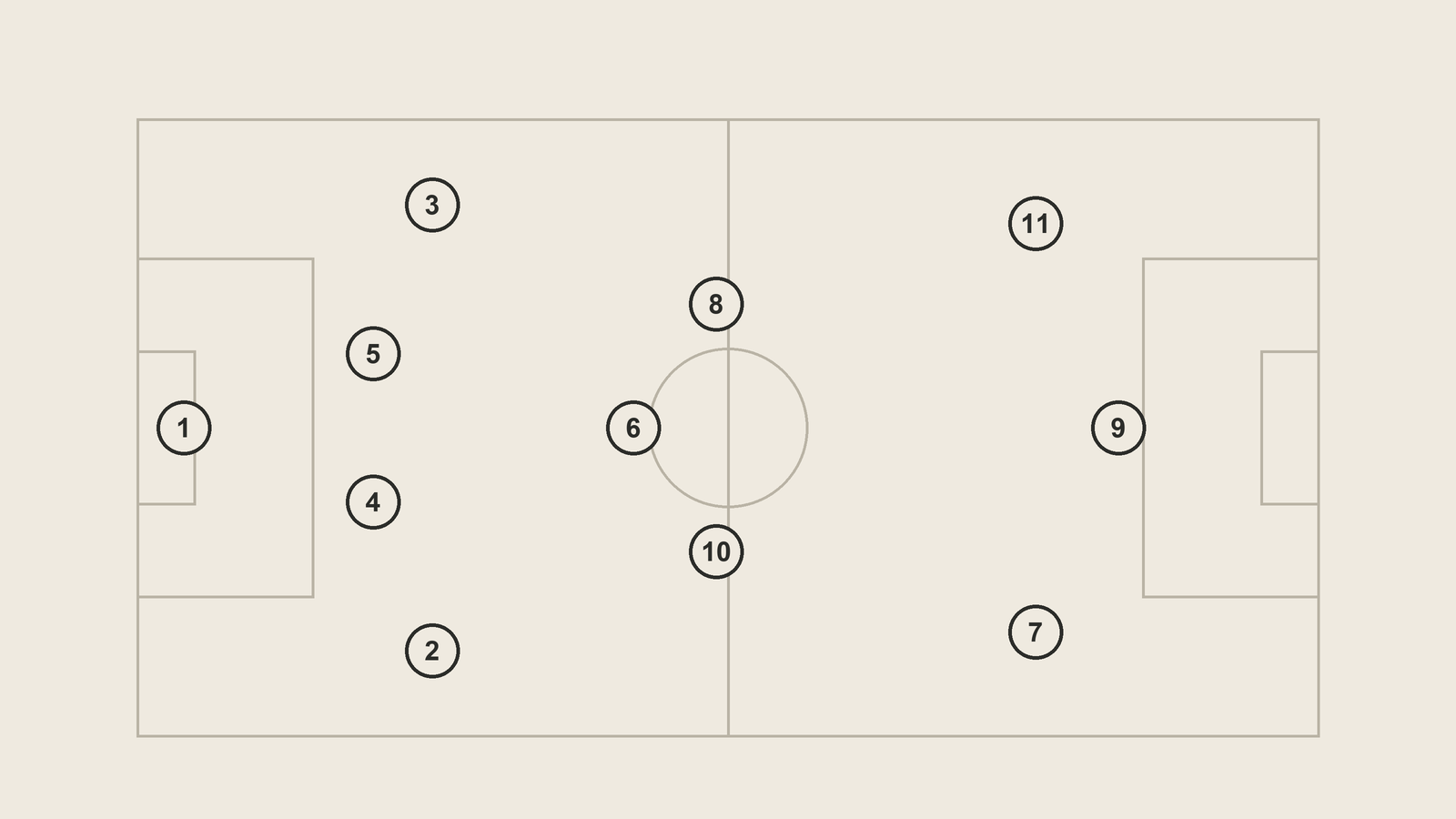
A football team has eleven players in four groups: a goalkeeper, defenders, midfielders and forwards. A position is where a player starts and what that part of the pitch asks of him; shirt numbers 1 to 11 are the old shorthand for those positions.
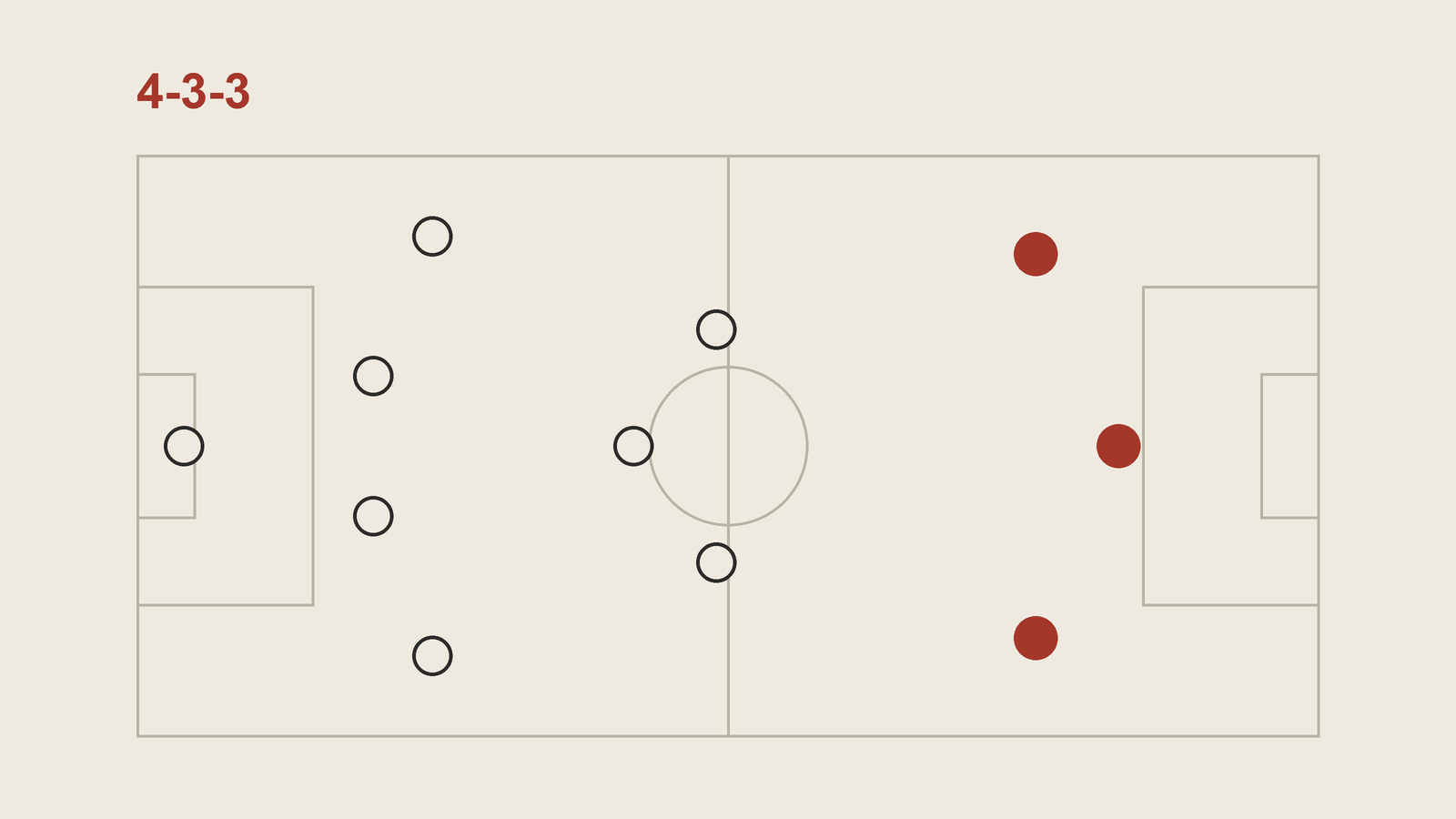
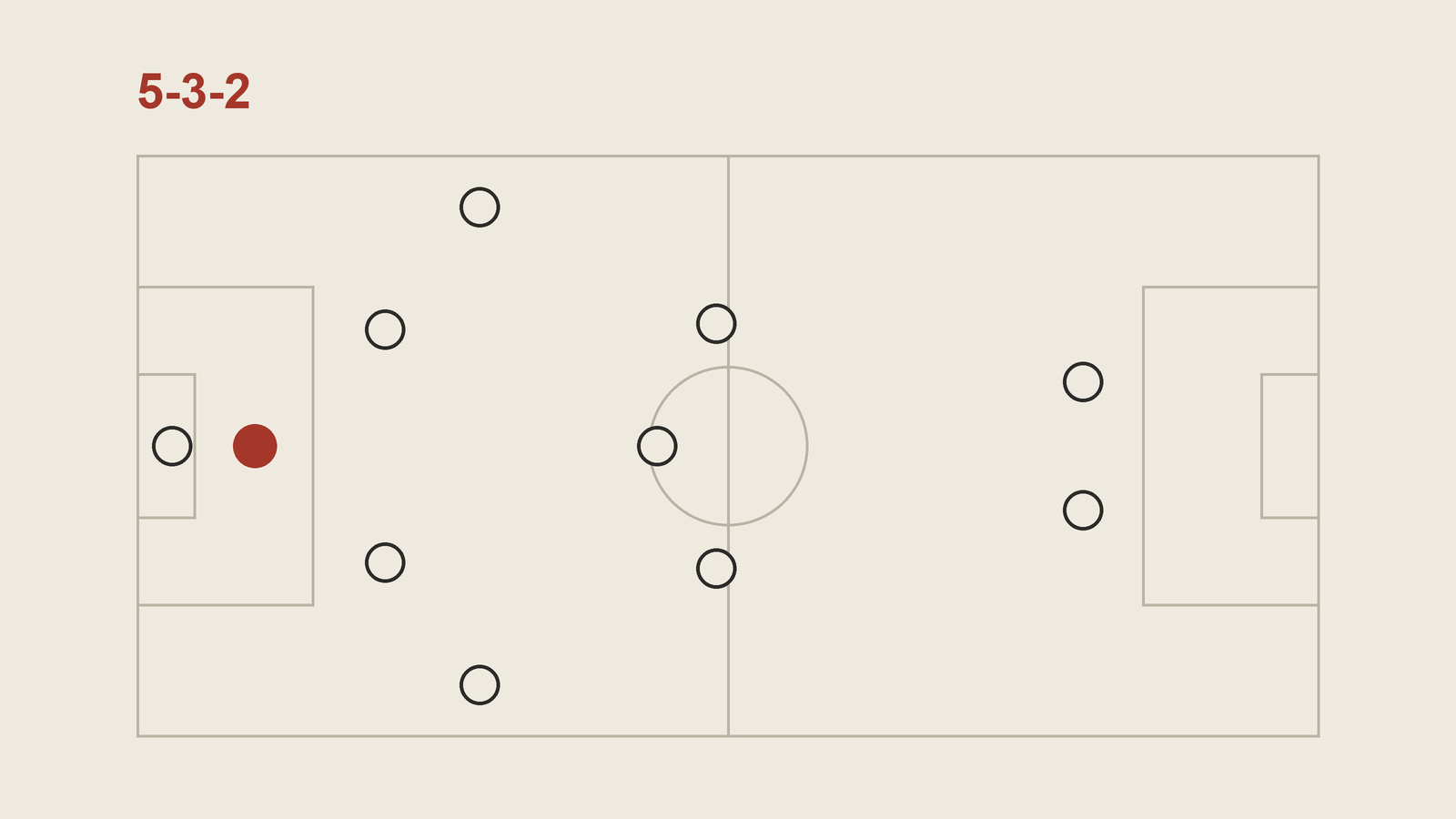
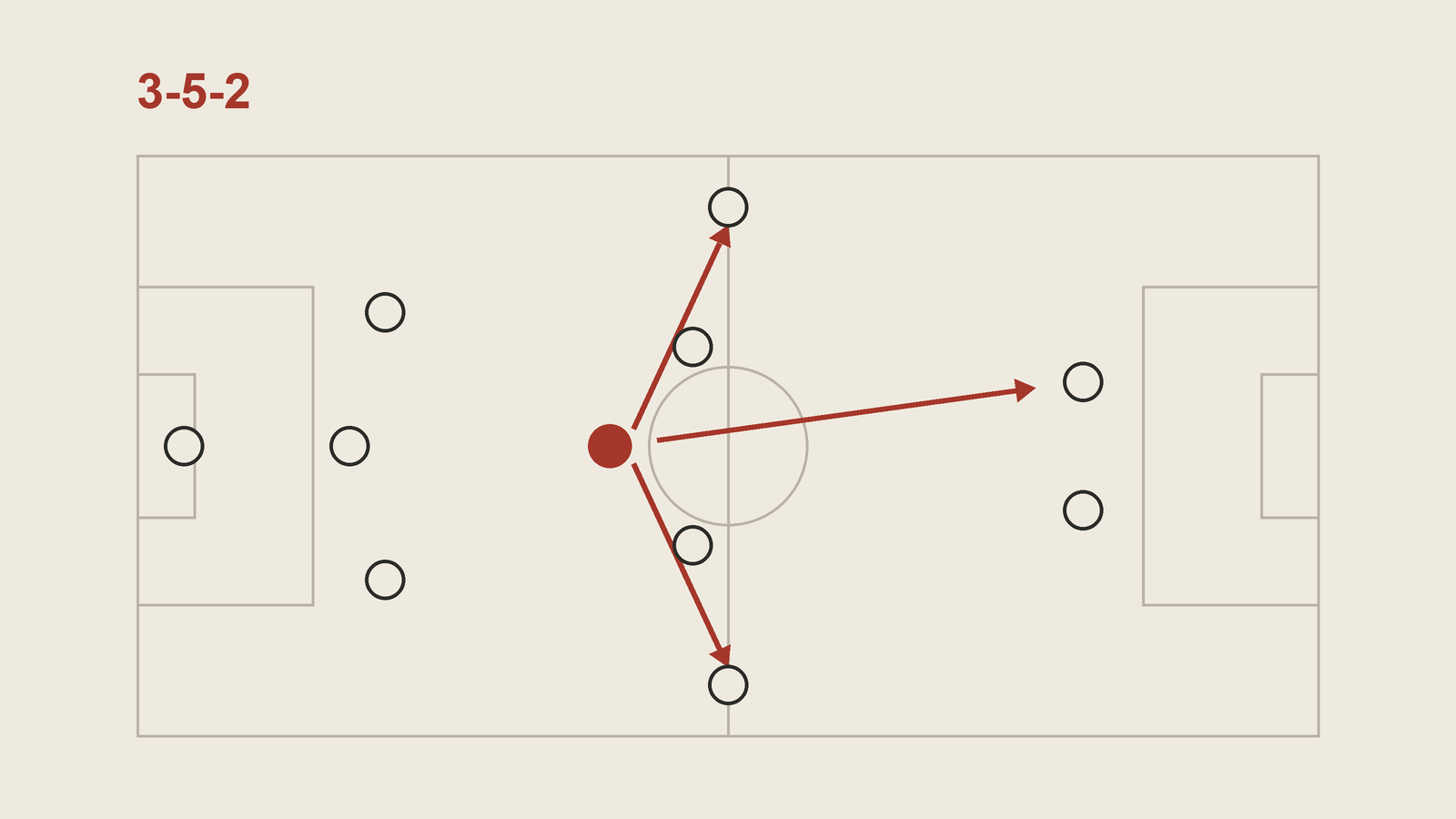
The Laws of the Game fix only two things: a team may field at most eleven players, one of whom must be the goalkeeper, and a match cannot start or continue with fewer than seven. Everything else, how many defenders, how many midfielders, who stands where, is a coach's choice, which is why the same eleven positions can be arranged as a 4-3-3, a 4-2-3-1, a 3-5-2 or a 4-4-2.
The positions at a glance
| No. | Position | Main job |
|---|---|---|
| 1 | Goalkeeper | Stops shots, organises the defence, starts attacks |
| 2 | Right-back | Defends the right flank, supports attacks down it |
| 3 | Left-back | The same on the left |
| 4 and 5 | Centre-backs | Defend the middle of the penalty area, win headers, pass out from the back |
| 6 | Defensive midfielder | Screens the defence, wins the ball back, keeps possession moving |
| 8 | Central midfielder | Links defence and attack, covers ground in both directions |
| 10 | Attacking midfielder | Plays between the opponent's lines and creates chances |
| 7 and 11 | Wingers | Attack the flanks, beat full-backs, cross or cut inside |
| 9 | Striker | Scores, occupies the centre-backs, finishes moves |
The numbers in the table follow the most common modern convention for a back four with a three-man midfield. They are a convention, not a rule: squad numbers today belong to the player for a whole season, and a club's best defensive midfielder may well wear 16.
Goalkeeper (1)
The goalkeeper is the only player allowed to handle the ball, and only inside his own penalty area. Shot-stopping is still the core of the job, but modern goalkeepers spend far more of a match with the ball at their feet. They are the first passer in build-up play, and in teams that defend with a high line they cover the space behind it, the job a libero once did.
Defenders (2 to 5)
Centre-backs play in pairs in a back four or in threes in a back three. They defend the area in front of their own goal, deal with crosses and long balls, and decide when the line steps up or drops. The modern centre-back is also judged on passing: a defender who can break the first line of the press with a pass or a carry saves his midfielders a lot of work.
Full-backs play on either side of the centre-backs. Their defensive job is to stop wingers and crosses; their attacking job depends on the system. Some overlap down the touchline, some stay at home, and some step into midfield in possession, the inverted full-back role. In a back three, the wide defenders are usually replaced by wing-backs, who cover the whole flank on their own.
Midfielders (6, 8 and 10)
The defensive midfielder stands in front of the defence. He screens passes into the forwards, wins the ball back and keeps it moving. Some teams use one, some use two side by side, the double pivot. When the deepest midfielder is above all a passer who dictates the tempo, Italian football calls him a regista.
The central midfielder is the link. He receives from the defenders, carries the ball forward and gets back when possession is lost. In a three-man midfield, the central midfielders who drift wide towards the flanks are called mezzalas in Italy.
The attacking midfielder plays closest to the forwards, in the space between the opponent's midfield and defence. The most valuable patch for him is the central area just outside the penalty box, known in analysis as zone 14, and the channels either side of it, the half-spaces.
Forwards (7, 9 and 11)
Wingers play wide in attack. A traditional winger stays on the side of his stronger foot and crosses; an inverted winger plays on the opposite side and cuts inside to shoot or pass.
The striker is the most advanced player and the main goalscorer. He pins the centre-backs, finishes chances and, with his back to goal, holds the ball up while team-mates arrive. A striker who drops into midfield instead of staying high is a false nine.
Why the numbers mean what they mean
Shirt numbers came before most of today's positions. On 25 August 1928, in matches involving Arsenal and Chelsea, players wore numbers assigned by field position, and the Football League made numbers compulsory from the 1939–40 season. The numbers followed the dominant formation of the time, the 2-3-5:
- 1 goalkeeper, 2 right-back, 3 left-back
- 4 right half-back, 5 centre half-back, 6 left half-back
- 7 outside right, 8 inside right, 9 centre forward, 10 inside left, 11 outside left
When teams moved to the WM formation, the centre half-back dropped back into defence. In England the 5 therefore became a centre-back, which is why a "number 5" in English football is still a defender. In South America the same number moved into the middle of the park instead, and in Argentina and Brazil the 5 is the central defensive midfielder.
German football names midfield roles directly after the numbers: the Sechser (the six) screens the defence, the Doppelsechs is a pair of sixes, the Achter (the eight) links defence and attack, and the Zehner (the ten) is the playmaker behind the strikers. In the original 2-3-5, by contrast, the 6 was a left half-back. The old term half-back itself had fallen out of use by the early 1970s, replaced by "midfielder".
A position is not a role
The position says where a player starts. The role says what he does from there. Two left-backs in the same 4-3-3 can play completely different games: one overlaps the winger, the other moves inside next to the defensive midfielder. A striker can stay high or drop as a false nine; a centre-back can stay in line or step out as the free man. That is why this site explains the classic roles separately, from the libero to the regista, and why the same team can look different with the ball and without it, when it has to organise its rest defence.
To see how positions fit together, it helps to move them yourself. Put a 4-3-3 on the board, then push the full-backs up and drop the 6 between the centre-backs: the eleven positions are unchanged, but the team now builds up with three at the back.
What are the 11 positions in football?
Goalkeeper, right-back, left-back, two centre-backs, defensive midfielder, central midfielder, attacking midfielder, right winger, left winger and striker is the most common modern set in a 4-3-3. Other formations swap some of them: a 3-5-2 uses three centre-backs and two wing-backs, and a 4-4-2 uses two strikers and two wide midfielders.
What is the 10 position in football?
The 10 is the attacking midfielder or playmaker who plays behind the striker and creates chances. The number goes back to the inside left of the 2-3-5 and became associated with the most creative player in the team.
What does number 5 mean in football?
It depends on the country. In England the 5 is traditionally a centre-back, because the centre half-back dropped into defence in the WM formation. In Argentina and Brazil the 5 is the central defensive midfielder.
What is the difference between a position and a role?
A position is where a player starts on the pitch, such as left-back or striker. A role is how he plays from there, such as an inverted full-back or a false nine. The same position can host several roles, depending on the coach's plan.
Sources and further reading
- Law 3 – The Players — IFAB
- Association football positions — Wikipedia
- Squad number (association football) — Wikipedia
- Mittelfeldspieler — Wikipedia (de)