Formations and roles · Analysis
Box-to-box midfielder: the 8 who defends one box and attacks the other
A box-to-box midfielder, the 8, tackles near his own box and arrives in the other. What the role asks for, in a two or a three, famous examples, mezzala.
By 01 Owen
· Updated 3 Oct 2026 · 6 min read
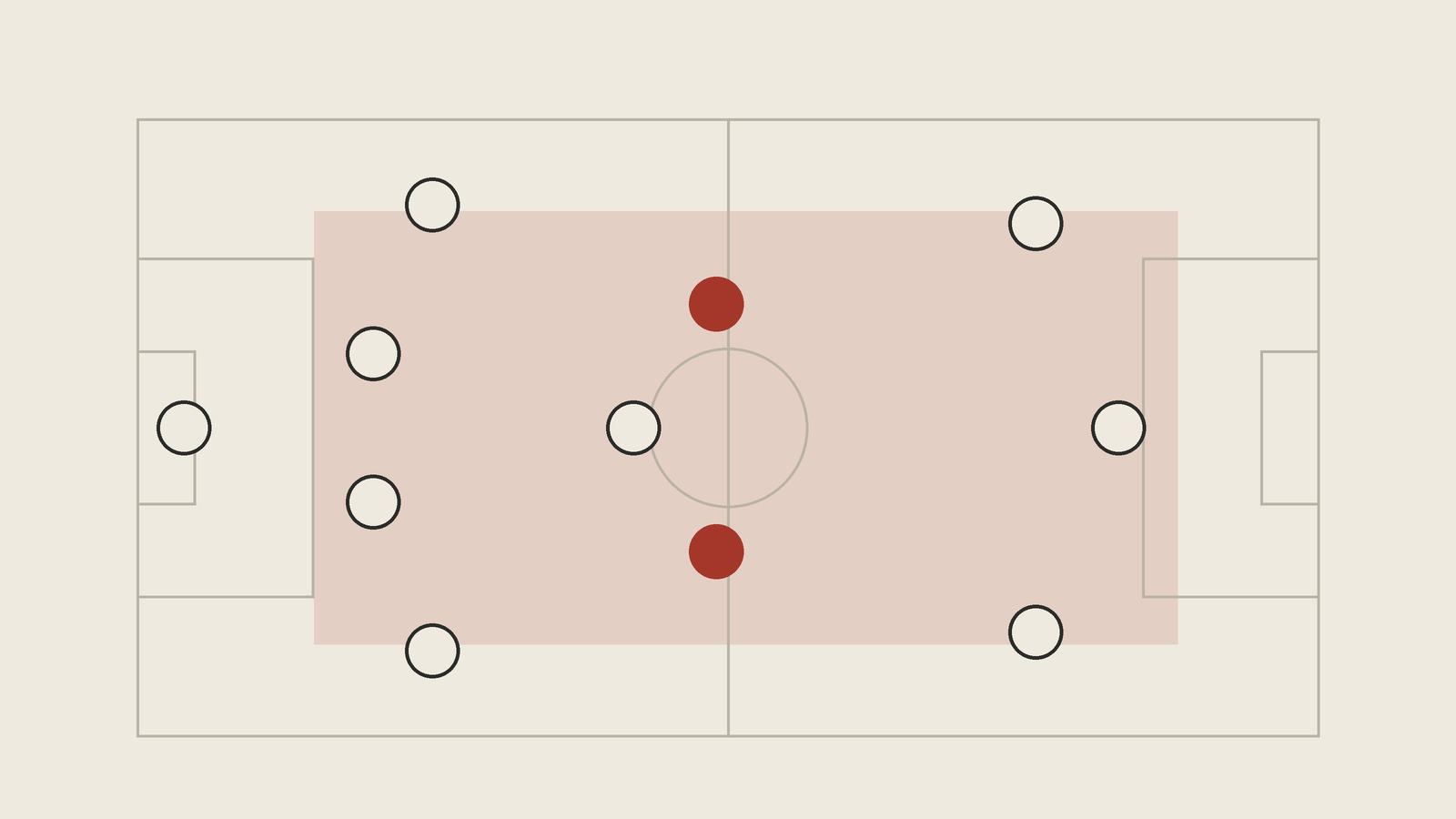
A box-to-box midfielder is a central midfielder who works in both penalty areas: he tackles near his own box, then carries the ball or runs forward into the opponent's. In modern shorthand he is the 8, the midfielder between the defensive 6 and the creative 10.
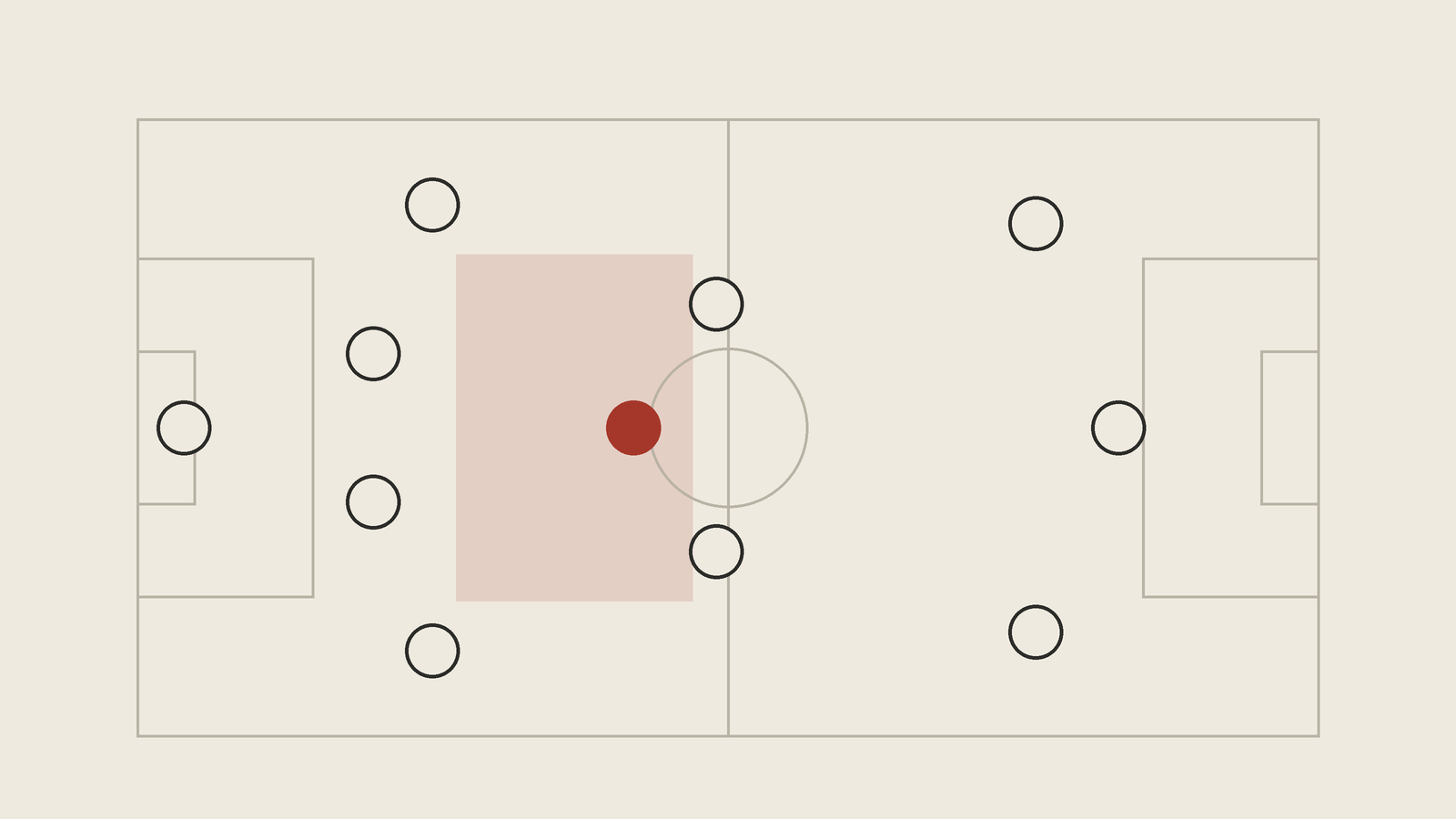
The name describes the workload more than a fixed spot on the pitch. Where a defensive midfielder holds his position in front of the back four, the 8 is expected to cover ground: press, recover, connect the defence with the attack and add a runner to the box when the team attacks.
Why he is called the 8
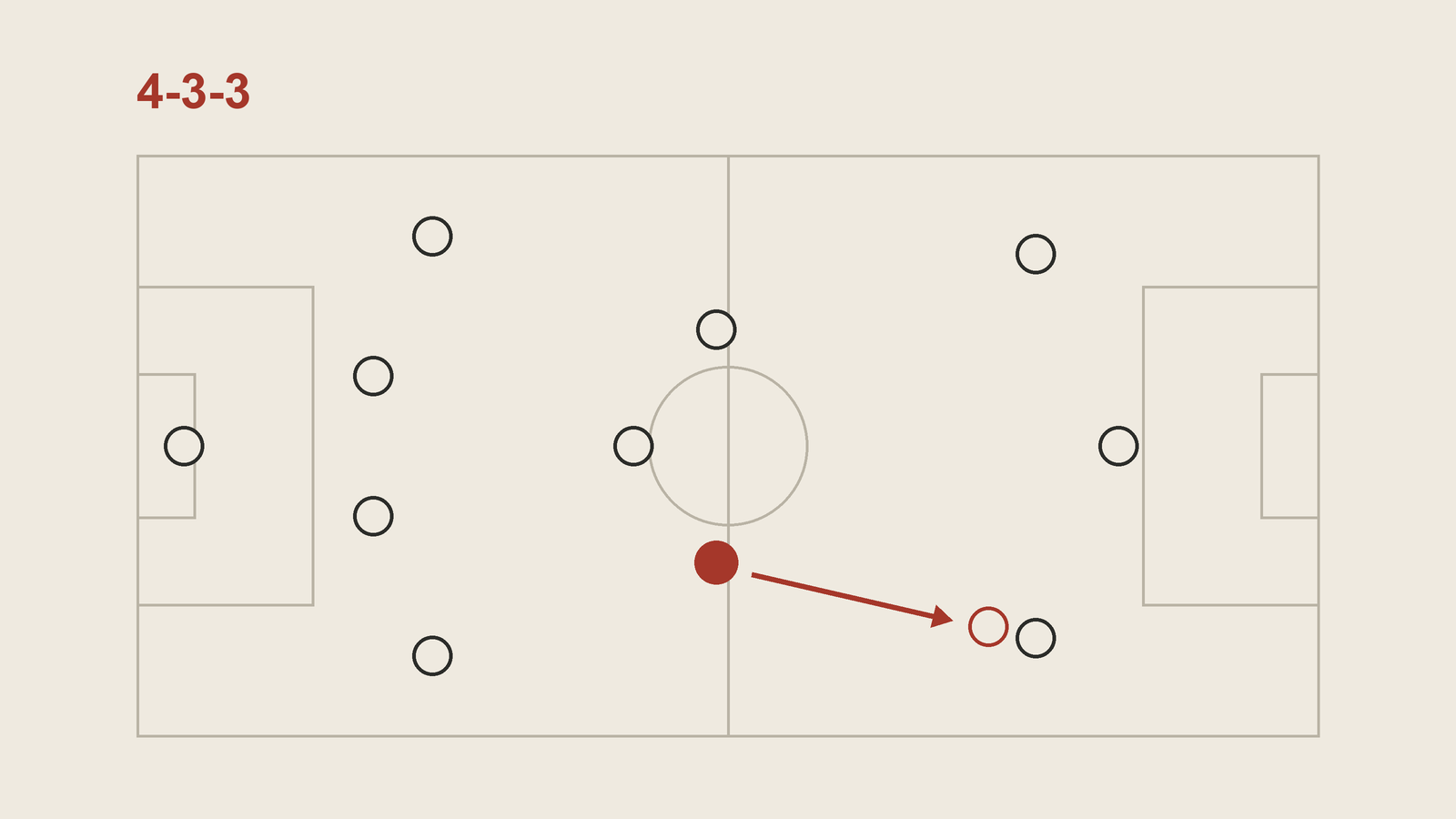
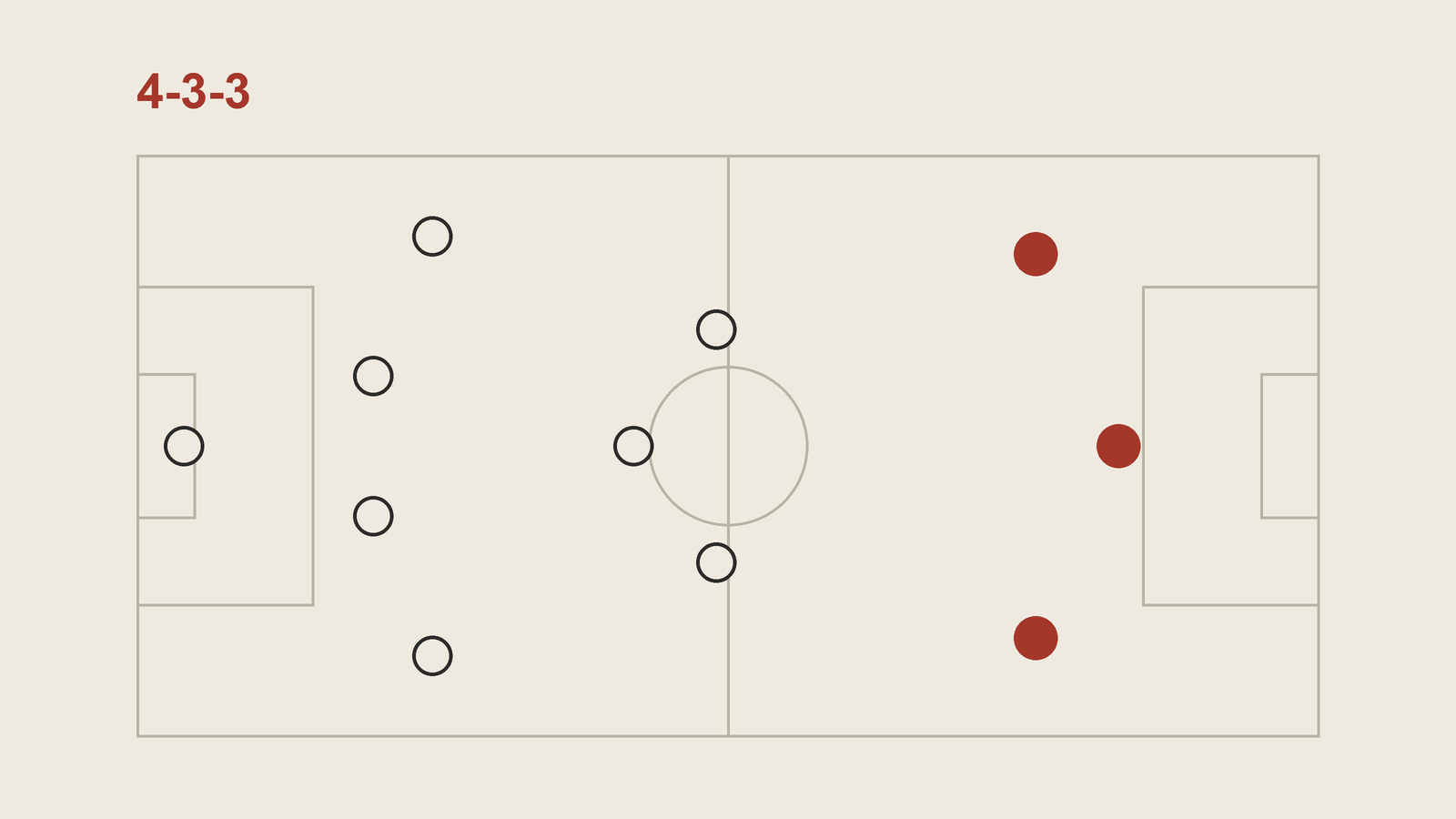
In the old 2-3-5, the 8 was the inside right, one of two inside forwards beside the centre-forward, as explained in the guide to football positions. As teams pulled forwards back into midfield, the number stayed with a central midfielder who still had attacking duties. German football calls him the Achter, next to the Sechser and the Zehner. In a 4-3-3 the usual midfield is a 6 with an 8 and a 10, or with two 8s, ahead of him.
What a box-to-box midfielder does
Coaches' Voice describes the 8 as the player who connects defence with attack and the right side of the team with the left.
With the ball he:
- receives from the defenders and the 6 and moves the ball forward, by passing or by carrying it through midfield;
- switches play to the far side, shoots from distance and combines with the striker;
- makes late runs into the box, often into the space between the opposing centre-backs, to finish moves that started out wide.
Without the ball he:
- tracks the opponent's central runners back towards his own goal;
- screens passes into the opposing striker, especially in a midfield two;
- counter-presses straight after a turnover, which is why box-to-box midfielders suit teams built on gegenpressing.
In a midfield two, in a three, in a diamond
The job changes with the system.
- In a midfield two, as in a 4-4-2, one central midfielder stays deeper while the 8 makes the forward runs. This is the classic box-to-box setting, where the 8 has to be athletic, strong in duels and able to cover huge distances.
- In a midfield three, two 8s play either side of the 6 and run through the inside channels, the half-spaces, towards the gaps between the opposing full-backs and centre-backs. One can drop to help build-up while the other moves up.
- In a diamond, the 8s play on the sides, behind a number 10.
Coaches' Voice gives modern examples. At Liverpool, Jordan Henderson made penetrative runs to support attacks, covered for Trent Alexander-Arnold on the right and counter-pressed aggressively. At Real Madrid, Toni Kroos dropped into the left inside channel, sometimes deeper than the single pivot, to break lines with passes, while Luka Modrić switched play and found team-mates running into the box.
Box-to-box, mezzala, deep playmaker
Midfield roles are often split into three: holders, creators and carriers. The box-to-box midfielder is the carrier, the player who wins the ball and then moves it forward himself or arrives late in the box. Jonathan Wilson, quoted on Wikipedia, files Clarence Seedorf, Bastian Schweinsteiger, Sami Khedira, Yaya Touré and N'Golo Kanté in this group.
The Italian mezzala is a close relative: a central midfielder at the side of a three who drifts wide into the channel, often described in English as a variant of the box-to-box role. The difference is direction. The mezzala attacks wide areas and half-spaces; the classic box-to-box midfielder attacks the centre and the box. The deep playmaker or regista, by contrast, stays deep and dictates the tempo with passing.
Famous box-to-box midfielders
The classic examples come from different eras: Johan Neeskens in the Dutch teams of the 1970s, Bryan Robson for Manchester United and England, Lothar Matthäus for Germany, and in the Premier League Patrick Vieira, Roy Keane, Steven Gerrard and Frank Lampard. More recent names include Arturo Vidal, Yaya Touré, Jude Bellingham and Declan Rice.
Since the mid-2000s, the decline of the flat 4-4-2 has made the pure box-to-box player rarer. Many modern 8s play more controlled football in the inside channels, with fewer end-to-end runs and more combinations.
What makes a good box-to-box midfielder
Stamina comes first: the role is a long series of sprints from one penalty area to the other, and the 8 has to make the last one as sharply as the first. Then timing. The best box-to-box midfielders arrive in the box late, after the defenders have picked up the strikers, which is why they score goals that look easy. Without the ball the same timing decides when to press and when to drop.
Technique and decisions finish the picture. A box-to-box midfielder has to pass forward under pressure, carry the ball through midfield and choose between shooting, passing and keeping possession at speed. Physical strength helps in duels, but reading the game is what keeps him from arriving everywhere a second too late.
Because the role depends so much on running, many box-to-box midfielders change jobs as their careers go on. Some drop deeper and become holding midfielders, where reading the game matters more than covering ground; others move closer to goal and play as attacking midfielders. The skills that made them good 8s, timing and decision-making, travel well to both.
What the numbers show
A box-to-box midfielder leaves traces at both ends of the pitch. Ball-winning shows up in tackles, interceptions and pressures and regains. Moving the ball forward shows up in progressive actions, carries and passes. Arriving in the area shows up in box entries, touches in the box and expected goals from late runs. A player strong in all three is rare, which is why scouts value a true 8.
How to spot the 8 in a match
Watch the central midfielders when the team wins the ball. The 6 usually stays; the 8 is the one who runs past the ball and arrives in the box seconds later. Then watch the moment the ball is lost: the 8 is often the first to press the ball-carrier, then the one sprinting back.
What is a box-to-box midfielder?
A box-to-box midfielder is a central midfielder who defends near his own penalty area and attacks the opponent's. He tackles, presses and tracks runners, then carries the ball forward or runs into the box to score or assist.
What is the number 8 position in football?
The 8 is a central midfielder who links defence and attack. He plays next to or ahead of the defensive midfielder (the 6) and behind the attacking midfielder (the 10), and is usually expected to cover ground in both directions.
What is the difference between a box-to-box midfielder and a mezzala?
Both are central midfielders who attack and defend. The mezzala plays at the side of a midfield three and drifts wide into the half-space and the channel; the classic box-to-box midfielder attacks the centre and arrives late in the box.
Who are famous box-to-box midfielders?
Classic examples include Johan Neeskens, Bryan Robson, Lothar Matthäus, Patrick Vieira, Roy Keane, Steven Gerrard and Frank Lampard. More recent ones include Yaya Touré, Arturo Vidal, Jude Bellingham and Declan Rice.
Sources and further reading
- Midfielder — Wikipedia
- The number eight: football tactics explained — The Coaches' Voice
- The mezzala: explained — The Coaches' Voice
- Squad number (association football) — Wikipedia