Formations and roles · Analysis
The Striker Who Leaves the Centre-Backs With Nobody to Mark
A false nine is a centre-forward who drops into midfield instead of staying on the last line. How it works, from Hidegkuti in 1953 to Messi, and what it needs.
By 01 Owen
· Updated 22 Sep 2026 · 4 min read
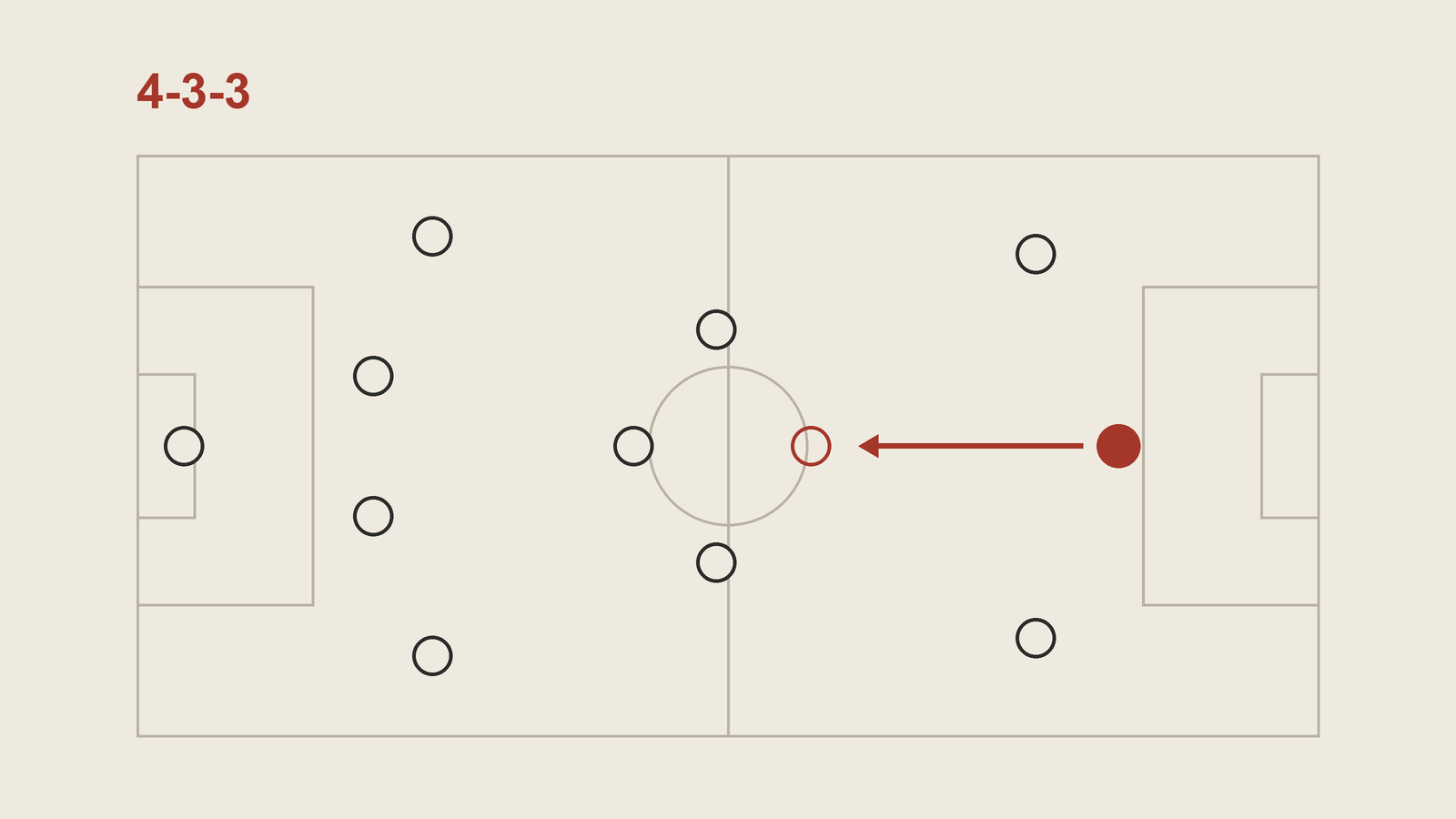
A false nine is a centre-forward who, instead of staying up against the centre-backs, drops into the space between the opponent's defence and midfield. He wears the striker's position on the team sheet and spends the match somewhere else. The point is the dilemma this creates. If a centre-back follows him, there is a hole in the back line for someone else to run into. If nobody follows, the team has an extra midfielder receiving the ball with time to turn.
The idea is much older than the name. Matthias Sindelar played this way for the Austrian Wunderteam of the early 1930s. The example every history cites is Nándor Hidegkuti, who wore nine for Hungary at Wembley in November 1953, kept wandering into midfield, and scored a hat-trick in a 6-3 win while England's centre-half tried to work out whether to go with him. Luciano Spalletti reinvented the role at Roma in the mid-2000s almost by accident, playing Francesco Totti as the most advanced player in a team with no real striker, and Totti finished 2006-07 as the top scorer in Europe.
The modern reference is Lionel Messi under Pep Guardiola. In May 2009, away to Real Madrid, Guardiola moved Messi from the right wing to the centre with instructions to drop towards Xavi and Andrés Iniesta. Madrid's centre-backs had no one to mark, Barcelona had four players against three in midfield, and they won 6-2. Spain won Euro 2012 with Cesc Fàbregas, a midfielder, in the same position, beating Italy 4-0 in the final. At Liverpool, Roberto Firmino played a less extreme version between two high-scoring wide forwards.
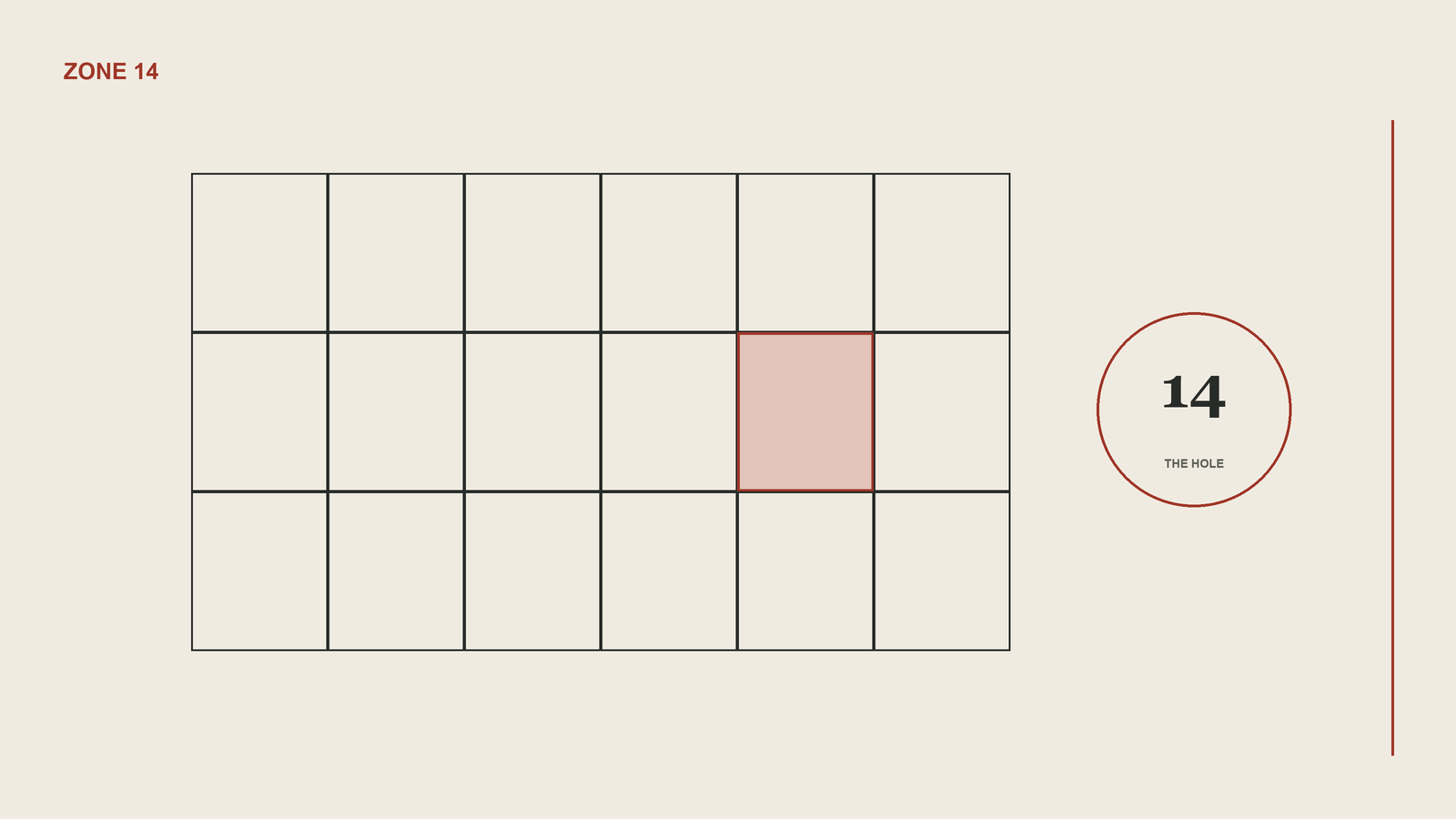
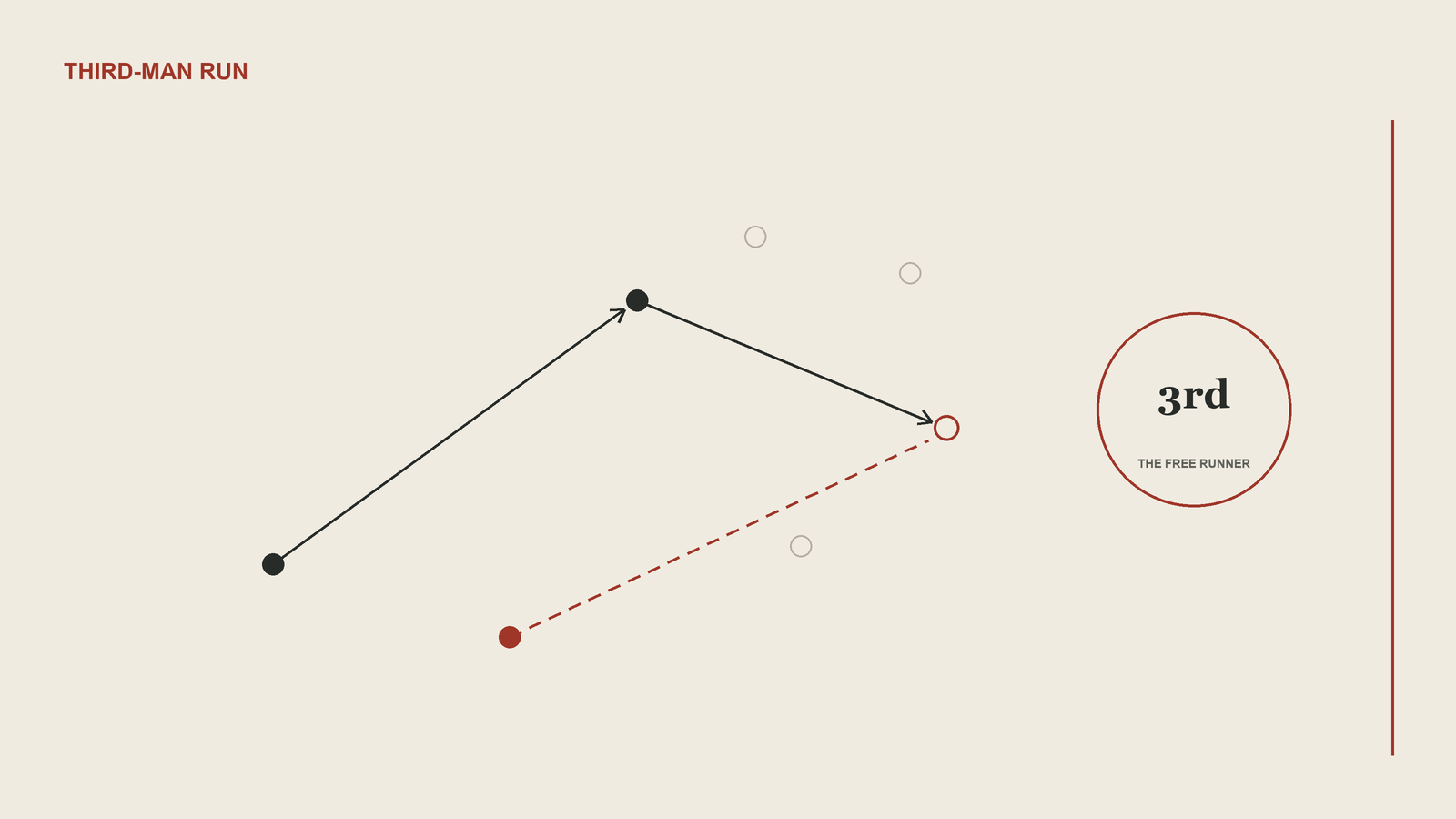
The mechanism has three parts. The drop creates an overload in midfield, so the team keeps the ball more easily and the opponent's holding midfielders have one more player to watch. The drop also empties the centre of the attack, and that space has to be attacked by somebody else: wingers cutting in from outside, as Thierry Henry, David Villa and Pedro did for Barcelona, or a midfielder arriving late. Without those runs a false nine is just a team with no striker. The pattern is a third-man run in its purest form: ball into the false nine, lay-off to a midfielder, pass in behind for the runner the defence lost track of. And the false nine receives in the most dangerous pocket of the pitch, Zone 14, facing goal.
The player needs a midfielder's skills in a forward's position: a first touch that holds up under pressure from behind, the awareness to receive half-turned, and the passing to release runners. He also has to score, because the role does not excuse the team from needing goals from its centre-forward's shirt. Messi was the ideal because he was both the best passer and the best finisher on the pitch.
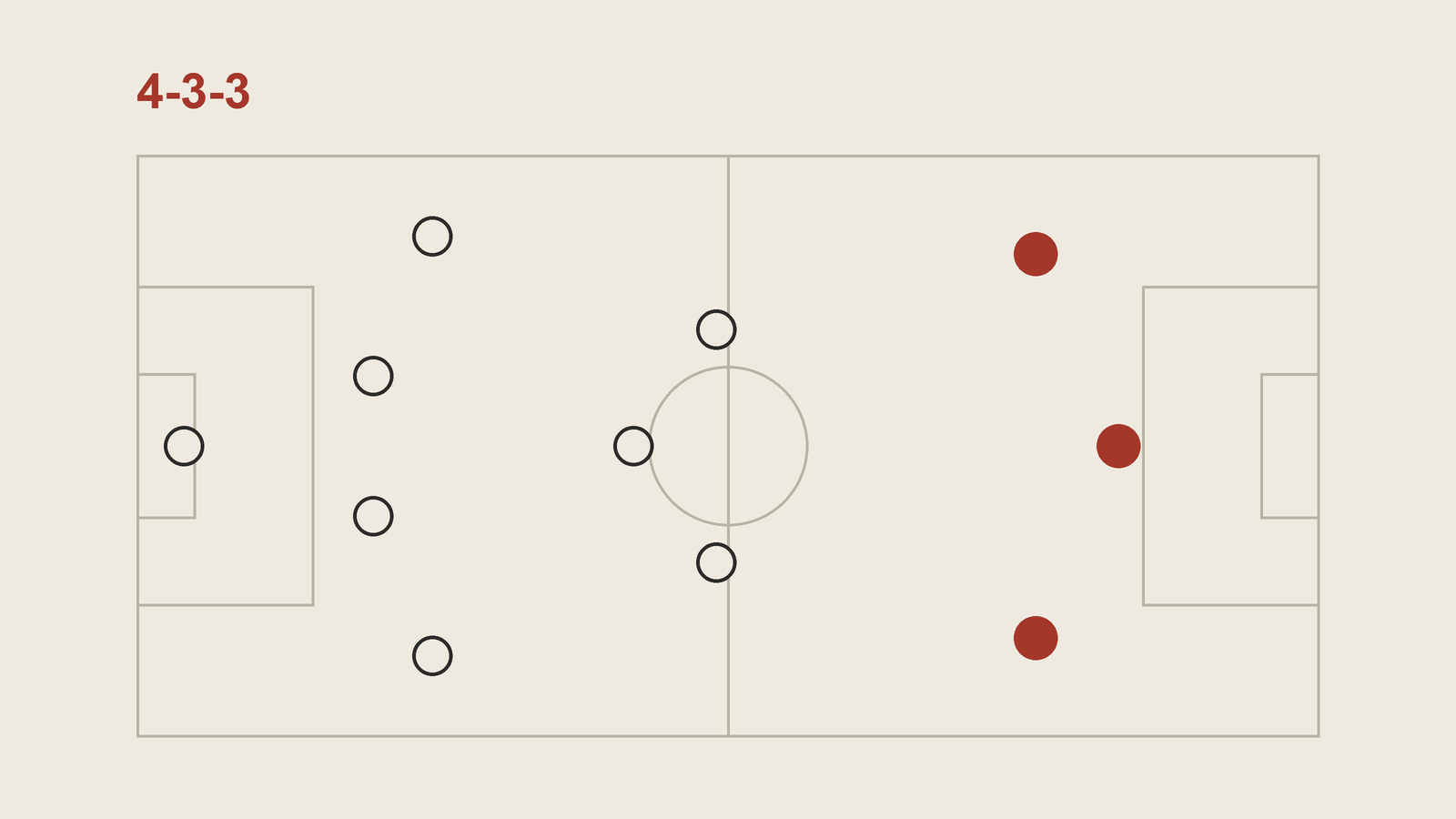
There are reasons it is not used more. A defence that refuses the bait, holding its line and passing the false nine on to a midfielder, removes most of the benefit, and a compact low block leaves no space between the lines for him to drop into in the first place. Crosses lose their target. The team has less presence in the box and nobody to aim a long ball at when it is under pressure. And the role depends on wide forwards who score, which most squads do not have. It fits best in a 4-3-3 that already dominates possession; elsewhere it is usually a plan for particular opponents rather than a system. You can open a 4-3-3 on the tactics board, drag the number nine back to the centre circle and see what the two centre-backs are left looking at.
What is the difference between a false nine and a number ten?
Where they start and what they leave behind. A number ten plays behind a striker, so the centre-backs always have someone to mark. A false nine is the most advanced player on the team sheet, so when he drops into the same area a ten would occupy, the centre-backs are left marking space. The positions they receive in can be identical; the effect on the defence is not.
Sources and further reading
- The false nine: explained — The Coaches' Voice
- Forward (association football) — Wikipedia