Formations and roles · Analysis
Second striker: the forward who plays off the number 9
A second striker plays off and just behind the main striker, linking midfield to attack and scoring. Role table, diagram, examples and how to spot one.
By 01 Owen
· Updated 7 Oct 2026 · 7 min read
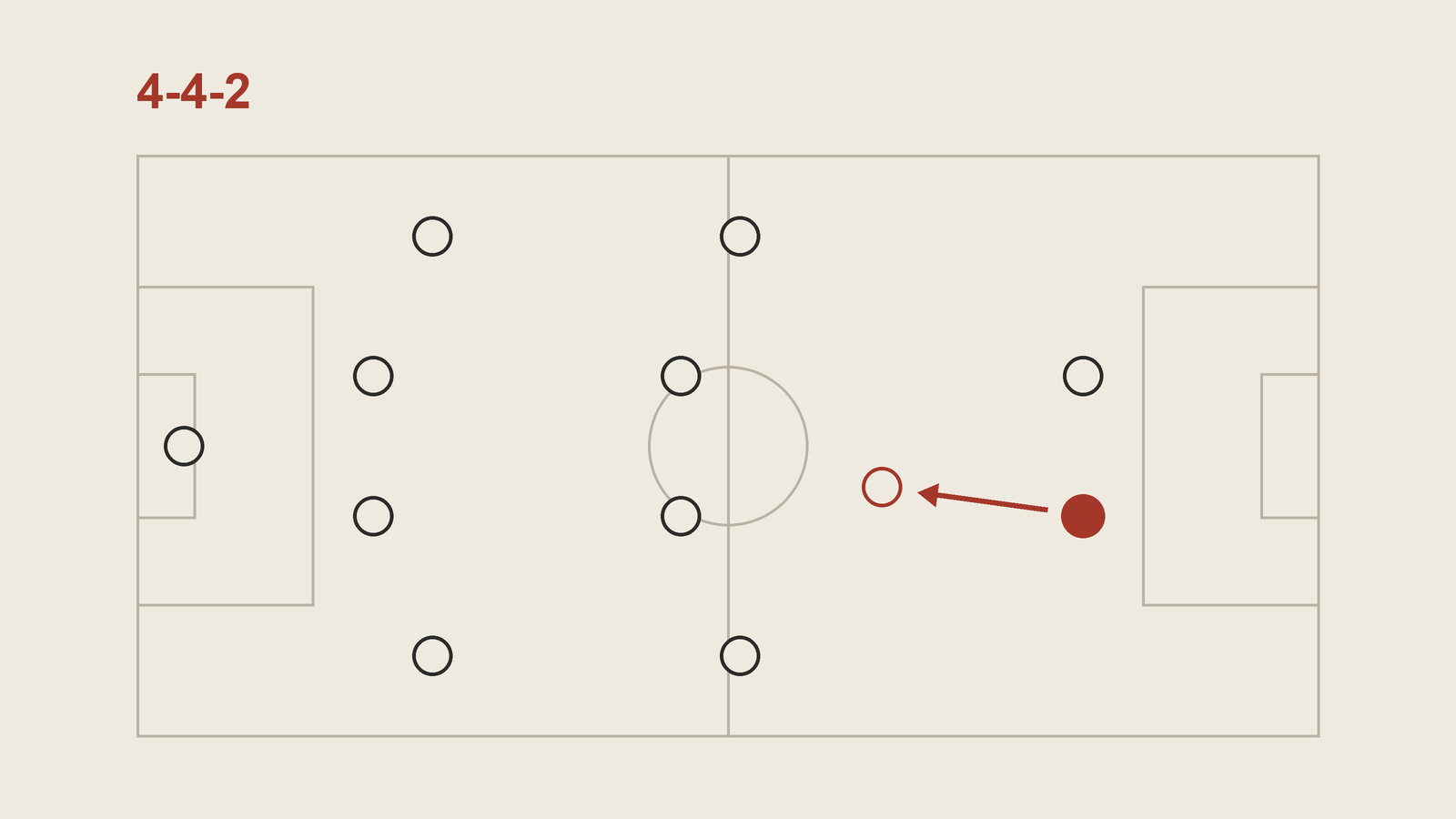
A second striker is the forward in a front two who plays off and slightly behind the main striker. He drops between the opponent's lines to receive, links midfield to attack, creates for his partner and still scores his own goals.
The Italians call him the seconda punta, and the role has several English names: shadow, support or auxiliary striker, or deep-lying forward. Michel Platini's description of Roberto Baggio, a "nine and a half", is the shortest summary of it: a player half-way between a forward and a midfielder.
| Second striker | |
|---|---|
| Where he plays | In a front two, a few yards behind and beside the main striker, often between the lines |
| Main job | Link midfield to attack, create for the striker, score from close range |
| Without the ball | Screens the opponent's holding midfielder and helps the midfield when it is outnumbered |
| Typical formations | 4-4-2, 3-5-2, 4-4-1-1 |
| Typical shirt number | No fixed number; Baggio at Juventus and Wayne Rooney at Manchester United wore 10 |
| Related roles | Striker, attacking midfielder, false nine, trequartista |
| Well-known examples | Roberto Baggio, Dennis Bergkamp, Alessandro Del Piero, Antoine Griezmann |
In the guide to football positions the role sits between the 9 and the 10. Wikipedia calls it a loosely defined and often misunderstood position, a free role somewhere between the out-and-out striker and the attacking midfielder. Before modern formation names, players like this were called inside forwards or deep-lying centre-forwards. In Italy he is the seconda punta, mezzapunta or rifinitore; in Brazil, the segundo atacante.
What a second striker does with the ball
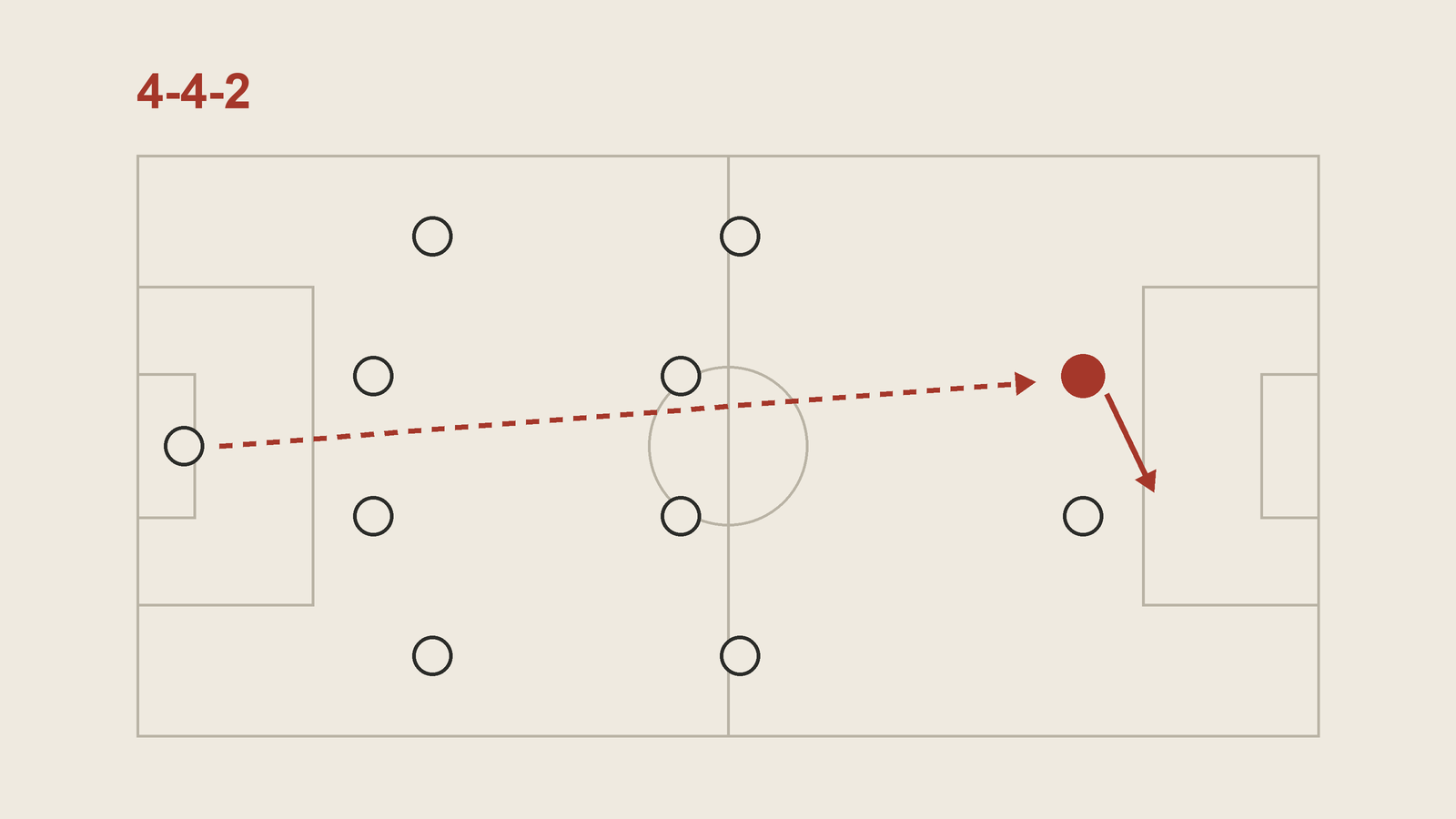
He receives where the main striker does not. While the 9 stays on the last line against the centre-backs, the second striker drops a few yards into the space in front of them, takes the ball on the half-turn and plays forward. A forward who drops in from the front line can be hard to pick up, because no defender is sure whose man he is.
Coaches' Voice describes Antoine Griezmann as combining a nine's goalscoring instincts with a ten's creative qualities. He liked to drop deep to receive to feet, turn and advance play with a pass, but also arrived in the box more often than most traditional tens. That double threat is the job.
- Linking. Passes come into him; he lays them off, turns, or slips the ball in behind for his partner's run.
- Creating a decision. By drifting away from his position he forces a defender to choose: follow him out of the line, or pass him on to a midfielder. Coaches' Voice notes Griezmann's skill at standing where it is unclear whose man he is.
- Scoring. He is still a forward. Most of Griezmann's goals came from close range, often from a late run on a defender's blind side to meet a low cross.
Wikipedia lists the qualities that suit the role: a mobile forward with good dribbling and ball control, acceleration, vision, passing and link-up play, able to keep the ball and to make chances for a less versatile centre-forward. It adds that many second strikers are small creative players, so finishing with the head is less common among them.
What a second striker does without the ball
In a 4-4-2 the two forwards are the first line of the defensive shape. A common split is that the main striker presses the centre-backs while the second striker stays a little deeper, close to the opponent's holding midfielder, so the first pass through the middle is not free. Against a midfield three, he is the forward who drops back to help.
After winning the ball, his position matters again. Coaches' Voice describes Griezmann at Atlético Madrid staying deeper and central when the team broke forward, securing the ball and aiming passes at the runs of Luis Suárez. That makes the second striker the first outlet of a counter-attack.
Formations that use a second striker
The role needs a partner, so it belongs to two-striker systems.
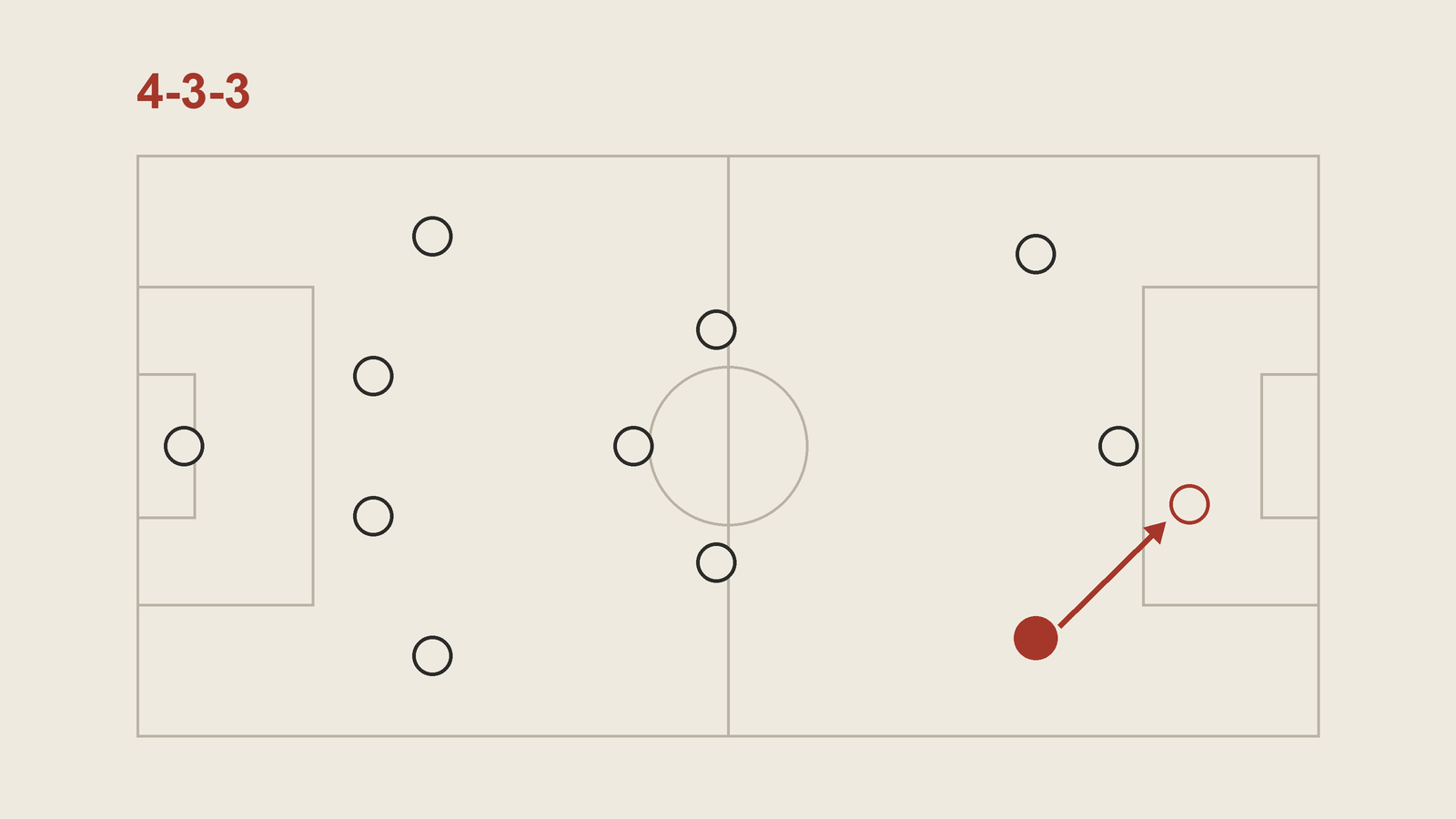
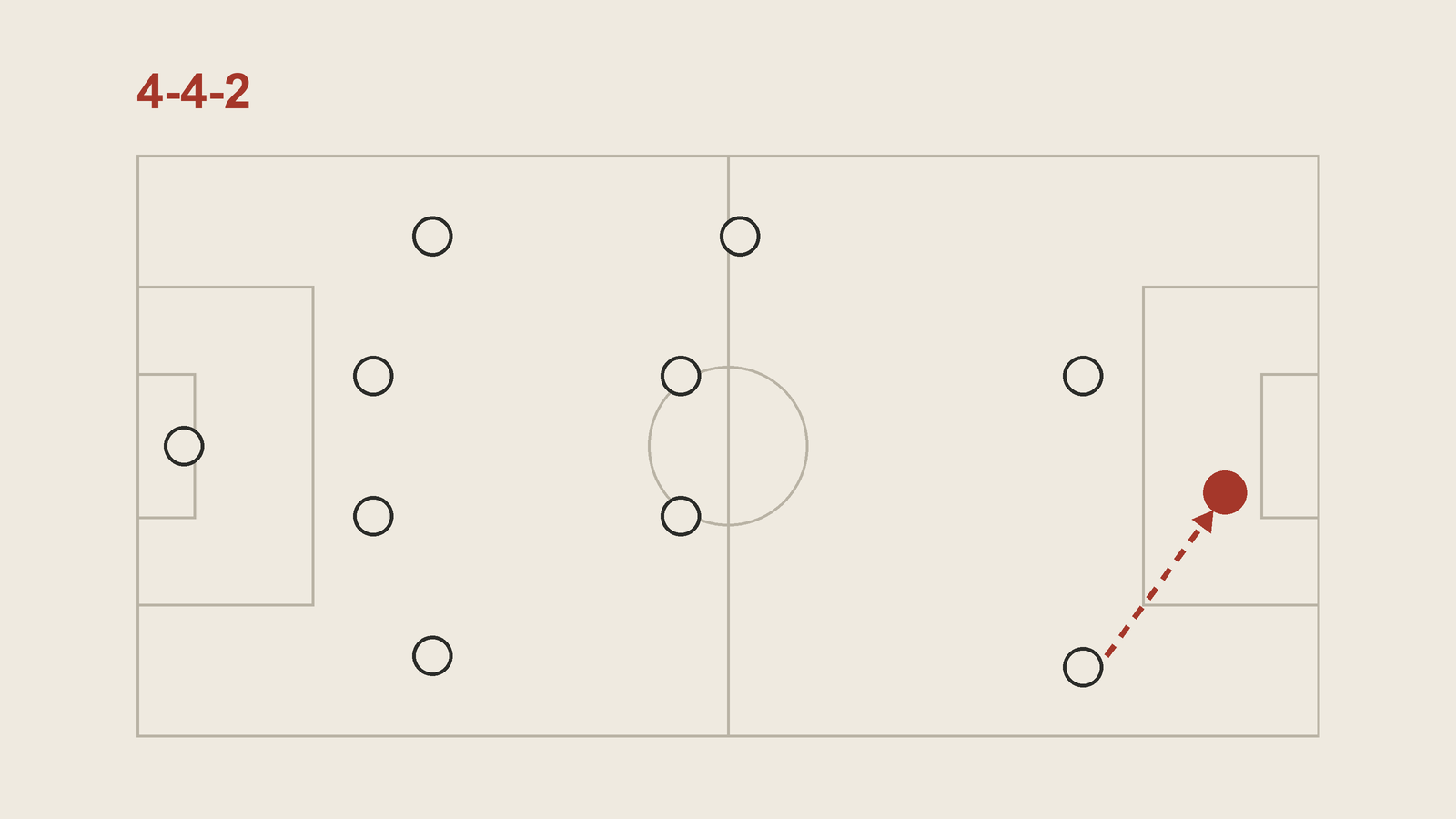
- 4-4-2 (see the shape). The home of the role. Coaches' Voice explains how Atlético's double pivot let both full-backs advance, which drew the wide midfielders inside and left Griezmann more space to drop into in front of the opponent's midfield. When the second striker sits clearly behind his partner, Wikipedia's formation guide calls the shape a 4-4-1-1.
- 3-5-2 (see the shape). Two forwards again, with two attacking midfielders in the inside channels. The second striker can drift wide when one of them runs beyond him.
- 3-4-2-1. Here the second striker becomes one of the two 10s behind a lone 9. Coaches' Voice notes that Griezmann had less freedom in that version, working more towards one side of the pitch and only sometimes dropping into the inside channel, the half-space.
Examples
Roberto Baggio is the reference. Wikipedia describes him as mainly a second striker, sometimes an attacking midfielder. He took over Platini's number 10 at Juventus, and Platini's "nine and a half" was coined for him. He won the Ballon d'Or in 1993.
Dennis Bergkamp joined Arsenal in 1995 and, according to Wikipedia, played in his preferred position as a creative second striker, alongside Ian Wright and later Nicolas Anelka and Thierry Henry. Wikipedia's own definition of the role uses him as the example, playing just behind Henry.
Alessandro Del Piero at Juventus, Youri Djorkaeff at Inter and Teddy Sheringham at Tottenham are also named by Wikipedia as second strikers, and Wayne Rooney was often used there behind the number 9 at Manchester United.
Antoine Griezmann is the modern example. Coaches' Voice, writing in January 2022, noted that at Atlético he was usually the more withdrawn of the front two, while he had won the 2018 World Cup with France in a front three alongside Olivier Giroud and Kylian Mbappé.
How the second striker differs from neighbouring roles
Number 10 or attacking midfielder. The ten starts in midfield and runs the attack. Wikipedia makes the distinction directly: second strikers are less involved in orchestrating attacks than the number 10 and play mostly in a supporting role, as assist providers. The attacking midfielder has the ball more; the second striker has the box more.
False nine. A false nine is the only striker and drops from the front line, leaving the centre-backs with nobody to mark. A second striker drops while his partner stays up, so the centre-backs always have a man in front of them. The false nine vs striker comparison covers the lone-forward side of that question.
Trequartista. The trequartista is a playmaker who lives behind the strikers and has fewer defensive duties. A second striker starts as one of the strikers and is judged partly on goals. The mezzala vs trequartista comparison explains the trequartista in more detail.
How to spot a second striker in a match
Look at the front two when his team has the ball. If one forward keeps coming short into the space in front of the centre-backs while the other stays level with the last defender, the one coming short is the second striker. Then watch what he does with it: a second striker turns and plays forward, and still arrives late in the box when the ball goes wide.
When a coach picks a second striker
A coach picks one when he wants two forwards but cannot afford a dedicated number 10, which is the logic of a compact 4-4-2. The role works less well against a deep low block, where the space between the lines is too small to drop into, and it asks the midfield to cover for a forward who is free not to track every run.
What is the difference between a second striker and a striker?
The striker is the most advanced player and stays on the last line to finish chances. The second striker plays off and slightly behind him, drops to receive between the lines and creates as well as scores.
Is a second striker the same as a number 10?
No, although the same player can sometimes do both jobs. The number 10 starts in midfield and organises the attack. The second striker starts as a forward, is less involved in building the play and is expected to score as well as create.
What is a "nine and a half" in football?
It is Michel Platini's description of Roberto Baggio, a player half-way between a number 9 and a midfielder. Wikipedia notes that the term has been an attempt to become the standard name for the second striker's position.
What formation uses a second striker?
Mainly the 4-4-2 and the 3-5-2, the systems with two forwards. When the second striker plays clearly behind his partner, the 4-4-2 is often written as a 4-4-1-1.
Sources and further reading
- Forward (association football): Second striker — Wikipedia
- Antoine Griezmann: La Liga Player Watch — Coaches' Voice
- Roberto Baggio — Wikipedia
- Dennis Bergkamp — Wikipedia