Formations and roles · Analysis
Poacher: the striker who lives in the penalty area
A poacher is a striker who stays in the box and scores from close range with few touches. Role table, diagram, examples and how to spot one.
By 01 Owen
· Updated 7 Oct 2026 · 7 min read
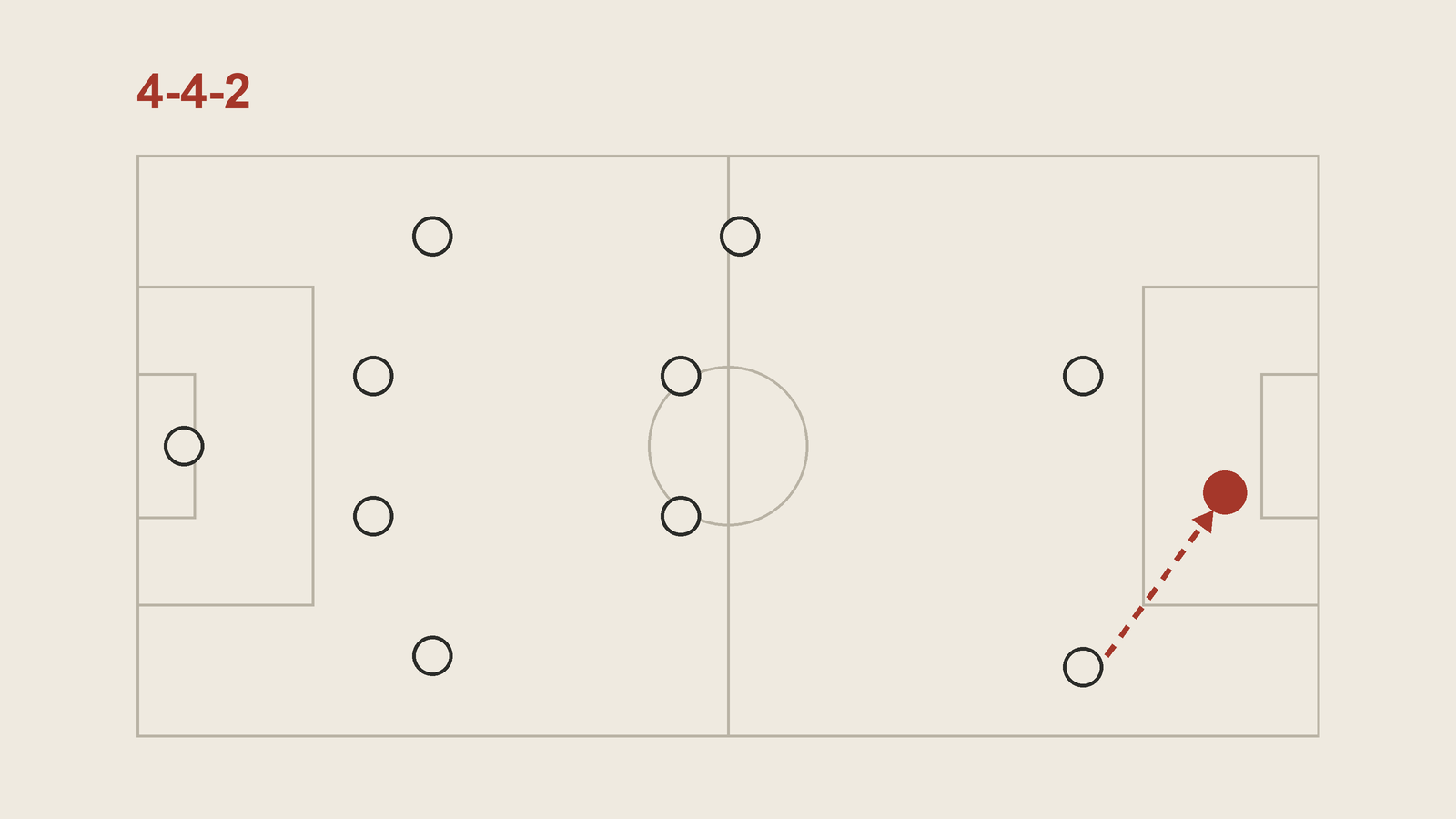
A poacher is a striker who lives in the penalty area and scores from close range, usually with one or two touches. He contributes little to build-up play; his value is timing, anticipation and finishing, being in the right place a moment before the defender.
The word comes from hunting: a poacher takes what should not have been his. In football he takes chances the defence should have cleared, tap-ins, rebounds and crosses that a centre-back misjudged by half a yard. Of all the types of striker, he is the most specialised, and the one whose whole game is easiest to see on a highlights reel and hardest to see in the other 85 minutes.
| Poacher at a glance | |
|---|---|
| Where he plays | Centre-forward, between the centre-backs and inside the box |
| Main job | Finish chances from close range, often first time |
| Without the ball | Stays high, on the shoulder of the last defender |
| Typical formations | 4-4-2, 3-5-2, 5-3-2 (with a strike partner) |
| Typical shirt number | Usually 9, the traditional centre-forward number |
| Related roles | Target man, complete forward, false nine, second striker |
| Well-known examples | Gerd Müller, Filippo Inzaghi, Javier Hernández |
What the poacher does with the ball
Very little, and on purpose. The poacher is not the player who holds the ball up, carries it through midfield or plays the final pass. His touches come at the end of moves, in the box, and most of them are shots. A good poacher finishes with either foot and with his head, because the chance arrives from wherever the cross or the rebound sends it and there is no time to adjust.
His real work happens a second before the ball arrives. He reads where a cross is going to land, where a goalkeeper will parry a shot, where a deflection will drop, and gets there first. The movements are small: a step behind a centre-back's shoulder, a check towards the near post and a spin to the far one, a late arrival into space a team-mate has just left. The Guardian's obituary of Gerd Müller says he scored a large proportion of his goals in the six-yard box "through opportunism and quick thinking". That is the job description.
What the poacher does without the ball
He stays high. The poacher plays on the last line of the opposing defence, often right on the edge of offside, and waits for the moment a pass or a cross can be played in behind. Wikipedia describes Filippo Inzaghi as a player who lived on the offside line, timing his runs to beat the offside trap, and quotes Sir Alex Ferguson's joke that he "must have been born offside".
That position has a cost and a benefit. The cost is defensive: a poacher rarely leads the press, and Inzaghi was criticised for not taking part in the build-up. The benefit is that he pins the back line. Centre-backs cannot step up freely when a striker is waiting behind them, which keeps the opposing defence deeper and leaves more room in front of it for the team's midfielders.
Which formations use a poacher
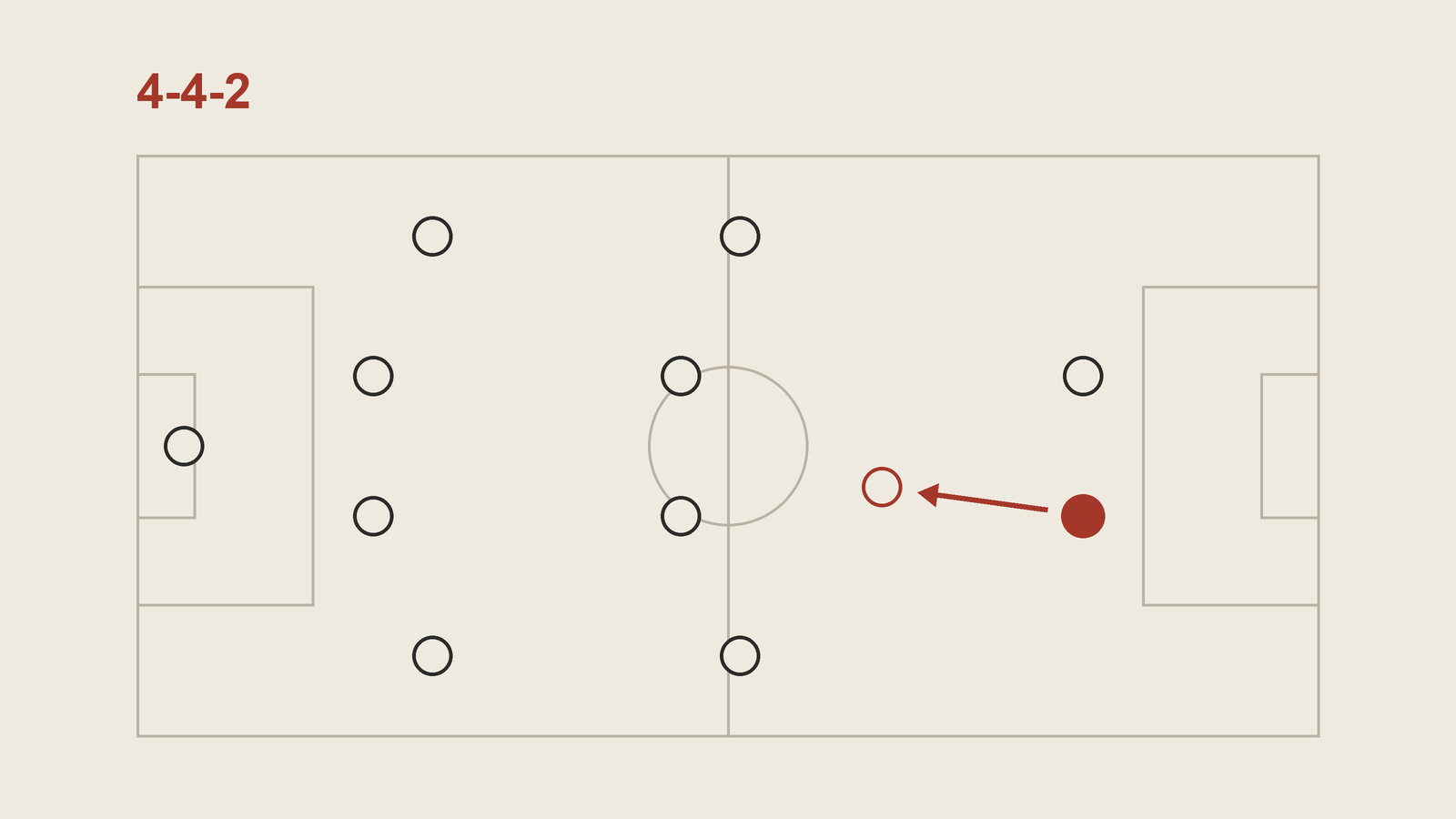
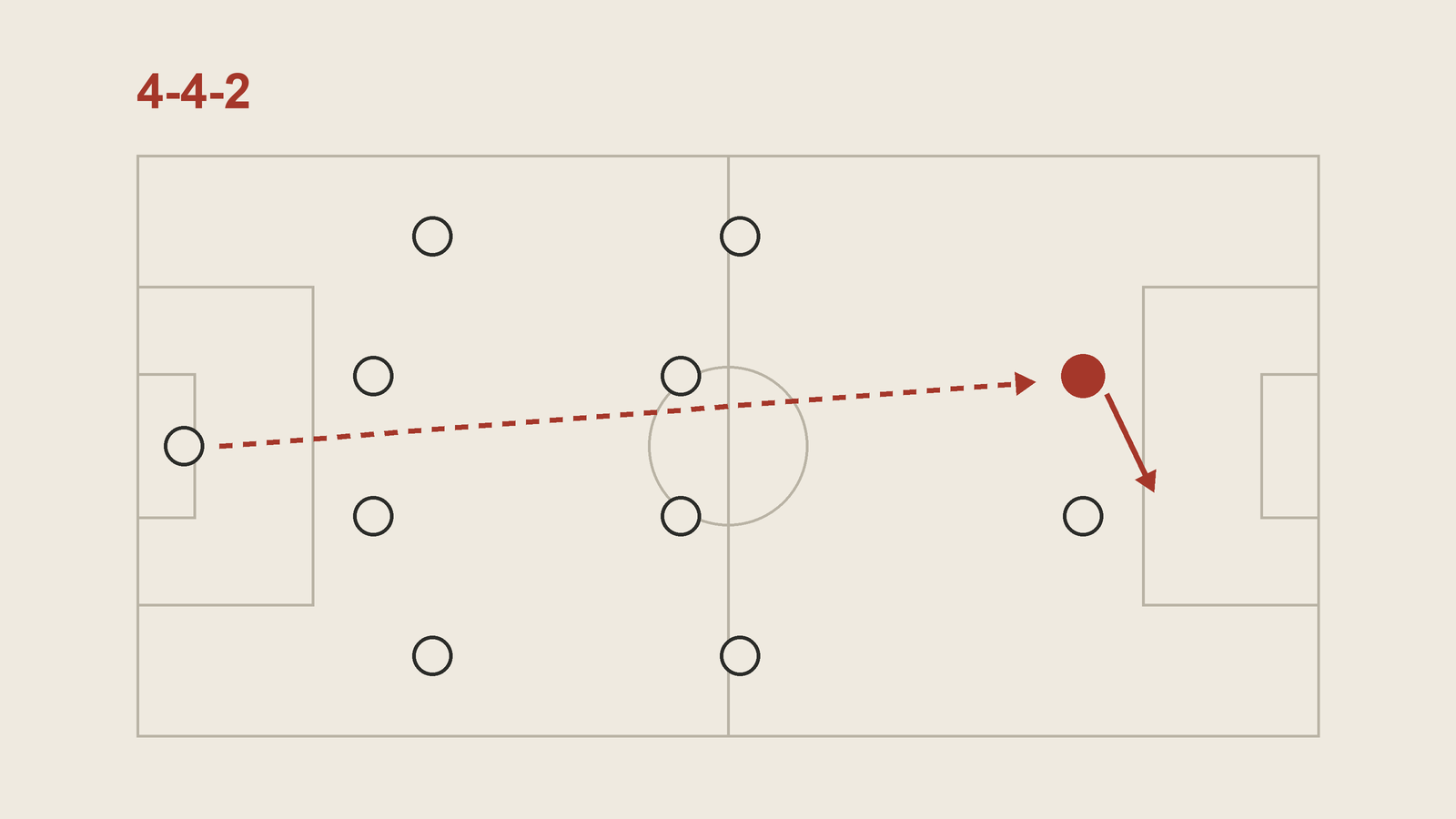
The poacher usually works best with a partner. In a 4-4-2 (board version), the classic pairing is a target man who wins the long ball and holds it up, and a poacher who feeds off his flick-ons and knock-downs. The two wide midfielders supply the other main source of chances: crosses from the flanks into the box, which is exactly what the diagram above shows, with the right winger crossing to the striker inside the box.
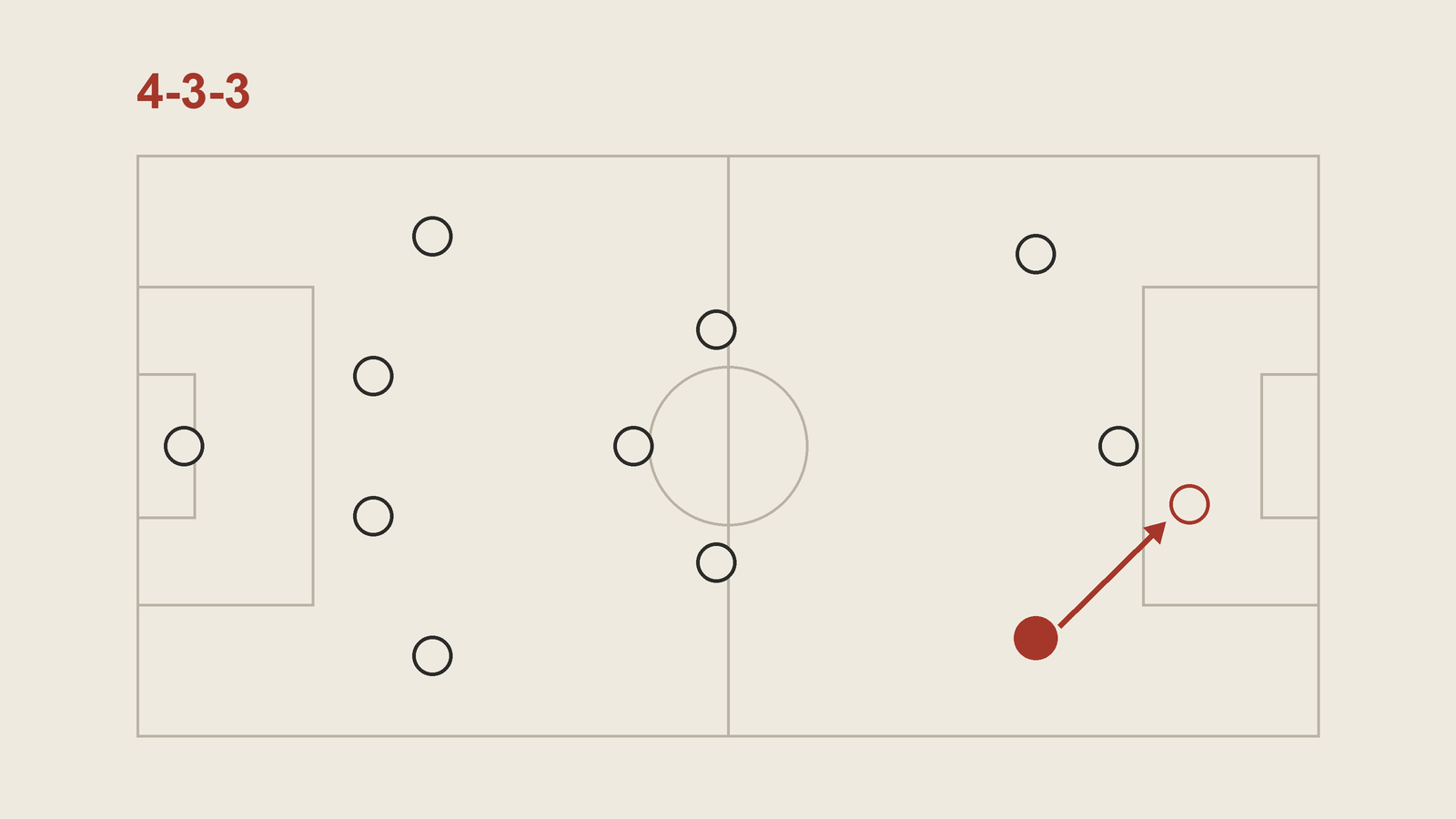
A 3-5-2 (board version) does the same with two strikers and the wing-backs providing the width. In a system with a lone striker, such as a 4-3-3 or a 4-2-3-1, a pure poacher tends to be harder to fit: the single 9 is usually asked to hold the ball up, press and link play too, which is one reason modern lone strikers are often complete forwards.
Examples
- Gerd Müller (Bayern Munich, West Germany) is the reference point. Wikipedia says he is seen as the greatest goal poacher in history. He scored 365 goals in 427 Bundesliga matches for Bayern and 68 in 62 games for West Germany, and The Guardian notes that his winning goal decided the 1974 World Cup final against the Netherlands.
- Filippo Inzaghi (Juventus, AC Milan, Italy) built a career on movement: Wikipedia notes he was not very technically gifted but stood out for his positional sense in the area and his runs off the last defender's shoulder. He scored both of Milan's goals in their 2-1 win over Liverpool in the 2007 Champions League final in Athens.
- Javier "Chicharito" Hernández (Manchester United, Mexico) is described by Wikipedia as a goal poacher because many of his goals came from close range. Ferguson compared his style to Ole Gunnar Solskjær's, and Hernández became Mexico's all-time leading goalscorer.
What links them is the ability to arrive in the box at the right moment and finish with one touch.
How the poacher differs from neighbouring roles
- Target man: plays with his back to goal, wins headers and holds the ball up for others. The poacher faces goal and wants the ball in the box, not outside it. The two complement each other, which is why they so often play together.
- Complete forward: finishes like a poacher but also links play, presses and creates. The poacher is the finishing part without the rest.
- False nine: starts as the striker and drops into midfield to receive. The poacher does the opposite and stays on the last line. The false nine vs striker comparison covers this difference in detail.
- Second striker: plays a little deeper, in a free role, and creates as well as scores. A poacher who starts dropping off to combine is drifting towards that role.
How to spot a poacher in a match
Watch where he is when his team has the ball in the opponent's half. A poacher is almost always in or near the box, level with the last defender, and almost never in midfield. Count his touches: they will be few, and a large share of them will be shots. Watch the moment a cross is about to be played, from a winger or an overlapping full-back: he makes a short, late movement to lose his marker, rather than standing still or running a long way. And watch when the team loses the ball: a poacher tends to stay high rather than chase back.
In the numbers, you would expect a poacher to take few shots from outside the box and a high share of close-range chances. His expected goals (xG) per shot should therefore be relatively high, even when his overall shot count is modest.
When a coach picks a poacher
A coach picks a poacher when the team already creates chances and needs someone to finish them. That usually means good crossers on the flanks, a strike partner who wins the first ball, or midfielders who get shots away and produce rebounds. Against a deep defence that leaves no room in behind, a poacher can also make sense, because the chances come from crosses and scrambles in a crowded box rather than from through balls.
He is a harder choice when the team needs its striker to press from the front, hold the ball up under pressure or drop in to create, or when the plan is a fast counter-attack that needs a forward who can carry the ball over distance.
The broader guide to football positions shows where the poacher sits among the other attacking roles.
What is a poacher in football?
A poacher is a striker who stays in or near the penalty area and scores from close range, usually with one or two touches. He does little in the build-up and relies on timing, anticipation and finishing.
What is the difference between a poacher and a target man?
A target man plays with his back to goal, wins headers and holds the ball up for team-mates. A poacher faces goal and waits for the ball in the box. In a front two they often play together, with the target man winning the ball and the poacher finishing.
Who is the best poacher in football history?
Gerd Müller is the usual answer: Wikipedia says he is seen as the greatest goal poacher in history. Filippo Inzaghi and Javier Hernández are other well-known examples of the role.
Why is it called a poacher?
The word comes from hunting, where a poacher takes game that is not his. In football the poacher takes chances that the defence should have dealt with, by being in the right place a moment before the defender.
Sources and further reading
- Gerd Müller obituary — The Guardian
- Gerd Müller — Wikipedia
- Filippo Inzaghi — Wikipedia
- Javier Hernández — Wikipedia
- The poacher — Guide to Football