Formations and roles · Analysis
Sweeper-Keeper: the goalkeeper who defends the space behind his back line
A sweeper-keeper plays far off his line to clear balls in behind a high defensive line and joins the build-up. Table, diagram, examples and history.
By 01 Owen
· Updated 7 Oct 2026 · 7 min read
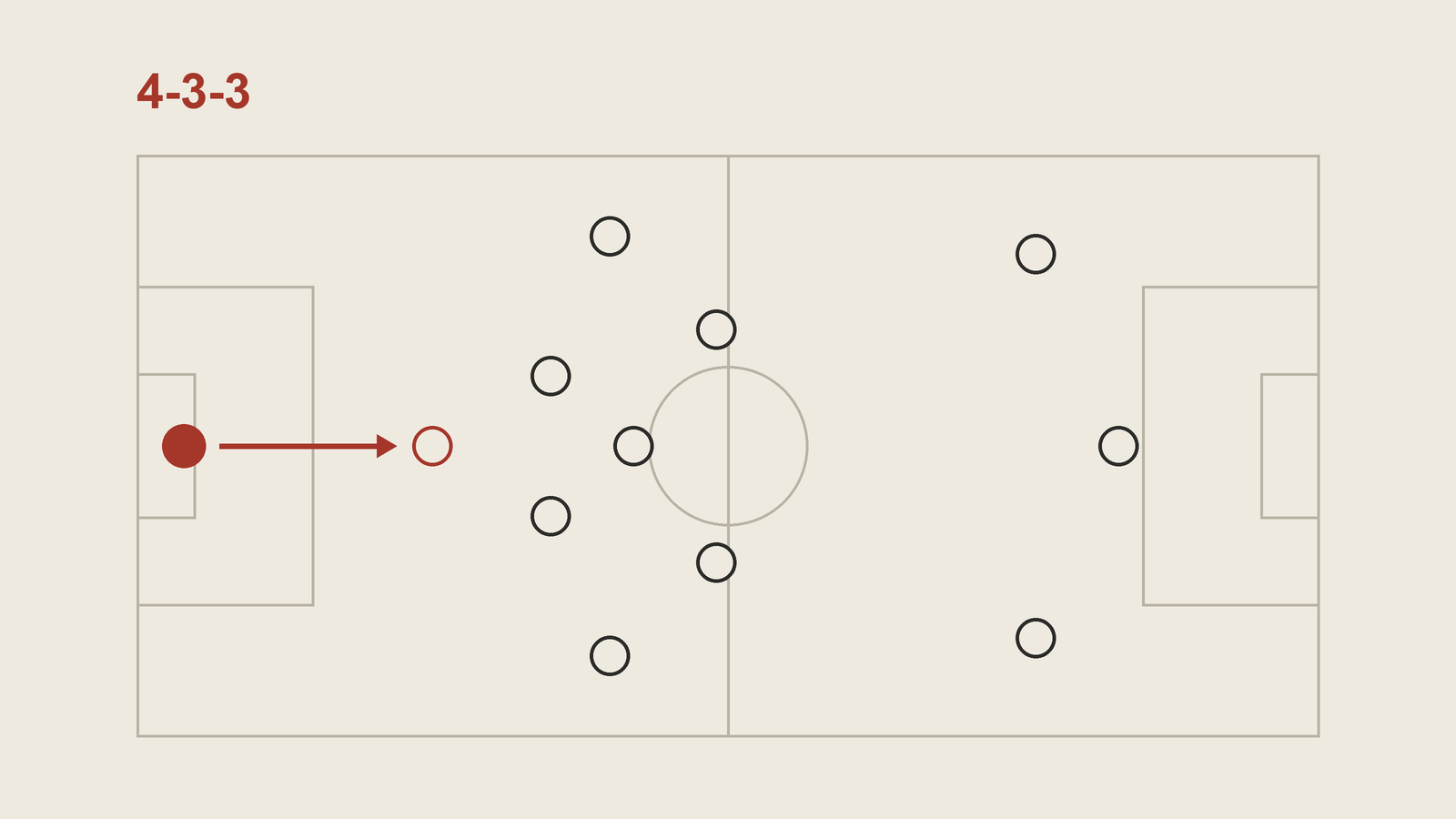
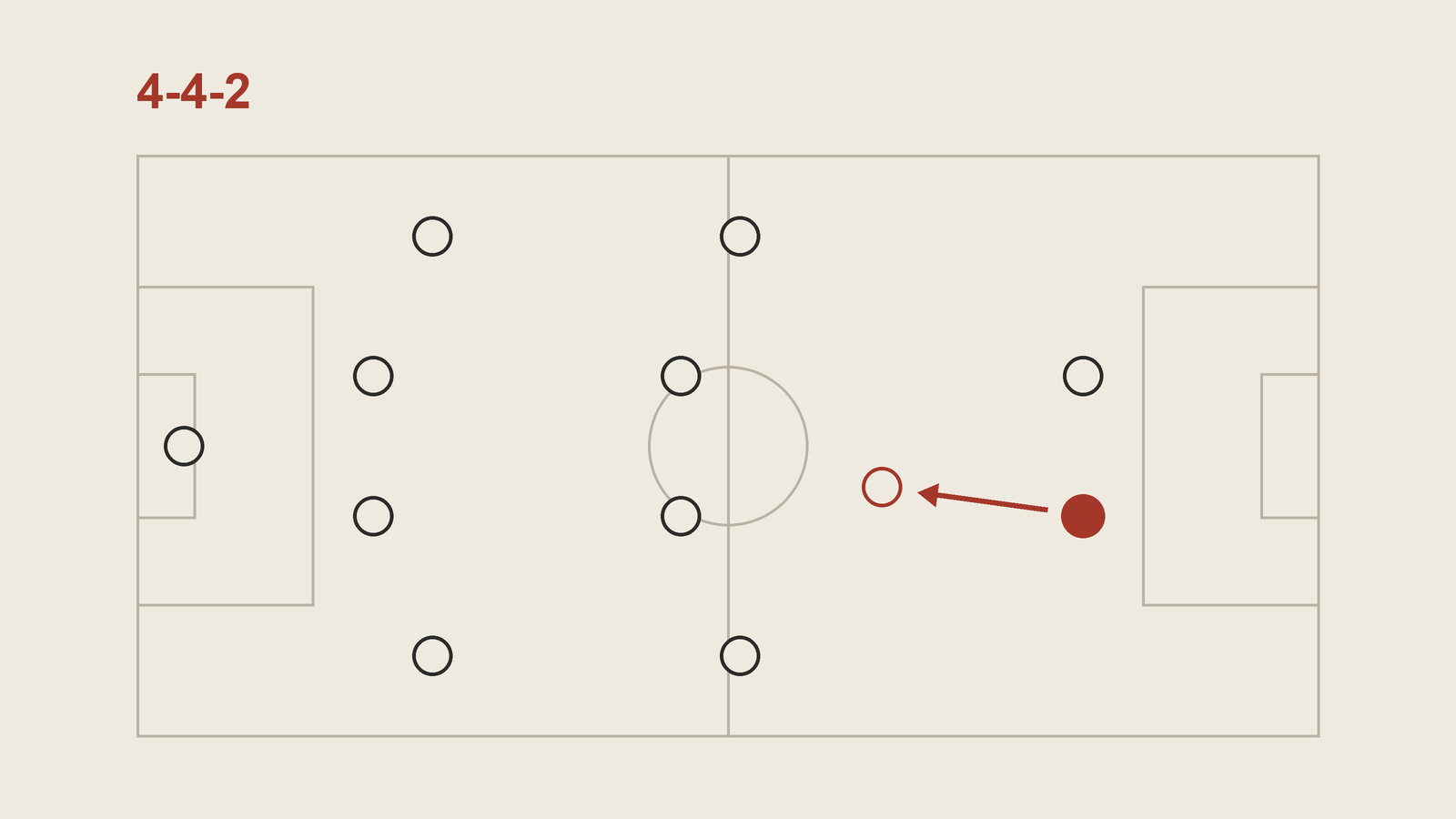
A sweeper-keeper is a goalkeeper who stands well off his line, often near the edge of his penalty area, and runs out to clear balls played in behind his defence. With the ball, he acts as an extra outfield player at the start of his team's build-up.
The role exists because of the high defensive line: if the back four push up, someone has to cover the space behind them. The guide to football positions describes the goalkeeper in general; this page is about the version that plays as a defender too.
| Sweeper-keeper | |
|---|---|
| Where he plays | In goal, but starting well off his line, often near the edge of the box |
| Main job | Stop shots and clear through balls and balls over the top behind a high line |
| Without the ball | Positions himself to cover the space behind the defence and organises the line |
| With the ball | First passer in the build-up, short and long |
| Typical formations | 4-3-3, 4-2-3-1, any shape with a high line and a high press |
| Shirt number | 1 |
| Well-known examples | Manuel Neuer, Alisson, Ederson, Hugo Lloris; earlier Heinz Stuy, Tommy Lawrence, René Higuita |
Where the role comes from
Until 1912 a goalkeeper could handle the ball anywhere in his own half; that year the law limited him to his penalty area, and for decades most keepers stayed close to their goal. The Guardian's Jonathan Wilson traces the change to Gyula Grosics, who in Hungary's 6-3 win over England at Wembley in 1953 came out to the edge of his area to kick a ball clear, to the astonishment of the commentator Kenneth Wolstenholme.
The name came later. According to Wilson, the Manchester City manager Joe Mercer coined "sweeper-keeper" to describe Liverpool's Tommy Lawrence after the 1966 Charity Shield against Everton. Lawrence, nicknamed the Flying Pig for the way he charged from his line, let Liverpool play what was then an aggressively high offside line.
The idea reached its fullest form in Total Football. Rinus Michels' Ajax pressed hard and pushed their defence up, which left a large space behind it. Heinz Stuy, their goalkeeper for the three European Cup wins between 1971 and 1973, kept his place largely because he could sweep behind the back four, even though he was unreliable with crosses. Johan Cruyff summed up the logic: "If everybody moves forward, you need an extra defender."
The 1992 back-pass rule did the rest. Once goalkeepers could no longer pick up a deliberate pass from a team-mate's foot, every keeper had to be at least comfortable with the ball at his feet, and one who passed well could become, in Wilson's words, a de facto playmaker.
What a sweeper-keeper does without the ball
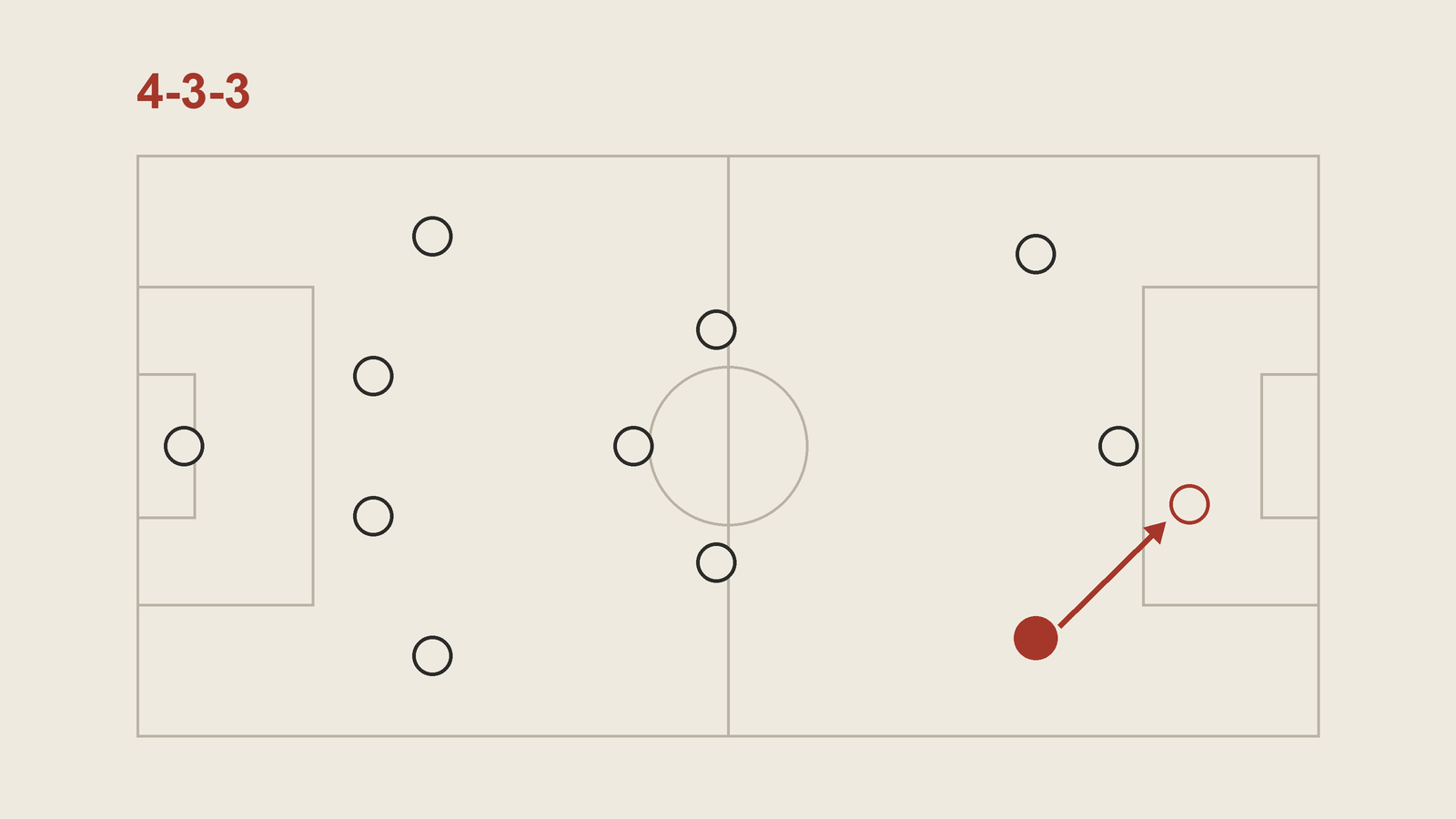
His starting position is the whole point. When his team has the ball in the opponent's half, he moves up with the play, sometimes to the edge of his area or beyond. From there he can reach a through ball before the striker does.
The key moments are passes in behind: a ball over the top, a through pass that beats the offside trap, or a long clearance after a counter-press fails. The sweeper-keeper reads the pass early, leaves his line at full speed and clears with his feet or head, since he cannot handle outside the box. Coaches' Voice says of Alisson that he is so quick off his line that he is rarely beaten to a through ball by an opponent.
Wilson made a subtler point about Lloris at Tottenham: a keeper known to be quick off his line also discourages opponents from trying the ball in behind at all.
He also organises the back line, because the space he covers depends on where the line is.
What a sweeper-keeper does with the ball
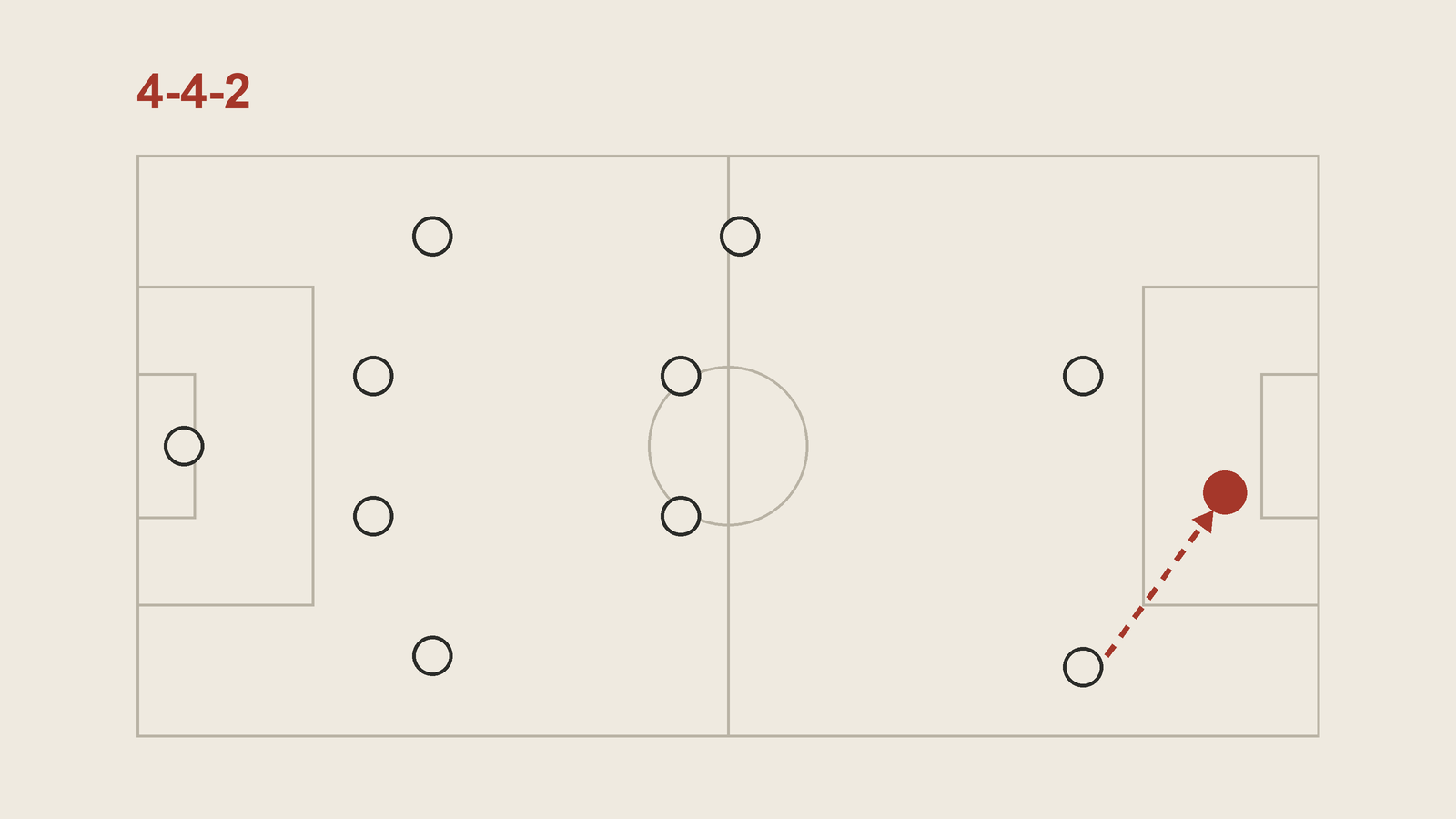
In build-up play he is the extra man. The opponent's goalkeeper does not come out to mark anyone, so a team that uses its keeper can create a spare player in its own half against the press. He passes to the centre-backs, to a midfielder dropping in, or long to a full-back or a forward, and then moves again to offer a return pass.
Coaches' Voice describes Ederson at Pep Guardiola's Manchester City as always looking for the free man and as having long passes accurate enough to set up a striker directly. Wilson called him, in effect, a midfielder in gloves. After a sweeping action the same skills matter: a keeper who finds a team-mate rather than clearing into touch can start a counter-attack while the opponents are still out of position.
Formations that use a sweeper-keeper
The role depends on the height of the defence more than the shape, but it is most common in a 4-3-3 or a 4-2-3-1 that presses high. Both shapes push the full-backs up and leave two centre-backs and the keeper to protect a large area. You can see the starting positions on the 4-3-3 formation page and the 4-2-3-1 formation page.
A team that defends deep has less need for one: there is little space behind its line to sweep.
Examples
- Manuel Neuer (Bayern Munich, Germany) is the best-known modern example. In Germany's 2-1 extra-time win over Algeria in the round of 16 at the 2014 World Cup he had to play as a sweeper-keeper to stop their counter-attacks, and he won the tournament's Golden Glove.
- Alisson at Jürgen Klopp's Liverpool swept behind a high line and was praised by Coaches' Voice for his speed off his line and his calm passing afterwards.
- Ederson, Guardiola's goalkeeper at Manchester City from 2017 to 2025, valued above all for his passing. He joined Fenerbahçe in 2025.
- Hugo Lloris in his Tottenham years, a sweeper first and a passer second.
- René Higuita of Colombia, nicknamed El Loco, came out of his area to dribble and pass. At the 1990 World Cup a failed feint against Roger Milla of Cameroon cost Colombia a goal and knocked them out, an often-cited example of the role's risk.
How it differs from neighbouring roles
Traditional goalkeeper. A shot-stopper stays near his goal line, commands his six-yard box and kicks long when in doubt. The sweeper-keeper still has to stop shots, but his starting position is higher and his feet are as important as his hands.
Libero. The libero was an outfield defender who played behind the back line and covered for the markers. The sweeper-keeper has taken over much of that covering job, as the comparison of libero and centre-back explains, while the libero's work on the ball has passed mostly to ball-playing centre-backs.
Centre-back. A centre-back defends the line; the sweeper-keeper defends the space behind it. The two have to agree on the height of the line, or a gap opens that neither can cover.
How to spot one in a match
- When his team attacks, the keeper stands near the edge of the penalty area, not on his line.
- Through balls are met by the keeper outside the box, cleared with a foot or a header.
- In build-up he takes part in short passing sequences, receives back passes under pressure and moves to offer an angle.
- The back four hold a high line with confidence, and the opponents try lobs from distance.
When a coach picks one
A coach picks a sweeper-keeper when he wants to press high and defend with a high line, the approach of teams that use gegenpressing or keep long spells of possession. The keeper becomes part of the team's rest defence, the cover left behind when the ball is lost.
The cost is risk. A keeper far from goal can be lobbed from long range, a mistimed challenge outside the box can bring a red card, and a misplaced pass near goal can lead straight to a shot.
What does sweeper-keeper mean?
It means a goalkeeper who also plays as the last defender. He stands off his line, clears balls played behind his defence and joins the passing from the back.
Who was the first sweeper-keeper?
There is no single answer. Gyula Grosics of Hungary is often named as an early pioneer, and the term itself was first used for Liverpool's Tommy Lawrence in the 1960s. Ajax's Heinz Stuy took the idea further in Total Football.
Is Neuer a sweeper-keeper?
Yes. Manuel Neuer is the best-known modern sweeper-keeper and is widely credited with changing the position. He combines shot-stopping, sweeping and passing.
Why do teams with a high line need a sweeper-keeper?
A high line leaves a large space between the defenders and the goal. Without a keeper who can cover it, any accurate ball over the top puts a forward through on goal.
Sources and further reading
- Goalkeeper (association football): Sweeper-keeper — Wikipedia
- Tottenham's Hugo Lloris is Premier League's supreme sweeper-keeper — The Guardian
- Ederson leads way as a ball-playing Premier League midfielder in gloves — The Guardian
- The modern goalkeeper: football tactics explained — Coaches' Voice
- Alisson: Premier League Player Watch — Coaches' Voice