Playing styles · Analysis
Tiki-taka: the short-passing style of Spain and Guardiola's Barcelona
Tiki-taka is a style of short passing, constant movement and keeping the ball. Where the name came from, how Spain and Barcelona played it, its critics.
By 01 Owen
· Updated 3 Oct 2026 · 6 min read
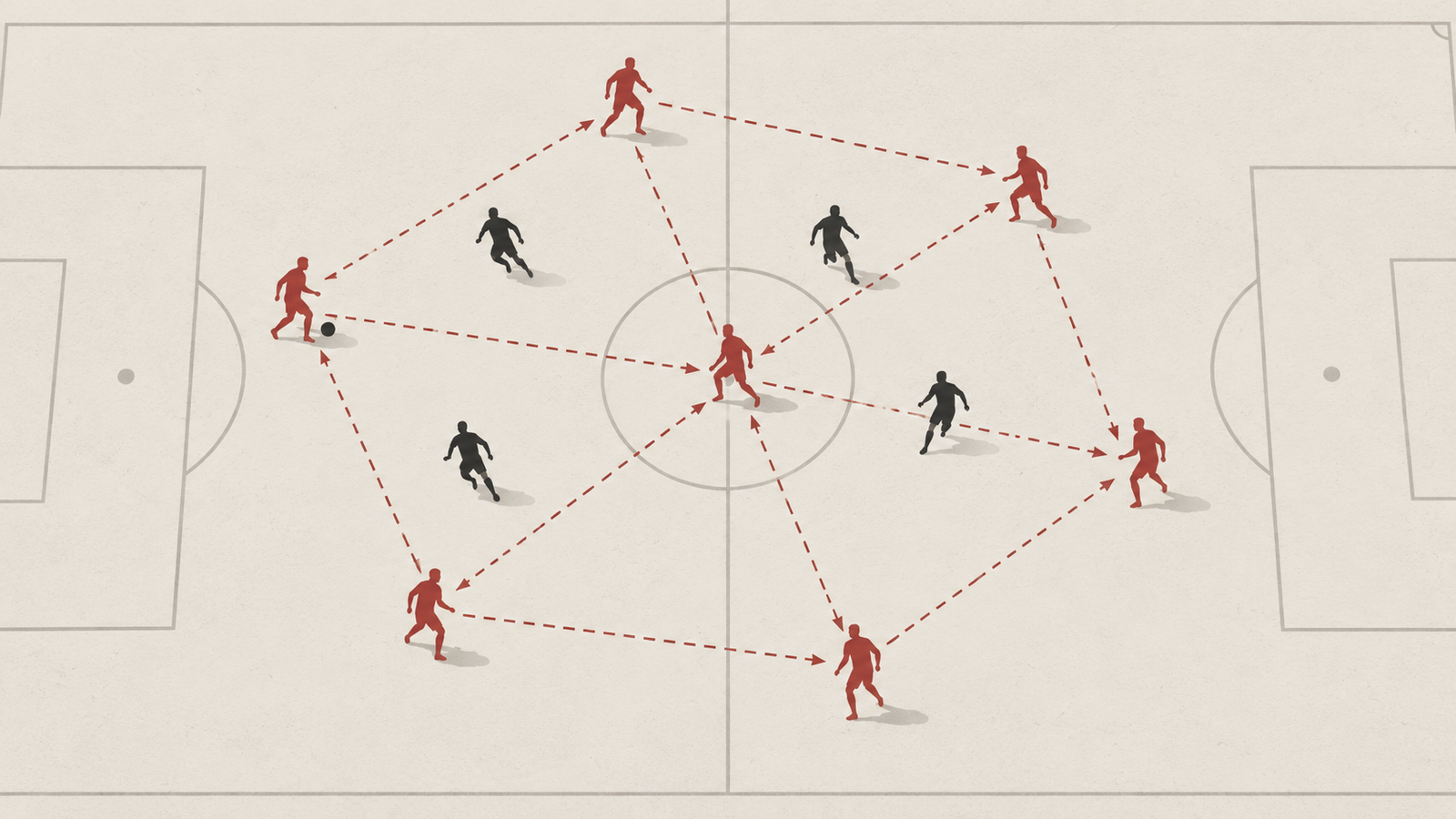
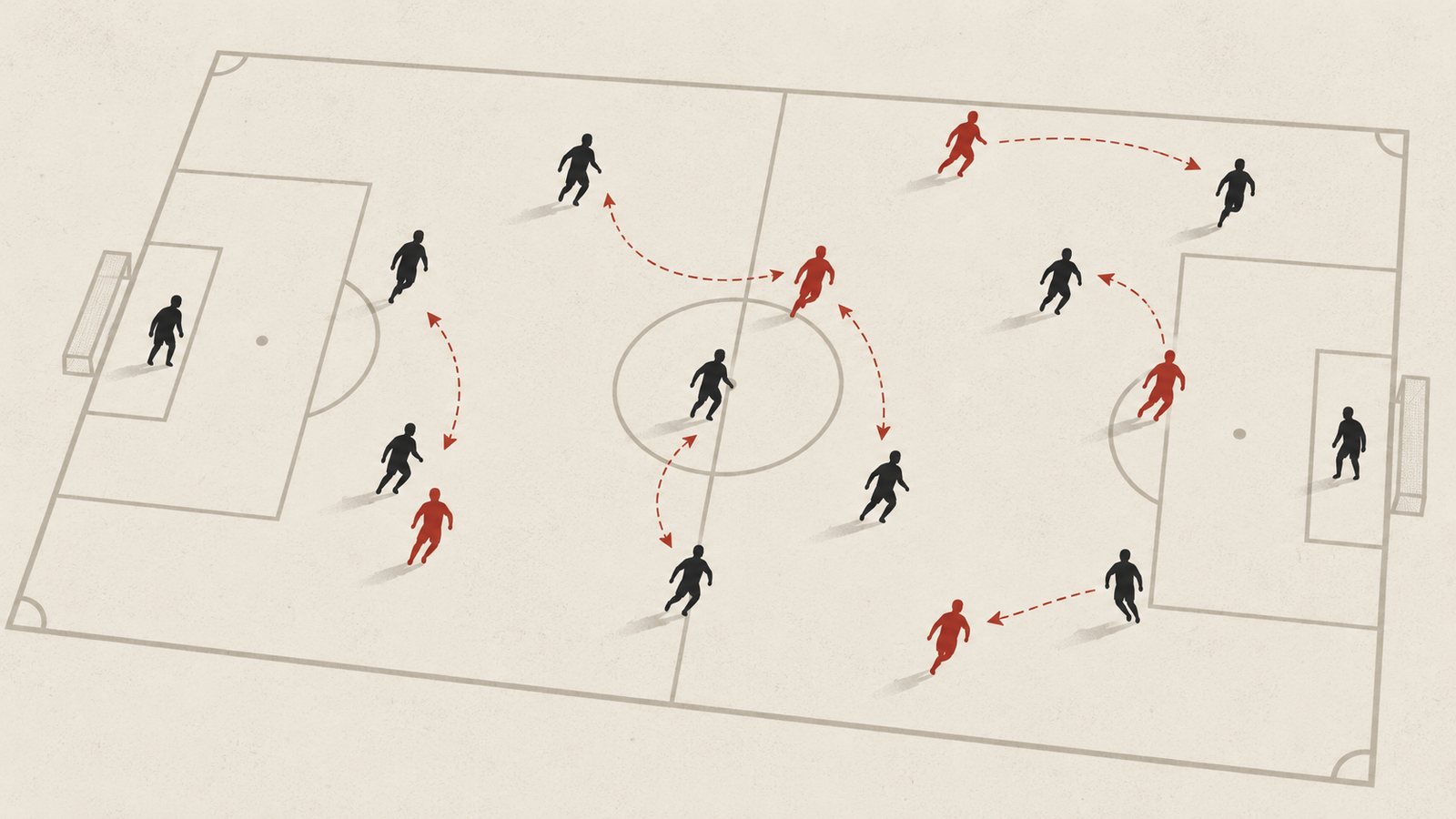
Tiki-taka is a style of play built on short passing, constant movement and keeping possession. The ball is worked through different channels with quick, simple passes until a gap opens, and the team presses hard to win it back as soon as it is lost.
The style is tied to two teams that dominated football between 2008 and 2012: Spain, who won Euro 2008, the 2010 World Cup and Euro 2012, and Pep Guardiola's Barcelona, who won 14 of the 19 competitions they entered. Both were built around the same midfielders, Xavi Hernández, Andrés Iniesta and Sergio Busquets, and both treated the ball as something to keep, not to risk.
Where the name comes from
Wikipedia credits the Spanish commentator Andrés Montes with popularising the phrase during the 2006 World Cup on laSexta, describing Spain's passing as "tiki-taka". The term may be older: Wikipedia notes it may have been used earlier in Spanish football, possibly critically, by the coach Javier Clemente. Either way, the word described a sound as much as a plan: the rhythm of many short passes in a row.
Roots in Cruyff's Barcelona
The ideas behind tiki-taka arrived in Barcelona long before the name. Johan Cruyff, who had been the on-field leader of Dutch total football, coached Barcelona from 1988 to 1996 and built a team around possession, positional discipline and technically gifted midfielders. Guardiola was his defensive midfielder. When Guardiola became Barcelona coach in 2008, he took those principles further.
How tiki-taka works
Tiki-taka is easy to describe and hard to play. Its main elements:
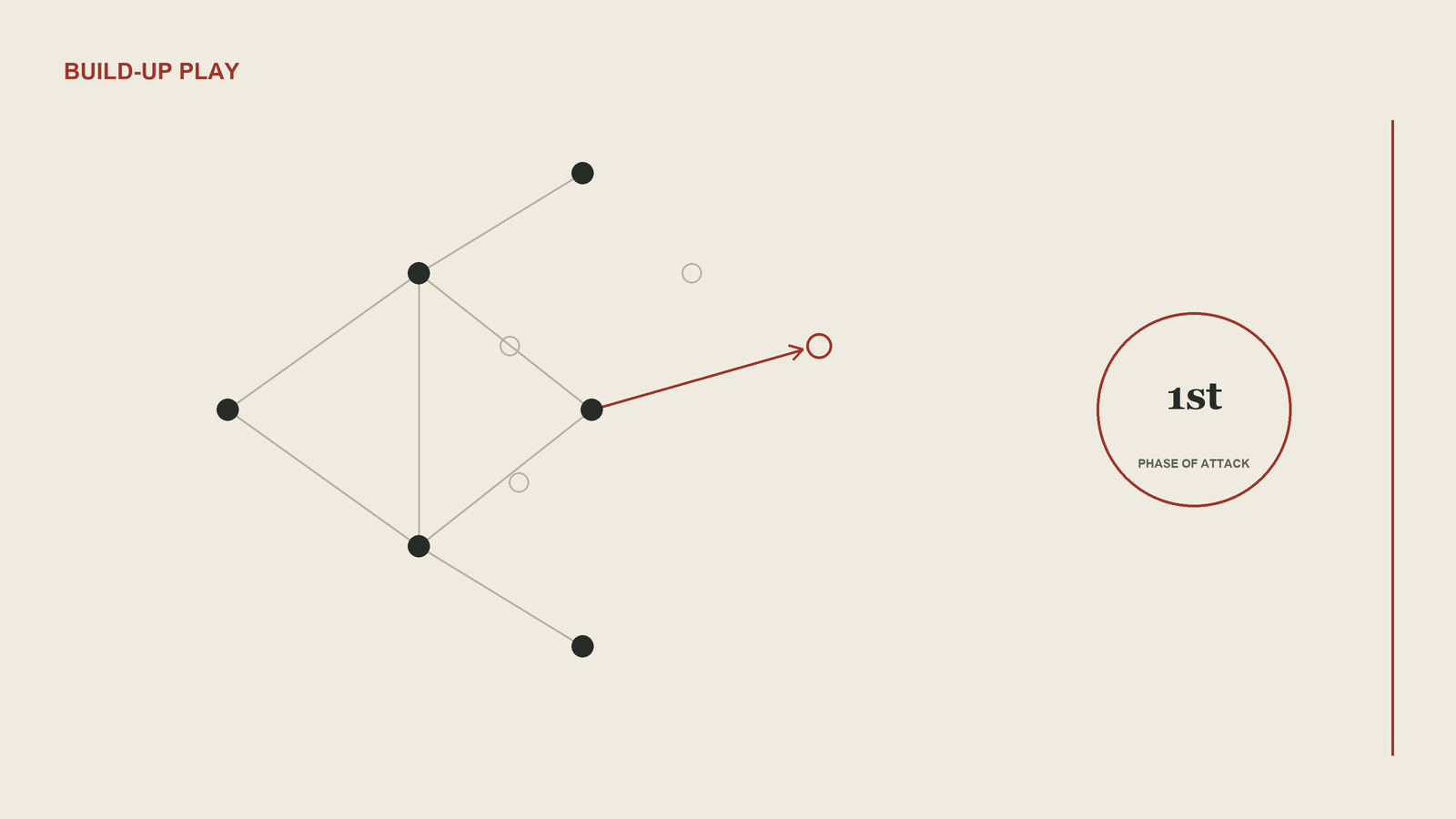
- Short passes and triangles: players position themselves so the ball carrier always has two or three close options, usually forming triangles. Passes are short and quick, often one or two touches, and the ball moves faster than the opponent can shift.
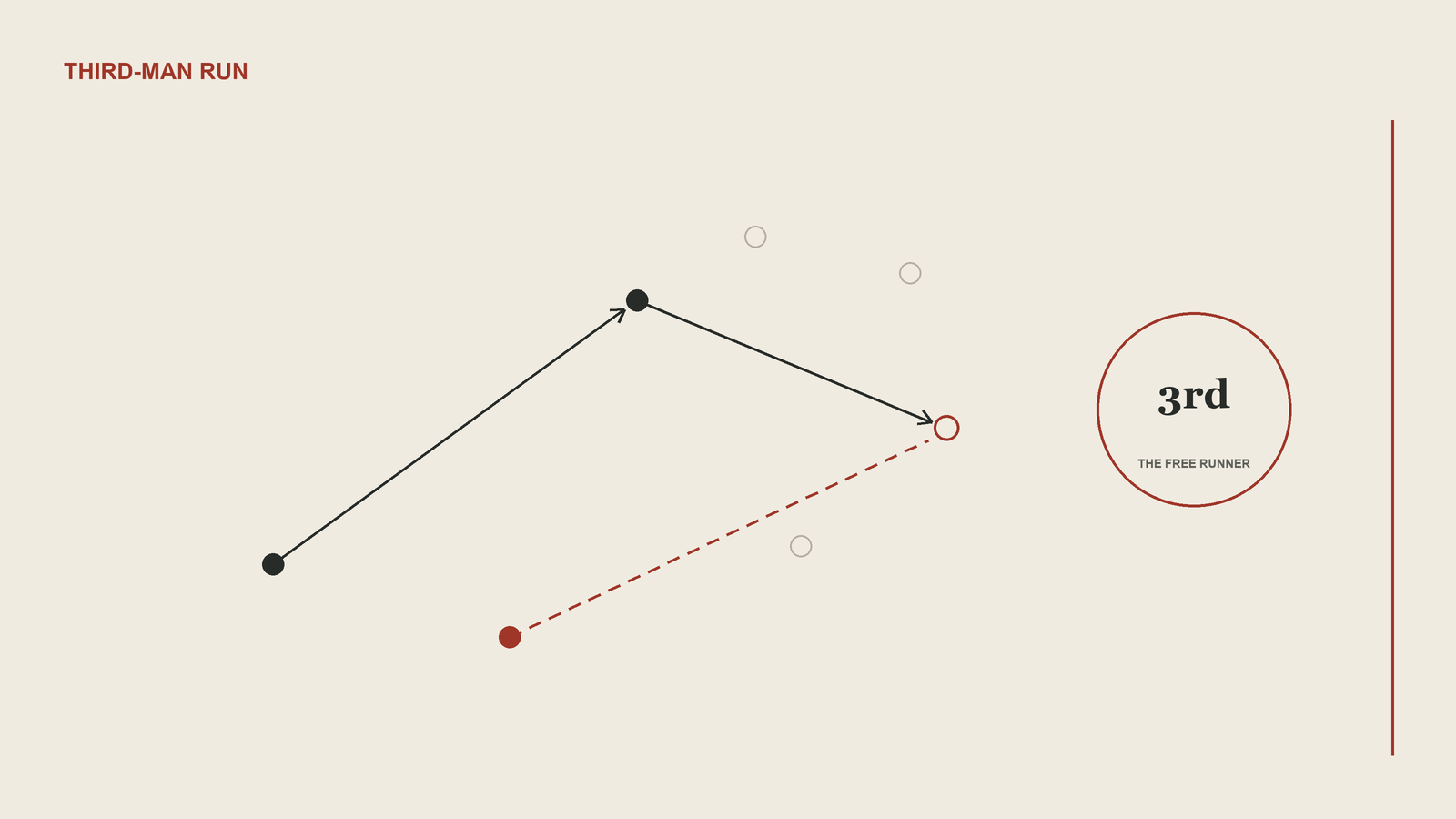
- Movement off the ball: every pass is followed by a new movement to offer the next angle. Midfielders drift between the lines and into the half-spaces, and third-man runs take the ball past a defender who closed the first option.
- Patience: the team does not force the final pass. If no gap appears, the ball goes back, to the side or to the goalkeeper, and the circulation starts again until the opponent's shape breaks.
- Pressing after losing the ball: possession is protected without the ball too. UEFA describes Guardiola's Barcelona as combining possession with high pressing, and keeping so many players in the opponent's half that the ball was usually won back immediately, an early form of gegenpressing.
The usual shape was a 4-3-3. In Barcelona's version Lionel Messi played as a false nine, dropping from the centre-forward position into midfield to create an extra passer.
Spain 2008–2012
Spain's run began under Luis Aragonés, who won Euro 2008, beating Germany 1-0 in the final. UEFA notes that Guardiola did not invent tiki-taka: Aragonés's Spain were already playing a form of it, keeping the ball high up the pitch and breaking teams down with quick, intricate passing moves.
Vicente del Bosque kept the style and won the 2010 World Cup, beating the Netherlands 1-0 in the final with a goal from Iniesta, and Euro 2012, beating Italy 4-0 in the final. Three major tournaments in a row was an unprecedented run for a national team.
Guardiola's Barcelona 2008–2012
Guardiola's first season, 2008-09, brought six trophies: the Spanish Super Cup, La Liga, the Copa del Rey, the Champions League, the UEFA Super Cup and the FIFA Club World Cup. UEFA lists 14 trophies from 19 competitions in four years, including two Champions League finals won against Manchester United: 2-0 in Rome in 2009 and 3-1 at Wembley in 2011. Messi scored in both finals. Alex Ferguson called them the best team he had faced as Manchester United manager, according to UEFA.
The team was built largely on academy players: UEFA counts 22 debuts for academy graduates under Guardiola. Xavi directed play, Iniesta carried the ball through tight spaces, and Busquets held the position in front of the defence.
Each of them had a specific job inside the passing. UEFA describes Xavi as the midfield orchestrator and Guardiola's representative on the pitch. Iniesta was the technician who could beat a man in a crowded area, and he scored the late semi-final winner against Chelsea in 2009 that sent Barcelona to Rome. Busquets rarely left his zone, so the others could move. Messi, starting as the false nine, turned possession into goals. Without that mix of control, dribbling and finishing, the passing alone would have been harmless.
Criticism and decline
Tiki-taka also drew criticism. Opponents complained that it could turn into possession without purpose, sideways passing that kept the ball but created little. Guardiola himself rejected the label: in 2014 Wikipedia quotes him saying he loathed passing for the sake of it, and that tiki-taka in that sense was rubbish with no purpose. For him, the passing was always a means to disorganise the opponent, never the goal.
The style's peak ended around 2014. Spain lost 5-1 to the Netherlands in their first match of the 2014 World Cup and went out in the group stage, and Barcelona moved towards more direct football under later coaches. Opponents had also learned to defend against it, sitting deep in a compact low block and waiting for counter-attacks.
Legacy
Tiki-taka's influence is everywhere in modern football. Building from the goalkeeper, centre-backs who can pass, possession-based pressing and midfielders trained to receive between the lines all spread from Barcelona and Spain to the rest of Europe. Guardiola's later teams kept the principles but added more direct options, and his approach is usually described today as positional play, the more structured idea behind the passing.
How to recognise tiki-taka in a match
Count the passes before a shot and watch the distances between players. A team playing tiki-taka keeps players close to the ball, plays many short passes in a row, and rarely goes long. Then watch the moment possession is lost: if three or four players immediately close the ball, the team is protecting its possession the way Spain and Barcelona did.
Guardiola himself preferred to talk about positional play, the structure underneath the passing: where players stand so that each pass creates an advantage.
What is tiki-taka in football?
Tiki-taka is a style of play based on short passing, constant movement and keeping possession. The team circulates the ball patiently until a gap opens, and presses immediately to win it back after losing it.
Who invented tiki-taka?
No single person invented it. The ideas come from Johan Cruyff's Barcelona and Dutch total football; the name was popularised by the Spanish commentator Andrés Montes in 2006, and Pep Guardiola's Barcelona and Spain under Aragonés and Del Bosque made it famous.
Is tiki-taka the same as positional play?
Not exactly. Tiki-taka describes the visible style, many short passes and lots of possession. Positional play is the underlying structure: where players stand to create passing options and superiority. Guardiola himself preferred to talk about positional play.
Why did tiki-taka decline?
Opponents learned to defend deep and compact against it, and critics argued that it could become possession without purpose. Spain's 5-1 defeat by the Netherlands at the 2014 World Cup is often seen as the end of its peak.